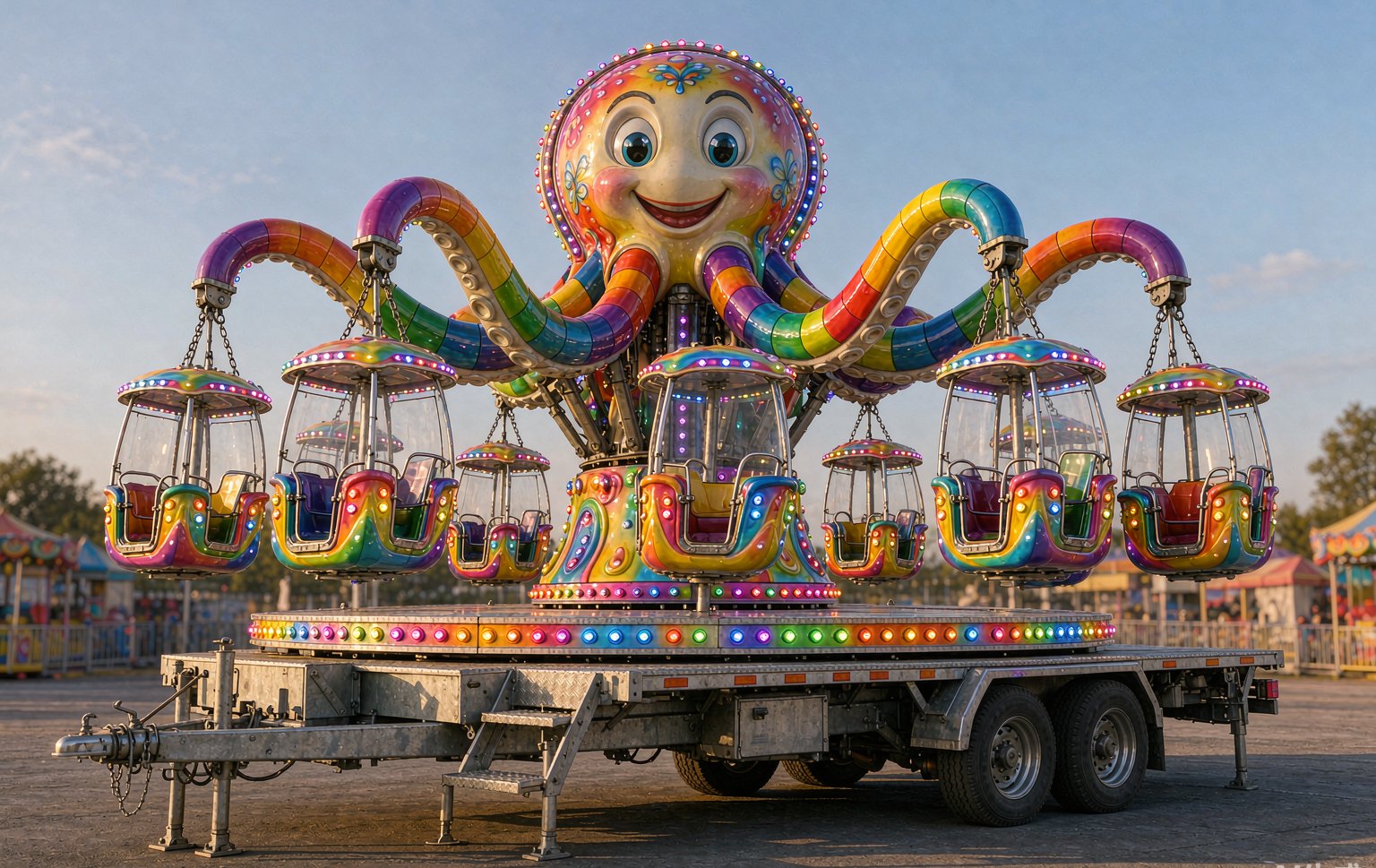
A gyroscope ride is one of the most misunderstood machines in a midway. Buyers compare three things: riders per hour, footprint and service interval. A compact 6-seat gyroscope ride from a Chinese supplier typically costs USD 28,000 to 55,000 FOB. That is an indicative range, before freight and installation. Larger 12-seat versions with multiple axes cost more, but they move far more people per cycle. This guide covers the types, the throughput math, the site needs and the service rhythm that keeps a gyroscope ride earning.
We write for buyers who need a machine that runs. Every price here is indicative only. Confirm each figure with a formal quotation for your specification.
Why a gyroscope ride still pulls a queue
A gyroscope ride sells a sensation that flat rides cannot match. The seats flip through a full rotation, sometimes on two axes at once. Riders cannot predict the next orientation. That uncertainty creates the scream, the re-ride and the crowd that stops to watch.
Watching matters. A 360-degree machine is a vertical billboard for itself. People queue because they saw the last cycle, not because of a sign. For night markets and travelling carnivals, that visual pull reduces marketing spend.
The machine also fits different budgets. A compact single-arm unit can sit in a mall atrium. A multi-arm version anchors a fairground. You can start small and add a second machine later without rebuilding the site.
Resale value is another quiet advantage. Rotating thrill machines hold their appeal longer than themed rides tied to one character. A buyer in another region can usually reuse the same unit with new graphics.
Operating cost is modest compared with water or dark rides. One attendant can run most compact units, and power draw sits well below a large coaster.
Before you fix a budget, run your visitor and ticket assumptions through our amusement park ROI model. A gyroscope ride is one line in a wider equipment plan. Park-level numbers tell you what the machine must earn.
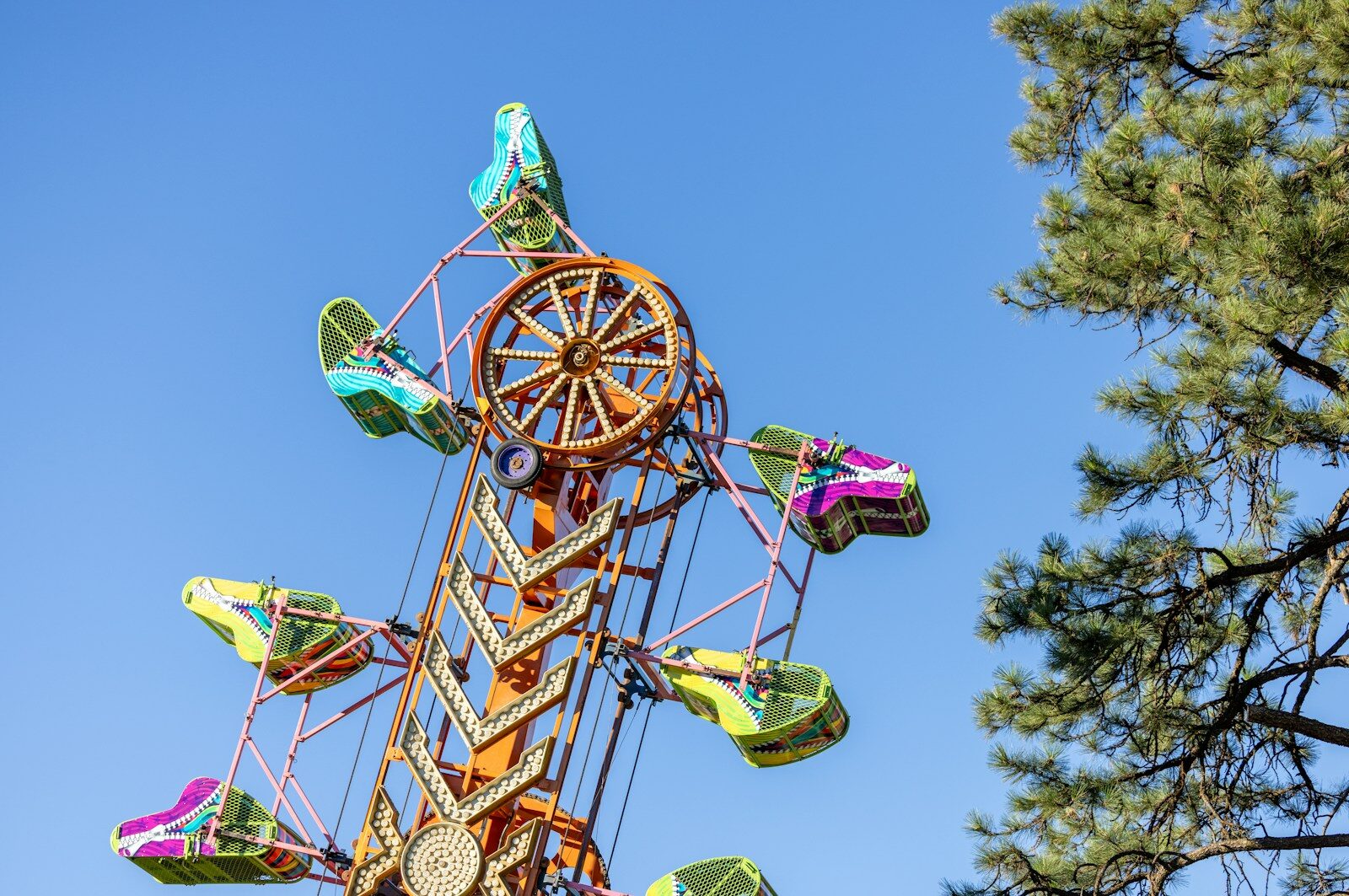
Gyroscope ride types: what “360 degrees” actually means
“360 degrees” describes the rotation of the passenger unit, not the whole machine. Some rides spin one axis. Others tilt and spin at the same time. The number of axes changes the thrill, the price and the maintenance load.
The table below uses indicative FOB ranges for a standard machine. Confirm with a formal quotation, because steel weight and control systems move the number.
| Type | Seats | Motion | Typical setting | Indicative FOB range |
|---|---|---|---|---|
| Compact single-arm | 4–6 | One axis, full rotation | Night market, mall | USD 28,000–45,000 |
| Multi-arm satellite | 8–12 | Two axes, tilt and spin | Carnival, fair | USD 45,000–90,000 |
| Family gyroscope | 12–16 | Slow multi-axis, no inversion | FEC, family park | USD 70,000–140,000 |
| Extreme 360 | 6–8 | Three axes, full inversion | Theme park | USD 90,000–180,000 |
Compact units suit operators with limited power or a short season. Extreme multi-axis machines need a concrete foundation and a trained crew. Choose by throughput first and thrill second.
Match the machine to the venue, not the other way round. A mall wants slow cycles and easy loading. A travelling show wants fast setup and road-legal transport dimensions.
Throughput: the math behind the queue
Ask any supplier for riders per hour and you will get a round number. Verify it yourself. The formula is simple and works for every rotating ride:
Riders per hour = seats × cycles per hour × load factor
A 12-seat machine with a four-minute cycle runs about 13 cycles per hour. At an 80% load factor, that is roughly 125 riders per hour. If a supplier claims 300, ask for the cycle breakdown.
Now test a compact unit. Six seats, a three-minute cycle and 20 cycles per hour give 96 possible riders. At 70% loading, the realistic figure is about 67 riders per hour.
How to read a cycle time
A cycle includes restraint check, loading, the ride itself, unloading and a visual sweep. Loading often takes longer than the ride. A 90-second load on a 120-second ride cuts capacity sharply.
Use a realistic load factor. Weekend peaks may reach 95%, but weekday averages sit lower. Design for the average, not the peak. That habit protects your payback model.
Thrill levels and rider eligibility
A family gyroscope ride rotates slowly and avoids full inversion. An extreme version turns riders through every orientation. The two machines attract different crowds and different price points.
Set a height and health restriction before you buy. Many operators publish a minimum height and exclude guests with certain conditions. Confirm the exact limits with your supplier and your local regulator.
Loose articles are another operational cost. Provide locked storage or a bag drop. Without it, staff spend the cycle chasing phones and glasses.
Train attendants on the loading sequence. A confident crew keeps the queue moving and spots an unfinished restraint early. That single skill protects both throughput and safety.
Site, power and foundation requirements
A gyroscope ride needs more than floor area. The rotating arm sweeps a vertical envelope. Check overhead clearance, nearby structures and the reach of the safety zone.
Most units require a level concrete pad and a three-phase supply. Exact drawing values depend on the model. Ask for the foundation drawing before you pour anything.
Queue space is easy to forget. A popular unit needs room for waiting guests, a gate line and accessible viewing. Measure the whole guest journey, not just the machine footprint.
Shade and lighting extend operating hours in hot markets. A night market machine without good lighting loses its visual pull after dark.
Indicative price ranges and what moves the number
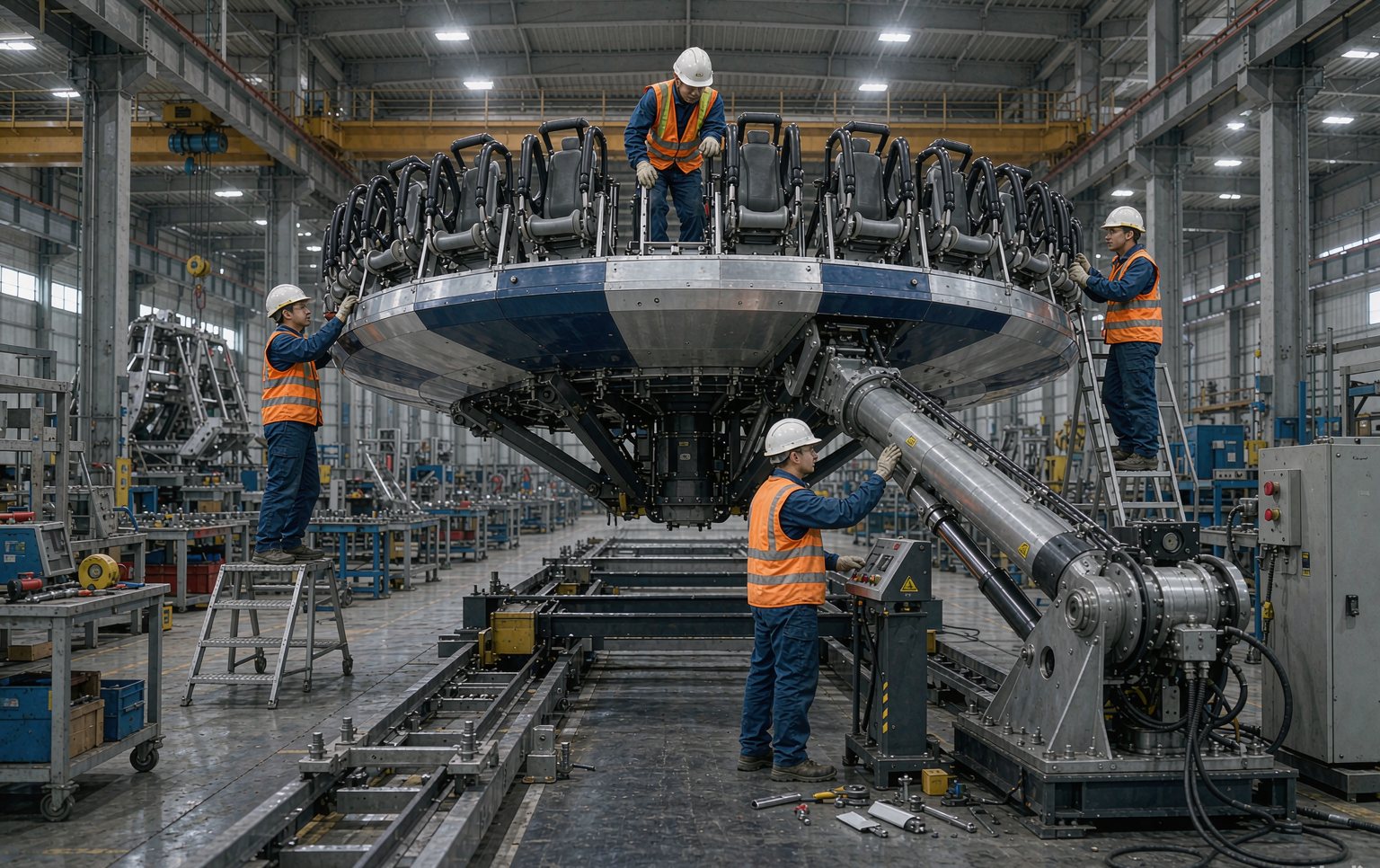
Four line items dominate the quotation: structure, drive system, seats and controls. Freight and installation sit outside the factory price. The table shows a typical split for a mid-size machine.
| Cost line | Share of factory price | What changes it |
|---|---|---|
| Steel structure and finish | 30–40% | Frame weight, coating, custom graphics |
| Drive and rotation system | 20–30% | Motor brand, number of axes, bearing spec |
| Seats and restraint system | 15–25% | Seat count, padding, latch design |
| Controls, lighting and sound | 10–20% | PLC brand, LED package, audio system |
All figures are indicative only. Confirm with a formal quotation. A heavier frame, branded motors or a custom lighting package will shift the split.
Look beyond the factory price. Add freight, foundation work, lifting equipment, operator training and first-year spares. Those items often add 15% to 30% to the delivered cost.
Transport, lead time and installation
A 12-seat gyroscope ride usually ships as several crates in one or two containers. Confirm the packing list before you book freight. A missing crate can hold the whole assembly.
Indicative production time runs 45 to 75 days after drawing approval. Add shipping, customs and site work. Plan the season backwards from these dates.
Check crate weights against your lifting plan. Some platforms arrive as one large piece. Confirm whether the site has a forklift or a mobile crane available.
Installation needs a crew, a lifting plan and a signed handover. Do not skip the handover training. Your team will run the ride long after the supplier leaves.
Maintenance cycle and spare parts
A gyroscope ride works hard. Rotation joints, bearings and restraints see constant load. A daily visual check takes minutes and prevents most failures.
Set a written schedule: daily checks, weekly lubrication, monthly fastener inspection and an annual structural review. Log every action. Good records protect you when an insurer asks.
Common mistake: skipping the spare-parts box
Do not buy a machine without its first-year spare-parts list. Belts, brushes and bearing kits are cheap on the factory shelf. They are expensive when your ride is stopped in peak season.
Our amusement ride maintenance guide explains how to build a checklist your crew will actually follow.
Safety standards and documentation
Buyers in Europe and North America will ask about EN 13814 and ASTM F2291. These standards cover design, manufacture and operation of amusement rides. Ask which documents your supplier can provide.
A credible supplier shares design calculations, material certificates and factory inspection records. Read them before you pay a deposit. Our inside a top-tier China amusement ride factory article shows what to look for.
Never accept a verbal assurance as a certificate. Request the actual document and check its scope.
Your insurer and local inspector may need copies before the ride opens. Keep one controlled folder with drawings, certificates and logbooks. It shortens every future audit.
How to choose a gyroscope ride supplier
Use this checklist when you compare offers. It removes the marketing and focuses on facts you can verify.
- Ask for the general arrangement drawing with dimensions and envelope.
- Request the foundation and power drawings before you sign.
- Get the riders-per-hour calculation with a stated cycle time.
- Ask which parts are wear items and what the first-year kit costs.
- Request references from machines of the same model, not the company in general.
- Confirm what installation training and handover documents are included.
- Read the warranty in writing, including what voids it.
- Compare freight terms, not only the factory price.
A supplier who answers all eight has little to hide. One who dodges the cycle-time question will likely miss the throughput too.
Ask how quickly spare parts ship and who pays the freight. A fast reply during sales says little about support in year three. Get the response time in writing.
Frequently asked questions about a gyroscope ride
How much does a gyroscope ride cost?
An indicative FOB range for a compact 6-seat machine is USD 28,000 to 55,000. Multi-axis models with 12 seats can exceed USD 90,000. Confirm with a formal quotation for your specification.
How many riders can a gyroscope ride serve per hour?
A 12-seat ride with a four-minute cycle and 80% load factor serves roughly 125 riders per hour. Ask your supplier for the cycle breakdown behind any higher claim.
Does a gyroscope ride need a special foundation?
Most units need a level reinforced concrete pad sized to the machine’s rotating envelope. Request the foundation drawing before site work begins.
Can a gyroscope ride run outdoors year-round?
Yes, with a rated enclosure, drainage and a documented wind limit. Hot climates also need shading and scheduled rest periods for staff.
What is the difference between a gyroscope ride and a satellite ride?
A gyroscope ride typically flips the passenger unit through full rotation. A satellite ride combines arm movement with gentler spinning. The satellite is usually the family option.
How long does delivery take?
Indicative production is 45 to 75 days after approved drawings. Freight, clearance and assembly add more time. Book your season backwards.
Planning a bumper car or amusement ride installation?
Send us your site size, expected visitor volume and budget range — our engineering team will reply within 24 hours with a layout sketch and an indicative quotation, no obligation.