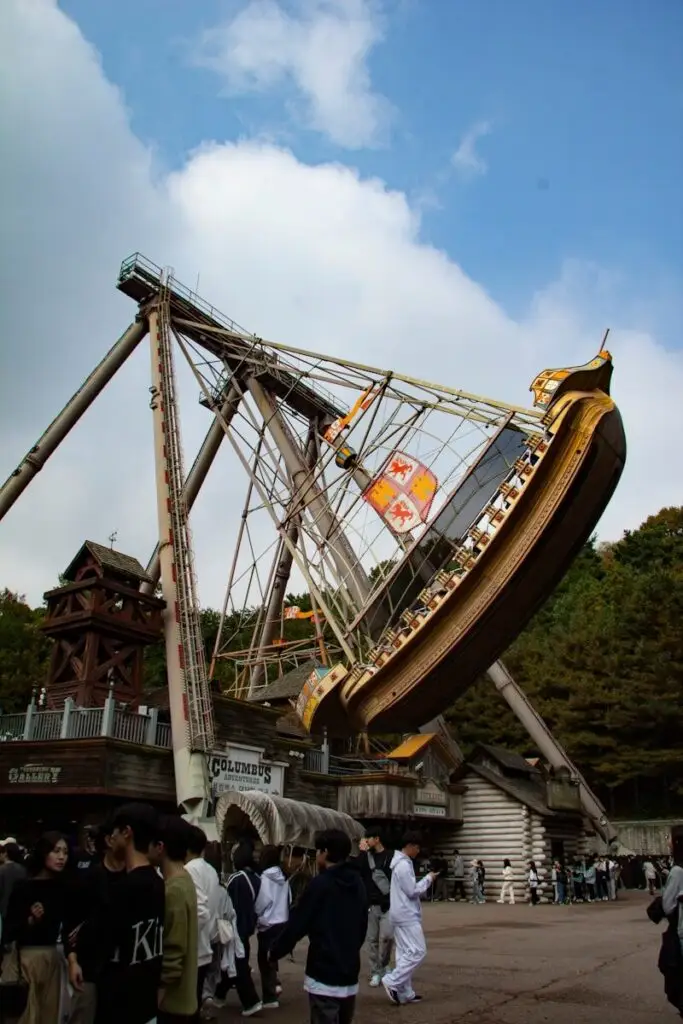
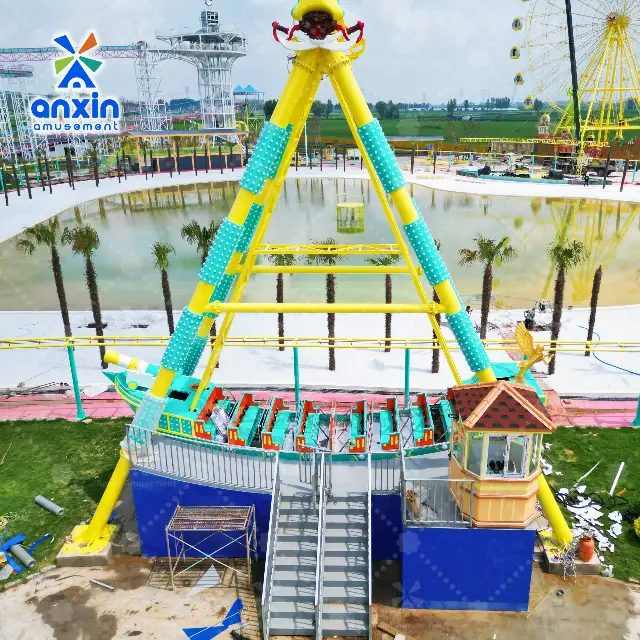
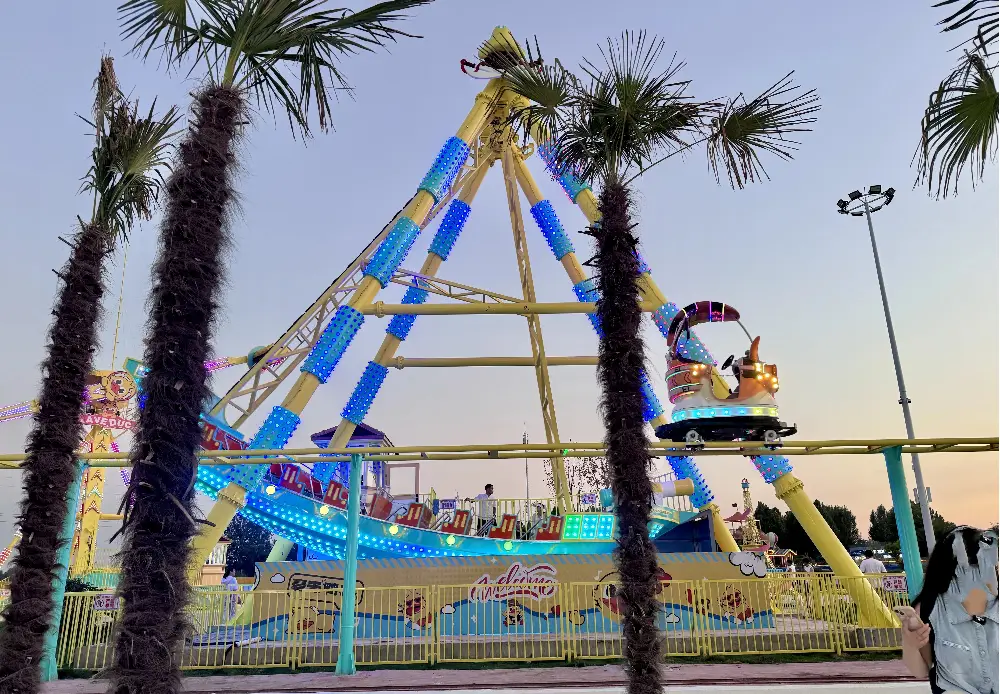
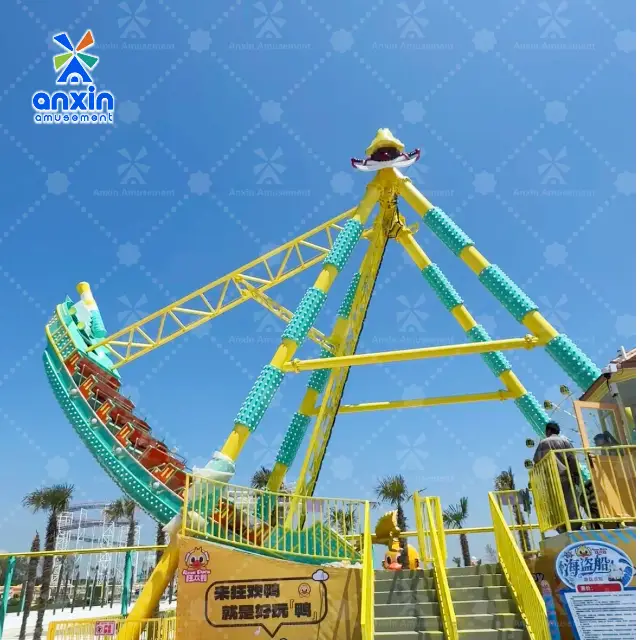
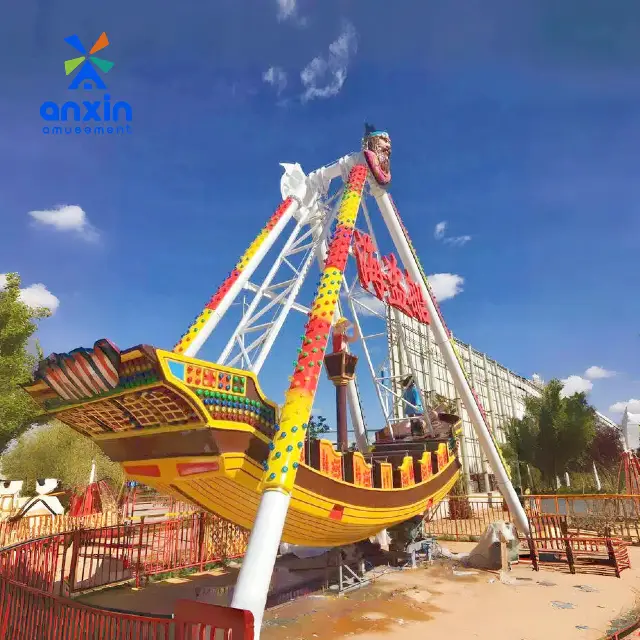
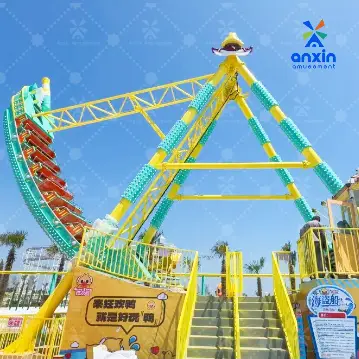
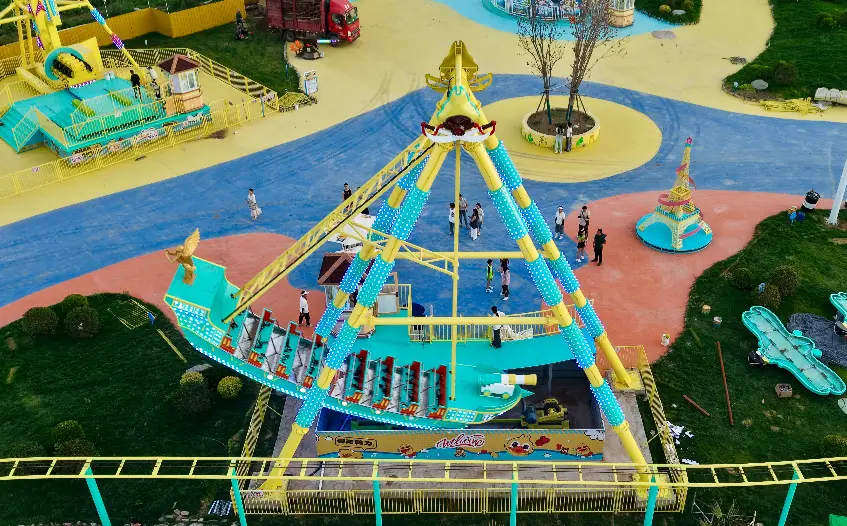
If you are looking for an attraction that consistently pulls guests from the entrance straight to the thrill zone, the pirate ship ride remains one of the most reliable choices in the amusement industry. It is a classic pendulum attraction that offers high throughput, broad demographic appeal, and a return on investment that makes financial sense for both permanent parks and traveling operators.
Why Pirate Ship Rides Are a Smart Investment for Your Venue
When evaluating new equipment, park owners and operators usually look at three metrics: hourly capacity, maintenance overhead, and demographic reach. The pirate ship checks all three boxes better than almost any other mid-sized thrill ride.
Let’s talk about throughput first. A well-managed 36-passenger pirate ship can process up to 360 riders per hour. That means during peak season, you are moving a massive volume of guests through a single footprint. Unlike complex roller coaster systems that require extensive dispatch timing and block zone management, a pirate ship operates on a simple, continuous cycle. Load, dispatch, swing, brake, unload. The operational rhythm is predictable, which translates directly to consistent revenue.
Demographic reach is where this ride truly shines. A pirate ship is a “gateway thrill.” It is intense enough to satisfy teenagers and young adults seeking an adrenaline rush, but it lacks the extreme G-forces or inversions that alienate older guests or families with older children. This makes it a perfect bridge between the family & kiddie rides and the extreme thrill section of your park. You aren’t just selling tickets to thrill-seekers; you are selling an experience to multi-generational groups.
From an ROI perspective, operators typically achieve payback within 12 to 24 months. The maintenance costs are relatively low compared to hydraulic launches or magnetic propulsion systems found on modern coasters. The primary wear items are mechanical bearings, drive motors, and restraint padding, all of which are straightforward to inspect and replace. When you factor in the ride’s 15-20 year service life, the long-term value proposition is incredibly strong.
Pirate Ship Ride Models Explained
Choosing between the 24-passenger and 36-passenger models is the first major decision you will make. This isn’t just about capacity; it is about matching the ride to your specific site constraints and target market.
The 24-Passenger Model
This model features a 13.2-meter diameter arc and swings to a 50-degree angle. It utilizes a single-drive system, which keeps the mechanical complexity and power consumption lower. This is the ideal choice for Family Entertainment Centers (FECs), smaller regional parks, or venues with limited footprint. The 50-degree swing angle actually provides a slightly more intense sensation relative to the size of the ship, making it a great option for venues that want to offer a solid thrill without requiring a massive clearance zone.
The 36-Passenger Model
The 36-passenger model is the workhorse for high-traffic venues. With a 19.4-meter diameter arc and a 45-degree swing angle, it uses a double-drive system to manage the increased mass and momentum safely. It features 8 rows of seating, including center and side configurations, allowing for efficient loading patterns. The 360 riders/hour capacity is what makes this model a staple for large-scale theme parks, seaside resorts, and major traveling carnivals. The double-drive system also provides redundancy; if one drive experiences an issue, the system is engineered to handle the load safely while maintenance is scheduled.
When deciding, look at your peak-hour attendance data. If your park regularly sees bottlenecks at your mid-tier thrill attractions, the 36-passenger model is likely the right move. If you are filling a gap in a smaller park or adding a secondary thrill option, the 24-passenger model offers better space efficiency.
What Sets Our Pirate Ship Rides Apart
The market is full of pirate ship manufacturers, but not all engineering is created equal. We focus on the details that affect your daily operations and long-term costs.
VFD Technology for Smooth Operations
Every pirate ship we build is equipped with Variable-Frequency Drive (VFD) technology. This is non-negotiable for modern operations. VFD allows for precise control over the motor speed, resulting in buttery-smooth starts and stops. For the rider, this eliminates the jarring mechanical jerks that cause discomfort and complaints. For the operator, it drastically reduces mechanical stress on the frame, bearings, and drive train. Less stress means fewer breakdowns and longer component life. VFD also allows operators to adjust the swing intensity based on the time of day or crowd demographics, giving you operational flexibility.
Hot-Dip Galvanized Steel Frame
Corrosion is the enemy of outdoor amusement equipment, especially for seaside parks or venues in humid climates. Our pirate ship frames are hot-dip galvanized, not just painted. This process coats the steel in a thick layer of zinc that provides sacrificial protection against rust. While the upfront cost is higher than standard powder-coated frames, the long-term savings are massive. You avoid the constant cycle of sandblasting, priming, and repainting that plagues operators who buy cheaper equipment. A hot-dip galvanized frame is what gives us the confidence to guarantee a 15-20 year service life.
Theming Flexibility
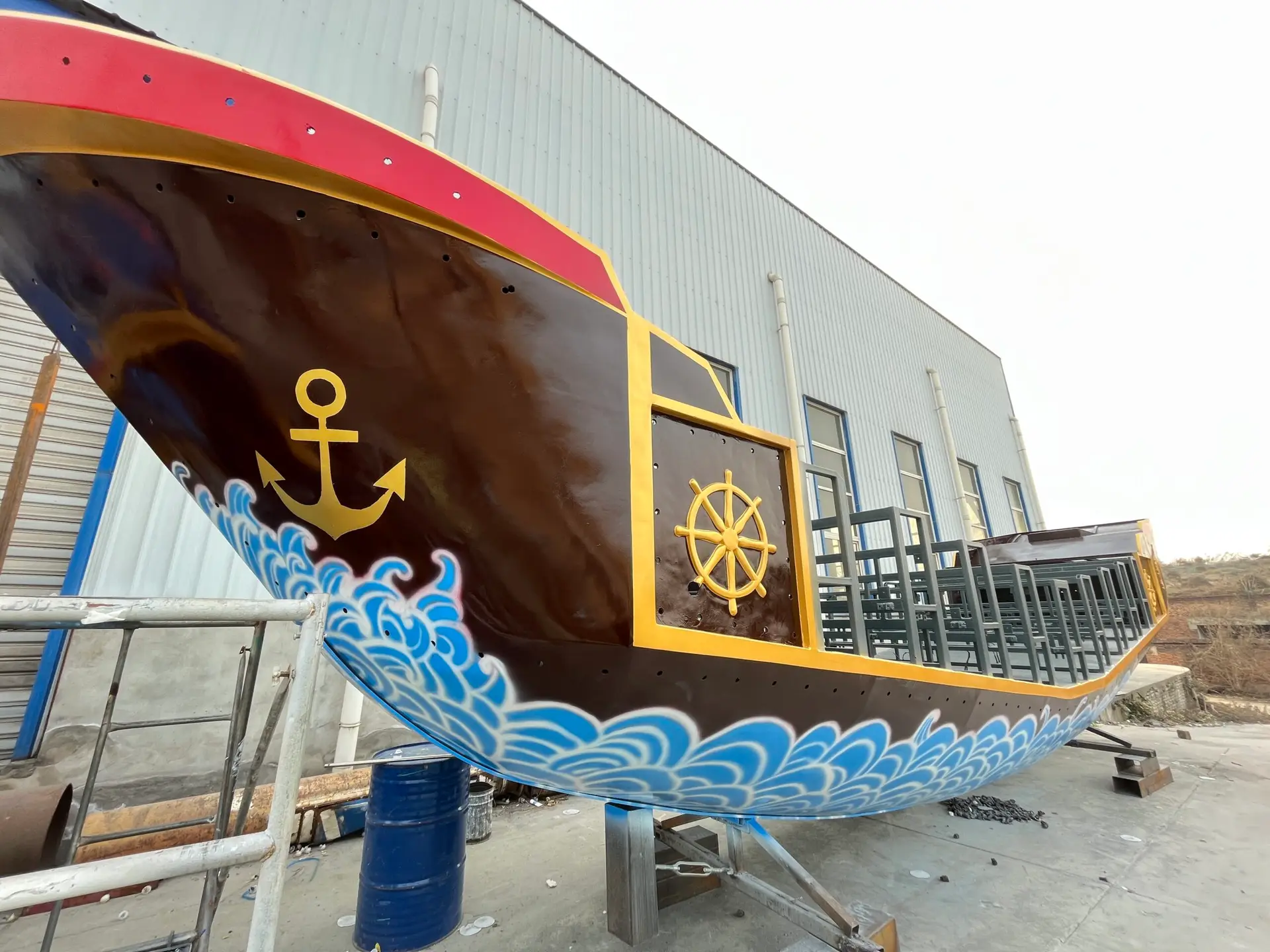
A pirate ship doesn’t have to look like a generic fiberglass hull. We offer extensive custom theming options to match your park’s narrative. Whether you need a classic pirate ship, a Viking vessel, or a fully custom design that integrates with your park’s IP, we can build it. This includes LED lighting packages for nighttime operation, onboard sound systems that sync with the ride’s motion, decorative hull wraps, and themed queue-line elements. A well-themed ride doesn’t just look better; it increases perceived value and encourages social media sharing, which is free marketing for your venue.
Where Pirate Ship Rides Thrive — Venue Types
Pirate ships are versatile, but they perform best in specific environments.
Large-Scale Theme Parks: Here, the 36-passenger model serves as a mid-tier anchor attraction. It provides necessary throughput between high-capacity dark rides and extreme coasters. Custom theming allows it to blend seamlessly into immersive lands.
Family Entertainment Centers (FECs): The 24-passenger model is perfect for FECs where space is at a premium. It offers a thrill level that appeals to the 10-and-up demographic without requiring the massive footprint of a coaster.
Traveling Carnivals & Fairs: Modular assembly is key here. Our pirate ships are designed for quick setup and teardown. The hot-dip galvanized frame withstands the rigors of frequent transport and reassembly. For traveling operators, reliability is everything; a ride that breaks down at a fair costs you thousands in lost revenue. Our PLC-controlled operational monitoring helps operators catch issues before they cause downtime.
Seaside & Water Parks: The combination of hot-dip galvanization and marine-grade finishes makes our ships ideal for salt-air environments. Pairing a pirate ship with water play rides creates a natural thematic zone that keeps guests in that area longer, increasing food and beverage sales.
Space, Foundation & Installation Requirements
Before you place an order, you need to understand the physical requirements. Getting this wrong is one of the most common and costly mistakes buyers make.
We offer six standard heights: 10m, 11m, 15m, 17m, 24m, and 25m, with custom options available. The height you choose directly impacts the required clearance zone. You must account for the maximum swing arc plus a mandatory safety buffer. Local building codes and insurance requirements will dictate your exact clearance needs, so always verify with your local authorities before finalizing your site plan.
Foundation requirements vary based on the model and your local soil conditions. The 36-passenger model requires a significantly larger and deeper concrete foundation than the 24-passenger model. We provide detailed foundation drawings and load specifications with every proposal. Do not attempt to pour a foundation based on generic estimates; soil bearing capacity varies wildly, and an undersized foundation is a safety hazard and a liability nightmare.
Installation typically takes 2-4 weeks for the 24-passenger model and 4-6 weeks for the 36-passenger model, depending on site access and weather conditions. Our team can supervise installation, or we can provide detailed guidance for your local contractors if you prefer to manage the build yourself.
Safety Features That Protect Your Investment
Safety isn’t just about protecting riders; it’s about protecting your business from liability and regulatory shutdowns. Our pirate ships are engineered with multiple layers of protection.
Certifications That Matter
Every ride we manufacture is certified to CE (EN 13814), ASTM F24, ISO 9001, and GB/T 18160 standards. These aren’t just stickers; they represent rigorous third-party verification of our engineering, manufacturing processes, and safety systems. If you are operating in a regulated market, having properly certified equipment is non-negotiable. It simplifies your inspection process and demonstrates due diligence to insurers.
Triple-Redundant Braking System
We don’t rely on a single braking method. Our pirate ships feature three independent braking systems: hydraulic, electromagnetic, and mechanical emergency. The hydraulic system provides primary stopping power with smooth deceleration. The electromagnetic brake acts as a secondary fail-safe that engages automatically if hydraulic pressure drops. The mechanical emergency brake is a purely physical system that can stop the ride even in a total power failure. This redundancy ensures that no single point of failure can compromise rider safety.
Restraint Systems
Each seat is equipped with individual lap bars and seat belts. Individual restraints are superior to shared bench-style bars because they accommodate different body sizes and provide a secure fit for every rider. The seat belts serve as a secondary retention device and prevent riders from attempting to stand or exit during operation. All restraint systems are monitored by the PLC, which prevents the ride from dispatching if any restraint is not properly locked.
Operating Costs & Revenue Potential
Let’s get into the numbers that actually matter to your bottom line.
Power Consumption: The VFD technology doesn’t just improve ride quality; it reduces energy costs. The 24-passenger model typically draws 30-45 kW during operation, while the 36-passenger model draws 55-75 kW. These are peak numbers; average consumption is lower due to the VFD’s efficient acceleration profiles. Compare this to hydraulic pendulum rides that can draw 150+ kW, and the savings add up quickly over a season.
Staffing: A pirate ship requires a minimum of two operators: one at the control panel and one for loading/unloading. During peak hours, you may want a third person dedicated solely to restraint checks to maintain throughput. The PLC-controlled monitoring system simplifies the operator’s job by providing clear visual and audible feedback on system status, reducing training time and human error.
Revenue Potential: At 5perride,a36-passengermodelrunningat300riders/hourduringa10-hourpeakdaygenerates15,000 in gross daily revenue. Even accounting for off-peak hours and slower days, the annual revenue potential is substantial. With operating costs (labor, power, maintenance) typically running 15-25% of gross revenue, the margin is healthy. Most operators achieve payback within 12-24 months, as mentioned earlier, but high-traffic venues can see faster returns.
Seasonal Strategy: How to Maximize Revenue Year-Round
Pirate ships are often viewed as summer attractions, but smart operators extend their revenue season.
Summer Peak: This is when the ride earns its keep. Run at full capacity, maximize staffing, and use the ride as a crowd flow management tool. Position it strategically to pull guests away from congested areas.
Shoulder Seasons (Spring/Fall): Reduce staffing to match lower attendance. Use the VFD to run shorter cycles or lower swing angles for younger crowds during family-focused events. The LED lighting package becomes valuable here as daylight hours shorten; a lit-up pirate ship is a visual beacon that draws evening visitors.
Winter Strategies: In colder climates, you have options. If your park operates year-round, the hot-dip galvanized frame handles snow and ice without corrosion issues. You’ll need to implement winter maintenance protocols (more frequent lubrication, weather protection for electrical components), but the ride can operate safely. For parks that close in winter, the modular design allows for partial disassembly or full enclosure protection. Some operators in milder winter climates run the ride during holiday events, using themed lighting and sound to create a festive atmosphere.
Indoor Options: For FECs or indoor theme parks, the pirate ship is a year-round revenue generator regardless of weather. The controlled environment actually extends component life by eliminating UV degradation and moisture exposure.
How to Choose the Right Pirate Ship Ride for Your Venue
Use this five-step framework to make your decision:
- Analyze Your Demographics:Who are your primary guests? If you serve mostly families with children under 12, the 24-passenger model with a lower swing angle may be appropriate. If you cater to teens and young adults, the 36-passenger model with full swing is necessary.
- Measure Your Available Space:Don’t just measure the footprint; measure the clearance zone. Talk to your local building department early to understand setback requirements. If space is tight, the 24-passenger model or a custom lower-height option may be your only viable choice.
- Review Your Peak-Hour Data:Look at your busiest days. What are your current bottlenecks? If mid-tier thrill rides have 45-minute waits, you need the 36-passenger model’s throughput. If your park rarely sees crowds that strain existing capacity, the 24-passenger model is more cost-efficient.
- Consider Your Climate:Coastal or humid environments demand hot-dip galvanization. Extreme temperature swings may affect hydraulic fluid viscosity, making the VFD electric drive a better choice. Year-round operation requires planning for winter maintenance or enclosure.
- Budget for Total Cost of Ownership:Don’t just compare purchase prices. Factor in shipping, foundation, installation, annual maintenance, and expected component replacement costs. A cheaper ride with higher maintenance needs will cost you more over 10 years than a properly engineered ride with a higher upfront price.
Pirate Ship Rides vs Other Thrill Rides — Which Fits Your Park Best?
The pirate ship is versatile, but it isn’t always the right choice. Here’s how it compares to other attractions:
Vs. Pendulum Rides: Traditional pendulum rides often offer higher swing angles and more intense G-forces. They appeal to a narrower demographic (hardcore thrill-seekers) and typically have lower hourly capacity. The pirate ship is broader appeal and higher throughput; the pendulum ride is niche intensity.
Vs. Drop Tower Rides: Drop towers offer a different type of thrill (vertical freefall vs. swinging motion) and have much lower throughput (typically 20-40 riders/hour). They’re great as a signature attraction but can’t serve as a primary crowd-flow workhorse like a pirate ship.
Vs. Flying Chair Rides: Flying chairs offer a gentler, more scenic experience with higher capacity. They’re excellent for families but lack the thrill factor that drives teenage and young adult visitation. The pirate ship fills the gap between flying chairs and extreme coasters.
Vs. Scream Rides: Scream rides (like the Sizzler or Twist) are compact, high-intensity flat rides with very high throughput. They’re great for dense midways but lack the visual presence and thematic potential of a pirate ship. The pirate ship is a destination attraction; the scream ride is a filler.
Vs. Spin Rides: Spin rides offer rotational thrills with varying intensity levels. They’re versatile but often have lower capacity per cycle than a pirate ship. The pirate ship’s swinging motion is more universally appealing and less likely to cause motion sickness.
Vs. Roller Coasters: Coasters are signature attractions with massive draw but also massive cost, footprint, and maintenance requirements. The pirate ship is a complementary attraction that provides high-capacity thrills at a fraction of the coaster’s operating cost.
Vs. Mega Disk’O: The Disk’O offers spinning and swinging in a compact footprint with moderate capacity. It’s a good alternative when space is extremely limited, but the pirate ship offers better theming potential and broader demographic appeal.
Common Mistakes Buyers Make
After decades in this industry, we’ve seen these mistakes repeatedly:
- Buying on Price Alone:The cheapest pirate ship often uses inferior steel, lacks proper galvanization, and has no VFD. You’ll spend the savings on maintenance, premature repainting, and lost revenue from downtime within the first three years.
- Ignoring Clearance Requirements:Ordering a ride that fits your lot but violates local setback codes. Always verify clearance with authorities before purchasing. Retrofitting or relocating a foundation is exponentially more expensive than planning correctly upfront.
- Skipping the Site Survey:Assuming your soil can support the foundation without testing. Soil bearing capacity varies dramatically; a geotechnical survey is a small investment that prevents catastrophic foundation failure.
- Neglecting Theming:Buying a bare-bones ship and expecting it to draw crowds. In today’s market, guests expect immersive experiences. A well-themed ride justifies higher ticket prices and generates social media buzz.
- Underestimating Staffing Needs:Planning for minimum staffing but not accounting for peak-hour demand. Understaffing leads to slow loading, longer waits, and guest complaints. Plan your staffing model based on peak-hour throughput, not average daily attendance.
- Choosing the Wrong Supplier:Working with a manufacturer who lacks proper certifications, has no after-sales support, or can’t provide references from similar venues. Your supplier should be a long-term partner, not just a vendor. Verify their track record, ask for references, and ensure they offer comprehensive after-sales support.
Pairing Your Pirate Ship with Other Attractions for Maximum Foot Traffic
A pirate ship doesn’t exist in isolation. Strategic placement and pairing with complementary attractions creates synergy that boosts overall park revenue.
With Bumper Cars: Bumper cars appeal to the same broad demographic as pirate ships but offer a different type of interaction. Placing them adjacent creates a “thrill and play” zone that keeps guests in the area longer. The bumper cars serve as a cooldown activity after the pirate ship’s intensity.
With Carousel: The carousel attracts families with young children who may not be ready for the pirate ship. Having both attractions nearby allows multi-generational groups to stay together. Parents can ride the carousel with younger kids while older siblings hit the pirate ship, then swap.
With Water Play Rides: As mentioned earlier, this is a natural thematic pairing. The pirate ship serves as the anchor attraction in a water-themed zone, driving traffic to splash pads, water slides, and interactive fountains. This increases dwell time and food/beverage sales in that zone.
With Swing Rides: Swing rides offer a gentler, scenic alternative to the pirate ship’s intensity. Placing them together creates a “sky attractions” zone that appeals to guests who enjoy elevation-based thrills at varying intensity levels. The swing ride serves as an introduction for guests who may eventually try the pirate ship.
With Family & Kiddie Rides: Positioning the pirate ship near family rides creates a natural progression path. Kids graduate from kiddie rides to the pirate ship as they age and seek more thrills. This extends the lifetime value of family visitors by giving them reasons to return as their children grow.
Our Manufacturing & Support Process
We don’t just build rides; we build partnerships. Our process is designed to ensure you get exactly what you need, when you need it, with support that lasts the life of the ride.
It starts with a detailed consultation where we analyze your venue, demographics, space, and budget. We don’t push a one-size-fits-all solution; we engineer a recommendation based on your specific needs. From there, we provide detailed proposals with transparent pricing, clear specifications, and realistic timelines.
Manufacturing takes place in our ISO 9001-certified facility, with rigorous quality control at every stage. You receive regular progress updates and can request factory acceptance testing before shipment. Our team handles all logistics, ensuring your ride arrives safely and on schedule.
Post-sale, we provide comprehensive installation support, operator training, and detailed maintenance documentation. Our solutions team is available for troubleshooting, parts supply, and future upgrades. We’re not gone after the sale; we’re invested in your success. Learn more about our company and our commitment to quality on our about us page.
Frequently Asked Questions
- What is the hourly capacity of your pirate ship rides?The 24-passenger model handles approximately 200-240 riders per hour, while the 36-passenger model handles up to 360 riders per hour. Actual capacity depends on operator efficiency, loading patterns, and cycle time settings.
- What are the age and height requirements for riders?Most jurisdictions require riders to be at least 48 inches tall to ride alone, with children between 42-48 inches requiring adult supervision. Age restrictions vary by location; check your local regulations. Our restraint systems are designed to accommodate riders from approximately 42 inches to 6’4” and up to 250 lbs.
- How weather-resistant are these rides?Our hot-dip galvanized frames are highly resistant to corrosion, including salt-air environments. Electrical components are IP65-rated or higher. The ride can operate in rain, but we recommend shutting down during high winds (typically above 35-40 mph), lightning, or heavy precipitation.
- What are the shipping dimensions and logistics?Shipping dimensions vary by model and disassembly configuration. The 36-passenger model typically requires 3-4 flatbed trucks. We handle all logistics and can provide detailed shipping specifications during the proposal phase. International shipping is available with full export documentation.
- What warranty do you provide?We provide a standard