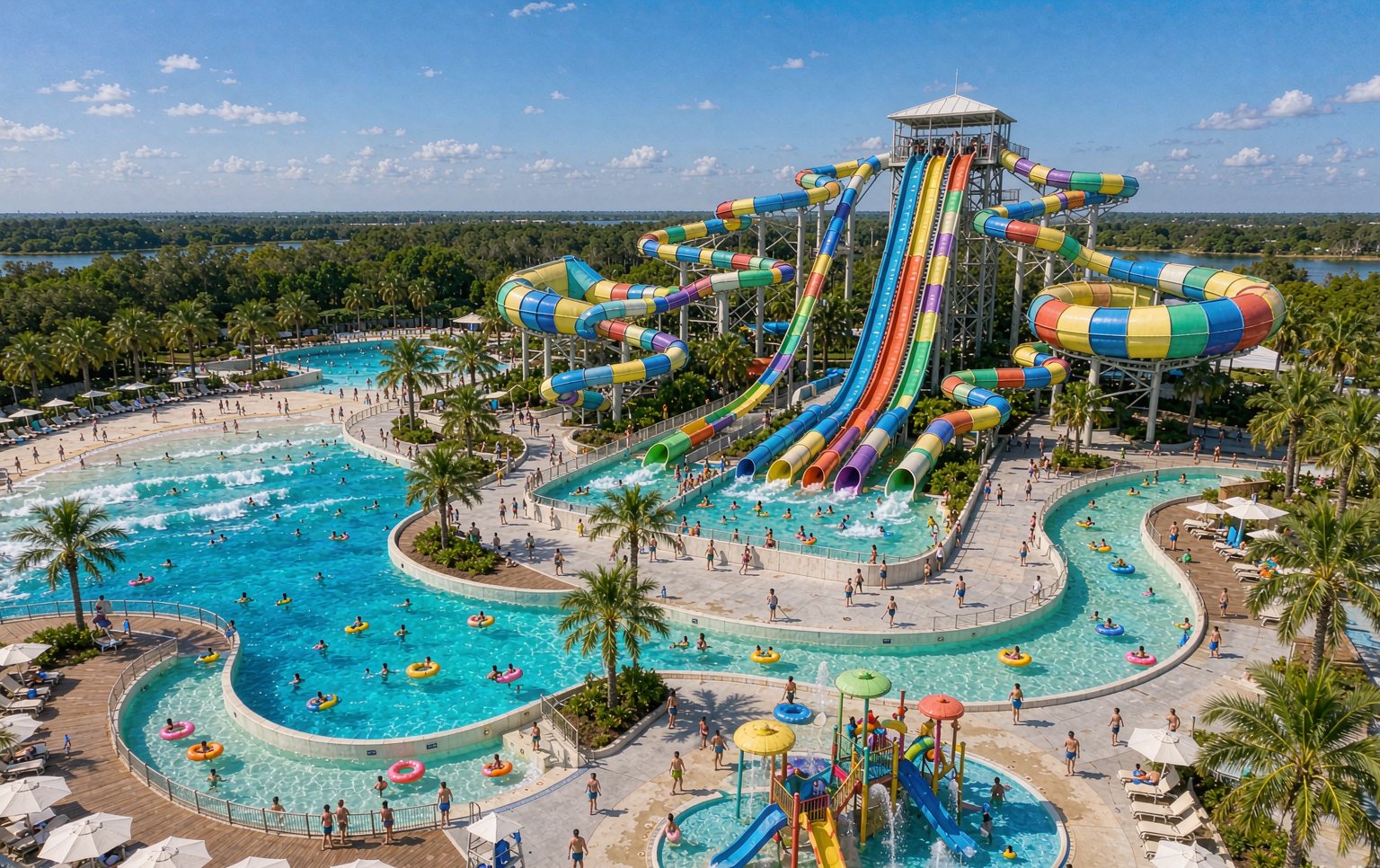
Planning water park equipment is less about picking the tallest slide and more about balancing four budget lines. These are slides, wave and play systems, circulation equipment, and civil works. For a mid-sized outdoor park, attractions typically absorb 45–60% of capital spend, while pumps, filtration and electrical works quietly take another 20–30%. This guide gives you an indicative budget framework, a cost-share table and the site questions to settle before you request a quotation. All figures are indicative ranges — confirm with a formal quotation.
Why the water park equipment budget decides the project
Water parks fail on cash flow more often than on guest demand. A park can open on time and still struggle if the operator underbudgeted pumps, filtration or spare parts. Those items never appear in a slide brochure, yet they run every operating day.
Budget planning should start with the full mechanical scope, not with a wish list of attractions. Demand is durable when families can plan repeat visits around weather and school holidays. The real task is matching that demand to a ride mix that handles peak queues without doubling capital cost.
A written budget also strengthens your financing conversation. Lenders and municipal reviewers want to see operating assumptions, not just a supplier brochure. Show them the turnover rate, the staffing plan and the replacement cycle for wear parts. Those details prove you have priced the park as a business, not as a collection of rides.
What the equipment package actually includes
Comparison shopping is hard because suppliers draw scope boundaries differently. A quotation may look complete while excluding the pumps or the control panel. Use the same four-part breakdown for every bid.
- Slides and towers. Fiberglass flumes, support structures, stairs, platforms and launch decks. Check whether the tower finish and handrails are included.
- Wave and play systems. Wave generators, children’s aqua structures, splash pads, dumping buckets and interactive water features.
- Circulation and treatment. Pumps, filters, chemical dosing, heaters, pipes, valves and the plant-room control panel.
- Site works. Foundations, slab, drainage, water supply, power distribution, fencing and signage. Most suppliers price these separately.
Ask every supplier to price the same boundaries. A lower headline number often means the plant room or the foundations were left for you to buy elsewhere.
A useful next step is to turn the four groups into a spreadsheet with one row per item and one column per bidder. Add a column for exclusions. Exclusions are where budget overruns start, and they are easier to spot side by side than in three separate PDF files. Keep the same sheet through negotiation so each revision is visible.
Cost breakdown: where the money goes
The table below shows a typical allocation for a new outdoor water park. Percentages are shares of the equipment package, not of the whole investment. Land, buildings, roads and financing sit outside it.
| Line item | Typical share | What drives the number |
|---|---|---|
| Slides, towers and flumes | 30–45% | Height, length, tube count, fiberglass thickness and tower steelwork |
| Kids’ aqua play and splash zones | 10–20% | Footprint, feature count, material and anchor system |
| Wave pool and wave machine | 8–18% | Pool area, wave height and generator type |
| Pumps, filters and dosing | 15–25% | Flow rate, turnover time, filtration grade and automation |
| Piping, valves and controls | 5–12% | Run length, pipe diameter and control-room scope |
| Installation and commissioning | 5–10% | Crew size, crane access and local labour rates |
Indicative range — confirm with a formal quotation. A park with a large wave pool will sit at the top of the treatment band. A compact family park with one play tower will sit at the bottom.
Read the shares as relationships, not fixed prices. If a supplier quotes a very low treatment line, the likely explanation is a smaller filter package or a shorter pipe run. Both choices reduce today’s invoice and raise tomorrow’s operating cost. Ask for the design turnover time in hours, then compare it against your expected peak attendance.
Choosing the slide mix by throughput and footprint
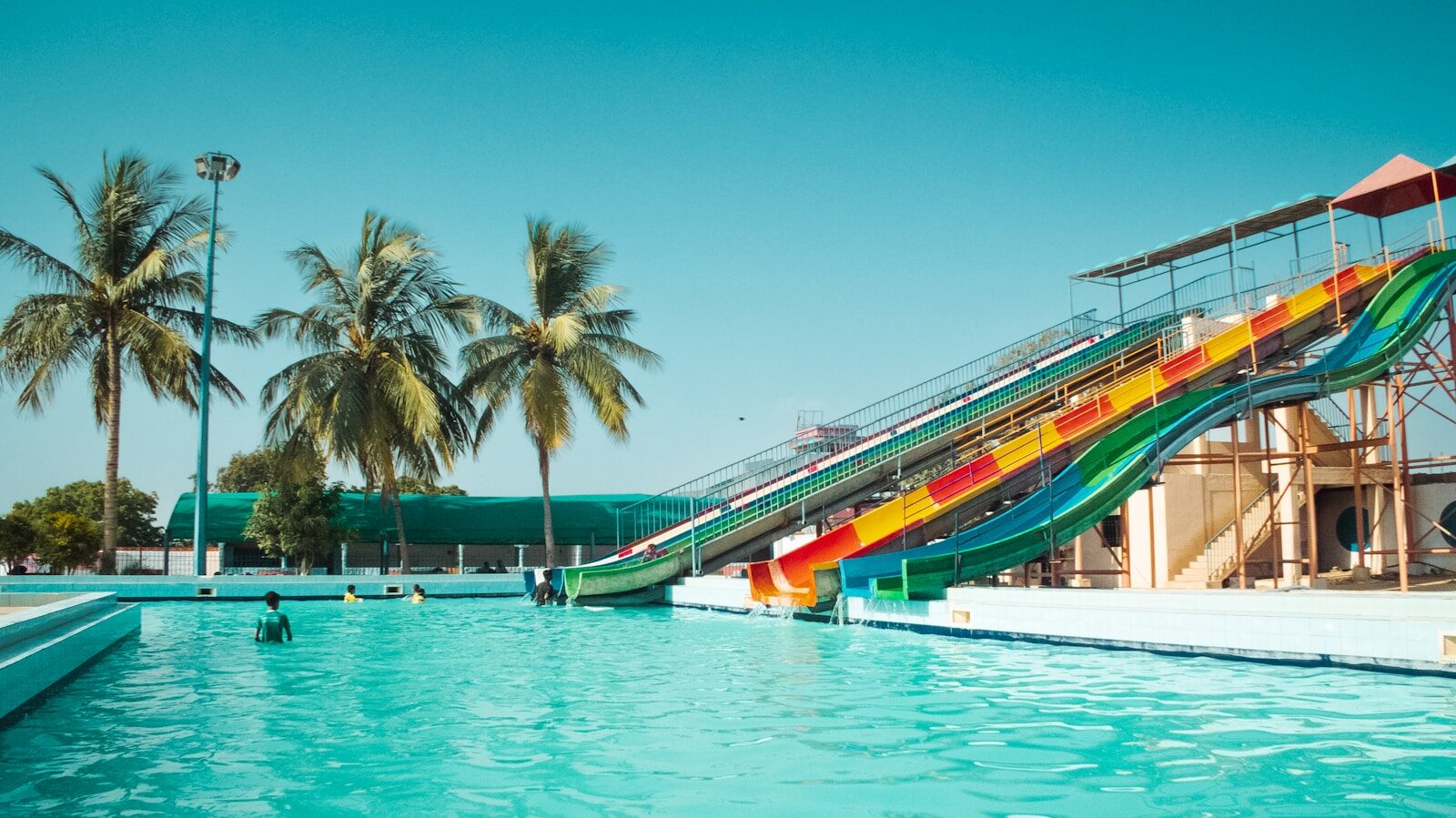
Start with the number of guests you need to move per hour, then work backwards to slide count. A family raft ride can move 300 to 600 riders per hour when staffing and loading are well organised. A single body slide usually moves far fewer.
Space is the second constraint. Bowl and funnel rides need generous fall zones and tall towers, while a compact slide tower can serve a small site. If your plot is tight, prioritize two or three complementary slides over one signature ride with a long queue.
Mix age groups deliberately. A park with only high-thrill slides loses the family segment during the busiest afternoon hours. Add one gentle flume and one shallow play zone for every two intense rides. This balance raises dwell time and spreads demand across the site, which reduces queue pressure at peak periods.
Wave systems, kids’ zones and treatment costs
Wave pools create a strong visual draw, but they demand the largest volume of treated water on site. Size the wave machine to the pool and to the filtration plant at the same time. A powerful generator behind an undersized filter will only produce cloudy water.
Children’s aqua structures deliver high dwell time per square meter. They suit family parks and resort clubs where adults stay nearby. Anchoring, drainage and non-slip surfacing matter more here than the number of features.
Common mistake: budgeting treatment as an afterthought. Turnover rate, backwash water and chemical consumption keep costing money long after installation. Ask for the operating consumption figures in writing before you sign.
Plan for staffing as well as hardware. A wave pool needs trained attendants, and a children’s structure needs constant supervision. Those wages belong in the same model as the equipment price. A cheaper machine that needs three extra staff can cost more over five seasons than a better specified one.
Site, utilities and civil requirements
Most delays come from site conditions, not from manufacturing. Check access roads for heavy trucks, crane turning space and ground bearing capacity before ordering a tall tower. A headline price means little if the slab has to be redesigned.
Power and water supply deserve the same attention. Confirm the connected load, the standby generator capacity and the incoming pipe size. Local rules may also require fencing, life-saving equipment and separate changing facilities.
Drainage is the quiet cost driver. A site with poor soil or a high water table needs a different slab and a stronger retention system. Ask a local civil engineer to review the drawings before the equipment order becomes binding. That single review can prevent a redesign after the foundations are already poured.
Indicative budget by park size
The second table gives a planning envelope by site area. It assumes an outdoor park with a mix of slides, a children’s zone and a standard filtration plant. It excludes land, buildings and financing costs.
| Site area | Typical attraction mix | Indicative equipment budget |
|---|---|---|
| 2,000 m² | Slide tower, splash pad, small pool | USD 350,000–700,000 |
| 5,000 m² | Three to five slides, wave pool, kids’ zone | USD 900,000–1,800,000 |
| 10,000 m²+ | Signature rides, large wave pool, full play village | USD 2,200,000–5,000,000+ |
Indicative range — confirm with a formal quotation. Climate, local labour costs and imported equipment duties can move these figures by a wide margin. Always budget a contingency for civil works.
Revenue and payback math you can run yourself
Keep the model simple. Daily revenue equals visitors times ticket price, plus secondary spend. Annual gross margin equals daily revenue times operating days times your margin rate. Payback months equal equipment cost divided by monthly gross margin.
For example, assume 400 visitors a day at USD 18 per ticket, open 150 days a year. That is USD 1,080,000 in annual ticket revenue before secondary spend. If the equipment package costs USD 900,000 and net margin is 30%, monthly margin is about USD 27,000. Simple payback is roughly 33 operating months, before financing and tax.
Run the same calculation for each ride mix you are considering. Our amusement park ROI model gives a wider park-level view when you are comparing several attractions at once.
Add secondary spend before you make a final decision. Food, lockers, towels and photo sales often contribute a meaningful share of gross margin. Seasonality matters too: a park open 150 days a year carries the same fixed equipment cost across fewer trading days. Model a weak season alongside a strong one.
Delivery, installation and commissioning
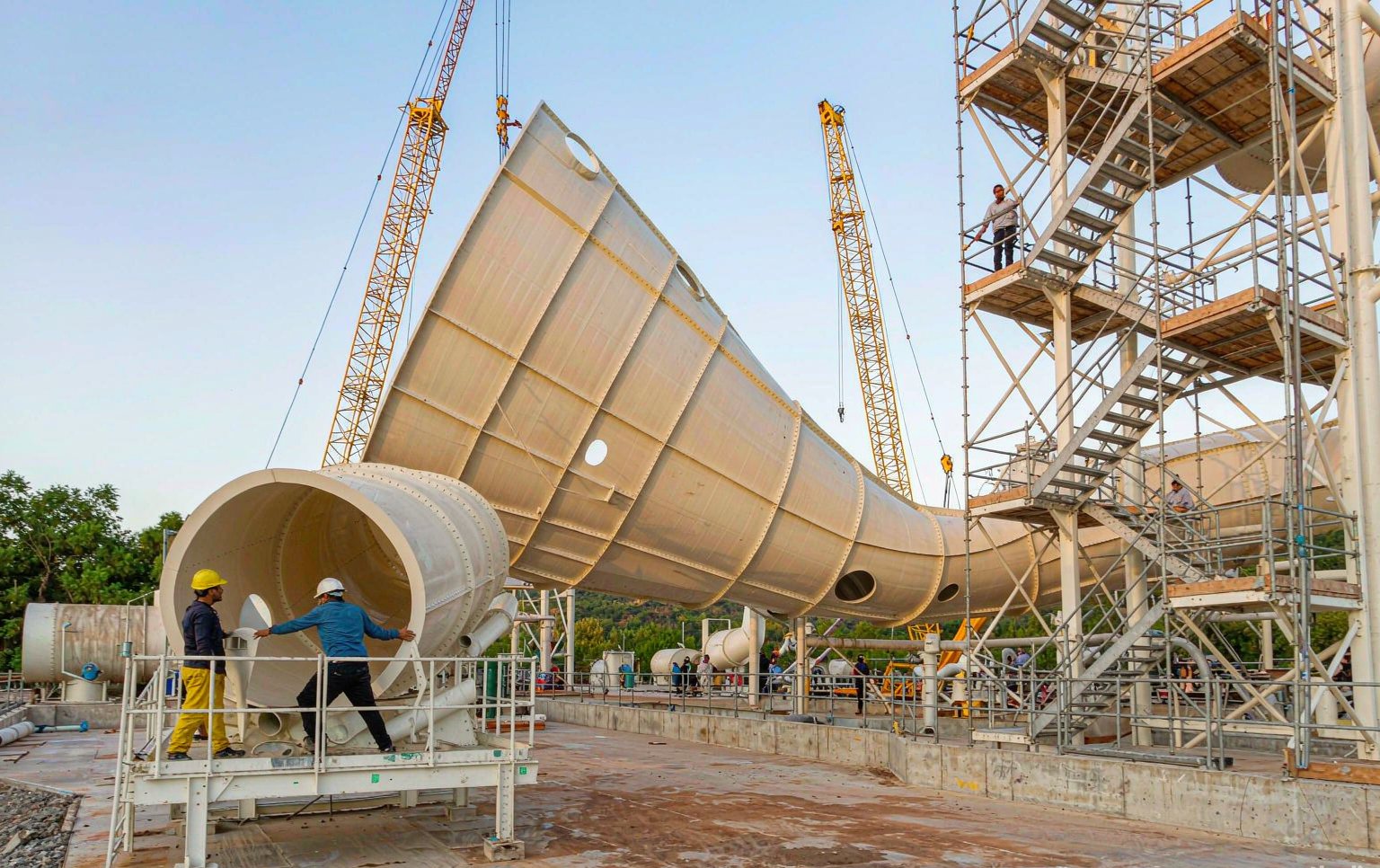
Slide flumes ship in sections, so container planning starts at the design stage. A 40HQ container holds a surprising amount of fiberglass, but towers and large shells often need open-top or flat-rack units. Confirm the loading plan before you book freight.
Allow time for civil works, assembly, leak testing and local inspection. Commissioning is not a formality: water balance, pump curves and ride clearances all need checking on site. Keep at least one installer on hand for the first weeks of operation.
Ask for a wear-parts kit with the shipment and schedule operator training before opening day. Filters, seals and ride surfaces need routine attention, and waiting for an international replacement part costs operating days. A short training session paid for in the contract is cheaper than a rushed service call later.
How to compare supplier quotations
Use this checklist when two bids sit on your desk. It turns a price comparison into a scope comparison.
- Confirm the exact list of rides, features and spare parts included.
- Ask for pump and filter specifications, not just a line item for “water treatment”.
- Check who supplies the control panel and the chemical dosing system.
- Verify what installation, training and commissioning support are priced in.
- Request the expected annual consumption of chemicals and electricity.
- Confirm warranty terms, response times and the spare-parts stock list.
- Ask which local inspections or certifications the supplier can support.
Transparent suppliers welcome these questions. For the product side of the same decision, read our water park equipment for sale overview. For wider park scope, see the complete amusement park equipment package and custom theme park design services.
FAQ
How much does water park equipment cost for a small park?
For a 2,000 m² family site, an indicative equipment budget runs from USD 350,000 to 700,000. That covers a slide tower, a splash area and basic treatment. Confirm with a formal quotation.
Which part of the budget is most often underestimated?
Water treatment and civil works. Pumps, filters, piping and drainage can take a quarter of the package. Under-sizing them leads to poor water quality and expensive retrofits.
Can I add slides to the park later?
Yes, if the original design reserves tower load, pipe capacity and electrical headroom. Ask your supplier to document those allowances in the drawings before you sign.
What is the typical lead time for water slides?
Manufacturing often takes two to four months, with freight and installation adding more. Local inspection schedules vary widely, so start that conversation early.
Should I budget for an indoor or outdoor water park?
Outdoor parks cost less to build but depend on season and weather. Indoor parks run year-round and need a larger envelope for HVAC, dehumidification and roofing. Compare both against your local climate and ticket demand.
Planning a bumper car or amusement ride installation?
Send us your site size, expected visitor volume and budget range — our engineering team will reply within 24 hours with a layout sketch and an indicative quotation, no obligation.