If you are shopping for commercial bumper cars for sale, three decisions shape your cost and daily revenue. They are the power system, the track size, and the duty cycle the cars are built for. A typical 15-car ceiling-grid set from a Chinese manufacturer lands between USD 55,000 and 95,000 FOB, before freight and installation. A 10-car battery-powered set can start closer to USD 25,000 — but it will carry fewer riders per hour.
This guide breaks down what each option costs. It also covers the site requirements buyers miss and a payback model you can run with your own ticket price.
Why bumper cars still earn in 2026
Bumper cars are one of the few attractions that appeal to teenagers and parents at the same time. The ride is social, mildly competitive, and does not require a height threshold that excludes younger children when a parent rides along.
Operationally they are forgiving. A cycle runs 3 to 5 minutes, loading and unloading takes another 2 to 3 minutes, and one attendant can supervise a full track. That gives you a high rider-per-staff ratio, which matters more than headline capacity when labour is your second-largest cost line.
They also scale. A 10-car track in a mall atrium and a 30-car track in a regional park use the same technology. You can start small and add cars later without replacing the system. Specify the ceiling grid or floor grid with spare capacity from the start.
If you are still sizing the overall investment, run your visitor and ticket assumptions through our amusement park ROI model first. Bumper cars are usually one line in a larger equipment budget. Park-level numbers decide whether a single ride can carry the capital cost on its own.
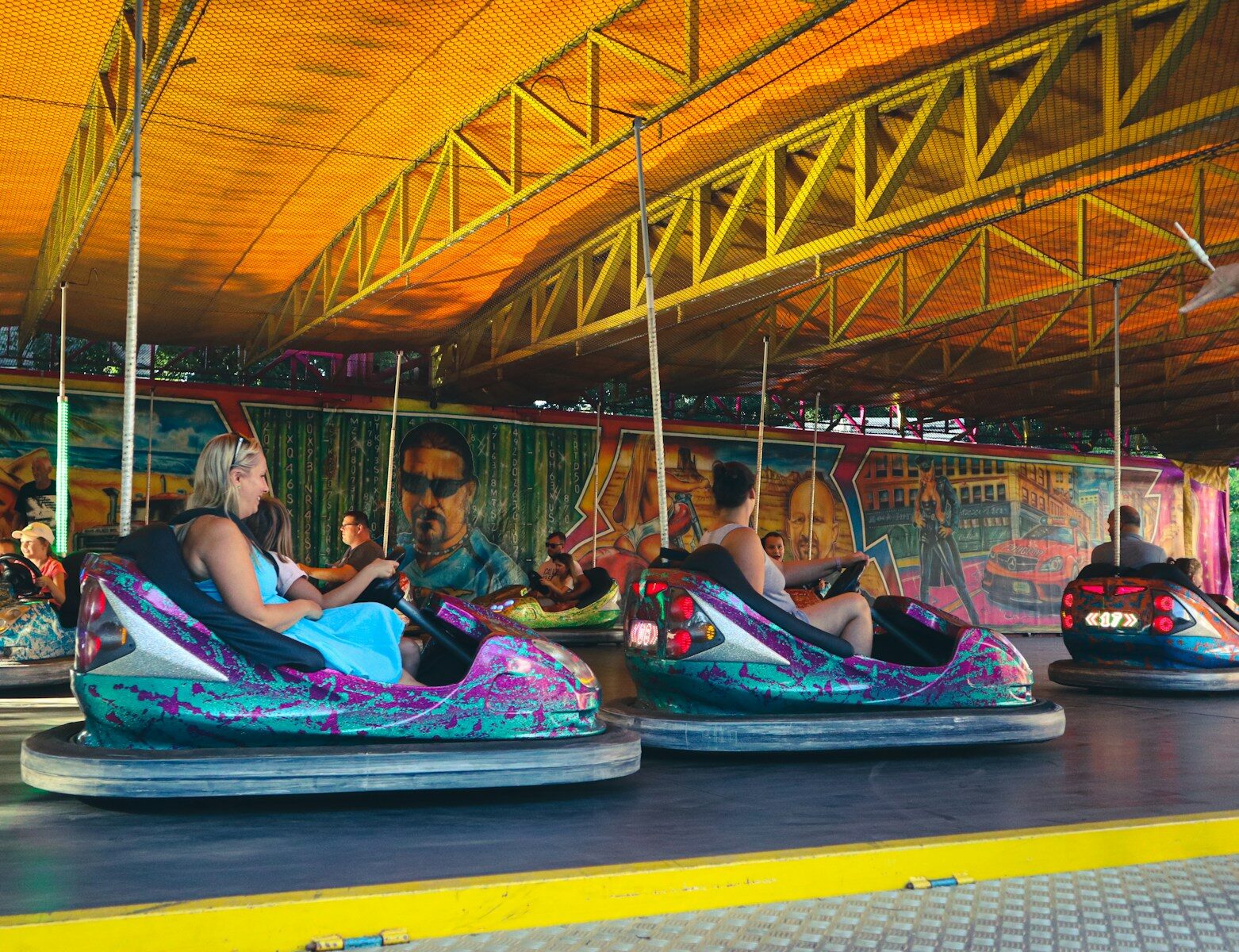
Three power systems, three different businesses
Ceiling-grid (overhead conductor) bumper cars
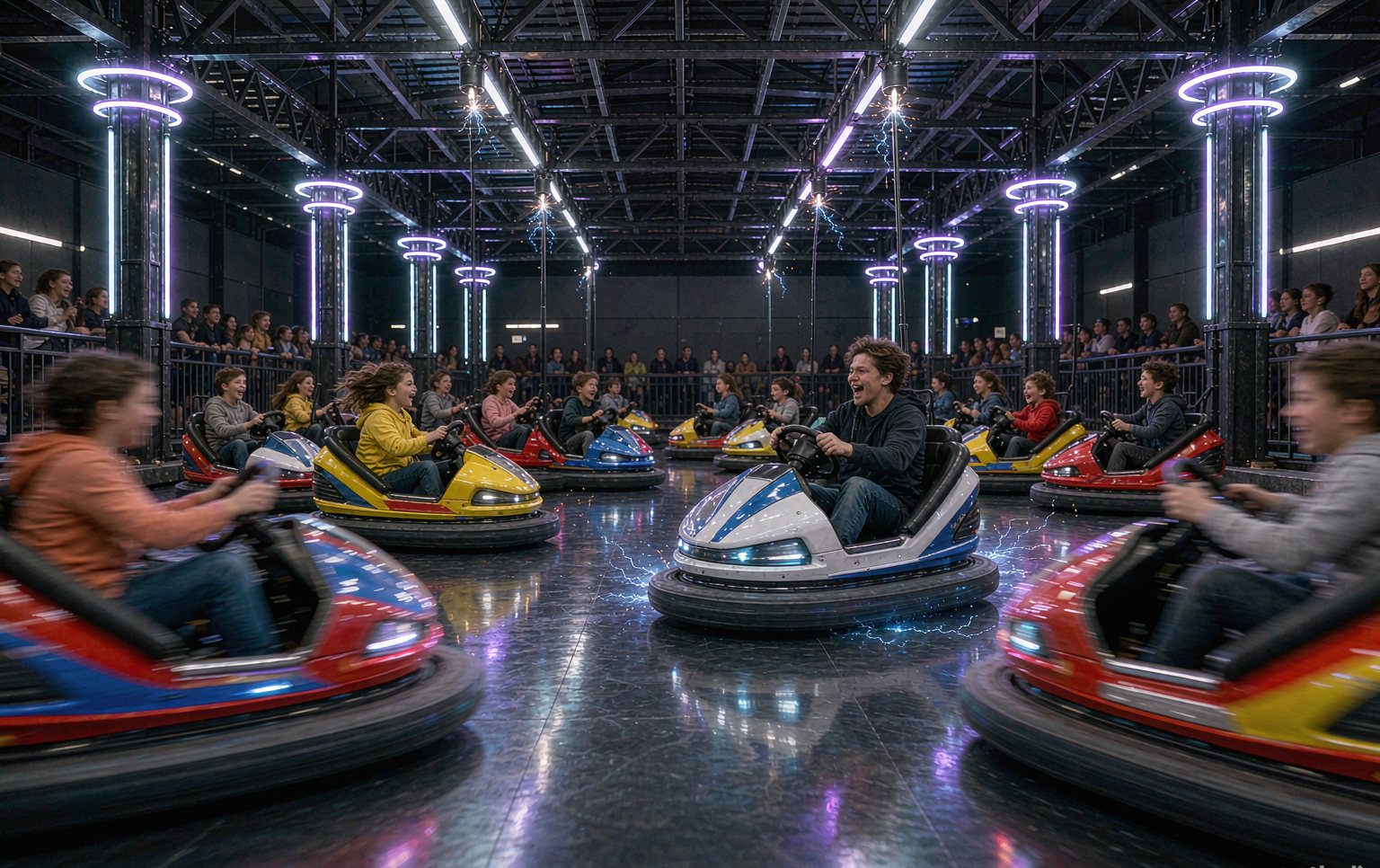
Power is picked up from a conductive grid built into the ceiling, usually at 90–110V DC or 48V depending on the design. Cars are unrestricted across the floor, so the ride feels fast. No floor infrastructure needs digging up. You only need a steel grid at a defined height.
This is the default choice for indoor parks and the system most buyers mean when they search for commercial bumper cars. It requires a real ceiling structure and a higher capital cost per car.
Floor-grid bumper cars
Power comes from alternating strips embedded in the floor, with an insulated floor finish on top. Cars are typically cheaper per unit and the ceiling requirement is relaxed, which makes floor-grid attractive for buildings with low clearance or existing concrete slabs.
The trade-off is the floor itself. The strip layout must be installed correctly, and the floor must stay dry and clean. Any renovation later means opening the floor again.
Battery and inflatable bumper cars
Battery cars run free of any grid, usually with a 6 to 10 hour pack and a charging rotation. Inflatable bumper cars are the cheapest entry point and are common in rental operations, family events and small FECs. Both are slower and carry fewer riders per hour than grid systems, but they need almost no infrastructure.
| System | Typical cars per set | Indicative price per car | Best fit |
|---|---|---|---|
| Ceiling grid | 10–30 | USD 3,500–6,500 | Indoor parks, high throughput |
| Floor grid | 10–25 | USD 2,800–5,200 | Low-ceiling buildings, retrofits |
| Battery | 6–15 | USD 1,800–3,500 | Malls, events, flexible layouts |
| Inflatable | 6–20 | USD 900–2,200 | Rental, seasonal, low budget |
Indicative ranges only — final pricing depends on shell design, motor rating, controller brand and order quantity. Confirm with a formal quotation.
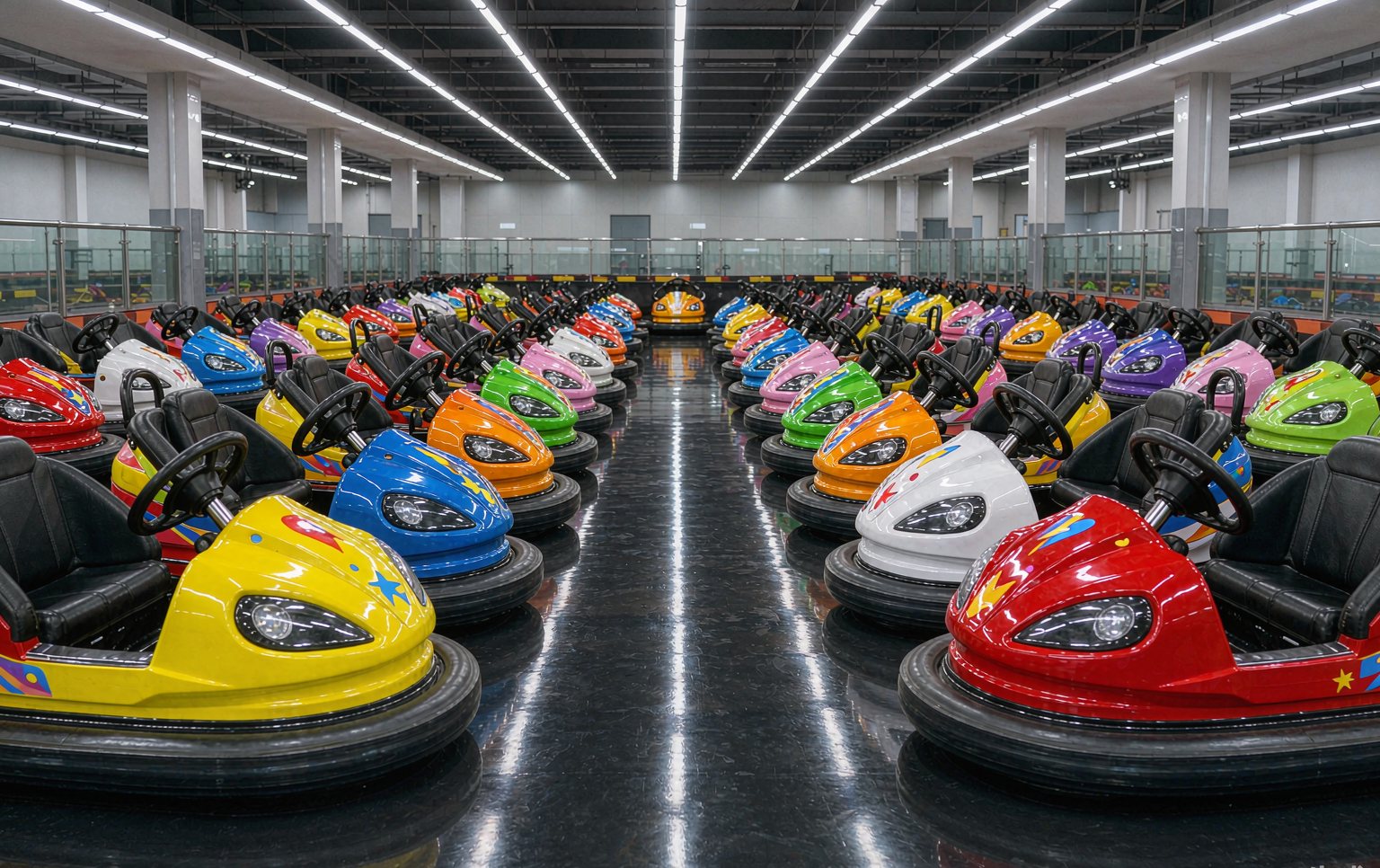
Before you compare commercial bumper cars for sale quotes
Buyers often compare quotes car-by-car and assume the difference is margin. In practice the gap comes from five components:
- Shell and body. Hand-laid fiberglass with gel coat versus cheaper chopper gun shells. This is where most visual quality and repairability come from.
- Chassis and motor. Motor rating determines acceleration and how the car behaves with two adults aboard. Underpowered cars overheat in summer.
- Controller and safety board. Programmable speed limits, soft-start, collision cut-off and fault codes. Cheap controllers fail first and are the most common cause of downtime.
- Grid and power supply. The ceiling grid, conductor rails, insulation and transformer are frequently quoted separately. Ask explicitly.
- Track package. Fencing, bumper rails, floor finish, lighting, sound and the entrance gate. On a 15-car track this can be 10–18% of the total.
A genuinely useful quote lists every one of these lines separately. A single lump-sum figure with no breakdown is a warning sign — you will discover the missing items after the deposit is paid.
Site requirements most buyers miss
Bumper cars are simple to operate and fussy to install. Check these before you commit to a building:
- Clear ceiling height. Ceiling-grid systems typically need 4.5–6 m from floor to the underside of the grid, depending on car height and grid design.
- Floor flatness and load. A level, sealed floor with no drainage slope. Confirm the slab can carry the cars plus the fencing anchors.
- Power supply. Three-phase supply sized to the transformer, plus a dedicated distribution board. Voltage fluctuation is the number one cause of controller faults in emerging markets — budget for a stabiliser.
- Ventilation. Indoor tracks get hot and the smell of rubber and ozone builds up. Mechanical ventilation is not optional in a closed hall.
- Escape routes and fencing. Fencing height, gate position and emergency stops must satisfy your local fire and ride-safety inspector, not just the manufacturer’s drawing.
Send the manufacturer a floor plan with dimensions, ceiling height and available power. A serious supplier will return a layout sketch with car count, track shape and grid layout before you pay anything.
Capacity and queue math
Published capacity figures are almost always theoretical. Use this instead:
Riders per hour = cars × average riders per car × cycles per hour × realistic occupancy
Use 15 cars, 1.7 riders per car, and 6 minutes per cycle. That is about 10 cycles per hour. A well-run track reaches roughly 180–230 riders per hour at 70% occupancy. That is the number to put in your financial model.
Three things quietly reduce it: a single narrow entrance, cash-only ticketing, and attendants who start the cycle only when the track is full. Fixing those is free.
A payback model you can reuse
Here is an illustrative case. Replace every assumption with your own numbers.
- 15 ceiling-grid cars, track package and installation: USD 85,000
- Ticket price: USD 3.00 per ride
- Operating days: 320 per year
- Average riders per day: 400 (a mid-performing indoor park, not a top performer)
- Daily gross: USD 1,200
- Operating cost at 45% (staff, power, maintenance, ticketing fees): USD 540
- Annual net contribution: about USD 211,000
On those assumptions the ride pays back in under six months. That is optimistic for a cold start — most new parks take 12 to 18 months to reach 400 riders a day. Model a ramp-up year at 200 riders per day. Payback stretches to roughly 12 months. That is still healthy for a ride with a 10 to 15 year service life.
The variables that move the result most are ticket price and opening hours, not the purchase price. A USD 10,000 saving on the equipment is worth less than one extra operating hour per day.
Safety and compliance
Ask for the compliance documents before the deposit, not after. Requirements depend on your market. Europe and much of Africa and the Middle East ask for CE marking and an EN 13814 assessment. The United States uses ASTM F2291 documentation. Your insurer will want the same file.
At minimum a supplier should provide an electrical schematic and load and stability calculations. Also request a bill of materials with component brands, a factory test record, and an English operation manual. A CE certificate that names the model you are buying — not a generic company certificate — is the one that counts.
Shipping, installation and lead time
A 15-car ceiling-grid set packs into roughly one 40HQ container including the grid sections and fencing; a 30-car set needs two. Production usually runs 30–45 days after drawing approval, plus 25–40 days of sea freight.
Installation of a 15-car track takes 5–10 working days with a manufacturer technician on site. Budget for his flights, visa, accommodation and a local helper team. These are normally excluded from the equipment price. They are among the most common budget surprises. The full import sequence, including Incoterms and clearance documents, is covered in our guide to buying amusement rides from China.
How to vet a bumper car manufacturer
Most commercial bumper cars for sale come from the same few production regions in China. The real difference is not the city. It is how much of the process a supplier will show you. Use this list before you pay a deposit, and cross-check it against our broader checklist for choosing a reliable amusement ride manufacturer.
- Ask for a video walkthrough of the production line, filmed live — not a stock factory video.
- Request two references in your region and call them.
- Confirm which controller and motor brands are used, then check those brands independently.
- Ask what happens when a controller fails in year three: spare in stock, or 45 days of shipping?
- Check that the CE or test documentation names your exact model.
- Verify the company’s export records and whether they have shipped to your country before.
- Insist on a pre-shipment inspection with photos and a video of the track assembled in the factory.
- Read the warranty: what is covered, for how long, and who pays the freight on a warranty part.
Frequently asked questions
How much does a set of 15 commercial bumper cars cost?
A complete 15-car ceiling-grid set with track fencing and lighting typically runs USD 55,000–95,000 FOB China. Floor-grid sets are 15–25% cheaper; battery sets with the same car count are roughly half. Freight, installation, customs and site works are additional.
How much space do I need for 15 bumper cars?
Plan for a track of about 14 m × 20 m, plus a queuing and ticketing area of 30–50 m². A 10-car layout fits in roughly 10 m × 15 m. Always confirm the final layout against the manufacturer’s drawing.
What is the difference between ceiling-grid and floor-grid bumper cars?
Ceiling-grid cars draw power from an overhead conductor grid, so the floor stays clear and cars move freely. Floor-grid cars pick up power from strips in the floor, which is cheaper but requires an insulated floor and limits some manoeuvres.
Can bumper cars be installed outdoors?
Yes, with a weatherproof track, drainage and a covered grid. Outdoor installations need a UV-resistant shell finish and a rain plan, since wet floors affect both grip and electrical safety.
What maintenance do bumper cars need?
Daily: tyre and bumper inspection, seat belt check, e-stop test. Weekly: grid brush and conductor cleaning, controller fault log review. Annually: motor, chassis and structural inspection with a written record — which your insurer will ask for.
How long does delivery take?
Typically 30–45 days production plus 25–40 days sea freight, then 5–10 days installation. Ordering before your peak season, not during it, is the single biggest schedule saver.
Planning a bumper car or amusement ride installation?
Send us your site size, expected visitor volume and budget range — our engineering team will reply within 24 hours with a layout sketch and an indicative quotation, no obligation.