
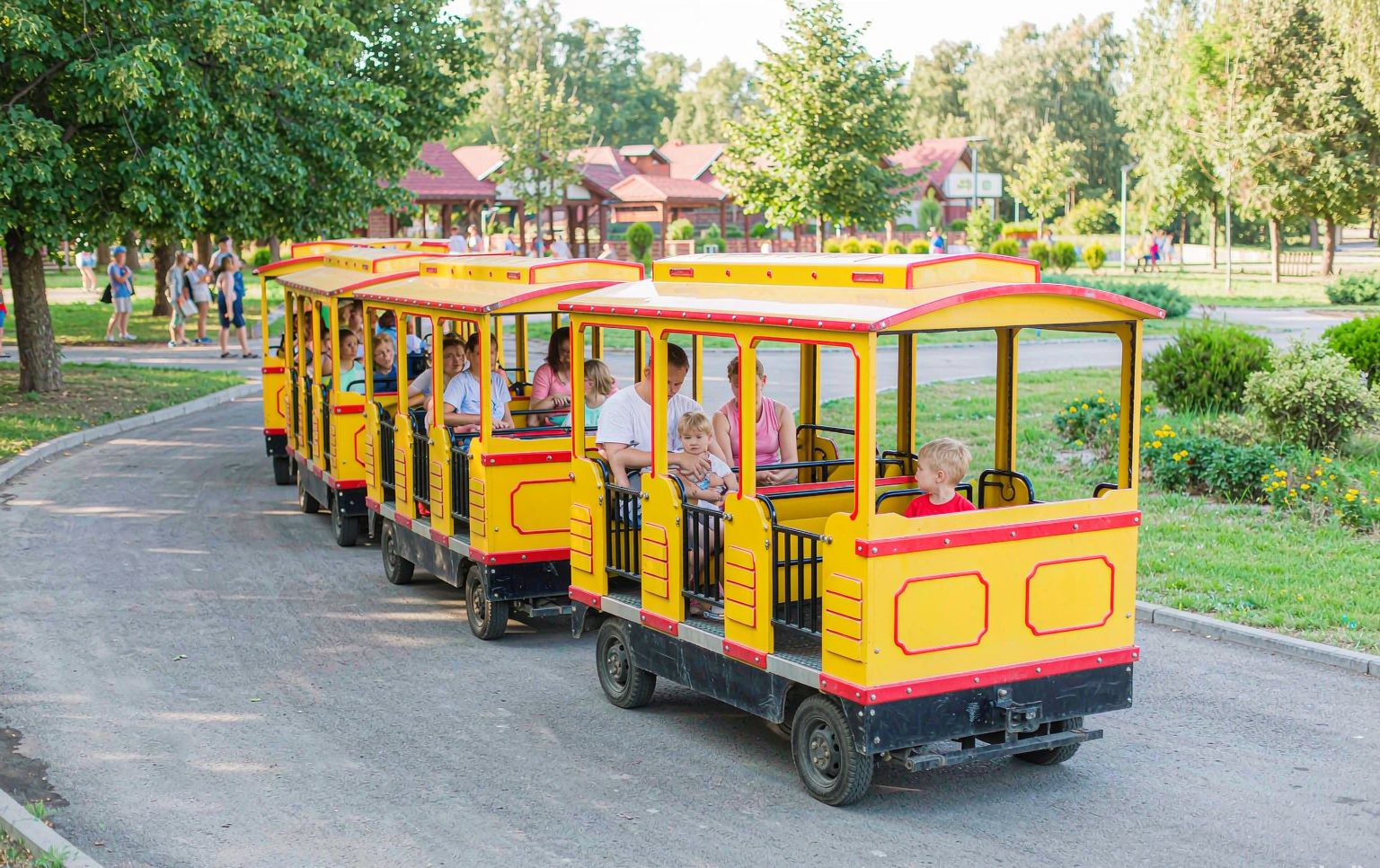
A trackless train for sale is one of the most versatile revenue-generating attractions a mall, park, or resort can buy. Unlike rides that need footings, fencing, or a dedicated plot, a trackless (road) train runs on paved or compacted surfaces, weaves between shoppers and guests, and can be relocated in a single afternoon.
For operators evaluating a kiddie rides investment with fast payback, few assets deliver consistent ticket volume across as many venue types. Ticketing is simple, staffing needs are minimal (one trained driver-operator), and the same asset can serve a summer park loop and a holiday mall program. As a manufacturer with 15+ years of experience, 200+ rides delivered, and installations in 24+ countries across Asia, Europe, the Middle East, South America, Africa, and Oceania, Anxin Amusement supplies road trains engineered for daily commercial duty — not toy-grade replicas.
Trackless Train for Sale: Matching the Model to Your Venue
Not every trackless train suits every site. Before comparing quotations, define which of the three most common buyer profiles you belong to:
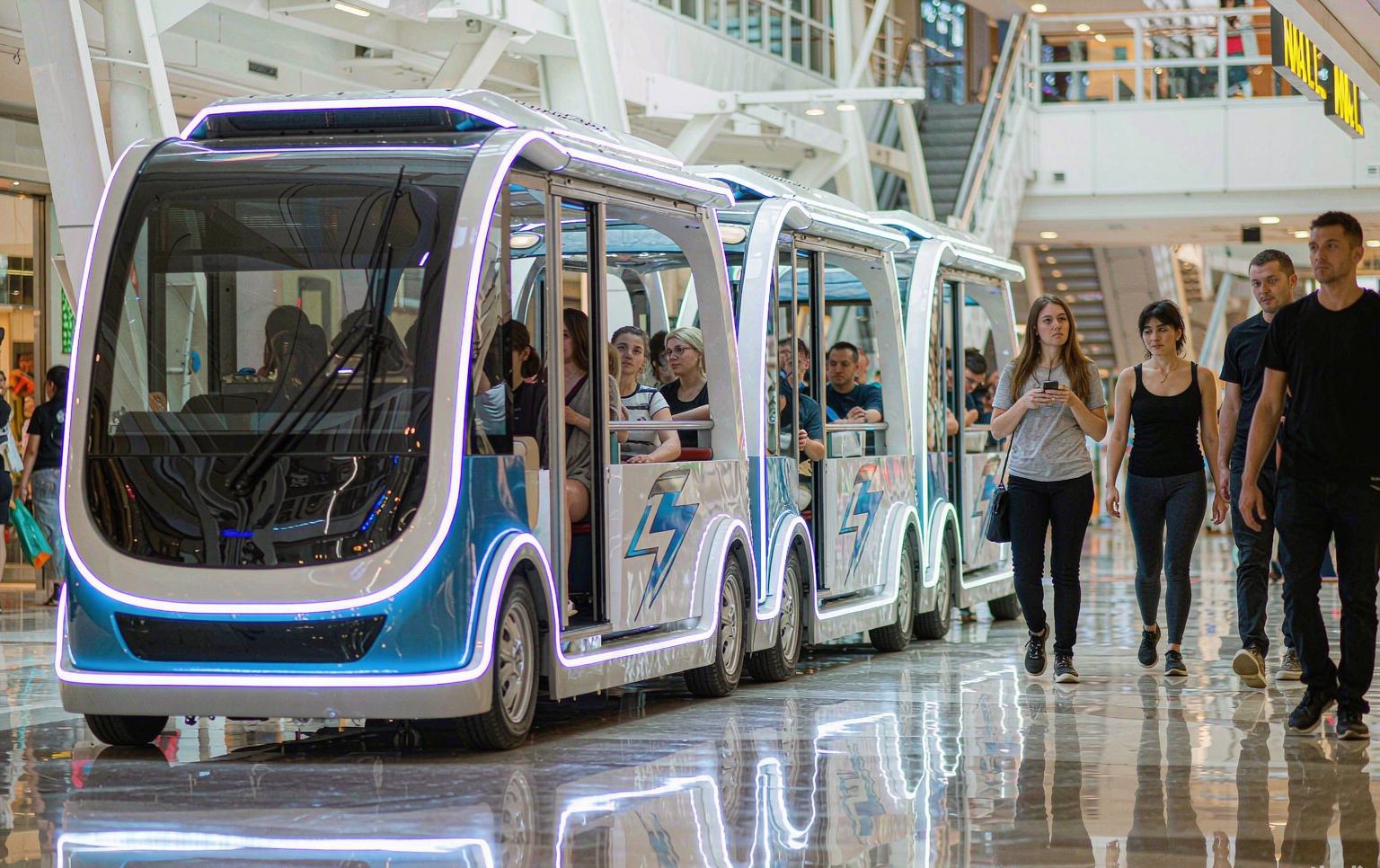
- Shopping malls and airports: Compact locomotives with 14–24 seats, low noise levels, and tight turning radii so the train can navigate corridors, atriums, and parking loops. Indoor models favor lithium battery power, zero emissions, and LED lighting packages that photograph well beside retail displays.
- Amusement parks and city parks: Larger 24–42 passenger configurations with weather canopies, themed liveries, and higher torque for outdoor grades, longer loops, and higher hourly throughput during peak season.
- Resorts, zoos, and scenic areas: Mid-size trains (24–28 seats) with premium finishing, optional wheelchair-accessible carriages, and branding panels that double as moving advertising for hotel packages, tour operators, and seasonal marketing campaigns run by your partners.
When you evaluate a trackless train for sale from different suppliers, ask for the site survey template first. Floor load, aisle width, gradient, and charging-point locations determine which model is realistic long before price negotiations begin. A supplier who skips this step is selling you a problem, not an attraction.
Lithium Battery vs Lead-Acid: Choosing the Power System
The powertrain decision affects running cost, charging downtime, and total vehicle weight. Both options remain available on every trackless train for sale in our catalog, and the right answer depends on your operating schedule:
- Lithium (LiFePO4) battery trains: 6–8 hours of continuous operation per charge, 2–3 hour fast charging, 2,000+ charge cycles, roughly 30% lighter, and no acid maintenance or dedicated battery room. Best for indoor malls, airports, and high-frequency resort shuttles where daytime charging windows are short.
- Lead-acid battery trains: Lower purchase price, widely serviceable parts in almost every country, 4–6 hours of runtime, and 6–8 hour overnight charging. A sensible choice for seasonal parks and venues where the train parks in the same service bay every night.
For venues running two shifts or indoor operations where ventilation is limited, we almost always recommend lithium, even though the upfront premium runs roughly $1,500–$3,000 per set. For seasonal operations that charge overnight anyway, lead-acid still pencils out and keeps spare batteries affordable. Either way, every unit is factory-tested before shipment and backed by our 2-year warranty and lifetime technical support.
One practical note: battery chemistry affects the weight distribution of each carriage, which in turn affects floor loading and tire wear. If you are retrofitting an existing fleet route inside a mall, tell the manufacturer the pavement type and any expansion joints on the route. The right trackless train for sale is the one matched to your pavement as much as to your budget.
Capacity, Gradient and Turning Radius: The Specs That Decide Performance
Brochures are full of numbers, but three specifications determine whether a trackless train will actually work on your site:
- Passenger capacity: Configurations range from 14 seats (locomotive plus one carriage) to 42 seats (locomotive plus three carriages). Throughput at malls typically runs 120–180 riders per hour; park loops can exceed 250 per hour with double boarding points and short loading discipline.
- Gradient capability: Standard models climb 6–8% grades fully loaded; heavy-duty outdoor units handle up to 12%. Anything steeper requires a site-specific drivetrain review, because climbing grades drain batteries faster than any spec sheet suggests.
- Turning radius: Compact indoor trains turn in 3.5–4.5 meters; larger park models need 5–6 meters. Measure your tightest corner with a string and stakes before requesting quotes — this single number eliminates most mismatched models before they waste your time.
Braking systems (electromagnetic plus mechanical drum), speed limits (typically 5–8 km/h), seat belts, and non-slip flooring are standard across all Anxin models, which comply with CE, EN 13814, ISO 9001, and ASTM requirements. When you inspect any trackless train for sale in person, ask to see the brake test and full-load climbing test videos from the factory floor — reputable manufacturers keep both on file.
Themed Liveries and Custom Branding Options
A road train is a rolling billboard as much as a ride. Every unit can be customized with:
- Fiberglass body shells in custom colors, holiday themes, or licensed-style character concepts (subject to IP clearance)
- Vinyl wrap panels for sponsor and mall-tenant advertising — a recurring revenue stream in itself, often covering a meaningful share of the monthly financing cost
- Optional sound systems, LED accent lighting, smoke effects, and faux steamstacks that make the train visible from across a plaza
- Open-side carriages, canopy carriages, or fully enclosed weatherproof carriages
Our in-house design team produces 3D renderings before production, so you approve the look before a single mold is cast. For fully bespoke concepts that go beyond paint and graphics, see our custom amusement rides program.
Trackless Train Price Guide: What to Expect in 2026
Pricing depends on seating count, power system, and theming depth. The table below shows indicative bands for a new trackless train for sale, ex-works China, configuration dependent:
| Configuration | Capacity | Power | Indicative Price (USD) |
|---|---|---|---|
| Economy indoor train, 1 carriage | 14–20 seats | Lead-acid | $9,000 – $16,000 |
| Standard mall train, 1–2 carriages | 18–24 seats | Lithium | $14,000 – $22,000 |
| Premium themed train, 2 carriages | 24–28 seats | Lithium | $20,000 – $30,000 |
| Large park train, 3 carriages | 36–42 seats | Lithium / lead-acid | $28,000 – $40,000 |
| Custom themed flagship | 28–42 seats | Lithium | $35,000 – $40,000+ |
All figures are indicative, ex-works, and configuration dependent. Shipping (FOB/CIF), import duties, and on-site installation are quoted separately. Compared with a track-based kiddie train, the trackless format saves the entire cost of rails and ground works — often $10,000–$30,000 on its own. Budget separately for spare battery sets, a weather cover, and local registration or inspection fees where applicable.
What actually moves a quote from one band to another? Carriage count is the biggest lever, since each additional fiberglass carriage adds structure, seating, axles, and brake hardware. The second lever is theming depth: a single-color economy shell costs far less than a multi-mold character locomotive with hand-painted detailing. Finally, power and control components — brushless drive motors, smart chargers, and PLC-based diagnostics — add cost on day one but reduce downtime over a five-year operating life. When you compare any trackless train for sale, normalize quotes to the same carriage count and power spec before judging the price.
Payment Terms and Lead Times
Ordering a trackless train for sale from Anxin Amusement follows a straightforward B2B process refined over hundreds of export projects:
- Payment terms: 30% deposit by T/T to begin production, 70% balance before shipment. L/C is available for established buyers and larger fleet orders.
- Lead time: Standard models ship in 25–45 days; custom-themed trains in 35–60 days, depending on theming complexity and mold work.
- Shipping: Locomotives and carriages are export-packed in steel frames or wooden crates; a complete 3-carriage set typically fits in one 40ft container, and our logistics team prepares full documentation for customs clearance.
- Commissioning: We supply video-guided assembly, operator training, spare parts kits, and — for larger fleet orders — on-site engineer support.
Because production slots fill quickly ahead of holiday seasons, we advise confirming orders 8–10 weeks before your planned launch date. Buyers who order in the low season also lock in pricing before year-end material adjustments.
After delivery, a typical commissioning timeline looks like this: one to two days for unloading and visual inspection, two to five days for assembly and battery installation, and a final day for loaded test runs and driver handover training. Plan your route signs and queue barriers in parallel so the train can start earning the week it arrives. A trackless train for sale that sits unassembled for a month is a month of revenue you will never recover, so agree the commissioning plan with your contractor before the container lands.
Pre-Purchase Checklist for Buyers
Before you commit to any trackless train for sale, run through this checklist:
- Confirmed site route: max gradient, tightest turning radius, floor load, and overhead clearances
- Power system chosen (lithium vs lead-acid) and charging-point locations mapped
- Target capacity and hourly throughput written into the purchase specification
- Theming, livery colors, and advertising panel requirements agreed in writing
- Certification documents (CE / EN 13814 / ISO 9001) and factory test reports requested
- Warranty scope (2 years), spare parts list, and after-sales response terms reviewed
- Payment schedule, delivery window, and commissioning responsibilities contractually fixed in the purchase agreement
- Insurance, local ride-inspection requirements, and driver training arrangements confirmed with your venue or contractor
Frequently Asked Questions
How much does a trackless train for sale cost delivered to my country?
Ex-works pricing ranges from $9,000 to $40,000 depending on configuration. Add sea freight, insurance, duties, and local taxes — typically 15–35% of the equipment value depending on destination. Send us your nearest port and we will quote CIF terms so the landed figure is clear before you commit.
Can a trackless train run indoors inside a shopping mall?
Yes. Indoor models use lithium batteries (zero emissions), run below 60 dB, and are built with a 3.5–4.5 meter turning radius for corridors and atriums. We recommend confirming floor load limits and fire-escape routes with mall management during the site survey, and we can provide engineering drawings to support that approval process.
How long do the batteries last on a full charge?
Lithium trains deliver 6–8 hours of continuous operation and recharge in 2–3 hours. Lead-acid versions run 4–6 hours and need 6–8 hours to recharge. For all-day operation, most operators buy a spare battery set or schedule a midday top-up during the lunch lull.
What maintenance does a trackless train require?
Daily checks cover tires, brakes, lights, and battery charge levels. Scheduled service includes drivetrain lubrication every 3 months and annual brake and frame inspections. Between service intervals, keep tires inflated to spec and store the train under cover to protect the fiberglass and upholstery. Every Anxin train ships with a maintenance manual, spare parts kit, and lifetime technical support from our engineers, who respond within one business day.
Is a trackless train profitable for a small venue?
Very often, yes. At a $3–$5 per-ride ticket and 120+ riders per hour during peak periods, a mid-range model can recover its cost within 6–12 months in a busy mall or resort. Low staffing (one driver-operator) and no track construction keep the total investment among the lowest of any ride category — a key reason so many first-time buyers start with a trackless train for sale rather than committing to a fixed track system that cannot be moved or resold.
Request a Quote from Anxin Amusement
A trackless train is one of the fastest, most flexible attraction investments you can make — and choosing the right manufacturer is the difference between a workhorse and a headache. Anxin Amusement offers CE-certified models from 14 to 42 passengers, lithium or lead-acid power, and full custom theming, backed by a 2-year warranty and delivery experience spanning 24+ countries. Browse our current range of trackless train for sale listings or request a quote today with your site dimensions and capacity targets, and our team will return a detailed specification and pricing within 24 hours.