Kiddie rides for sale are the highest-yield square meter in most family entertainment centers: compact, low-maintenance assets that turn a 40-square-meter corner into a paid attraction. Buying children’s rides is nothing like buying a thrill ride, because footprint, ceiling height, restraint design, and supervision rules constrain what you can legally install. This guide covers ride types, space planning, throughput, price bands, safety standards, payment terms, and lead times so you can request a quote on a specification that survives inspection.
What Buyers Get Wrong About Kiddie Rides for Sale
The most common mistake is treating a children’s ride as a small version of an adult attraction. Speeds are low, but cycle counts are high — a single unit may run 150 cycles on a Saturday — and riders cannot self-evacuate, cannot read warnings, and are often accompanied by adults who assume the ride is harmless. Every design decision follows from that.
The second mistake is sourcing on price alone. A quote that undercuts the market by 30 percent usually reflects thinner steel, a lower-grade control system, or missing documentation. When your inspector asks for load calculations, electrical schematics, and a conformity declaration, that saving evaporates. Serious buyers compare kiddie rides for sale on total delivered cost, including freight, civil works, commissioning, spares, and maintenance labor.
Third, buyers underestimate the site. A ride that fits the floor plan may still fail on ceiling clearance, door access, floor loading, or egress width. Measure before you negotiate, not after the container arrives. Reviewing custom ride solutions early is worthwhile: layout changes at the drawing stage are cheap, and layout changes at installation are not.
Five Ride Types That Anchor a Family Zone
Most successful family zones are built from a handful of proven formats. The five below cover the bulk of inquiries we receive for kiddie rides for sale, and they combine well because each serves a different age band and dwell time.
Mini Carousel
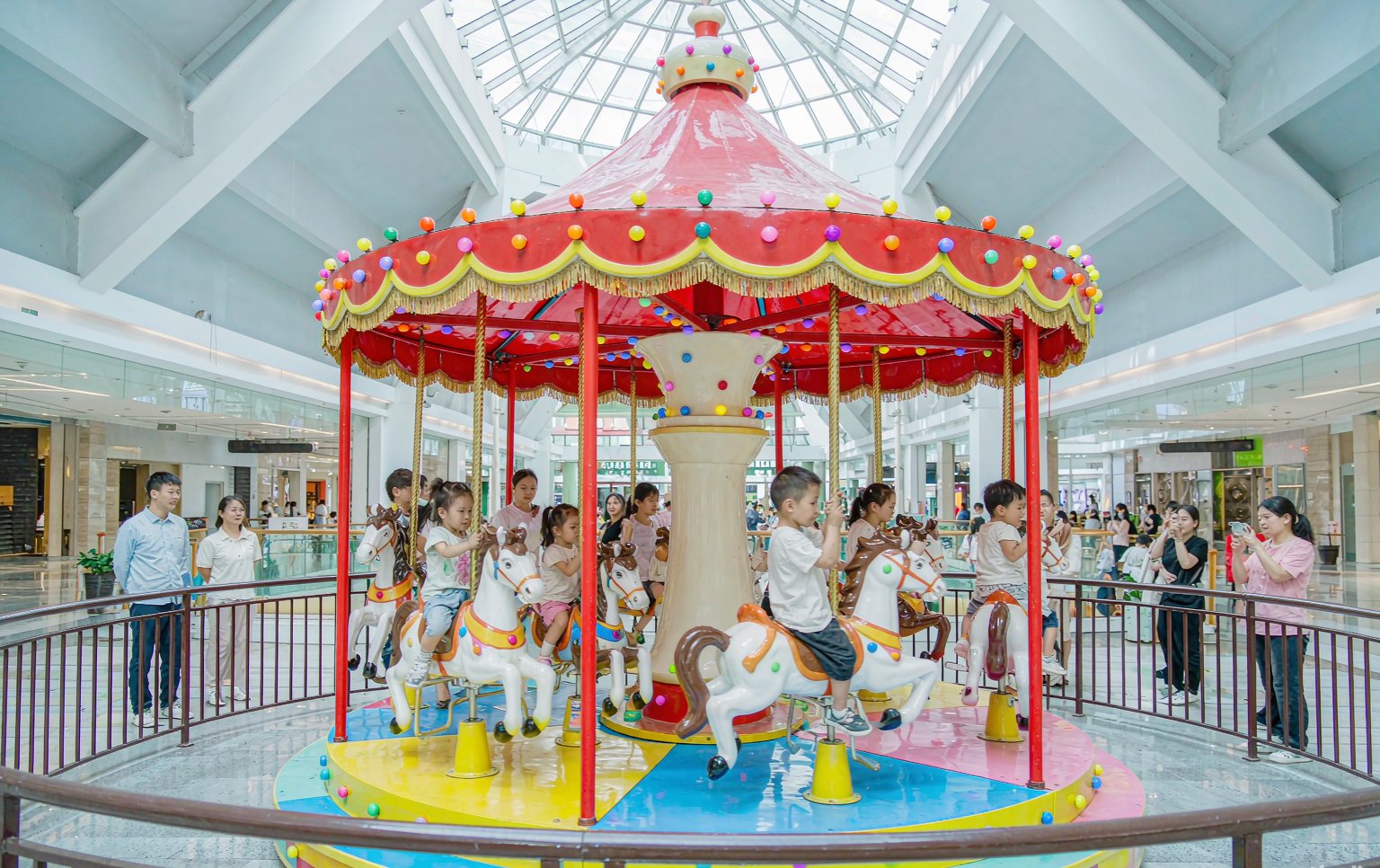
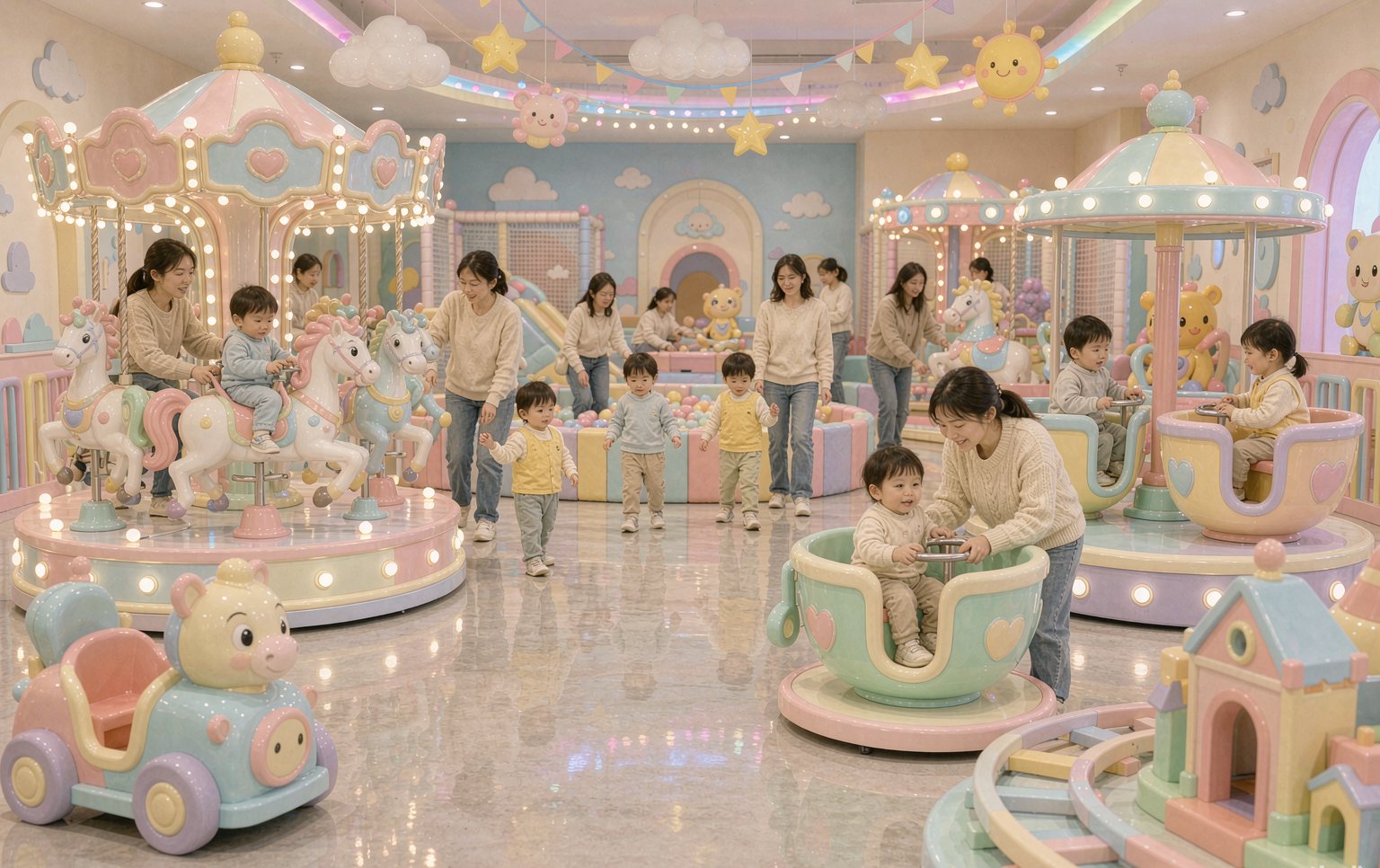
The default anchor. Eight to sixteen seats, a 4 to 6 meter platform, and a two to three minute cycle. Mini carousels are visually reassuring, which matters when a parent decides whether to let a four-year-old ride, and they photograph well. Themed figures, LED lighting, and canopy artwork are the usual customization levers — and where most of the price variation sits.
Teacup and Spinning Cup Rides
Six to nine cups on a rotating platform, with riders controlling their own spin. This format produces the loudest laughter per dollar in the category, but it asks more of the operator: guests must be seated correctly, and the ride needs a clear envelope as the cups swing outward. Throughput is strong because loading happens in parallel.
Mini Train
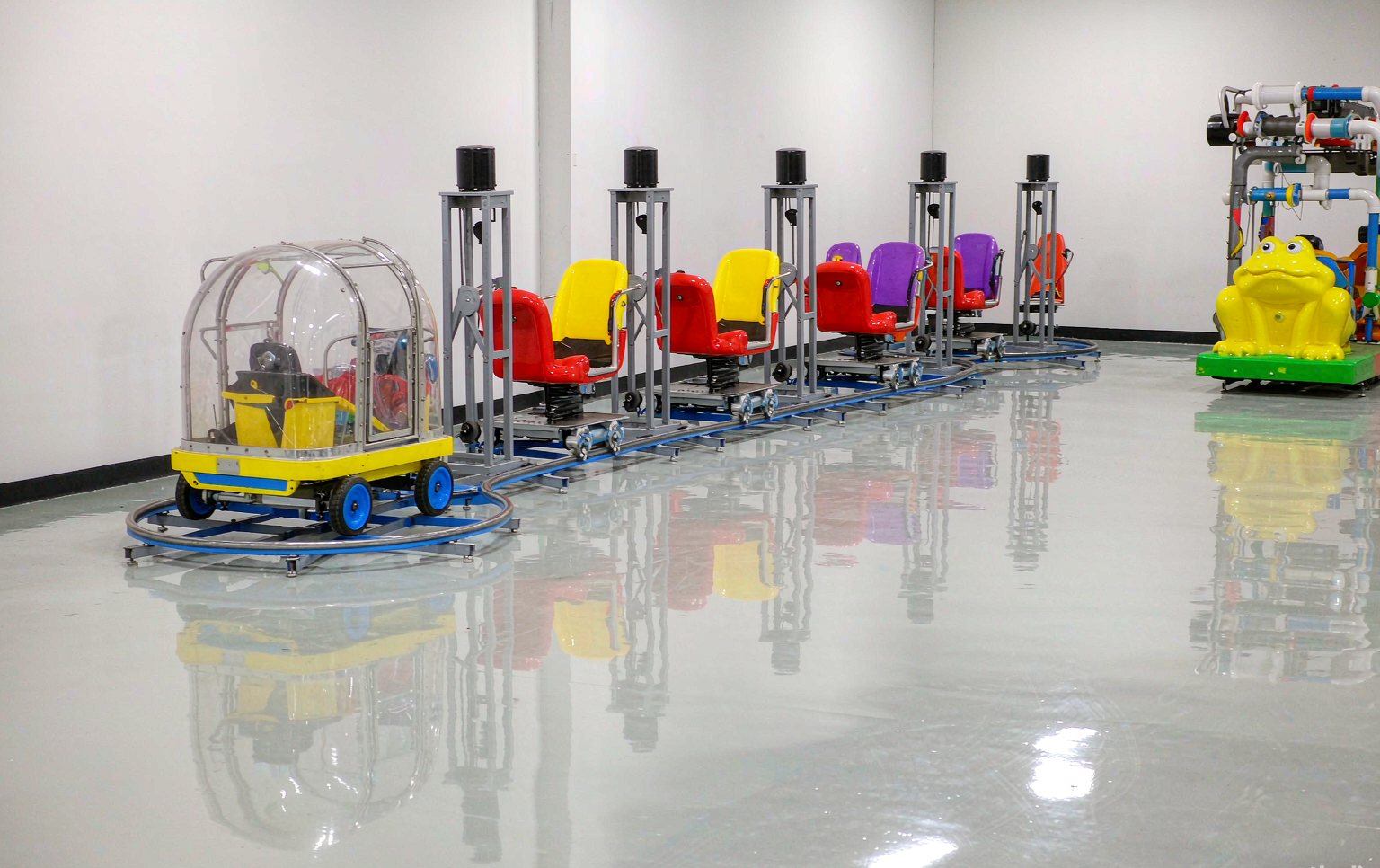
A tracked train with 60 to 200 meters of rail, usually themed as a steam locomotive or safari vehicle. Mini trains double as an attraction and as circulation, drawing families to the back of a site. They need the longest continuous footprint of the five formats, plus a fenced station platform.
Frog Hopper and Mini Drop Towers
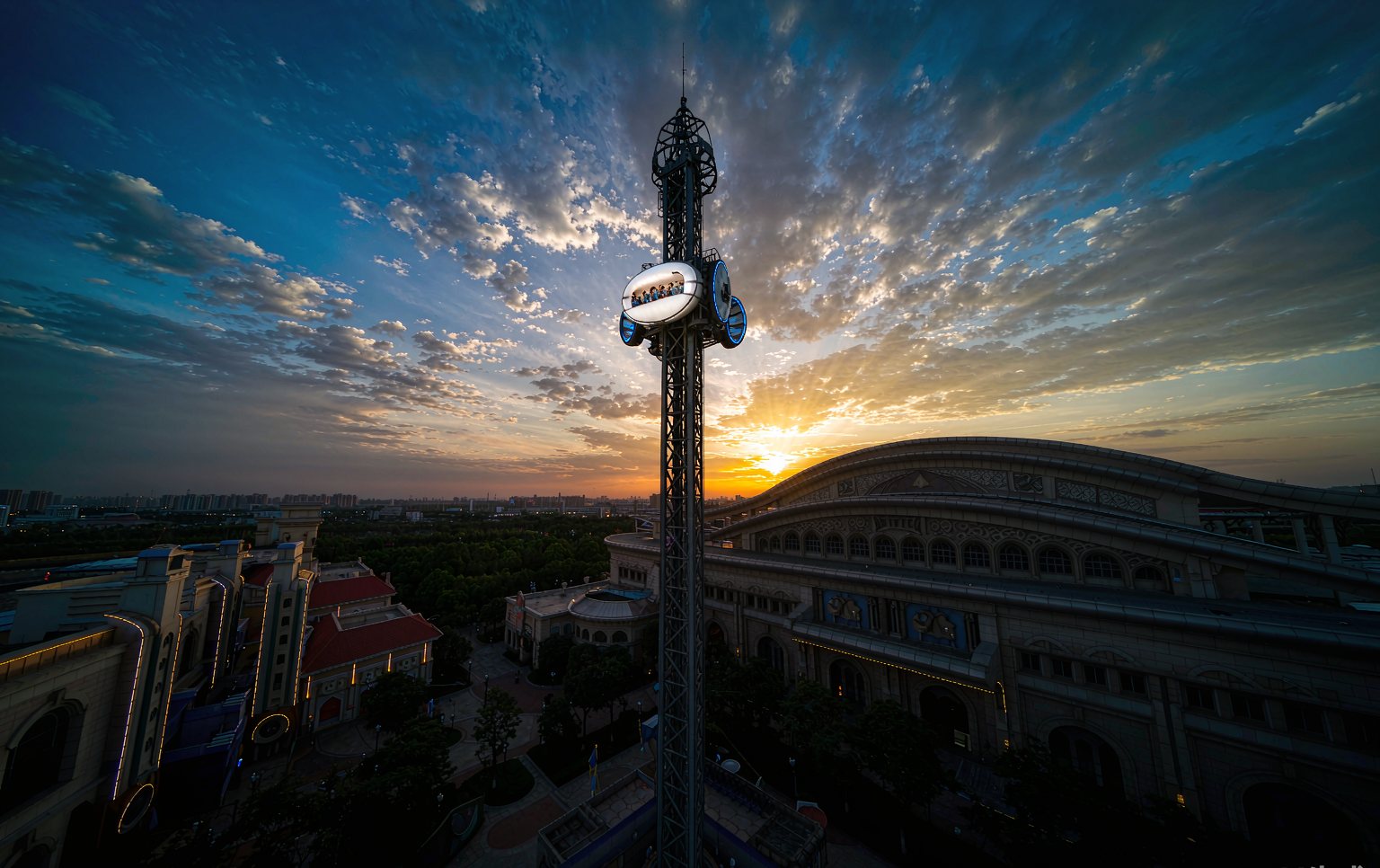
A gentle vertical bounce of two to four meters, with individual lap bars and a soft-stop profile. Frog hoppers deliver the sensation of height without the fear, bridging children who have outgrown the carousel. They are the most space-efficient way to add a vertical element to a flat site.
Soft-Play Combinations
Indoor playground structures paired with two or three powered units — typically a small carousel, a cup ride, and a tracked train. This is what mall operators and FEC developers request most often, because one admission becomes a two-hour visit and supports birthday-party revenue. The soft-play is unpowered and falls outside ride inspection regimes in many jurisdictions; the powered units in the same hall do not.
Site Planning: Footprint, Ceiling Height, and Throughput
Three numbers decide whether a ride is viable before price enters the conversation.
Footprint. Allow the platform plus a clear loading zone, a maintenance access side, and the queue. A practical rule is to take the stated diameter and add 40 to 60 percent, so a 5-meter carousel needs roughly 8 meters of clear floor. Confirm the envelope is free of columns, escalators, and sprinkler risers.
Ceiling height. Indoor units vary widely. Mini carousels typically need 3.5 to 4.5 meters; teacup rides 3 to 4 meters; frog hoppers 5 to 7 meters because of vertical travel plus a safety margin; mini trains 3.5 meters along the full rail loop. Add 300 to 500 millimeters for ducts and lighting track. If your hall is 4 meters clear, the frog hopper is off the table.
Throughput. Riders per cycle multiplied by cycles per hour, discounted 15 to 20 percent for loading inefficiency. A 12-seat carousel with a three-minute cycle plus one minute of loading runs 15 cycles an hour — 180 rides, or $540 at a $3 ticket. That figure, not the purchase price, sets your payback period, which is why operators comparing kiddie rides for sale should demand cycle time in writing rather than accept a catalog number.
Indicative Price Bands for Kiddie Rides for Sale
Prices for kiddie rides for sale cluster into a few bands. All figures below are indicative, ex-works, and vary by configuration, theming, seat count, control system, and destination. Treat them as a budgeting tool, not a quotation.
| Ride type | Typical footprint | Riders per hour | Indicative price (USD, ex-works) |
|---|---|---|---|
| Mini carousel, 8–12 seats | 4–6 m diameter | 120–200 | $9,000 – $28,000 |
| Teacup ride, 6–9 cups | 6–8 m diameter | 150–240 | $12,000 – $35,000 |
| Frog hopper / mini drop tower | 3–5 m diameter | 90–150 | $15,000 – $45,000 |
| Mini train, 60–150 m track | 200–600 m² incl. station | 180–300 | $35,000 – $120,000 |
| Soft-play combo with 2–3 powered units | 200–600 m² | 200–400 (mixed) | $25,000 – $90,000 |
| Themed kiddie coaster | 600–1,500 m² | 250–450 | $120,000 – $400,000 |
Two cost drivers surprise first-time buyers. Theming is the first: a stock fiberglass figure and a custom-molded character can differ by several thousand dollars per unit. Electrical configuration is the second: 380–415V three-phase versus 220–240V single-phase, plus local plug and isolation standards, changes the control panel and adds cost if discovered late. Send your electrical specification with the inquiry.
Safety Standards for Children’s Rides
Children’s rides are not exempt from regulation. In most export markets they fall under the same amusement device frameworks as adult attractions, with added attention to entrapment, fall protection, and supervision. Require CE marking for European destinations, EN 13814 compliance, ASTM F24 alignment for North America, and ISO 9001 for the production system. Then ask for the documents themselves: structural calculations, load test records, electrical schematics, risk assessment, and an operation manual in your language.
Design details matter more than certificates alone. Look for restraints sized to small bodies, gaps that cannot trap a head or limb, rounded edges at child height, non-slip platforms, and guarding that keeps bystanders out of the sweep envelope. Emergency stops should be reachable by an attendant at the boarding point, not hidden in a cabinet. Confirm a maximum rider height as well as a minimum, because a tall ten-year-old in a seat built for a four-year-old is a hazard.
Finally, insist on factory testing before shipment and a witnessed commissioning run on site. Anxin Amusement tests every unit at the factory and includes operator training in delivery, which matters because most incidents in this category trace back to supervision and procedure rather than mechanical failure. Sourcing kiddie rides for sale without a documented training handover leaves you exposed at the first insurance review.
Payment Terms, Shipping, and Lead Times
Standard terms are 30 percent deposit and 70 percent before shipment, against a pre-shipment inspection. On larger family-zone packages, buyers sometimes negotiate 20/60/20 with retention released after commissioning — achievable with established manufacturers, rarely with trading intermediaries. First-time buyers of kiddie rides for sale should also confirm whether spare parts are stocked locally.
Prices are normally quoted FOB, with CIF available to your nearest port. A 12-seat carousel ships in roughly one 40-foot high-cube container; a mini train with 150 meters of track needs two to three containers plus flat-rack space for long rail sections. Confirm who handles unloading, inland transport, and lifting at destination, because that cost sits on your side of the Incoterm.
Lead time for standard units is 25 to 45 days from deposit and drawing approval; custom theming or multi-unit family zones run 35 to 60 days. Add sea freight of three to six weeks plus 10 to 25 days for assembly and commissioning. Work backwards from your opening date and keep a two-week buffer for customs, because a ride that arrives after your soft opening has missed its marketing window. Confirm the 2-year warranty, lifetime technical support, and spare parts supply in the contract.
Procurement Checklist for Kiddie Rides for Sale
Use this list to compare kiddie rides for sale quotes on equal terms. Any supplier who cannot answer all ten items in writing is a risk.
- Clear ceiling height measured at the ride location, including ducts and lighting.
- Clear floor envelope with columns, egress routes, and queue zones marked on a drawing.
- Slab load capacity confirmed by a structural engineer.
- Delivery route checked for door width, lift dimensions, and turning radius.
- Electrical supply matched to the ride’s rated voltage and phase.
- Certification pack listed by document name, with samples provided.
- Cycle time and riders per hour stated in writing, not estimated verbally.
- Spare parts list with prices for the ten most-worn components.
- Installation scope defined: who supplies labor, lifting, and consumables.
- Training and manuals confirmed in your operating language.
For a wider view of available models, browse the family and kiddie ride range before you shortlist, and check the manufacturer’s production background so you know who is actually building the equipment.
Frequently Asked Questions
How much do kiddie rides for sale usually cost?
For a single standard unit, plan on $9,000 to $45,000 ex-works depending on type and theming. A complete family zone with a carousel, cup ride, frog hopper, mini train, and soft-play typically lands between $100,000 and $280,000 before freight and civil works. Ask for a line-item quote rather than a package number, because final pricing depends on configuration.
What is the minimum ceiling height for an indoor children’s ride?
Mini carousels need about 3.5 to 4.5 meters, teacup rides 3 to 4 meters, and frog hoppers 5 to 7 meters. Add 300 to 500 millimeters for suspended services. If your clear height is under 4 meters, focus on carousels, cup rides, and soft-play rather than vertical formats.
Do children’s rides need the same certification as adult attractions?
In most markets, yes. They are regulated as amusement devices and require CE marking or ASTM-aligned documentation, structural calculations, and load test records. Some jurisdictions apply lighter inspection regimes to unpowered play equipment, which is one reason soft-play combinations are popular with mall operators.
Can I open a family zone in a shopping mall?
Yes, and malls are one of the strongest locations for this category because you inherit footfall. The constraints are ceiling height, slab loading, service access for containers, noise, and egress width. Secure landlord approval on the ride envelope and floor plan before you place a deposit.
How long does delivery and installation take?
Standard rides ship in 25 to 45 days after deposit and drawing approval; custom or multi-unit projects take 35 to 60 days. Add three to six weeks of sea freight and 10 to 25 days for assembly and commissioning. A realistic total from purchase order to opening is three to four months, so buyers shortlisting kiddie rides for sale should start the process one season ahead.
Next Step: Request a Quote
The right way to buy is to specify first and price second. Send your floor plan with dimensions and clear height, your target age band, throughput goal, and opening date. A competent manufacturer will return a recommended ride mix, a site layout, and a costed bill of materials — and will tell you which ideas will not fit rather than quietly accepting the order.
Anxin Amusement has spent 15+ years manufacturing rides and complete park solutions, delivering 200+ rides to 24+ countries. Every unit is factory tested, covered by a 2-year warranty with lifetime technical support, and commissioned by our own installation team. If you are evaluating kiddie rides for sale for a family park, FEC, mall, or indoor playground, request a quote with your floor plan and clear height — we will confirm footprint, pricing, and lead time against your actual space.
Ready to specify your family zone? Send your floor plan and clear height to Anxin Amusement for an indicative quotation, a recommended ride mix, and a delivery schedule matched to your opening date.