Thrill rides for sale in 2026 are a very different purchase from the catalog pages of a decade ago. Buyers now compare acceleration profiles, hourly throughput, foundation loads, and certification packages before they ever ask for a number. For a park adding high-thrill capacity, the real question is not which machine looks most spectacular on a trade-show floor, but which one converts capital into repeat visits at the lowest lifetime cost.
This guide is written for owners, operators, and investors who are ready to commit rather than browse. It covers the ride types that dominate the segment, the space and infrastructure each one demands, indicative price bands, certification and installation, commercial terms, and the payback math that decides whether a project clears committee.
Why High-Thrill Capacity Deserves Its Own Budget Line
A headline attraction does something family rides cannot: it resets the park’s positioning. It justifies a premium gate price, drives season-pass upgrades among local residents, and generates the social content that fills the top of the funnel. Operators consistently report the highest per-capita spend in zones anchored by a major high-thrill machine, because the guests who queue for it stay longer, eat more, and buy more photographs.
The trade-off is capital intensity and regulatory scrutiny. A high-thrill unit carries heavier capex, a longer commissioning window, a stricter inspection cadence, and a maintenance regime that must be resourced from day one. Folding it into a general “rides” line item is how projects arrive at installation week underfunded. Treat structure, foundations, electrical capacity, queuing, fencing, signage, and the first spare-parts kit as part of the same package, because they are.
What separates a sound purchase from an expensive lesson is specification discipline. Fix the guest profile, the available plot, and the throughput target before you request a single drawing. Suppliers can engineer around almost anything, but every compromise you leave open becomes a change order later.
The Ride Types Commonly Offered as Thrill Rides for Sale
Most manufacturers’ high-thrill catalogs converge on five archetypes. Each has a distinct footprint, staffing model, and maintenance profile, and each behaves differently inside a mixed-generation park.
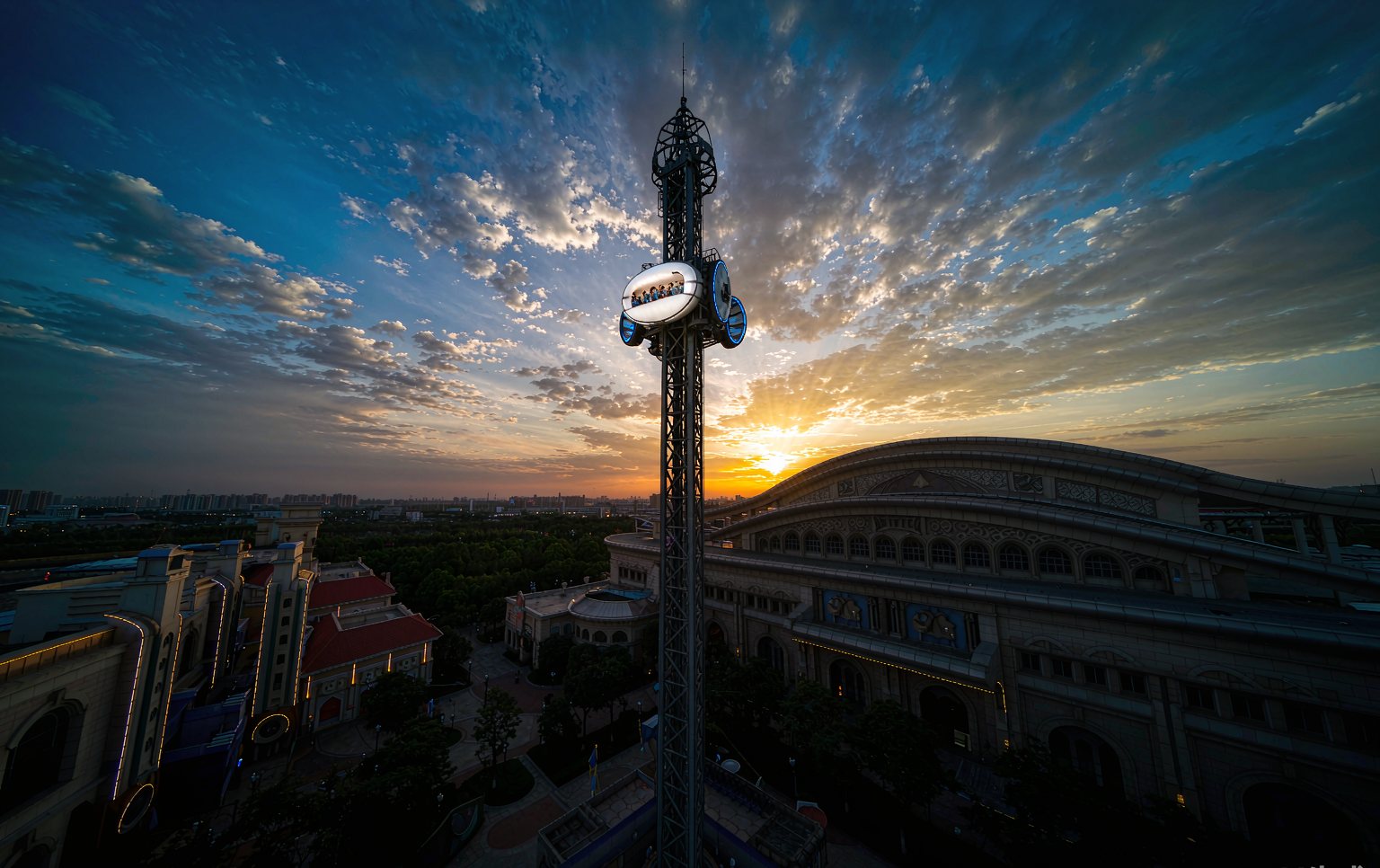
- Drop tower. A vertical lift and free-fall cycle delivers the highest perceived fear per dollar spent. Towers from 25 m to 60 m are standard, with 12 to 24 seats and cycle times under three minutes. Footprint is modest, but the height envelope, wind loading, and obstacle marking drive the civil works.
- Pendulum or pirate ship. A swinging gondola is the most reliable crowd-puller in the category and the easiest to theme. It suits parks with moderate ceiling clearance and a family-plus-teen audience, and it ages well because the motion is readable from a distance.
- Top spin. Gondola rotation combined with arm inversion produces a compact, photogenic spectacle. It is mechanically demanding, so service access and a disciplined lubrication schedule matter more than the purchase price.
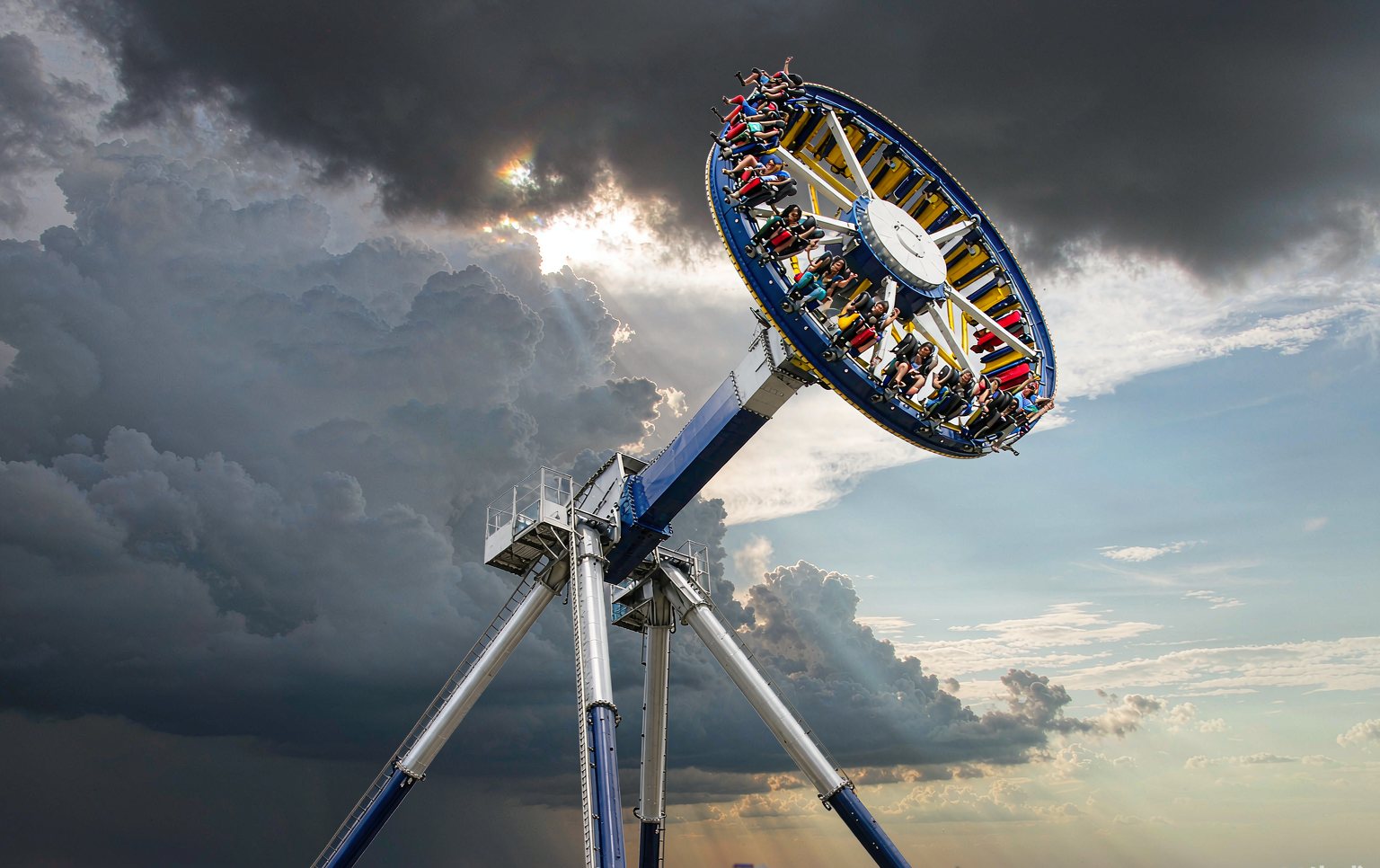
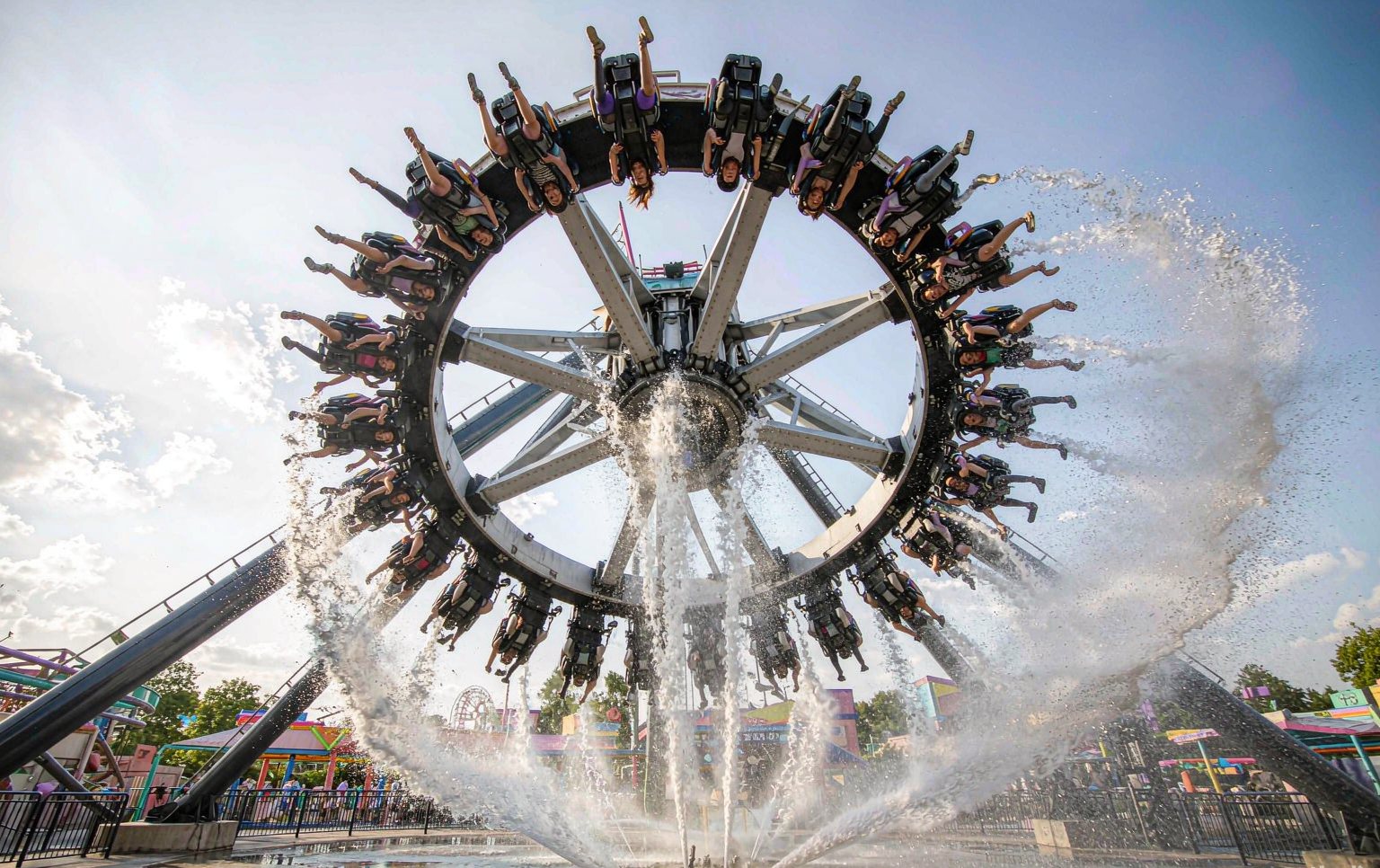
- Frisbee or gyro swing. A rotating disc on a swinging arm gives strong airtime with generous throughput and a footprint that fits a mid-size pad. It is often the best single addition for a park that wants one marquee ride without a coaster budget.
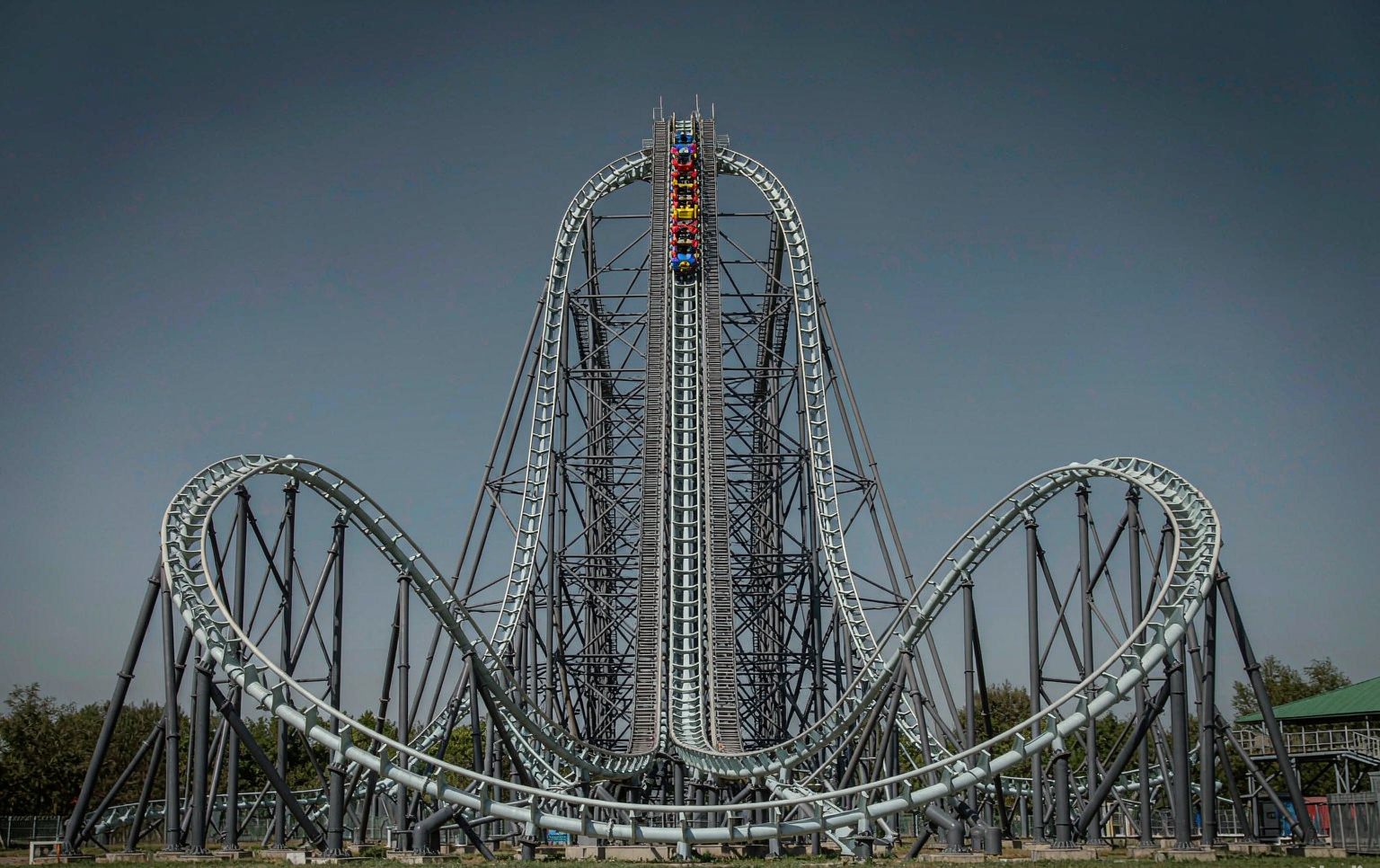
- Inverted coaster. Suspended trains with legs free create the strongest signature ride in the segment. Compact inverted layouts of 350 m to 600 m of track are now common, but they demand serious foundations, a large station, and a maintenance building.
A credible shortlist of thrill rides for sale should contain at least two of these archetypes at comparable investment levels, priced on the same basis. Comparing a bare-bones drop tower against a fully themed frisbee tells you nothing except which salesperson wrote a shorter quotation.
Height, Footprint, and Throughput: Match the Ride to the Site
Height is the first constraint and usually the most expensive one. The published ride height is only the start; you must also clear the structural envelope, crane lift radius, and obstacle marking thresholds. A 45 m tower on a site with a 40 m zoning ceiling is not a 45 m project, it is a redesign, and that single constraint will eliminate half the thrill rides for sale you were considering. Commission a topographical and geotechnical survey before shortlisting, and confirm local height limits in writing.
Throughput decides payback far more than seat count suggests. A 24-seat machine running a 150-second cycle with disciplined dispatch moves roughly 550 guests per hour; the same ride with slow loading and a single exit gate can lose a third of that. Model the queue, the pre-show, and the exit path together, then design the platform so staff can load and check restraints without crossing the car. Among the thrill rides for sale, two units with identical seats can differ by 40 percent in realistic hourly capacity.
Ground conditions rarely get the attention they deserve. Dynamic and fatigue loads from a pendulum or coaster are transmitted through anchor bolts into a foundation designed to the supplier’s loading schedule. On reclaimed or mixed fill, piling costs can add 10 to 20 percent to the civil budget. Ask for the foundation drawing package at quotation stage, not after the deposit clears.
Indicative Price Bands in USD
The ranges below are indicative only, quoted ex-works and excluding freight, duties, foundations, and site works. Final pricing depends on configuration, height, seat count, restraint type, drive system, theming, and destination market. Use them to size a budget, then request a configured quotation for a real number.
| Ride type | Typical height | Seats / throughput | Footprint | Indicative USD (ex-works) |
|---|---|---|---|---|
| Drop tower | 25–60 m | 12–24 / 450–700 pph | 12 × 12 m | 180,000–650,000 |
| Pirate ship (pendulum) | 12–20 m | 24–40 / 500–800 pph | 18 × 10 m | 120,000–380,000 |
| Top spin | 8–14 m | 24–32 / 400–600 pph | 16 × 12 m | 250,000–600,000 |
| Frisbee / gyro swing | 18–30 m | 24–40 / 500–750 pph | 20 × 14 m | 220,000–700,000 |
| Star flyer / swing tower | 30–50 m | 24–36 / 400–600 pph | 14 × 14 m | 300,000–900,000 |
| Inverted coaster (compact) | 18–30 m | 16–20 / 600–900 pph | 60 × 100 m | 1,200,000–3,500,000 |
Four variables move a quote most: drive technology, restraint specification, theming scope, and the documentation package. Hydraulic drives are cheaper up front but cost more in fluid, seals, and downtime; electric drives cost more up front and less to run. A themed gondola with custom fiberglass and lighting can add 15 to 30 percent. Buyers sourcing thrill rides for sale for a flagship location should also budget a five percent spares allowance and a contingency of at least eight percent on total installed cost.
Structural Certification, Safety, and Compliance
Certification is where cheap quotations reveal themselves. A compliant package includes design calculations to EN 13814 or ASTM F2291, CE marking where applicable, welded-joint inspection records, non-destructive testing on primary structure, a factory acceptance test with witnessed cycling, and a full documentation set: general arrangement drawings, load schedules, electrical schematics, operations and maintenance manuals, and inspection log templates. ISO 9001 on the factory is a useful signal of process control, not a substitute for ride-specific verification.
Ask who signs the design review and whether third-party verification is available for your jurisdiction. When you compare thrill rides for sale, treat a thin documentation set as a pricing signal rather than an oversight. Some markets require an independent notified body; others accept the manufacturer’s declaration plus a state ride inspector. Retrofitting certification after delivery is slow and expensive, so confirm acceptance criteria with your insurer and local authority first. Every unit supplied by a serious manufacturer should also arrive with a traceable test report and a warranty of at least two years on structure and drive.
Installation, Lead Times, and Commercial Terms
Installation is a joint operation. The buyer’s contractor pours foundations and provides power to the demarcation point; the supplier’s team assembles, aligns, commissions, and load-tests the ride, then trains operators and maintenance staff. Most thrill rides for sale arrive with an installation manual, but the site works are always local. Allow 10 to 25 days on site for a typical tower or pendulum, longer for a coaster, plus a shakedown period before public opening.
Standard lead times run 25 to 45 days from drawing approval and deposit; custom or large equipment such as coasters and landmark towers runs 35 to 60 days, with peak-season slots booked earlier. Payment terms are normally 30 percent deposit with the balance before shipment, against a pre-shipment inspection report. Letters of credit and milestone payments are negotiable. Shipping is quoted FOB or CIF, with flat-rack and heavy-lift options for oversized track and tower sections.
ROI: What a High-Thrill Ride Must Earn
Build the model on incremental revenue, not total park revenue. Assume the ride lifts admissions by a defensible percentage, adds a modest per-capita spend in its zone, and attracts a naming sponsor if the asset is visible from outside the gate. Against that, set power, staffing, insurance, and maintenance at three to five percent of capex per year. The best thrill rides for sale are the ones that fit existing traffic patterns; a well-placed unit in a park with footfall usually repays in three to five seasons, while a poorly located one never does.
Before releasing a purchase order, confirm each of the following:
- Geotechnical report and foundation design reviewed by a local structural engineer
- Height, noise, and zoning approvals secured in writing before you shortlist thrill rides for sale
- Electrical capacity and backup supply confirmed at the demarcation point
- Throughput model validated against realistic dispatch times, not brochure figures
- Certification package accepted by insurer, notified body, and local inspector
- Maintenance plan, spares kit, and two trained technicians in place before opening
- Queue, exit, and accessibility routes designed with the operations team
- Launch marketing, ticketing tier, and photo-capture upsell budgeted
Thrill Rides for Sale: Frequently Asked Questions
How much do thrill rides for sale cost in 2026?
Expect roughly USD 120,000–380,000 for a pirate ship, 180,000–650,000 for a drop tower, 220,000–900,000 for a frisbee or swing tower, and 1.2–3.5 million for a compact inverted coaster, all ex-works. Add 15 to 25 percent for foundations, installation, and site works, plus freight and duties. Configuration, height, and theming explain most of the spread within each band.
What is the typical lead time from order to opening?
Standard rides ship in 25 to 45 days after drawing approval and deposit; custom and large equipment takes 35 to 60 days. Add four to eight weeks for ocean freight and customs, 10 to 25 days for installation and commissioning, and a short shakedown period. A realistic order-to-opening window is four to six months for a tower or pendulum, and six to nine months for a coaster.
Can a manufacturer customize a ride for our park?
Yes, within engineering limits. Height, seat count, restraint type, color scheme, gondola shape, lighting, and signage are all configurable, and many suppliers will adapt the station and queue layout to your plot. In practice most thrill rides for sale can be reshaped in those areas, but structural changes require fresh calculations and certification, which adds cost and lead time. Share a site plan, a guest profile, and a budget ceiling early — a good supplier will tell you what is achievable rather than quote blindly.
Which certifications should a buyer require?
At minimum, design to EN 13814 or ASTM F2291, CE marking for European destinations, ISO 9001 for the production system, and documented non-destructive testing of primary welds. Require a witnessed factory acceptance test, a full operations and maintenance manual, and a two-year structural and drive warranty. Confirm with your insurer whether independent third-party verification is needed in your jurisdiction.
What payment and shipping terms are standard?
Thirty percent deposit on order, seventy percent before shipment against an inspection report, is the market norm; letters of credit and milestone schedules are common on larger contracts. Quotes are usually FOB or CIF, and oversized components ship on flat racks or break bulk. Confirm who handles unloading, inland transport, and crane hire at destination, because those costs sit outside the ride price.
Next Step: Request a Quote
Anxin Amusement has spent more than 15 years building high-thrill equipment, with 200+ rides delivered to 24+ countries and every unit factory-tested before shipment. Our high-thrill ride range covers drop towers, pendulums, top spins, frisbees, and coasters, and our engineering team can adapt a layout to your plot rather than asking you to fit theirs. If you are comparing thrill rides for sale across several suppliers, send us your site plan, target throughput, and budget band through our custom solution request. You will receive a configured quotation with foundation loads, certification scope, lead time, and payment schedule — the four documents that let a committee actually decide. You can also review our manufacturing and testing background before the first call.