If you are importing amusement rides from China, the factory price is only part of the number you will finally pay. Freight, packing, duties, port charges and inspection can move a project budget by double digits. A 40HQ container offers roughly 65 cubic meters of usable space, yet a 24-seat carousel and a drop tower pack very differently. This guide follows the shipment in order: Incoterms, container loading, documents, customs, and arrival checks. It also gives you a landed-cost formula and a document list to send before you sign.
None of the numbers below is a quotation. Treat every figure as an indicative range — confirm with a formal quotation that reflects your model, destination port and delivery scope.
Why importing amusement rides from China needs a logistics plan
Ride prices are usually quoted ex works or FOB. That means the buyer carries the cost and the risk of everything after the goods leave the factory gate. For a small family ride, freight may add a modest amount. For a 30-metre wheel or a spinning coaster, shipping and civil works can rival the machine price.
Logistics also decides your opening date. A delayed vessel, an incomplete packing list or a missing document can hold the whole park launch. Buyers who plan the shipment at the same time as the ride specification usually save weeks. Buyers who leave it until after payment often pay for storage and rework.
The six stages from deposit to handover
Every shipment follows the same sequence, whatever the ride type. Knowing the sequence lets you see which party is responsible at each point.
- Specification and contract: fix the model, capacity, power, paint, language of manuals and delivery term.
- Production and internal checks: the factory builds, welds, assembles where possible, and runs its own tests.
- Packing and declaration: the ride is stripped into modules, crated, numbered and documented.
- Export and ocean freight: the goods clear Chinese customs and move to your nominated port.
- Import clearance: you or your broker declare the goods, pay duties and collect the cargo.
- Site handover: the crates arrive, the team checks parts against lists, then installation starts.
Write these stages into your purchase contract with a named responsible party for each one. A shoulder shrug at stage four is where most disputes begin.
FOB, CIF or DDP: which term fits your project
Incoterms define who pays and who carries risk. They do not change the quality of the machine. Choose the term that matches your team’s experience, not the one that looks cheapest on the quotation.
Under FOB, you control the carrier and can negotiate freight yourself. That suits buyers with a freight forwarder already working in China. Under CIF, the supplier books the vessel and buys basic insurance, but risk still passes at the loading port. DDP moves most tasks to the seller, which is convenient but leaves you with less visibility over costs.
| Term | Supplier pays | Buyer pays | Best fit |
|---|---|---|---|
| EXW | Production only | Loading, export, freight, insurance, duties | Buyers with a China-based agent |
| FOB | Production and export clearance | Ocean freight, insurance, destination charges | Most experienced ride importers |
| CIF | FOB costs plus freight and basic insurance | Destination charges, duties, inland delivery | Buyers who want one freight contact |
| DDP | Most costs including import clearance | Unloading and site work, unless agreed | First-time buyers with a trusted partner |
Ask the supplier to name the exact port in every term. “FOB Shanghai” and “FOB Qingdao” produce very different inland trucking bills for a factory in the interior.
How much fits in a 40HQ container
A 40HQ container is the workhorse of ride shipments. Its internal length is about 12 metres and its usable height is close to 2.7 metres. The real limit is usually module size and weight, not volume alone.
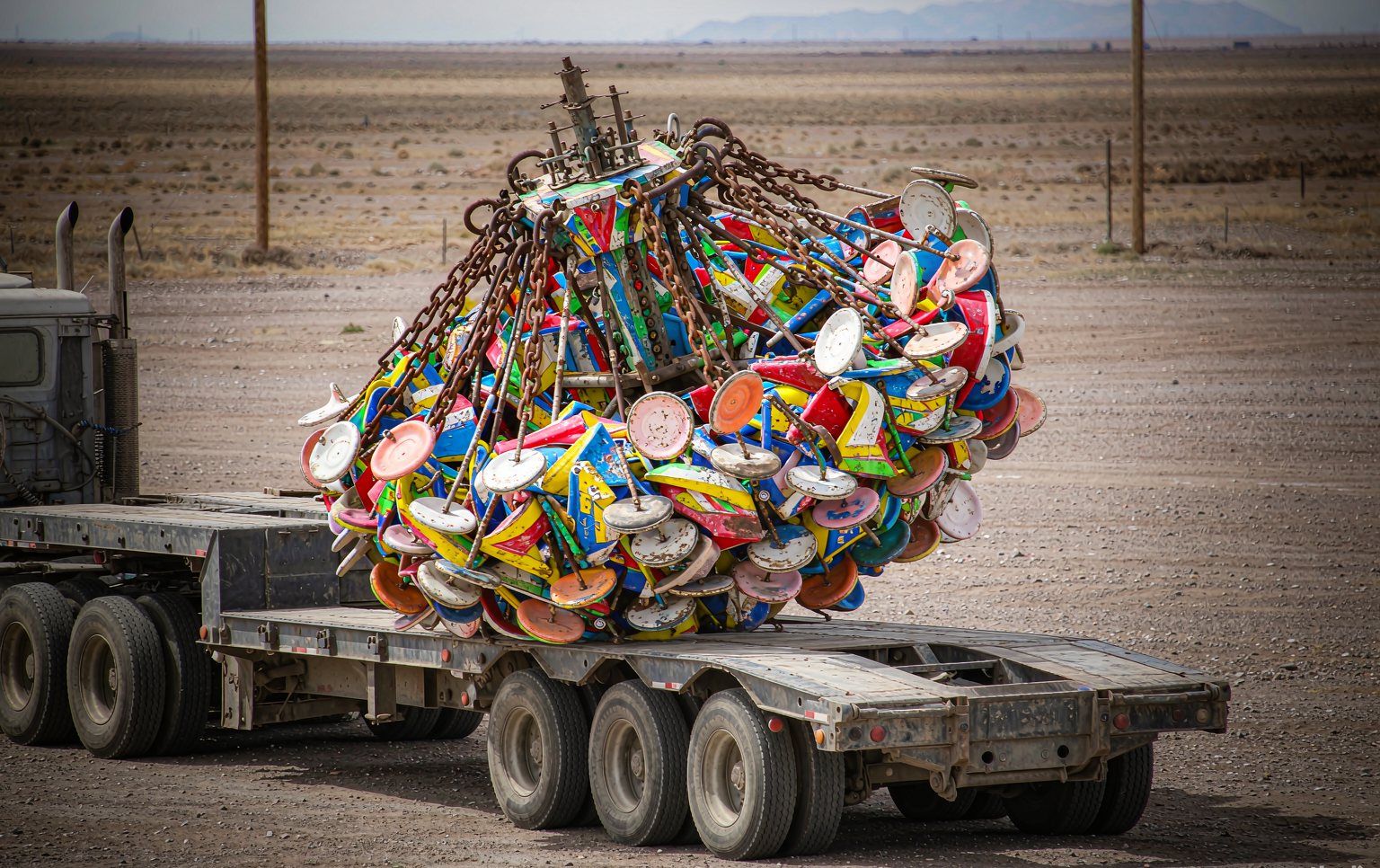
Every ride is designed for disassembly before it leaves the factory. Ask for the packing drawing early. It should show module dimensions, gross weight, lifting points and the number of crates. Without that drawing, you cannot quote freight accurately or plan a forklift.
| Equipment type | Typical packing | Indicative container need | Planning note |
|---|---|---|---|
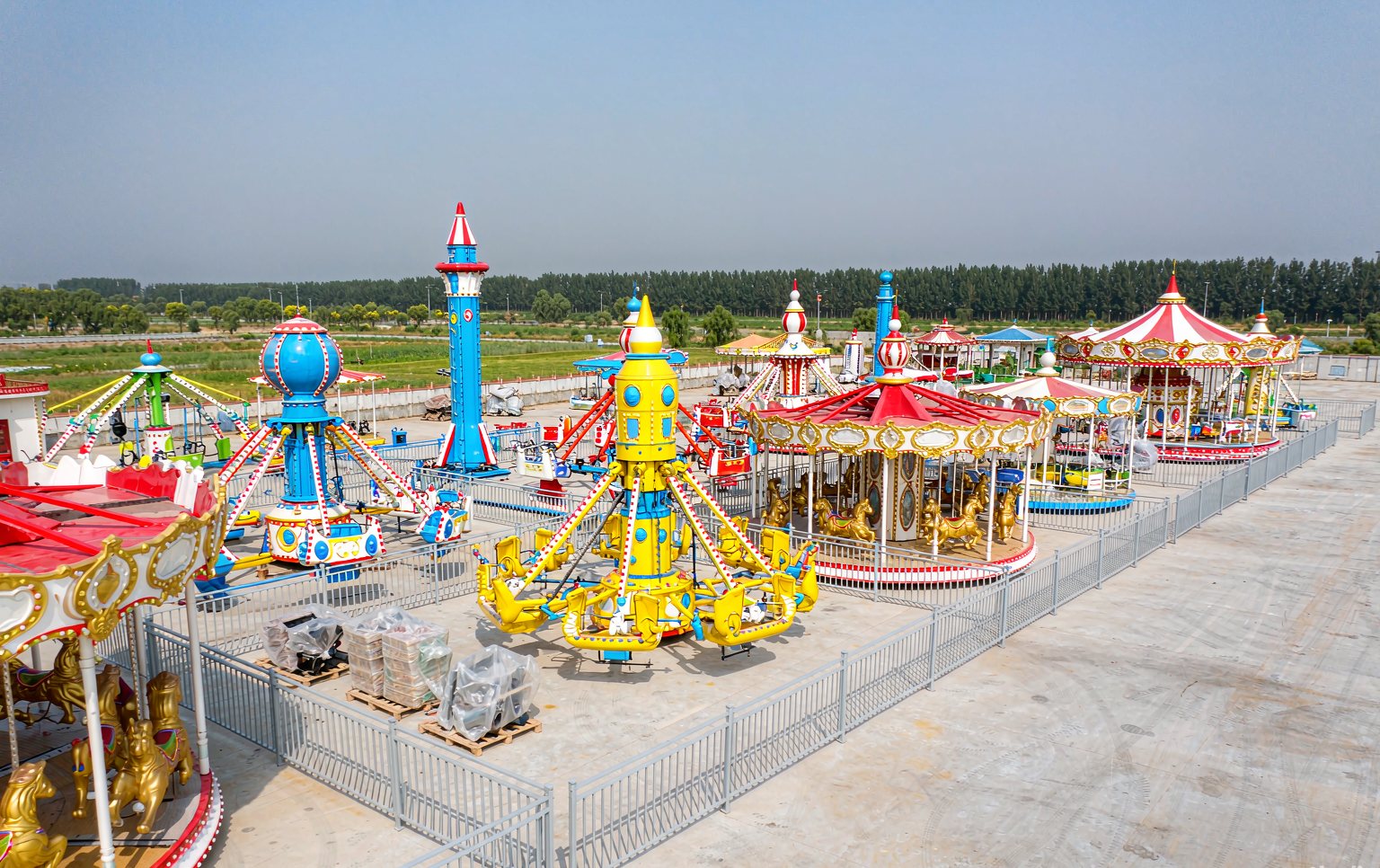
| 6 to 12 seat carousel | Platform segments, column, canopy, seats | 1 x 40HQ | Canopy frame often drives the crate height |
| Teacup or spinning family ride | Deck pieces, tubs, drive unit | 1 x 40HQ | Tubs can be stacked if agreed in advance |
| Bumper car set, 10 cars | Cars stacked, grid or chargers separate | 1 x 40HQ | Battery rules differ from ceiling grid parts |
| Trackless train, 3 carriages | Tractor and carriages on frames | 1 x 40HQ | Check maximum unloaded height for road limits |
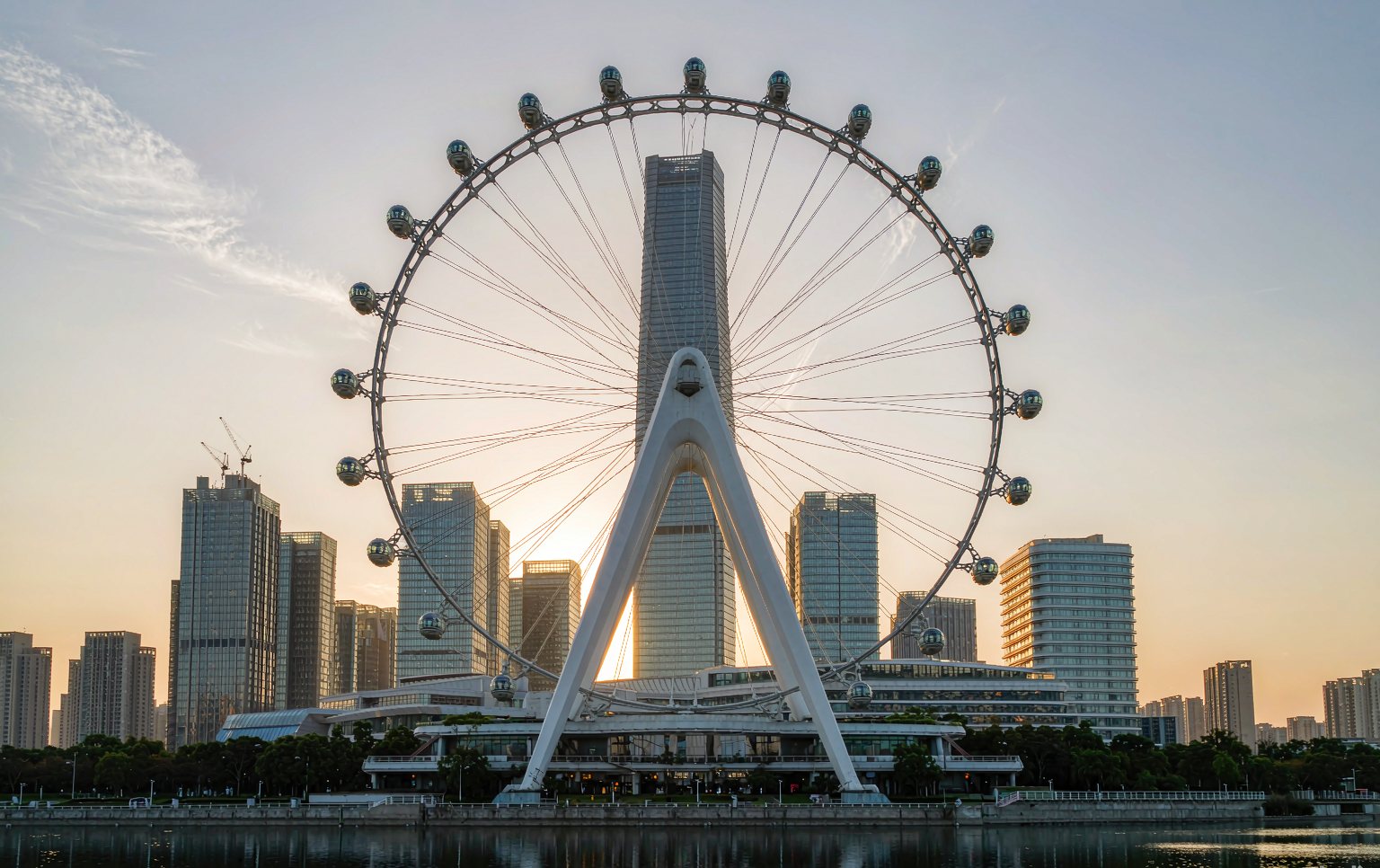
| Observation wheel above 30 m | Spokes, hub sections, support legs | Several 40HQ or break-bulk | Foundation steel is often shipped separately |
These are planning figures only. An indicative range — confirm with a formal quotation and the supplier’s final packing list before you book space.
Packing, crating and corrosion protection
Amusement rides travel through humid ports and may sit on a quay for weeks. Steel frames need more than a coat of factory paint. Ask how bare surfaces, weld seams and electrical cabinets are protected, and what happens if the coating is damaged during unloading.
Good packing is also an inventory system. Each crate should carry a number, a photo reference and a parts list fixed to the outside. Loose bolts belong in labelled bags inside the matching crate, not in one large box marked “spares”.
- Require export-grade wooden crates with treatment marking where your destination demands it.
- Require waterproof wrapping for motors, control cabinets and upholstered parts.
- Require a crate-by-crate photo set taken before the containers are sealed.
- Require clear lifting points and centre-of-gravity marks on heavy modules.
Those four requests cost nothing and remove most arrival disputes. If a supplier refuses to photograph packed goods, treat that as a question to resolve before payment.
The customs document checklist
Document rules differ by country, so confirm the exact list with your broker. The following package is the common starting point for a mechanical ride shipment. Ask for drafts before the vessel sails, not after arrival.
- Commercial invoice with model, quantity, unit price and total value consistent with the contract.
- Packing list with crate numbers, net weight, gross weight and measured dimensions.
- Bill of lading or airway bill matching the shipper and consignee names.
- Certificate of origin if your destination grants a preferential tariff.
- Technical file including manuals, drawings and the declarations your market requires.
- Insurance certificate when the term includes insurance arranged by the seller.
- HS code proposal for each major item, agreed with your broker in advance.
- Third-party inspection report only if you contracted and paid for one.
Never assume that a supplier holds a particular certificate for your country. Ask which documents they can actually provide for the exact model you are buying. If a document does not exist, change the plan rather than invent a number.
Duties and landed cost: the formula
Landed cost is the price of the ride plus every cost required to put it on your site. Use the same formula for every supplier, so your comparison stays fair.
Landed cost = factory price + inland freight + ocean freight + insurance + destination charges + duty + taxes + inspection + site delivery.
Here is a simplified example with stated assumptions. Assume a factory price of USD 100,000. Add freight and insurance of USD 18,000 and destination charges of USD 4,000. Now assume duty of 5% on the factory value and local tax of 10% on the duty-paid value. The duty is USD 5,000, the tax is USD 12,300, and the landed cost before site work is USD 139,300.
Those rates are illustrative assumptions, not advice about your country. Actual rates depend on HS classification, trade agreements and local rules. Ask your broker to confirm them in writing before you sign the contract.
Pre-shipment inspection and arrival inspection
There are two different checks, and buyers often mix them up. A pre-shipment check verifies that the goods match the contract before they leave the factory. An arrival check verifies that nothing was lost or damaged in transit.
If you hire an inspector, define the scope in writing: quantity, model, packing, nameplate data and witnessed test runs. Do not ask for a generic “quality certificate”. A named scope gives you a document that can actually be used in a claim.
- Compare crate numbers and quantities against the signed packing list.
- Photograph each crate before opening, especially any sign of water entry or impact.
- Check namesplates and serial numbers against the invoice and technical file.
- Count bolts, sensors and control parts against labelled bags, not memory.
- Record damage on the delivery note and notify the carrier within its claim window.
Keep the photos and the signed delivery note with the ride’s maintenance file. Insurers and manufacturers both move faster when the record is complete.
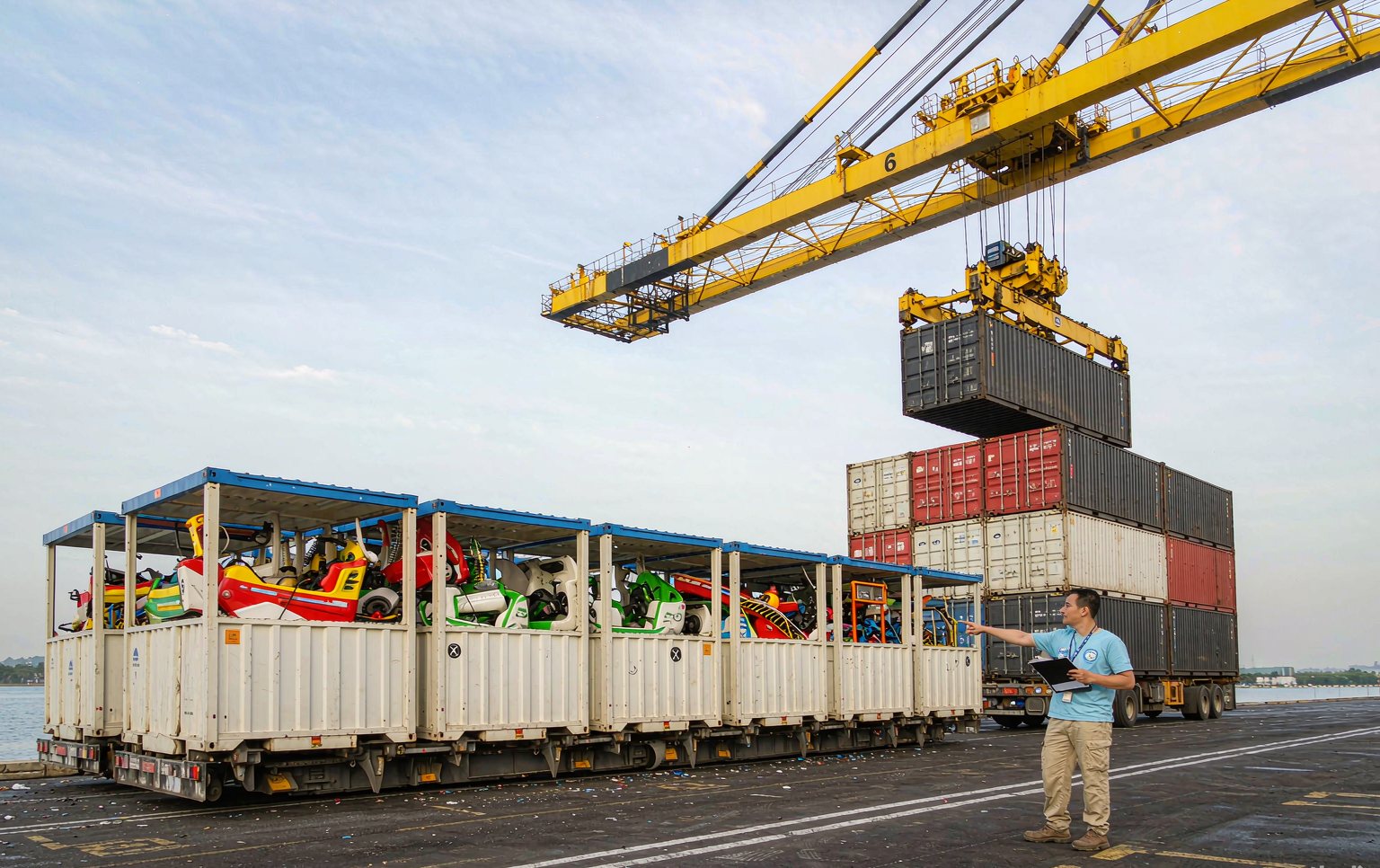
Five mistakes that delay a shipment
Most delays are not caused by the vessel. They are caused by paperwork or assumptions made weeks earlier. The list below comes from recurring planning errors, not from any single customer project.
Common pitfall: booking a container before the packing drawing is signed. A ride that arrives at the port with an oversized crate must be repacked, and repacking at the port is expensive. Confirm dimensions and weights first, then book space.
- Using a vague product description on the invoice that does not match the technical file.
- Assuming the supplier’s HS code will be accepted by your customs authority.
- Forgetting that batteries, hydraulic oil or treated wood may trigger extra rules.
- Leaving destination unloading and forklift arrangement to the day of arrival.
- Scheduling installation before the foundation and power supply are inspected.
Each item has a simple fix: write it down and assign an owner. A shared spreadsheet with dates and names is more useful than a long email thread.
Lead time and payment milestones
Production time depends on the ride’s size and how much of it is assembled before shipping. The table below gives planning ranges, not promises. Your contract should state the final schedule after the design is frozen.
| Stage | Indicative duration | What controls the timing |
|---|---|---|
| Design and confirmation | 1 to 3 weeks | Site data, custom colours, local requirements |
| Production | 4 to 12 weeks | Ride size, component sourcing, paint system |
| Packing and documentation | 3 to 7 days | Crate quality, photo set, document review |
| Ocean transit | 2 to 6 weeks | Destination port and routing |
| Clearance and site delivery | 1 to 3 weeks | Broker accuracy, local transport permits |
Tie payments to verifiable events rather than calendar dates. A common structure links the deposit to contract signature, a milestone payment to completed production, and the balance to documents or delivery. The exact split is a commercial decision for both parties.
How to check a supplier before the deposit
A lower quotation is only useful if the company can deliver the specified ride on time. Run the same checks on every supplier you shortlist, then compare the results side by side.
- Ask for a live video walkthrough of the workshop, not a edited showreel.
- Ask which parts are made in-house and which are bought from outside vendors.
- Ask for the welding and assembly standard used on the exact model.
- Ask for a sample packing list from a similar shipment, with photos.
- Ask who will answer spare-parts requests three years after delivery.
- Ask for references you may contact, then actually contact them.
We cover the wider process in our guide to buying amusement rides from China. We also explain how to choose a reliable amusement ride manufacturer.
FAQ: importing amusement rides from China
What does importing amusement rides from China usually cost in freight?
It depends on volume, module size and destination port, so there is no single number. Ask for a packing drawing first, then request freight quotes against real dimensions. An indicative range — confirm with a formal quotation applies to every freight estimate you receive.
Should I choose FOB or CIF for my first order?
Choose FOB if you already have a freight forwarder you trust. Choose CIF if you want one booking contact and accept less control over the carrier. In both cases, read the insurance clause carefully.
Can I inspect the ride before it leaves the factory?
Yes. Agree the inspection scope in the contract and give the inspector access during final assembly. A named scope with photos is far more useful than a general statement about quality.
How early should I start customs paperwork?
Start the HS code and document review as soon as the contract is signed. Send draft invoices and packing lists to your broker before loading. This leaves time to correct descriptions while the goods are still at the factory.
What if a crate is damaged on arrival?
Photograph the crate and contents before moving anything. Note the damage on the delivery note and notify the carrier within its claim period. Then check the parts list for missing items before installation begins.
Planning a bumper car or amusement ride installation?
Send us your site size, expected visitor volume and budget range — our engineering team will reply within 24 hours with a layout sketch and an indicative quotation, no obligation.