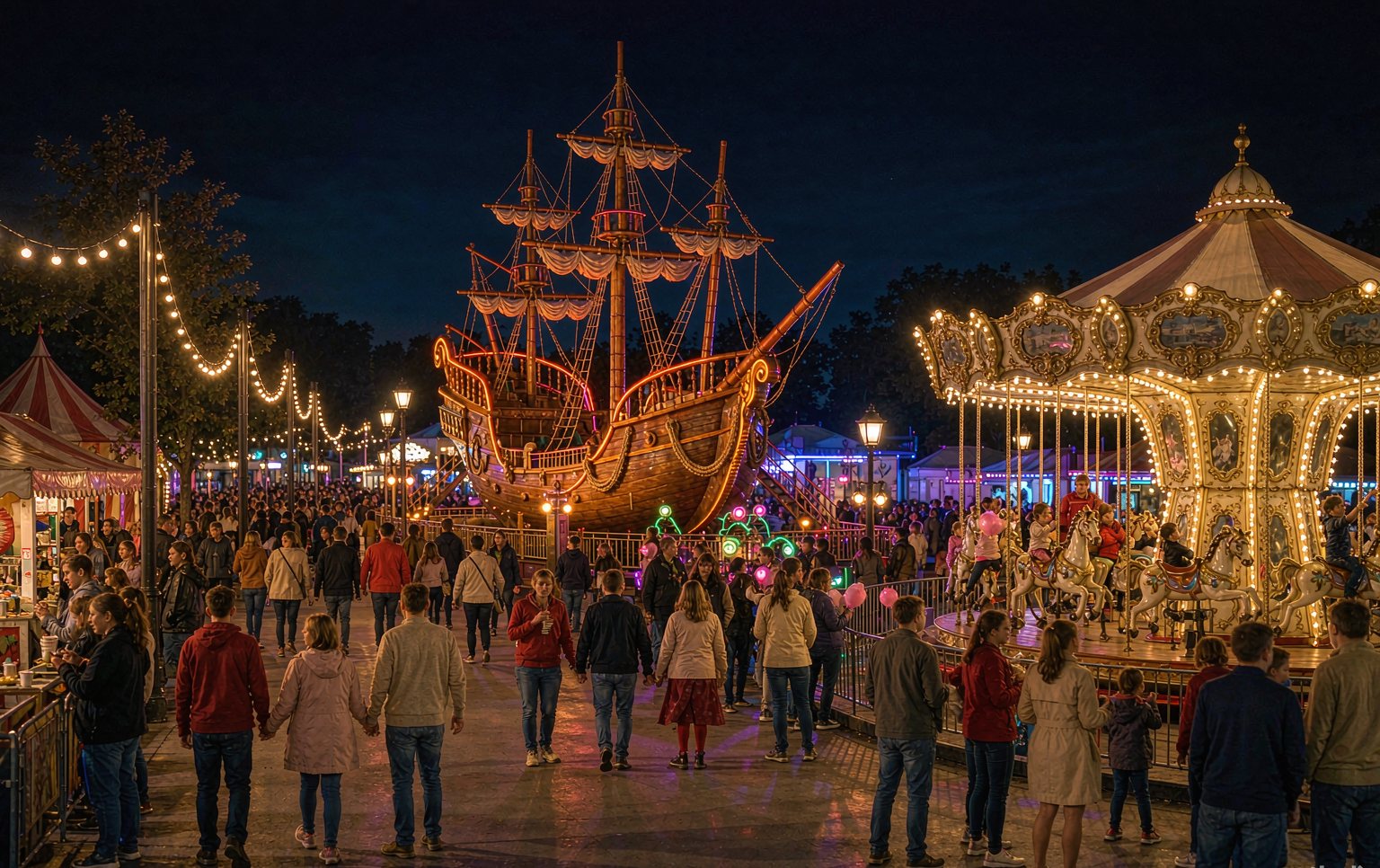
A carnival route rewards operators who buy equipment that travels well, sets up fast and pays for itself in a handful of seasons. Every year, travelling showmen, fairground operators and event companies search for carnival rides for sale that fit a very specific set of constraints: trailer length, crew size, available power, ground conditions and the permit rules of each jurisdiction they visit. A wrong purchase is expensive to undo. This guide covers what drives the decision: ride types, transport, setup time, indicative USD price bands, inspections, payment terms and lead times.
Start With the Route, Then Shortlist Carnival Rides for Sale
Before you compare catalogs, write down the route. A show that runs eight to twelve events a season across three states has different priorities from a single-site carnival that moves twice a year. The route determines four numbers that filter almost every buying decision:
- Maximum trailer length allowed by your permits, tow vehicles and the roads you actually drive.
- Crew size available for setup and teardown — in practice, the binding constraint on most routes.
- Power supply at each pitch: 380V three-phase, 220V single-phase, or generator only.
- Ground surface: grass after rain, gravel, asphalt or concrete, and how level the pitch usually is.
Operators who skip this step buy on appearance, then discover the unit needs a heavier tractor, a second generator or six hours of assembly instead of two. When you review carnival rides for sale listings, ask for the transport envelope — length, width, height and axle load — before you ask about graphics. A ride your fleet cannot move is a fixed asset wearing a trailer.
Ride Types That Earn Their Keep on the Road
Four categories account for most of the carnival rides for sale on the travelling market, and each carries different economics.
Carousels
The carousel is the anchor of nearly every carnival layout. A 24-seat unit with a 10–12 m platform draws families, runs a two-to-three-minute cycle and tolerates a wide range of ground conditions. Fiberglass figures, LED lighting and a folding canopy keep weight and setup time down, and a maintained unit holds resale value when you rotate inventory every five to seven years.
Pirate Ships
A 24-seat swinging ship delivers thrill value at a moderate footprint and remains one of the most reliable revenue generators on a route. Look for hydraulic or friction-wheel drive, redundant braking and a restraint system that passes inspection without modification. Setup usually needs firmer ground than a carousel because of the swinging loads, so check bearing-plate requirements against your usual pitches.
Spinning Rides
Spinning hardware — wave swingers, break-dance style units, tagadas — commands the highest ticket price on most routes and carries the highest transport cost. These units usually travel on two trailers or in two 40ft containers, need 6–10 hours to assemble and demand a crew that has done it before. Buy them when your route has long stands and a trained, stable crew, not when you move every weekend.
Funhouses
Walkthrough funhouses, mirror mazes and inflatable-panel attractions offer low hourly throughput but excellent margin per square meter, and they bridge kiddie and thrill inventory. They are also the easiest category to theme, which helps when you sell sponsorship. Check panel weight and pack-down volume before ordering; a funhouse that needs a flatbed plus a van is less portable than the brochure suggests.
Trailers, Transport and Setup Time
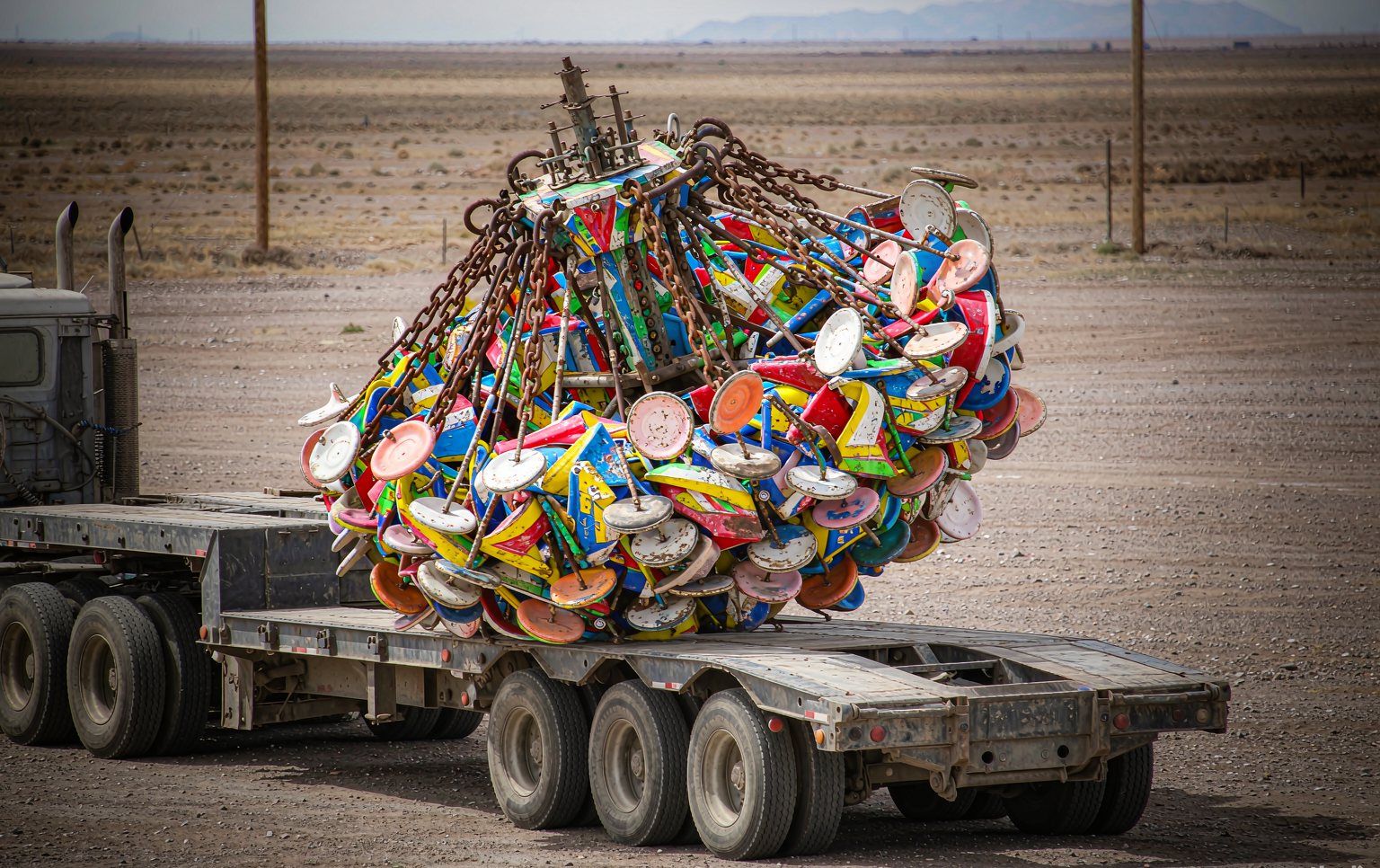
Transport is where a carnival purchase succeeds or fails. Three configurations dominate the market for carnival rides for sale, and the price gap between them is often smaller than the operating gap:
- Integrated trailer-mounted. The ride sits on its own chassis with axles, brakes, lights and a folding canopy. Fastest to move and set up, highest purchase price, and the trailer is inspected as part of the ride.
- Roll-on / roll-off with a separate low-bed. The ride sits on a skid and is winched onto a low-bed trailer. Cheaper per unit and flexible if you already run low-beds, but every move costs loading time and winch capacity.
- Container or skid-mounted for truck freight. Lowest ex-works price and the best option for export, but it assumes crane or heavy forklift access at both ends.
Setup time quietly decides your season. A carousel takes roughly 2–4 hours with three or four people; a pirate ship 4–6 hours; a large spinning ride 6–10 hours; a panel funhouse 3–5 hours. Add time for levelling, anchoring, fencing and electrical connection, and more if the pitch is soft. A ride that saves USD 20,000 at purchase but costs two extra crew-days per event loses that saving inside two seasons. Ask any supplier of carnival rides for sale for a written setup sequence with crew count and hour estimates, plus the wind limit for assembly.
Carnival Rides for Sale: Indicative Price Bands in USD
The bands below are indicative, ex-works, for new equipment, and exclude freight, duties, installation and local certification. Final pricing depends on capacity, seating, theming, lighting, drive type and trailer specification. Treat them as a budgeting tool, not a quotation.
| Ride type | Typical capacity | Indicative price (USD, ex-works) | Setup time |
|---|---|---|---|
| Kiddie carousel | 12–16 seats | 8,000 – 18,000 | 1–2 hours |
| Carousel, trailer-mounted | 24 seats | 22,000 – 45,000 | 2–4 hours |
| Pirate ship | 24 seats | 30,000 – 65,000 | 4–6 hours |
| Spinning ride (wave swinger class) | 24–32 seats | 45,000 – 95,000 | 6–8 hours |
| Spinning ride (break-dance class) | 16–24 seats | 85,000 – 150,000 | 8–10 hours |
| Funhouse / mirror maze | Walkthrough | 15,000 – 60,000 | 3–5 hours |
| Refurbished used unit | Varies | 40–60% of new price | As per model |
Two cost drivers surprise first-time buyers shopping for carnival rides for sale. First, trailer specification: brakes, lighting kits, axle ratings and road-legal width can add 10–20% to the ex-works figure. Second, lighting: a programmable LED package is a genuine revenue tool at night but priced separately. If budget is tight, buy capacity and structure first, then add lighting in year two.
Permits, Inspections and Compliance
Compliance is the part of buying carnival rides for sale that most often goes wrong on low-cost imports. Registries differ by country, but the expectation is consistent: the ride must be designed to a recognized standard, documented and inspected annually by a competent third party.
In Europe, EN 13814 governs the design, manufacture and operation of fairground machinery, and Germany applies DIN 4112 to travelling rides. In the United States, ASTM F2291 covers ride design and ASTM F1193 covers manufacture and quality assurance, with state inspectors handling annual permits. The UK runs the ADIPS scheme, and most Gulf, Southeast Asian and Latin American markets accept CE or ASTM documentation alongside local registration.
A complete document pack includes design calculations, material certificates, weld inspection and non-destructive testing reports, a load-test certificate, electrical schematics, an operation and maintenance manual and a spare-parts list. Ask for it before you pay a deposit. Retrofitting guardrail heights, restraint geometry or emergency-stop redundancy onto a non-compliant unit usually costs more than the saving.
Payment Terms, Shipping and Lead Times
Standard terms from established manufacturers are 30% deposit on order confirmation and 70% before shipment, released against a pre-shipment inspection report and photographs. Letters of credit at sight are common above roughly USD 100,000, and staged payments tied to production milestones are available on multi-unit orders.
Quotations are usually FOB from the Chinese port, with CIF and door-to-door options. A 40ft high-cube container holds a carousel or a pirate ship; large spinning rides need two containers or a flat rack. Ocean freight to Europe, the Middle East or the Americas runs 25–45 days port to port, and inland delivery plus customs clearance adds one to three weeks.
Lead time for standard carnival rides for sale is 25–45 days from deposit and drawing approval. Custom theming, non-standard capacities or large equipment run 35–60 days. On-site assembly support adds 10–25 days for installation and commissioning. Plan backward from your first event: a ride ordered in March for a June fair is comfortable, and a ride ordered in May is not.
Spare Parts, Training and After-Sales Support
Carnival rides work hard and live outdoors. Wear items — wheel assemblies, bearings, hydraulic seals, restraint components, drive belts, contactors and lighting modules — should be available as a stocked kit, not a special order. Budget 5–10% of the purchase price for first-year spares, and confirm the supplier supports the model beyond the warranty. Anxin Amusement backs every unit with a two-year warranty, lifetime technical support and a documented spare-parts channel.
Training matters as much as parts. Ask for operator and maintenance training at handover, an illustrated manual in your language, and a troubleshooting guide a ride operator can follow at 9 p.m. on a Saturday.
Frequently Asked Questions
How much do carnival rides for sale cost?
Indicative ex-works pricing starts near USD 8,000 for a kiddie carousel and reaches USD 150,000 for a break-dance class spinning ride. A 24-seat trailer-mounted carousel sits at USD 22,000–45,000 and a 24-seat pirate ship at USD 30,000–65,000. Freight, duties, certification and installation are additional, and configuration changes the figure substantially.
Can carnival rides be towed on public roads?
Trailer-mounted units can, provided they meet local rules on width, lighting, braking and registration. In most markets that means a braked chassis, approved lighting kit, mudguards and a documented axle rating, plus a tow vehicle rated for the loaded weight. Confirm permitted towing width in every jurisdiction on your route before ordering.
How long does setup take on site?
Allow 1–2 hours for a kiddie carousel, 2–4 hours for a 24-seat carousel, 4–6 hours for a pirate ship and 6–10 hours for a large spinning ride, with a trained crew of three to five on a level pitch.
What permits and inspections are required?
Most jurisdictions require annual third-party inspection, a design standard certificate, an operation and maintenance manual, and a documented daily pre-opening check. Europe works to EN 13814, the US to ASTM F2291 and F1193 with state inspection, the UK to ADIPS, and Germany to DIN 4112. Insurance usually depends on a current inspection certificate.
Do suppliers provide spare parts and training for exported units?
Established manufacturers do. Look for a two-year warranty, a published spare-parts list with prices, a stated availability period, operator and maintenance training at handover, manuals in your language and remote technical support. Ask for two references in your region and call them.
Next Step: Request a Quote
Buying carnival rides for sale is a capital decision measured in seasons. Get the route data right, match the ride type to your crew and transport, budget from realistic bands, and insist on compliance documentation before money moves.
Pre-Purchase Checklist
Run this list against every quotation for carnival rides for sale. A supplier who answers all ten items in writing is worth shortlisting.
- Transport envelope stated: length, width, height, axle load and tow requirements.
- Written setup sequence with crew count and hour estimate.
- Compliance statement naming EN 13814, ASTM or equivalent, plus a sample document pack.
- Load-test and factory test report for the specific serial number.
- Restraint system drawing and maintenance interval for wear parts.
- Spare-parts list with prices and stated availability period.
- Payment schedule, inspection rights before the balance payment, and Incoterms.
- Lead time tied to a production schedule, not just a number of days.
- Warranty terms in writing: two years on structure and drives, plus exclusions.
- Training scope: who attends, where, for how long, and in which language.
Anxin Amusement has manufactured rides for more than 15 years, delivered 200+ units to 24+ countries, and supports every unit with CE, EN 13814, ISO 9001 and ASTM documentation, factory testing, a two-year warranty and lifetime technical support. Send your route profile — events per season, crew size, power supply and budget band — and we will return two or three configurations that fit, with transport drawings and pricing. Request a quote for your carnival project, or browse our family and kiddie rides and thrill rides to start a shortlist.
Still comparing carnival rides for sale by category? Review the full Anxin Amusement ride range, then send the models that interest you with your route details and we will confirm availability, lead time and freight options.