Theme park construction is a discipline unlike any other in the building industry. It combines the precision of civil engineering with the artistry of themed entertainment design. Every beam, every facade, and every ride foundation must serve dual purposes: structural integrity and immersive storytelling. For developers, contractors, and investors, understanding the complexities of theme park construction is essential for delivering projects on time, on budget, and to the highest quality standards.
Unlike conventional commercial construction, theme park construction involves unique challenges. Attractions must accommodate dynamic forces generated by moving rides. Themed environments require specialized materials and artisan craftsmanship. Underground infrastructure must support complex ride systems, show control networks, and guest flow management. In this article, we will explore the major phases of theme park construction and the factors that determine project success.
Pre-Construction Planning
Successful theme park construction begins long before the first shovel breaks ground. The pre-construction phase establishes the foundation for every decision that follows.
Geotechnical Analysis
Soil conditions determine foundation design, drainage requirements, and structural load capacity. Geotechnical engineers conduct extensive testing to identify potential challenges such as unstable soil, high water tables, or seismic considerations.
Utility Infrastructure Assessment
Theme parks consume enormous amounts of electricity, water, and communications bandwidth. Assessing existing utility capacity and planning upgrades ensures that the park can operate at full capacity without service interruptions.
Permitting and Regulatory Approval
Theme park construction projects must navigate complex permitting processes that involve building departments, fire marshals, environmental agencies, and transportation authorities. Early engagement with regulatory bodies prevents costly delays.
Construction Scheduling
Detailed construction schedules coordinate the activities of dozens of contractors and suppliers. Critical path analysis identifies dependencies and potential bottlenecks, allowing project managers to optimize sequencing and minimize delays.
Site Preparation and Foundation Work
The physical construction of a theme park begins with site preparation. This phase transforms raw land into a buildable environment.
Grading and Earthwork
Large-scale grading creates the topographical foundation for themed landscapes. Hills, valleys, water features, and building pads are all shaped during this phase. Earthwork volumes can be substantial, requiring careful planning to balance cut and fill operations.
Utility Installation
Underground utilities form the hidden backbone of every theme park. Electrical conduits, water mains, sewer lines, communications fiber, and ride control cabling are all installed before surface construction begins.
Foundation Construction
Ride foundations require exceptional precision. The structural loads generated by operating roller coasters and motion-based attractions demand engineered foundations that resist dynamic forces. Theme park construction teams use high-strength concrete, steel reinforcement, and precision surveying to ensure that every foundation meets exact specifications.
Structural Construction
Once foundations are complete, the visible elements of the park begin to take shape.
Steel Erection
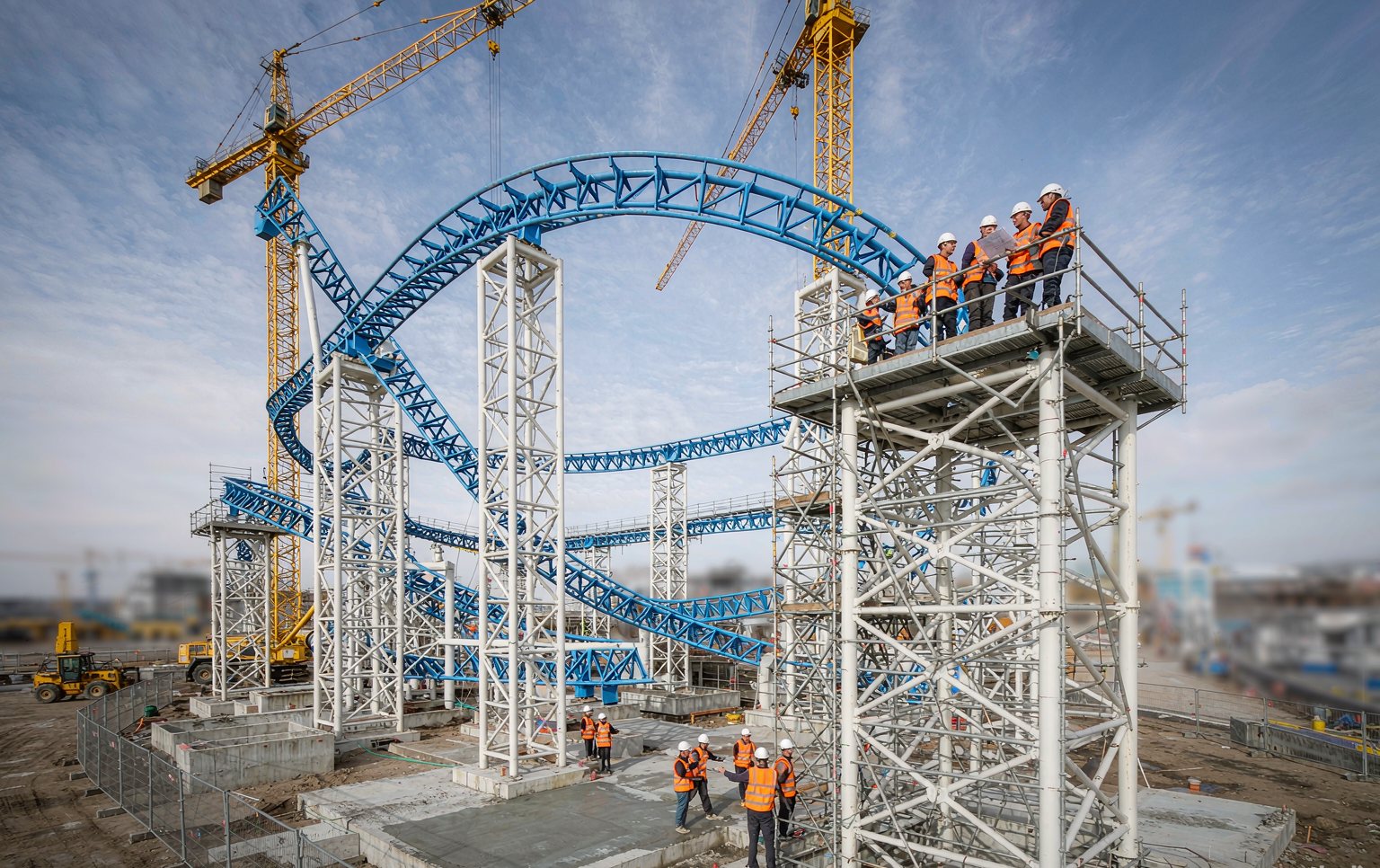
Ride support structures, building frameworks, and show buildings are constructed using structural steel. Erection crews work with precision to align components within tight tolerances. Even minor deviations can affect ride track alignment and guest sightlines.
Concrete and Masonry
Show buildings, queue areas, restaurants, and retail spaces are constructed using concrete, masonry, and specialized framing systems. These structures must accommodate both architectural finishes and the functional requirements of park operations.
Ride Installation
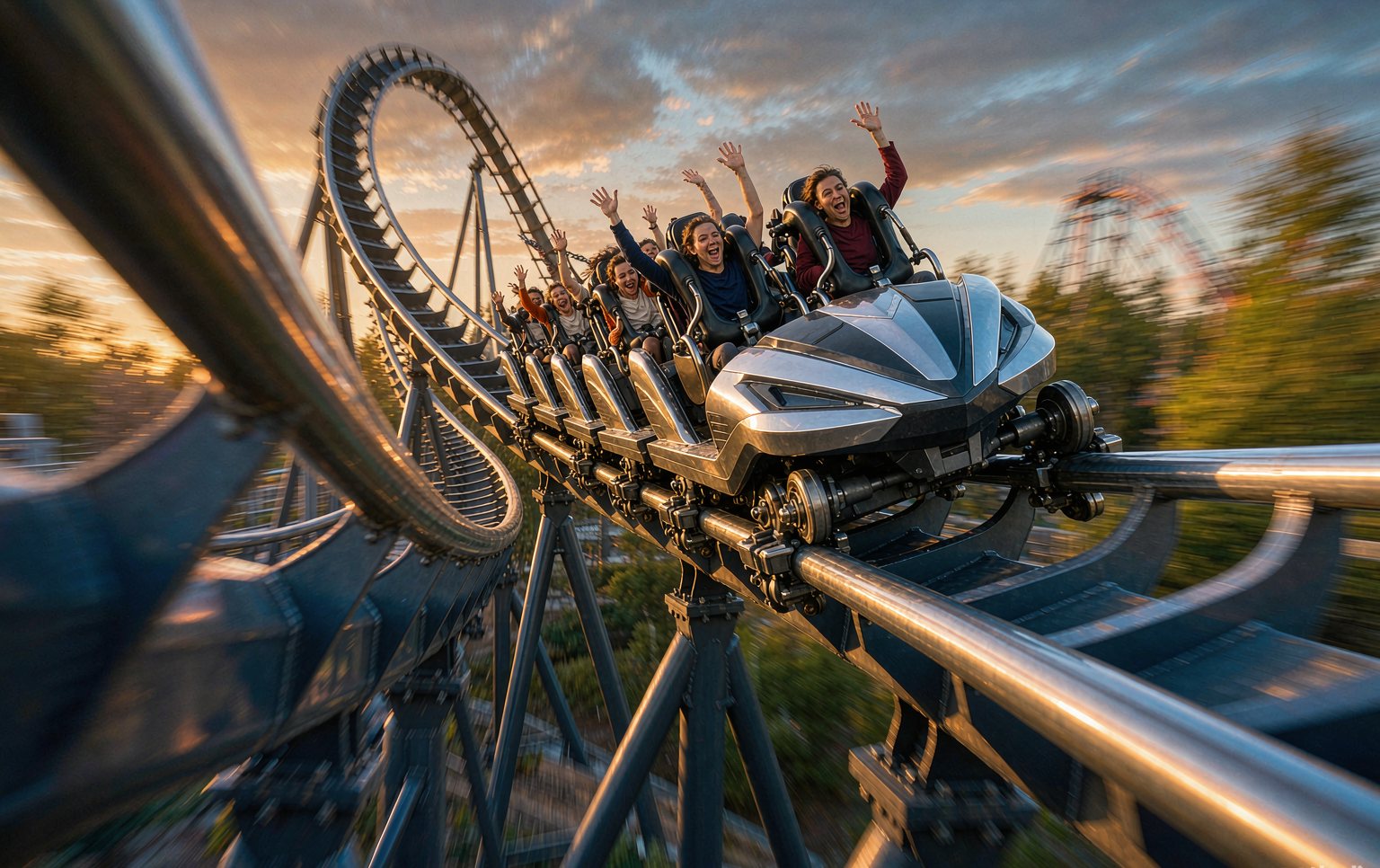
Ride manufacturers deliver components to the construction site, where specialized installation crews assemble track sections, mount ride vehicles, and connect control systems. Theme park construction teams coordinate closely with manufacturers to ensure seamless integration.
Themed Environment Construction
Theming is what distinguishes theme park construction from conventional building projects. Skilled artisans transform standard structures into immersive environments that transport guests into different worlds.
Artificial Rockwork
Skilled artisans sculpt artificial rock formations using specialized concrete mixes and hand-carving techniques. These elements create natural-looking cliffs, caves, waterfalls, and mountain facades that conceal ride structures and enhance the immersive experience.
Scenic Painting and Finishing
Painters and finishers apply detailed textures, weathering effects, and color schemes that bring themed environments to life. Every surface tells a story, from weathered wooden buildings to futuristic metallic structures.
Landscape Architecture
Plantings, water features, lighting, and hardscape elements complete the themed environment. Landscape architects work with creative directors to ensure that outdoor spaces reinforce the park’s storytelling while providing shade, comfort, and visual appeal.
Technology Integration
Modern theme parks are technology-intensive environments. Theme park construction must accommodate a wide range of systems that operate behind the scenes.
Ride Control Systems
Programmable logic controllers, sensors, and safety interlocks manage ride operations. These systems must be integrated with building infrastructure and tested extensively before guest service begins.
Show Control Networks
Audio, lighting, projection, animatronics, and special effects are coordinated through centralized show control systems. Precise timing ensures that every element activates in perfect synchronization with ride vehicles and guest experiences.
Guest-Facing Technology
Point-of-sale systems, access control gates, mobile apps, wayfinding displays, and guest Wi-Fi networks are all installed during construction. These platforms shape the guest experience from arrival to departure.
Testing and Commissioning
The testing phase validates that every system operates safely and reliably before guests arrive.
Ride Dynamics Testing
Engineers verify that ride speeds, forces, braking distances, and safety systems perform within design parameters. Weighted test vehicles simulate guest loads while sensors monitor every aspect of ride performance.
Systems Integration Testing
All technology systems are tested together to ensure seamless operation. Ride control, show control, audio, lighting, and safety systems must function as a unified platform.
Operational Readiness
Staff training, emergency procedures, crowd management protocols, and guest services workflows are validated during this phase. Theme park construction is not complete until the park is operationally ready to welcome guests.
Challenges in Theme Park Construction
Theme park construction presents unique challenges that require experienced project management.
Coordination Complexity
Dozens of specialized contractors work simultaneously on different aspects of the project. Coordinating their activities requires detailed scheduling, clear communication, and proactive problem-solving.
Design Changes
Creative revisions during construction can impact schedules and budgets. Experienced teams build flexibility into contracts and schedules to accommodate changes without derailing the project.
Weather Dependencies
Outdoor construction is subject to weather conditions. Rain, extreme heat, and high winds can delay critical activities. Contingency planning helps minimize weather-related impacts.
Quality Control
The artistic nature of themed construction makes quality control challenging. Consistent craftsmanship across large-scale projects requires detailed specifications, regular inspections, and clear standards.
Final Thoughts
Theme park construction is a complex, multidisciplinary endeavor that demands expertise in engineering, architecture, themed design, technology integration, and project management. Every phase, from site preparation to grand opening, requires careful coordination and unwavering attention to quality.
For developers and investors, partnering with experienced teams that understand the unique demands of themed entertainment construction is essential. With proper planning, skilled execution, and a commitment to excellence, a well-constructed theme park can become a landmark destination that generates lasting value and unforgettable guest experiences.