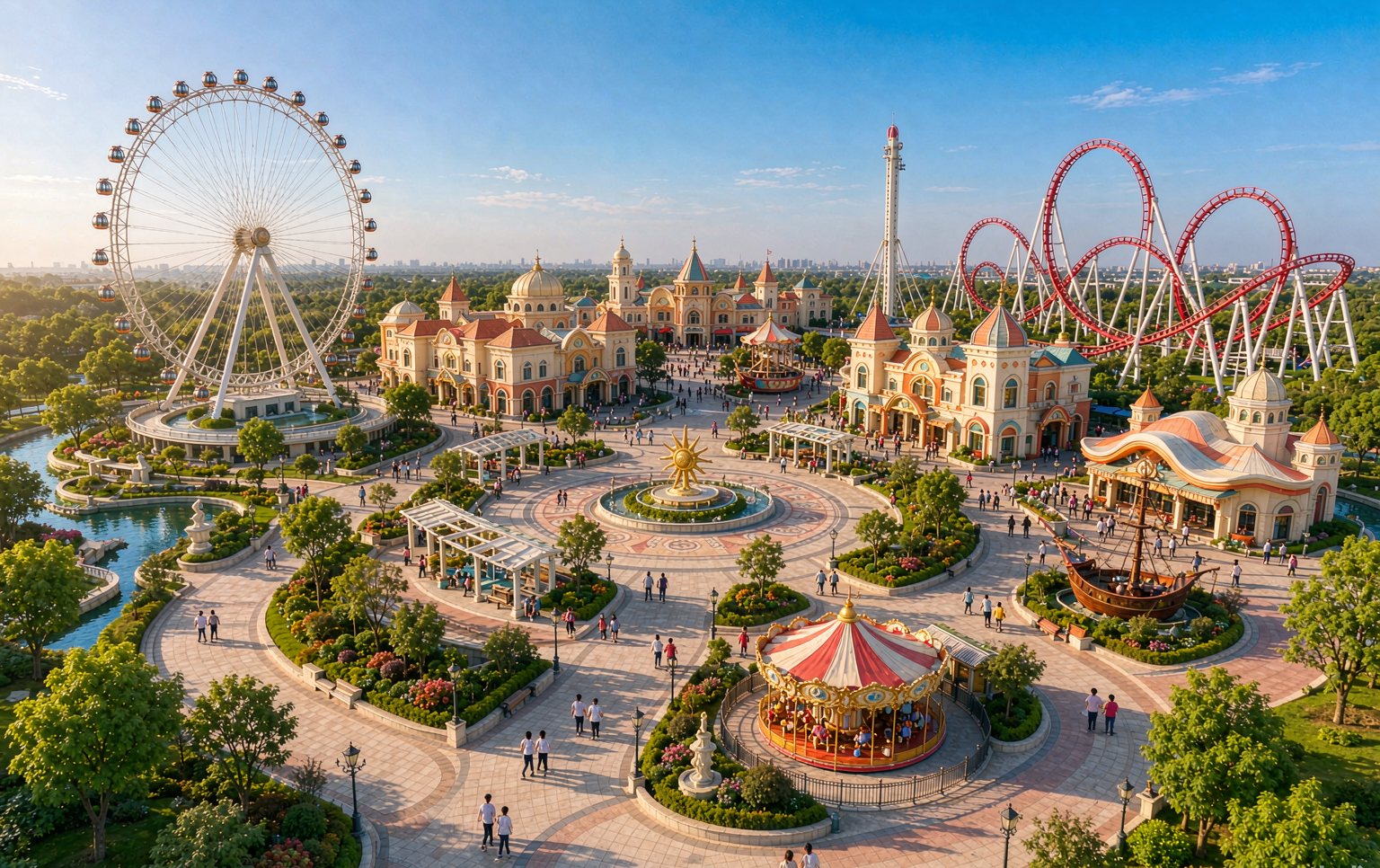
Selecting the right partner among today’s theme park manufacturers is one of the highest-stakes decisions an owner, operator, investor, or FEC developer will ever make. The equipment you buy defines your guest experience, your safety record, and your returns for the next two decades. This guide walks through how to evaluate theme park manufacturers methodically — engineering depth, certifications, lead times, spare parts, and after-sales support.
What Theme Park Manufacturers Really Do
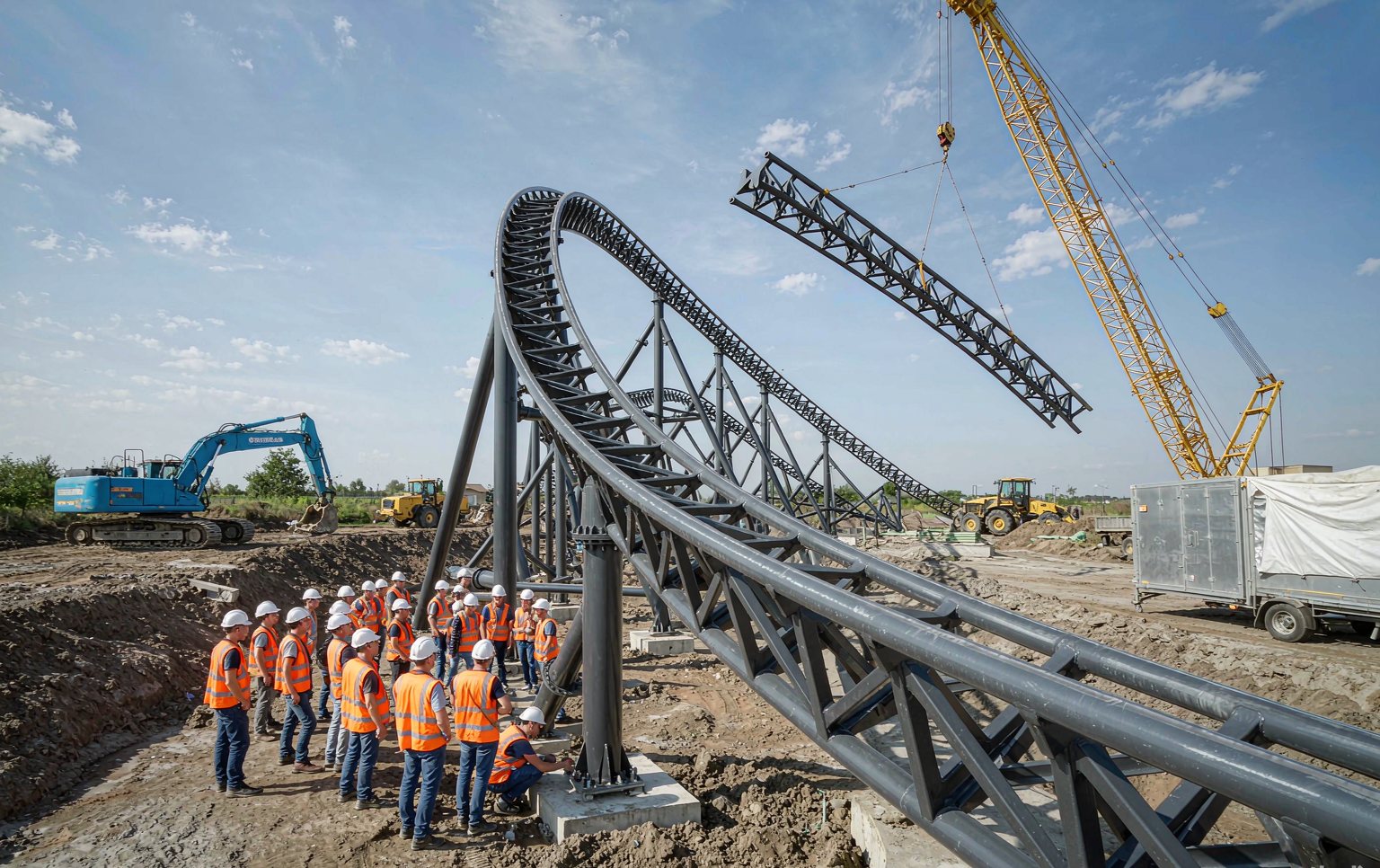
A common misconception is that a manufacturer simply builds a ride and ships it. In reality, capable theme park manufacturers operate as full project partners. They usually start with feasibility studies and site planning, then move into structural engineering, dynamic load analysis, and 3D concept design long before a single steel beam is cut. That early work determines whether a ride will fit your available footprint, pass local inspection, and handle the throughput your business plan assumes.
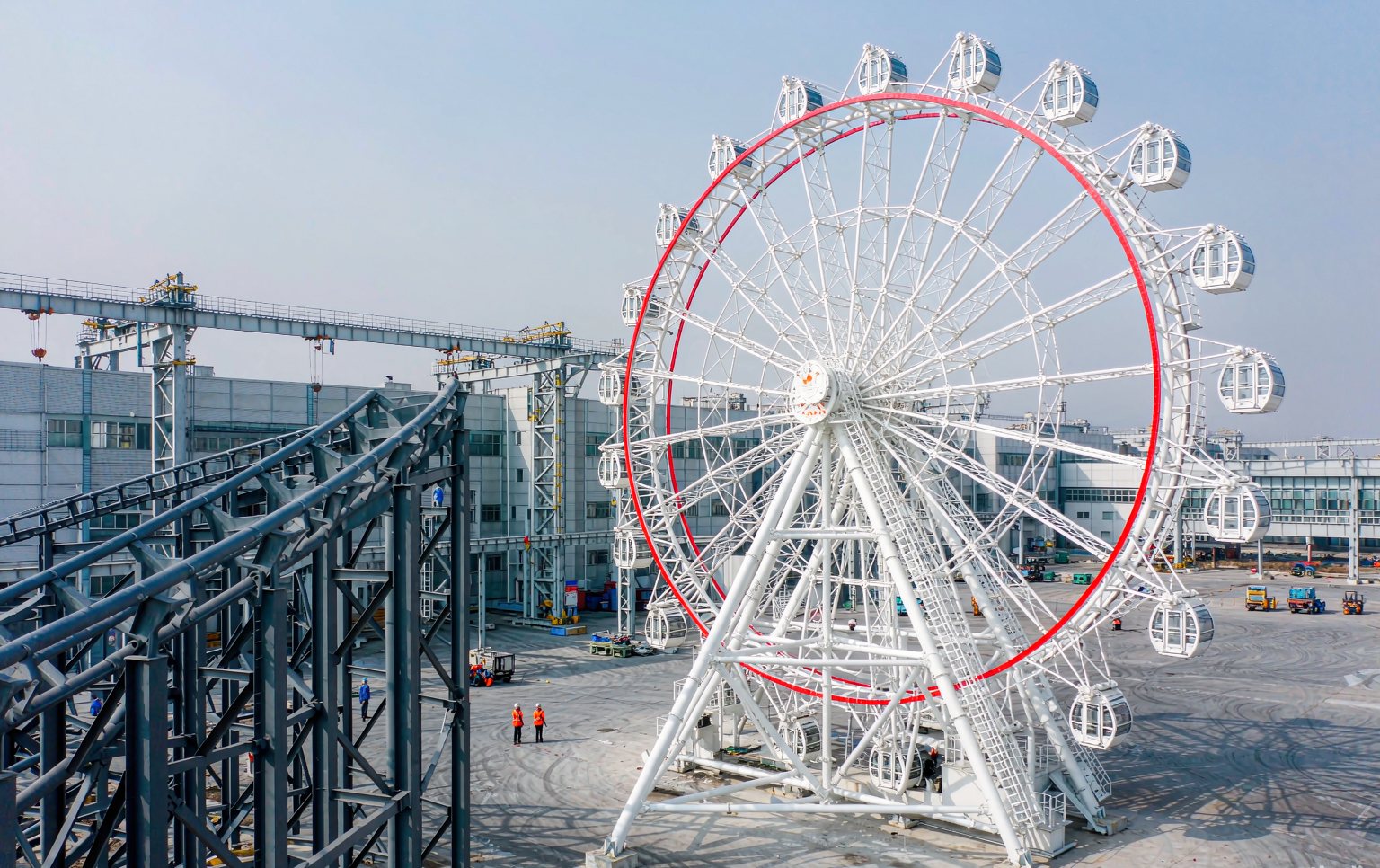
After fabrication, the strongest suppliers manage factory acceptance testing, shipping logistics, customs documentation, on-site assembly, commissioning, and operator training. When you shortlist theme park manufacturers, you are not comparing catalogs — you are comparing engineering teams, production capacity, and service infrastructure. A supplier that only quotes a price and a delivery date is handing you a fraction of the project.
Anxin Amusement, for instance, delivers complete solutions that span design, manufacturing, installation, and training, with more than 200 rides delivered across 24+ countries. That breadth of custom solutions is exactly what separates a project partner from a parts vendor, and it is why operators in regulated markets increasingly prefer one accountable supplier over a chain of subcontractors.
Depth also shows in research and development. Manufacturers that invest in in-house R&D can refine restraint systems, braking, and drive trains instead of copying an existing design. That matters when local regulations tighten, or when you want a signature attraction that no competitor nearby can replicate. Ask how many engineers the company employs, how long they have worked in the industry, and whether the business holds patents or proprietary designs of its own.
Why Partner Selection Decides Your Project ROI
Ride procurement is a capital decision with a 10–20 year horizon. Choosing among theme park manufacturers on price alone is the fastest way to damage that horizon. A cheap ride that suffers downtime, lacks spare parts, or fails inspection will cost far more than the savings recorded on the purchase order.
Reputable theme park manufacturers engineer for uptime. They specify components that are available in the aftermarket, document maintenance intervals, and provide lifetime technical support. Every additional day of reliable uptime translates directly into ticket, food, beverage, and retail revenue, and it protects the reputation you have spent years building with your local community.
Consider the arithmetic. A family ride that generates $2,000 per day in incremental revenue loses roughly $60,000 for every month it sits idle. A single closure during peak season can therefore outweigh the entire price gap between a low-cost fabricator and a serious manufacturer. When you frame the decision that way, the real question is not which quote is cheapest, but which supplier keeps the asset earning.
There is also a hidden cost to splitting a project across vendors. When drawings, tooling, and certifications sit with one company while assembly sits with another, change orders multiply and schedules slip. Operators who consolidate engineering, fabrication, and installation under one roof report fewer disputes, faster regulatory sign-off, and a much smoother handover to their own maintenance team.
Types of Ride Suppliers You Will Meet
The market is not monolithic. Broadly, you will encounter four categories when screening theme park manufacturers, and each carries a different risk profile.
Full-scope solution providers design, manufacture, install, and service a wide product range — thrill rides, family rides, and power-free playgrounds. Specialist manufacturers concentrate on a single category, such as large Ferris wheels or launch coasters. Regional fabricators serve local markets with competitive pricing but limited engineering depth. Brokers and trading companies resell third-party equipment and frequently cannot support installation, certification, or spare parts after the sale.
For most operators, full-scope theme park manufacturers offer the best balance of accountability and scale. A single point of responsibility eliminates the finger-pointing that occurs when a broker, a fabricator, and an installation crew each blame the others for a delay or a defect.
Your choice among these categories usually tracks project scale. A small FEC adding one kiddie ride may work comfortably with a regional fabricator. A destination park investing in a landmark structure, a launch coaster, or an entire multi-ride precinct needs the engineering depth, testing discipline, and documentation package that only an established producer can deliver.
How to Evaluate Theme Park Manufacturers: A 10-Point Checklist
Use this checklist during due diligence. Score each item from 1 to 5 and insist on documented evidence rather than verbal assurances. Anything you cannot verify, treat as a risk.
- Engineering team: In-house structural and mechanical engineers, not outsourced drafting.
- Track record: Verifiable installations you can visit or review on a video call.
- Certifications: CE, EN 13814, ISO 9001, or ASTM compliance relevant to your market.
- Factory testing: Every unit tested before shipment, with written test reports.
- Production capacity: Enough floor space and skilled staff to meet your deadline without last-minute subcontracting.
- Lead time: Realistic schedules — typically 25–45 days for standard rides and 35–60 days for custom equipment.
- Installation support: A professional crew, with on-site assembly taking 10–25 days.
- Warranty: At least a 2-year warranty plus a documented spare parts supply.
- Training: Operator and maintenance training included, not sold as an optional add-on.
- References: Three client contacts in markets comparable to yours.
Strong theme park manufacturers will welcome this scrutiny and produce documentation within days. Reluctance to share certificates, test reports, or references is itself a data point worth weighing heavily.
Site readiness deserves its own line in your plan. Access roads, crane capacity, power supply, water, drainage, and foundation works all affect how quickly a crew can assemble a ride. Share detailed site drawings and a ground survey early; experienced suppliers will flag problems before steel ever leaves the factory and help you avoid expensive rework once the crew is on site.
Comparing Suppliers: In-House vs. Contract Manufacturing
Not every company that sells rides actually builds them, and the difference shows up quickly during a project. The table below contrasts the two operating models you will meet when comparing theme park manufacturers.
| Factor | In-House Theme Park Manufacturers | Contract or Broker Model |
|---|---|---|
| Engineering control | Direct, in-house design and load analysis | Outsourced or third-party |
| Quality consistency | Documented QC and factory testing | Varies by subcontractor |
| Lead time control | Predictable, published schedules | Dependent on external suppliers |
| Spare parts | Guaranteed supply and original drawings | Often unavailable long term |
| Accountability | Single point of responsibility | Split across multiple parties |
| Certifications | CE, EN 13814, ISO 9001, ASTM | Inconsistent or missing |
When the stakes are high, companies that build in-house are almost always the safer choice. You gain a partner who can answer technical questions directly, modify a design without a chain of approvals, and support the asset for its entire service life.
Certifications, Safety, and Compliance
Safety documentation is non-negotiable in this industry. Ask every shortlisted supplier for current certificates and confirm that they apply to the specific ride model you are purchasing. A general company certificate is not sufficient; the paperwork must reference your equipment.
Leading suppliers comply with CE marking, EN 13814 for amusement ride safety, ISO 9001 quality management, and ASTM standards where applicable. They also provide structural calculations, dynamic load reports, and maintenance manuals in the language your technicians speak.
Quality = Existence. A ride that cannot be certified cannot be insured, financed, or opened.
Regulatory requirements vary widely by country. Inspectors across Europe, the Middle East, South America, and Oceania expect clear conformity documentation at handover. Work with suppliers who export regularly into regulated markets and who can deliver a complete compliance package on day one rather than promising documents later.
Documentation should travel with the asset. At handover, request as-built drawings, weld inspection records, non-destructive testing results, electrical schematics, and a spare parts catalog with part numbers. This package becomes essential years later, when a component needs replacing and the original project manager has long since moved on. Suppliers who archive project files and can retrieve them on request save operators weeks of avoidable downtime.
Cost, Lead Time, and Total Cost of Ownership
Purchase price is only the first line of the budget. Total cost of ownership includes shipping, import duties, foundations, civil works, installation, commissioning, spare parts, and periodic inspection. Sophisticated theme park manufacturers help you model these costs before you commit, so there are no surprises three months into construction.
Lead time matters just as much as price. Standard rides typically ship 25–45 days after design approval, while large or custom equipment such as Ferris wheels and roller coasters takes 35–60 days. Add 10–25 days for on-site assembly and a further window for commissioning and staff training. Build those periods into your opening date, your marketing campaign, and your recruitment plan.
Finally, negotiate service terms up front. The strongest suppliers bundle operator training, scheduled maintenance, and a documented spare parts list into the contract instead of treating each of them as an optional extra. A ride is a long-term asset, and the terms you agree to today set the cost of owning it for years.
Financing and insurance also depend on paperwork. Banks and insurers increasingly ask for conformity certificates, structural calculations, and a maintenance plan before approving a loan or a policy covering an amusement installation. A supplier who understands these requirements can shorten the approval process considerably and prevent an otherwise ready project from stalling at the final stage.
Frequently Asked Questions
How do I compare theme park manufacturers fairly when their quotes differ widely?
Normalize every quote to the same scope: engineering, foundations, shipping, installation, commissioning, training, warranty, and spare parts. Then compare certifications and verifiable references. The lowest number is rarely the lowest total cost once the full project is priced.
What certifications should reputable theme park manufacturers hold?
At minimum, CE marking and EN 13814 for ride safety, plus ISO 9001 for quality management. ASTM compliance is valuable for North American buyers. Always request certificates that name your specific ride model.
How long does delivery take from overseas ride suppliers?
Standard rides usually ship in 25–45 days after design approval, while custom or large equipment takes 35–60 days. On-site installation generally adds 10–25 days, depending on complexity and how ready the site is.
Do the best suppliers provide installation and operator training?
Yes. A full-scope partner sends a professional installation team, commissions the ride, and trains your operators and maintenance staff. This should be written into the contract, not handled informally between engineers on site.
What warranty and after-sales support should I expect?
Look for at least a 2-year warranty, lifetime technical support, guaranteed spare parts supply, and clear maintenance documentation. Ask exactly how the supplier responds if a critical component fails in the middle of peak season.
Conclusion: Choosing the Right Theme Park Manufacturers
Choosing among theme park manufacturers is ultimately a decision about risk. The right partner brings engineering depth, verifiable certifications, realistic lead times, and support that continues long after installation. The wrong one leaves you holding an asset you may not be able to certify, insure, or keep running.
Use the checklist and comparison table above as a screening framework, request documentation early, and visit a reference site whenever it is practical. Diligence at the procurement stage protects your capital, your schedule, and your reputation with guests and regulators alike.
Think beyond the first ride, too. A supplier you trust today can support a phased expansion tomorrow, matching new attractions to your existing standards, spare parts inventory, and maintenance routines. Long-term relationships of that kind consistently deliver better pricing, priority scheduling, and faster technical support than a string of one-off transactions.
Anxin Amusement has manufactured rides for more than 15 years, delivering 200+ rides to 24+ countries with CE, EN 13814, ISO 9001, and ASTM compliance, a 2-year warranty, and lifetime technical support. If you are evaluating theme park manufacturers for an upcoming project, explore our custom theme park solutions or contact our team for a detailed proposal and site assessment.