Theme parks are among the most complex construction projects in the world. Unlike conventional commercial or residential buildings, theme parks combine large-scale civil engineering, precision ride installation, custom fabrication, themed environment creation, and sophisticated technology integration into a single coordinated project. At the heart of every successful park lies disciplined theme park construction that transforms creative designs into safe, immersive, and profitable guest destinations.
For developers, investors, operators, contractors, and creative professionals, understanding the full scope of theme park construction is essential for managing risk, controlling costs, maintaining schedules, and delivering high-quality results. The construction process shapes every physical aspect of a park, from site preparation and infrastructure through attraction installation, themed environment buildout, commissioning, and final opening.
In this article, we will explore the phases of theme park construction, the specialized disciplines involved, the challenges that make themed projects unique, the best practices that drive successful delivery, and the emerging trends shaping the future of the industry.
The Theme Park Construction Process
Successful theme park construction follows a structured process that moves from site preparation through final commissioning. Each phase requires specialized expertise, careful coordination, and rigorous quality control.
Site Preparation and Civil Work
Construction begins with preparing the site for development. This includes grading, drainage, utility installation, road construction, parking facilities, and infrastructure systems. Site preparation establishes the foundation for all subsequent work and must accommodate the park’s long-term operational needs.
Structural Construction
Structural construction includes buildings, support structures, attraction foundations, show buildings, and guest facilities. Theme park structures must meet rigorous engineering standards while accommodating complex architectural forms, themed facades, and specialized equipment.
Attraction Installation
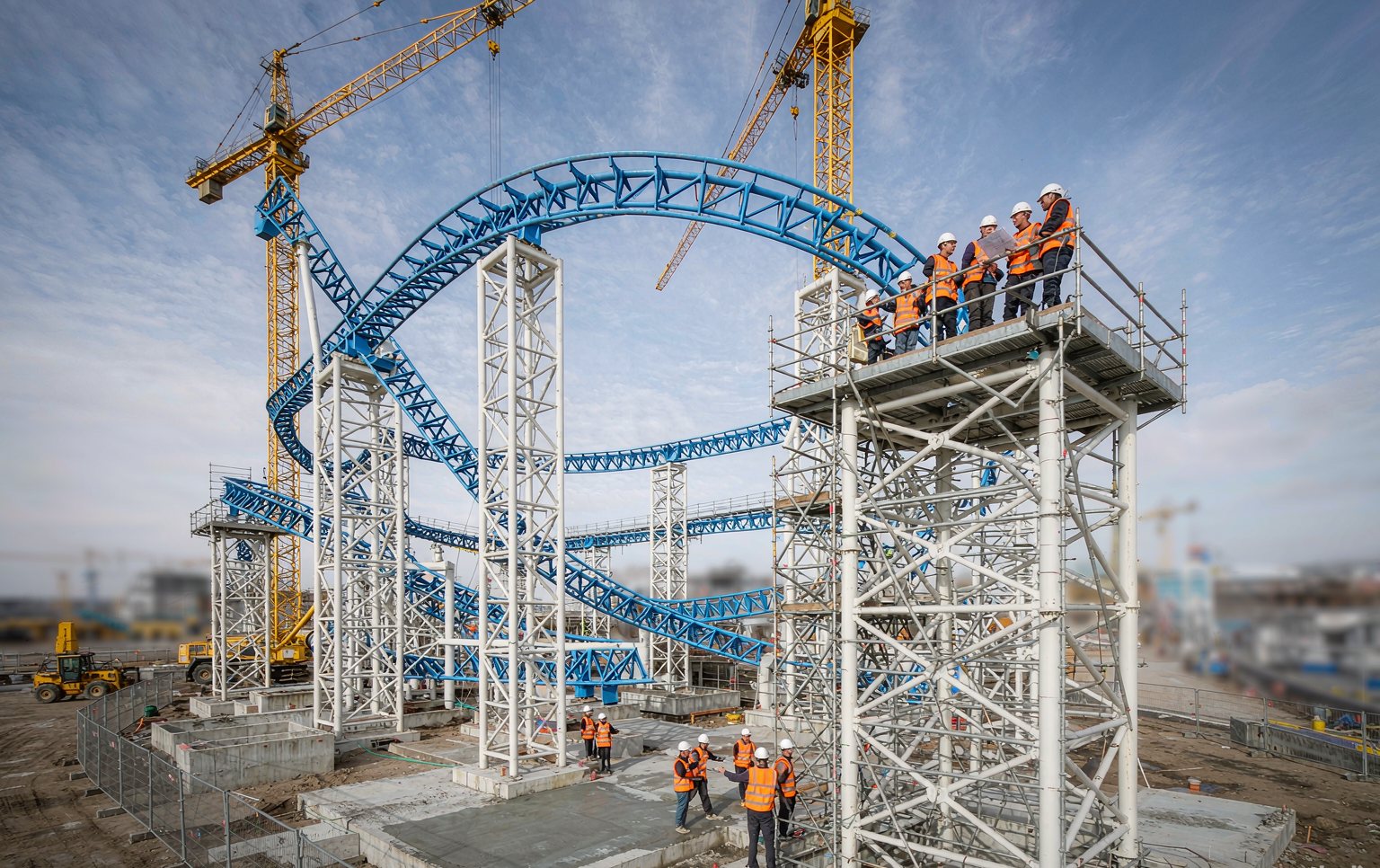
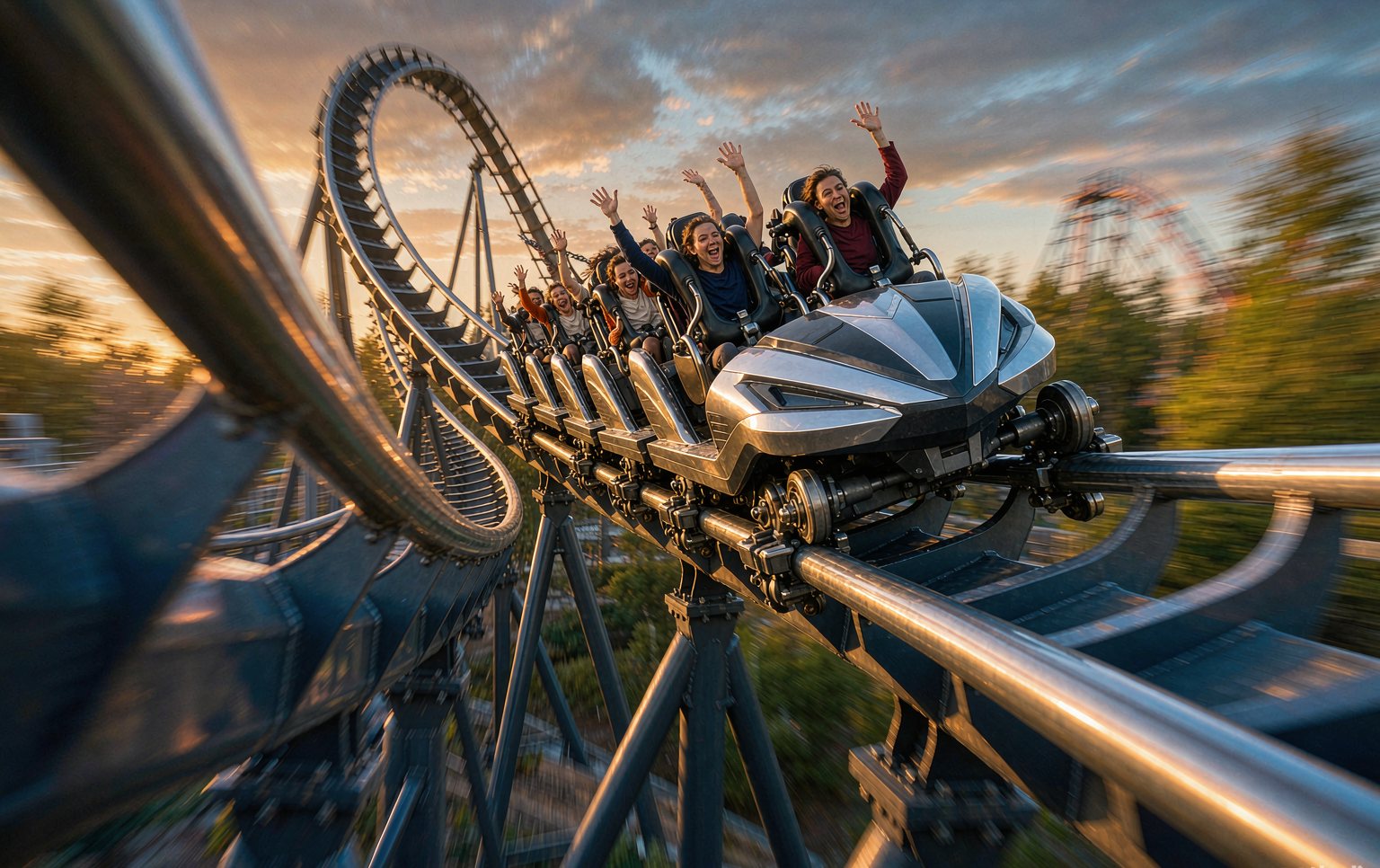
Attraction installation is among the most technically demanding aspects of theme park construction. Ride manufacturers deliver major components that must be assembled with precision tolerances. Track alignment, structural connections, control systems, restraint systems, and safety mechanisms must all meet exacting standards.
Themed Environment Construction
Themed environments transform ordinary structures into immersive worlds. Specialized artisans create rockwork, facades, interior sets, props, murals, sculptural elements, and decorative finishes. These elements must be durable, safe, and visually consistent with the creative design intent.
Technology Integration
Modern theme parks rely on complex technology systems. These include ride control systems, show control systems, audio systems, lighting systems, projection systems, animatronics, communication networks, and guest-facing technology. Technology integration requires coordination between multiple specialized contractors.
Commissioning and Testing
Before a park opens, every system must be tested and verified. Attractions undergo extensive operational testing, safety systems are validated, control systems are calibrated, and staff receive comprehensive training. Commissioning ensures that the park delivers a safe, reliable, and high-quality guest experience from day one.
Specialized Disciplines in Theme Park Construction
Theme park construction requires coordination among multiple specialized disciplines that rarely converge on conventional construction projects.
Ride Manufacturers and Installers
Ride manufacturers design, fabricate, and often supervise the installation of attraction systems. Their involvement ensures that attractions are assembled according to engineering specifications and operational requirements.
Themed Environment Contractors
Specialized contractors create the visual and sensory elements that define themed environments. These include sculptors, painters, set builders, landscape artists, lighting designers, and fabrication shops that produce custom elements.
Show Technology Integrators
Show technology integrators install and program the systems that bring attractions to life. They coordinate audio, video, lighting, projection, animatronics, special effects, and control systems to create cohesive experiences.
Civil and Structural Engineers
Civil and structural engineers design the infrastructure and structures that support the park. Their work must accommodate heavy dynamic loads from rides, complex architectural forms, and long-term durability requirements.
MEP Contractors
Mechanical, electrical, and plumbing contractors install the systems that make the park function. These include HVAC systems, electrical distribution, fire protection, water treatment, drainage, and specialized attraction support systems.
Safety and Quality Assurance Teams
Safety and quality assurance teams verify that construction meets design specifications, safety standards, and regulatory requirements. Their oversight ensures that every component performs as intended throughout the park’s operational life.
Challenges Unique to Theme Park Construction
Theme park construction presents challenges that distinguish it from conventional construction projects.
Custom Fabrication
Most themed elements are custom-designed and one-of-a-kind. Unlike conventional construction that relies on standardized components, themed environments require specialized fabrication, artistic craftsmanship, and creative problem-solving.
Complex Coordination
Theme parks involve multiple contractors, manufacturers, designers, and technology providers working simultaneously. Coordinating these parties requires sophisticated project management, clear communication, and integrated scheduling.
Precision Requirements
Attractions demand precision tolerances that exceed conventional construction standards. Track alignment, structural connections, control systems, and safety mechanisms must meet exacting specifications to ensure safe and reliable operation.
Creative and Technical Integration
Creative design and technical engineering must work in harmony. Themed elements must accommodate structural requirements, maintenance access, safety systems, and operational needs without compromising the guest experience.
Weather and Environmental Factors
Outdoor construction is subject to weather conditions that can impact schedules and quality. Theme parks in tropical, desert, or cold climate regions face additional challenges related to temperature, humidity, precipitation, and environmental conditions.
Regulatory Compliance
Theme parks must comply with building codes, safety standards, fire protection requirements, accessibility standards, and environmental regulations. Different jurisdictions have different requirements, and successful projects engage early with regulatory authorities.
Best Practices for Successful Theme Park Construction
Successful theme park construction requires disciplined project management and proven best practices.
Integrated Project Delivery
Integrated project delivery brings designers, engineers, contractors, manufacturers, and operators together early in the process. This approach reduces conflicts, improves coordination, and ensures that design intent is maintained throughout construction.
Clear Scope Definition
Clear scope definition prevents misunderstandings and change orders. Contracts should define deliverables, quality standards, schedules, responsibilities, and acceptance criteria with precision.
Rigorous Quality Control
Quality control must be continuous throughout construction. Regular inspections, testing protocols, and documentation ensure that work meets design specifications and safety standards.
Proactive Risk Management
Theme park construction involves significant financial, schedule, and safety risks. Proactive risk management identifies potential issues early, develops mitigation strategies, and maintains contingency plans.
Strong Communication
Effective communication between all project stakeholders is essential. Regular coordination meetings, clear documentation, shared schedules, and transparent reporting prevent misunderstandings and keep projects on track.
Comprehensive Testing
Testing should begin during construction, not after completion. Early testing of systems, components, and interfaces identifies issues while they can be addressed efficiently and cost-effectively.
Safety in Theme Park Construction
Safety is paramount in theme park construction. The combination of heavy equipment, elevated work, complex systems, and multiple contractors creates an environment where safety discipline is essential.
Construction Safety Programs
Comprehensive safety programs establish protocols for hazard identification, risk assessment, personal protective equipment, equipment operation, and emergency response.
Ride Safety Standards
Attractions must meet rigorous safety standards throughout their operational life. Construction quality directly impacts long-term ride safety, making precision installation and thorough testing essential.
Worker Training
All workers must receive appropriate training for their specific roles. Specialized training is required for ride installation, themed environment fabrication, technology integration, and work at heights.
Emergency Preparedness
Construction sites must have emergency response plans, first aid capabilities, fire protection systems, and clear communication protocols. Preparedness reduces the impact of incidents when they occur.
Emerging Trends in Theme Park Construction
The construction industry continues to evolve, driven by technological innovation and changing project delivery methods.
Building Information Modeling
Building Information Modeling enables designers, engineers, and contractors to coordinate complex systems before construction begins. This technology reduces conflicts, improves accuracy, and enhances collaboration.
Prefabrication and Modular Construction
Prefabrication and modular construction reduce on-site construction time and improve quality control. Components fabricated in controlled environments can be transported to site and installed with greater precision.
Sustainable Construction Practices
Energy-efficient systems, sustainable materials, water conservation, waste reduction, and renewable energy integration are becoming standard features in modern theme park construction. These practices reduce environmental impact while lowering long-term operating costs.
Digital Twin Technology
Digital twin technology creates virtual replicas of physical assets that can be used for design validation, construction planning, and ongoing operations. These models improve coordination and support long-term asset management.
Advanced Project Management Tools
Cloud-based project management platforms, real-time scheduling, mobile reporting, and integrated communication tools improve coordination among distributed project teams.
Final Thoughts
Theme park construction is one of the most complex and rewarding forms of construction in the world. It requires technical precision, creative craftsmanship, disciplined project management, and unwavering commitment to safety.
For developers and operators, success depends on more than building impressive structures. It requires a comprehensive approach that integrates design intent, engineering excellence, operational planning, quality control, and long-term maintainability. Parks that treat construction as an integrated process, rather than a series of isolated tasks, are best positioned to deliver destinations that are safe, immersive, reliable, and financially successful.
As technology continues to advance and guest expectations continue to evolve, the most successful theme park construction projects will be those that embrace innovation while maintaining the highest standards of quality, safety, and craftsmanship. By investing in skilled teams, proven processes, and disciplined execution, developers can create destinations that deliver unforgettable experiences for generations of guests.