Sourcing roller coaster cars for sale is very different from buying a complete coaster system. Whether you operate a family entertainment center adding a compact steel coaster, a theme park replacing aging vehicles on an existing circuit, or a ride brokerage hunting compatible spare parts, the vehicles themselves are where safety, comfort, and uptime are won or lost. This guide breaks down exactly what you can buy — complete trains, individual replacement cars, wheel assemblies, and restraint systems — what they cost, and how to confirm compatibility before you sign a purchase order.
Roller Coaster Cars for Sale: What Exactly Are You Buying?
Before comparing quotes, get precise about the scope of your purchase. Listings for roller coaster cars for sale generally fall into three categories, and mixing them up is the most common cause of mismatched expectations between buyer and manufacturer:
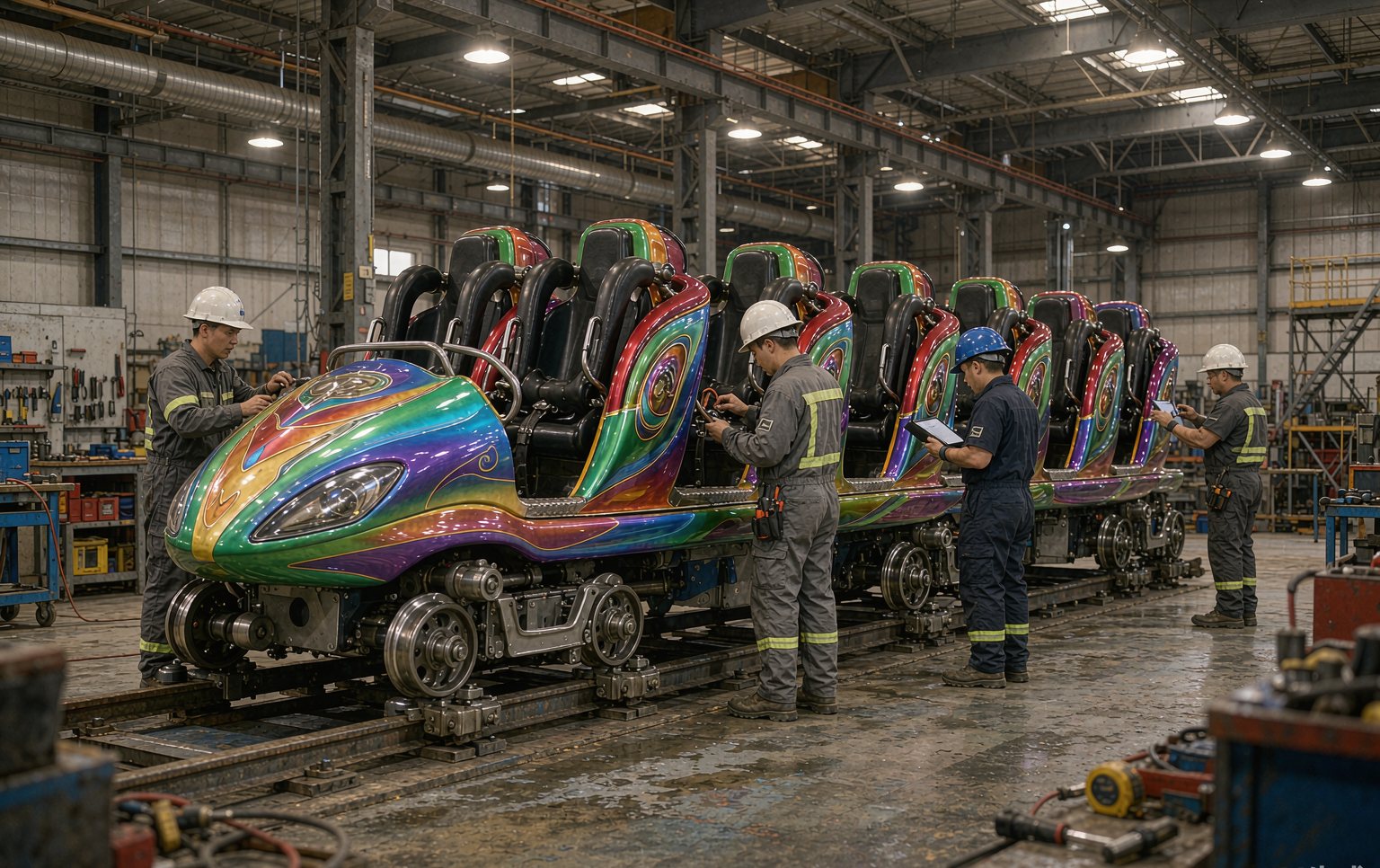
- Complete coaster trains: a matched set of vehicles (typically 3–6 cars) with couplers, wheels, restraints, and control interfaces, delivered as a rolling system ready for a track.
- Individual replacement cars: single vehicles built to match an existing train and track — common after collision damage, corrosion, or a capacity change.
- Components and subassemblies: wheel assemblies (road and up-stop wheels), lap bars and over-the-shoulder restraints, chassis frames, brake fins, and sensor hardware.
A reputable manufacturer will quote each category separately, because lead time, testing requirements, and price structure differ significantly. If you are evaluating an entire new ride rather than vehicles alone, our overview of a roller coaster for sale covers complete system pricing and layout options.
For operators whose track, lift hill, and control system are healthy but whose vehicles are worn, replacing the train — rather than the whole ride — is usually the smartest entry point into the roller coaster cars for sale market. A new train lets you upgrade restraint technology, refresh capacity ratings, and re-theme the ride at a fraction of the cost of new track and foundations.
Replacement cars make sense in three scenarios: accident or weather damage to specific vehicles, a phased refurbishment program, or a fleet standardization effort where one manufacturer’s cars must interface with another’s legacy track. In every case, the critical question is compatibility — covered in detail below — because a visually identical car can be mechanically unusable on the wrong track.

When you buy roller coaster cars for sale from a factory that also builds complete coasters, you benefit from in-house fiberglass molding, welding, and dynamic testing — the same disciplines that govern a full roller coaster construction project. Factories that only sell parts often outsource molding and cannot certify the assembled vehicle as a unit.
Wheel Assemblies, Lap Bars and Restraints: The Parts That Matter Most
Passengers touch the seat and the lap bar; everything else is engineering they never see. These are the components that deserve the closest scrutiny in any quote:
- Wheel assemblies. Each car runs on road wheels (carrying load), up-stop wheels (preventing lift-off), and side friction wheels (guiding the car through turns). Polyurethane-tread wheels on machined steel hubs are the industry norm. Insist on documented material specs, load ratings, and a defined replacement interval — typically measured in operating seasons.
- Lap bars and restraints. Hydraulic or ratchet-type lap bars with dual redundancy, or over-the-shoulder restraints on coasters with inversions. Restraints should be self-locking, inspectable without disassembly, and compliant with EN 13814 or ASTM F2291 design requirements.
- Chassis and frames. Welded steel chassis with documented weld inspection (visual plus NDT on critical joints) and anti-corrosion coating appropriate to your climate — a coastal park needs a materially different coating spec than a desert site.
- Brake fins and sensors. Metal brake fins and proximity sensors must match your track’s brake system and control PLC inputs; these are the most commonly overlooked compatibility items in cross-brand purchases.
For individual components rather than whole vehicles, see our guide to amusement ride parts for sale, which covers bearings, motors, PLC modules, and restraint hardware in depth.
Compatibility: Track Gauge, Control Systems and Existing Infrastructure
Buying a car that does not fit your track is an expensive paperweight. Before you request quotes for roller coaster cars for sale, gather this data from your existing installation:
- Track gauge (center-to-center rail distance) and rail profile — this determines wheel set geometry.
- Lift and launch type: chain lift, tire drive, or LSM/linear motor — cars must have the matching anti-roll-back dogs, drive interface pads, or fin arrays.
- Brake and control interface: sensor type, voltage, and PLC protocol so the new cars communicate with your existing block system.
- Station and platform geometry: car width, door or gate alignment, and load height must match your platform and safety gates.
- Train dynamics: total train mass, center of gravity, and wheelbase affect block timing and dispatch intervals; your control system was tuned to the original values.
Send engineering drawings, not just photographs. A serious manufacturer will review your track data and confirm fit before quoting — and will decline the sale if the interface cannot be made safe. That refusal is a green flag, not a red one. Expect a proper retrofit process to run in stages: dimensional survey of your existing track and stations, interface drawings for your sign-off, prototype wheel-set fitment on a gauge fixture, then full train trials before packing. Budget four to six weeks for this engineering phase on cross-brand projects, because it runs in parallel with fabrication rather than instead of it. Buyers planning a full new-build should also read our guide to choosing the best coaster manufacturer, which explains how factory auditing applies to both rides and vehicles.
Fiberglass Bodies, Theming and Custom Finishes
The visible shell of a coaster car is hand-laid or RTM fiberglass: a gelcoat exterior, structural laminate, and an internal steel or composite mounting skeleton. Quality differences show up in laminate thickness consistency, UV-stable gelcoat, and the precision of mold parting lines.
Theming is what separates interchangeable hardware from a signature attraction when you compare roller coaster cars for sale. Standard options include solid color gelcoats, multi-color airbrushed liveries, LED accent lighting integrated into the shell, and fully sculpted custom fronts — a dragon head, a rocket nose, a cartoon vehicle face — for family coasters. At Anxin Amusement, every train is molded, painted, and assembled in-house, so theme park operators can match car liveries to an existing land or re-theme a ride during refurbishment without a second vendor.
Specify your theming in writing: number of paint colors, artwork files, LED count and control, and clear-coat protection. Re-painting fiberglass later is possible but costs more than doing it right at the mold stage.
Roller Coaster Cars for Sale: Indicative Price Bands for 2026
Pricing below is indicative, ex-works China, configuration dependent, and reflects current export-market ranges. Full ride systems (track, supports, trains, controls) run from roughly $150k for a family coaster to $1.2M for large custom installations — the table here covers vehicles and major components only.
| Item | Typical Specification | Indicative Price (USD) |
|---|---|---|
| Single replacement car (family coaster) | 4-seat fiberglass body, steel chassis, lap bars, wheel sets | $18,000 – $45,000 |
| Complete train, family coaster (4 cars) | 16 passengers, chain-lift interface, standard theming | $70,000 – $180,000 |
| Complete train, spinning or suspended coaster | Custom chassis, enhanced restraints, premium theming | $150,000 – $350,000 |
| Wheel assembly (per axle set) | Road + up-stop + side wheels, polyurethane tread | $800 – $3,000 |
| Lap bar / restraint unit (per seat) | Hydraulic or ratchet type, dual locking | $600 – $2,200 |
| Custom themed car body (shell + paint) | Sculpted front, multi-color paint, LED package | $5,000 – $15,000 |
Several factors push a quote toward the upper end of each band: inversions requiring shoulder restraints, tropical or coastal corrosion packages, third-party certification fees, special track interfaces, and expedited production. Always confirm what documentation is included — material certificates, weld records, and dynamic test reports should be standard, not extras.
Lead Times, Payment Terms and Shipping
For roller coaster cars for sale in standard configurations, typical production lead time is 25–45 days; complete custom trains or vehicles requiring new molds and engineering review run 35–60 days. Mold creation for a bespoke themed body adds time, so order re-theming packages in your park’s off-season.
Standard payment structure is 30% deposit with order and 70% balance before shipment, via T/T. Every unit is factory-tested before dispatch — wheel fitment checks on a gauge fixture, restraint cycle testing, and full train static and dynamic trials where the track interface is known. Export shipping is typically flat-rack or containerized; a four-car family train usually fits two 40-foot containers with frames and spares.
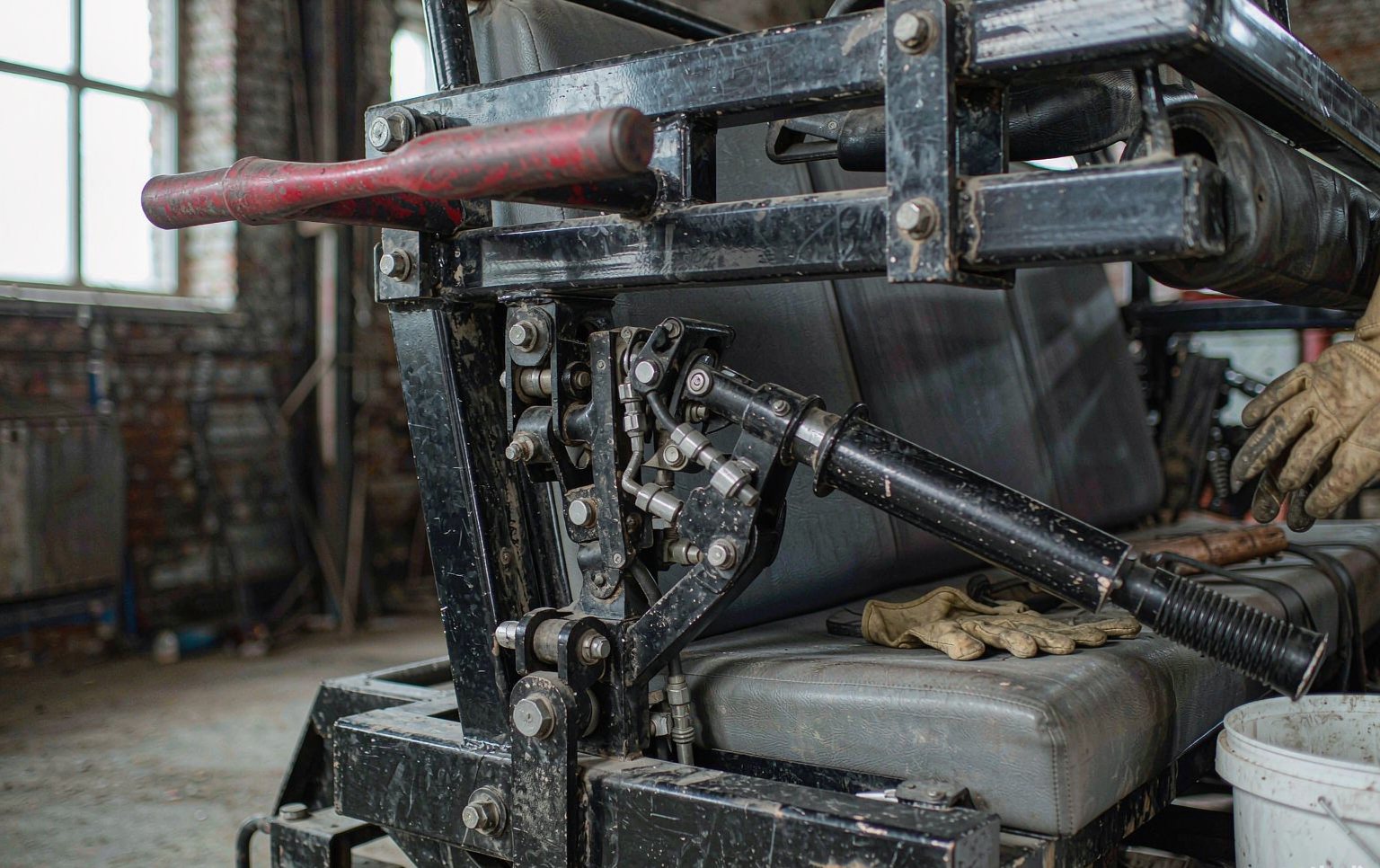
After delivery, support matters as much as the build. Keep a scheduled spare-parts kit on site — wheel sets for one full car, restraint cartridges, and sensor spares — so a routine wear item never turns into a ride downtime event. Anxin Amusement maintains spare parts supply and lifetime technical support for every train it ships, with remote diagnostics available for control-system questions.
Plan installation support too: Anxin Amusement provides on-site assembly (typically 10–25 days for full ride installations), operator training, a 2-year warranty, and lifetime technical support with spare parts supply — the same terms that apply to complete coasters.
Buyer’s Checklist Before You Order
Use this checklist when you find roller coaster cars for sale that look like a match. If a supplier cannot answer these questions quickly and in writing, keep looking:
- Track gauge, rail profile, and lift/launch interface confirmed against drawings?
- Brake fin and sensor compatibility with your existing control PLC verified?
- Restraint type certified to EN 13814 or ASTM F2291, with test documentation?
- Weld inspection and NDT reports provided for chassis fabrication?
- Wheel material spec, load rating, and replacement interval documented?
- Factory audit or video inspection completed before deposit?
- Warranty terms (2 years), spare parts availability, and support response time confirmed?
- Shipping, installation, and commissioning scope defined in the contract?
Frequently Asked Questions
Can I buy roller coaster cars for sale that fit another manufacturer’s track?
Yes, provided the interface is verified. The buyer must supply track gauge, lift type, brake and sensor specifications, and station geometry. A qualified manufacturer will engineer wheel sets, couplers, and control interfaces to match, and will test the car on a gauge fixture before shipping. Without full track data, no responsible factory will quote — and you should not accept one that does.
How much does a complete coaster train cost?
A four-car family coaster train typically runs $70,000–$180,000 ex-works, while custom spinning or suspended trains range up to $350,000. Price is driven by restraint technology, theming complexity, corrosion packages, and certification requirements. These figures are indicative and configuration dependent; a formal quote requires your track and capacity specifications.
What is the lead time for replacement coaster cars?
Standard replacement cars and components ship in 25–45 days. Complete trains with new molds, custom theming, or cross-brand interface engineering take 35–60 days. Off-season ordering gives you schedule margin for shipping, installation, and re-certification before your park opens.
How often do coaster wheels and restraints need replacement?
Polyurethane wheel treads are typically inspected monthly and replaced every one to three operating seasons depending on ride intensity and climate; steel hubs last far longer. Restraint mechanisms follow a scheduled inspection cycle — hydraulic units generally require fluid service annually and load testing per your local regulator’s interval. Buy from a supplier that stocks replacement wheels and restraint parts for the life of your ride.
Do replacement cars come with a warranty?
Reputable manufacturers back vehicles and components with a 2-year warranty covering structural, mechanical, and restraint defects, plus lifetime technical support and spare parts supply. Confirm in writing that the warranty applies to standalone vehicle purchases — not only complete ride systems — and that spare parts remain available for a minimum of ten years.
Get a Quote for Coaster Trains and Cars
Whether you need one replacement vehicle, a full re-themed train, or wheel and restraint components for a legacy coaster, the fastest path from browsing roller coaster cars to a firm number is an engineering review of your actual installation. Send Anxin Amusement your track drawings, car count, and theming brief, and our engineers will confirm compatibility, return an itemized quote with lead time and payment terms, and schedule factory testing before shipment. Request a quote today — or explore our complete custom ride solutions if a new attraction is on your roadmap.