A Ferris wheel is the single most visible asset in any park, and it is also one of the longest-lived purchases you will ever make: a well-built wheel can run safely for twenty years or more, while a poorly built one becomes a maintenance drain from day one. That is why the decision between different ferris wheel manufacturers deserves the same rigor as a feasibility study. In this procurement guide, we break down exactly how to evaluate ferris wheel manufacturers on welding and NDT practice, gearbox and drive redundancy, cabin quality, and site supervision — and what you should expect to pay in 2026.
Why Your Choice of Ferris Wheel Manufacturer Matters
Unlike a carousel or a bumper car fleet, a 42–66 meter observation wheel is a permanent steel structure that must survive wind loads, fatigue cycles, and daily passenger throughput for decades. Certificates alone do not guarantee that quality; the discipline of the factory behind them does. Experienced ferris wheel manufacturers design to EN 13814 and ASTM F2291, hold CE and ISO 9001 systems, and — critically — test every structural weld in-house before anything ships. The difference between the best wheels and the rest rarely shows up in the brochure. It shows up in the weld seam of the main spindle, the backlash spec of the drive gearbox, and the willingness of the supplier’s engineers to stand next to your foundation during installation. Anxin Amusement, with 15+ years of manufacturing and 200+ rides delivered across 24+ countries, builds its Ferris wheels on exactly that premise: quality is existence.
Welding, Steel and NDT: The Core of Ride Quality
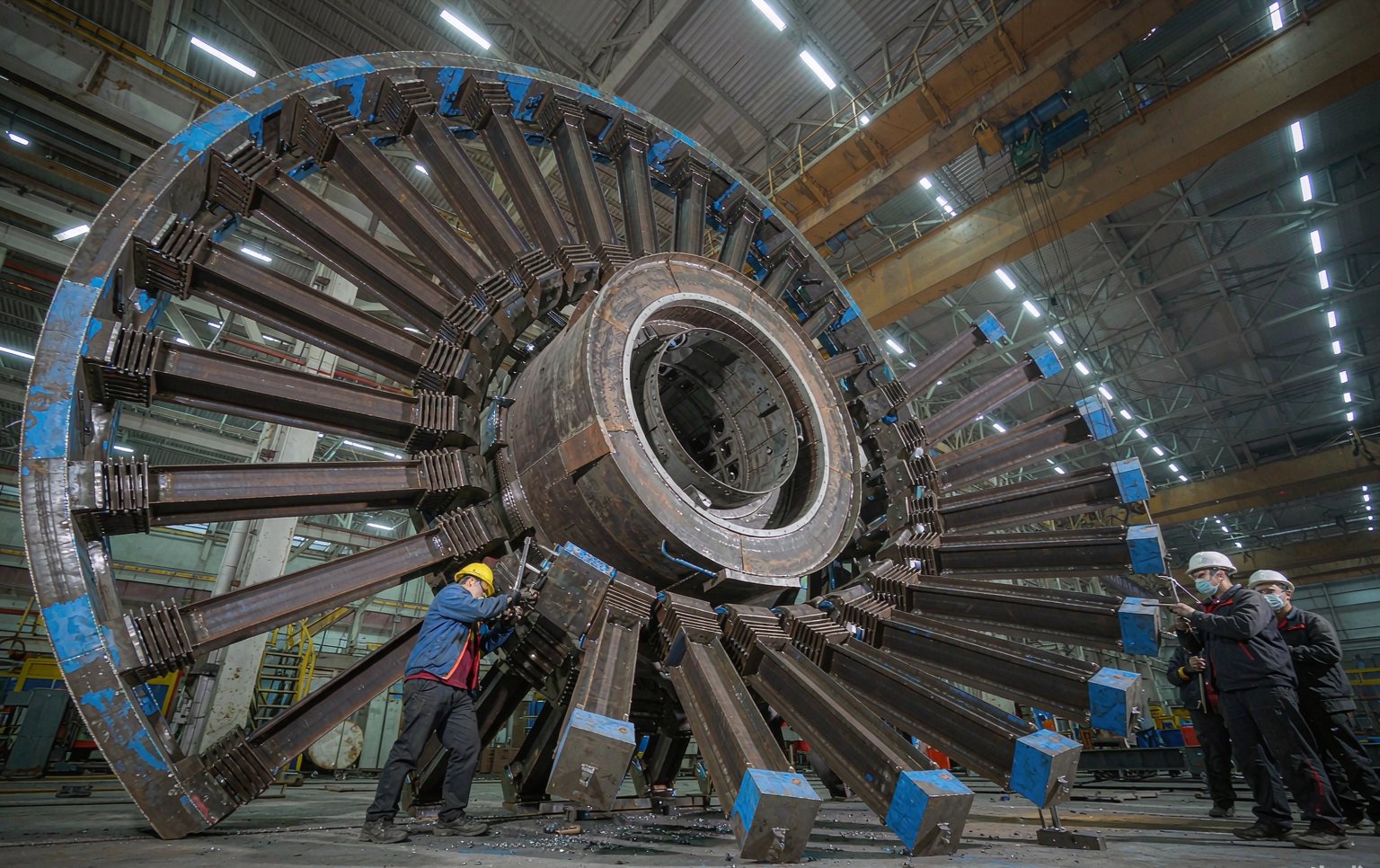
Start your factory audit at the weld shop, because a Ferris wheel is essentially a very large welded structure under cyclic loading. Ask every candidate on your shortlist of ferris wheel manufacturers the following questions and demand documented answers, not verbal assurances:
- Welding procedure specifications (WPS): Are qualified WPS and welder certifications available for the A-frame legs, hub, spokes, and rim sections?
- Steel traceability: Can the mill provide mill test certificates (MTCs) for the structural steel, with heat numbers traceable to your wheel’s components?
- NDT scope: Does quality control include ultrasonic testing (UT) on full-penetration butt welds and magnetic particle testing (MT) on fatigue-critical fillet welds — with written reports per weld, not just per batch?
- Post-weld treatment: Are stress-relief heat treatment or shot peening applied to high-cycle components such as the hub and spoke-to-rim joints?
- Surface protection: Is the corrosion system a hot-dip galvanize-plus-paint duplex coating rated for your site’s coastal or industrial atmosphere?
A reliable manufacturer will walk you through these documents during a Factory Acceptance Test invitation. A trader or an assembly shop will deflect. This single visit usually tells you more than any quotation. For a broader view of how factories compare across ride categories, see our theme park manufacturers buyer’s guide.

Gearbox and Drive Redundancy: What to Inspect Before You Sign
The drive system is where budget wheels cut corners, and it is the most expensive system to retrofit. Top-tier ferris wheel manufacturers engineer redundancy into every wheel above roughly 40 meters. Insist on:
- Multiple drive units: At least two independent drive trains (typically three to six friction-tire or gear-rim drives on large wheels), so a single gearbox failure does not stop the ride.
- Recognized gearbox brands or certified equivalents: Ask for the makes, service factors, and calculated bearing life (L10) of each reducer.
- Emergency and auxiliary drive: A backup system able to rotate the wheel and evacuate cabins at low speed during a power outage.
- Braking redundancy: Independent service and emergency brakes on the rim or main shaft, plus anti-rollback devices.
- Control and monitoring: A PLC with load, speed, wind-speed, and brake monitoring, remote diagnostics access, and labeled spare-part kits shipped with the ride.
During the FAT, request a no-load and partial-load run of the actual drive units destined for your wheel — not a demonstration unit from the showroom. Reputable ferris wheel manufacturers will also let your nominated inspector witness gearbox run-in tests and review vibration readings.
Cabin Quality and Passenger Comfort
Gondolas are your revenue interface: guests pay to sit in them, and insurers assess them. Compare cabin construction across the ferris wheel manufacturers you are quoting. Look for glass-fiber-reinforced plastic (GRP) shells with gelcoat finish (not paint over rough laminate), 304 stainless steel frames and fasteners, safety bars with self-locking latches, tempered glass windows where fitted, and HVAC or ventilation options for hot climates. Interiors should use fire-retardant materials, and each cabin should carry a serialized data plate. Ask about door interlocks and whether cabin doors are monitored from the control cabin. A 42 m wheel with 24–30 cabins should also offer theming options — custom colors, LED accent lighting, and branded panels — since an observation wheel doubles as a city landmark and advertising asset. Our custom amusement rides program covers full cabin theming and wheel illumination packages.
Comparing Types of Ferris Wheel Manufacturers and Suppliers
Not every seller in your inbox actually builds wheels. You will typically meet three types of ferris wheel suppliers, and each carries different risks:
- Direct factories: Own steel fabrication, machining, and GRP shops; provide MTCs, WPS, and NDT reports; assign their own installation engineers. Best total cost of ownership for large wheels.
- Trading companies: Add a margin and a layer of translation; useful for mixed-container orders of small rides, but they rarely control welding quality and often subcontract the wheel itself.
- Local agents and distributors: Convenient for after-sales response, but verify who actually holds the design dossier and who answers warranty claims two winters later.
The practical rule: the larger the wheel, the more the contract must sit directly with the factory that welds and machines the steel. For wheels above 48 meters, deal factory-direct or require the intermediary to name and warrant the actual fabricating plant, and put that plant’s quality documents — MTCs, NDT reports, and design verification — into your contract annexes.
Before shortlisting anyone, run this vetting checklist:
- Valid CE / EN 13814 design verification and ISO 9001 certificate — check the certificate number against the issuing body’s database.
- At least three reference installations of comparable height, with owner contacts you can call.
- In-house NDT capability with dated, weld-by-weld reports from a recent project.
- Documented design calculations for wind, fatigue, and foundation loads, stamped by a qualified engineer.
- Own installation team or named certified subcontractors, plus a supervision scope in writing.
- Spare-parts price list and guaranteed stocking commitments for bearings, gearboxes, PLC modules, and cabin latches.
- Clear warranty terms: at minimum a 2-year warranty with lifetime technical support.
- Factory visit or live video audit — never approve a wheel you have not seen under fabrication.
A supplier who resists this checklist is telling you something. A transparent amusement ride supplier will answer every line with documentation.
Indicative Ferris Wheel Price Bands in 2026
What should a 42–66 meter wheel cost? Prices from serious ferris wheel manufacturers cluster into predictable bands once you normalize configuration (cabin count, theming, drive type, coating class). The table below is indicative, ex-works, configuration dependent:
| Wheel Height | Cabins / Capacity | Indicative Price (USD, ex-works) |
|---|---|---|
| 42 m | 24 cabins / ~168 passengers | $400,000 – $600,000 |
| 48–54 m | 24–32 cabins / ~200–256 passengers | $600,000 – $1,000,000 |
| 60–66 m | 32–36 cabins / ~256–324 passengers | $1,000,000 – $1,500,000 |
Budget separately for shipping (CIF typically adds 8–15%), foundations and civil works, an 800 kVA-class power supply, installation travel, commissioning, and operator training. If a quotation lands dramatically below these bands, find out which of the systems above — NDT, redundancy, coating, cabins — has been quietly downgraded. Our companion article on ferris wheel price breaks the cost stack down line by line, and the ferris wheel for sale page lists current standard models.
FAT, Acceptance Testing, Site Supervision and Payment Terms
Professional ferris wheel manufacturers formalize quality in two gates. The first is the Factory Acceptance Test (FAT): static load tests on the structure at 125% of design load (or per your authority’s requirement), dynamic run-in of the drive system, emergency-stop and evacuation drills, brake-holding tests, cabin latch cycling, and a documentation pack — weld maps, NDT reports, torque records, electrical test certificates, and as-built drawings. Do not release the shipment until you or your third-party inspector has signed the FAT protocol.
The second gate is on-site. Site supervision matters more for wheels than for any other ride: tower bolt torques, spoke pre-tensioning, rim alignment, and gearbox mesh settings all demand factory-trained engineers. Ask candidate ferris wheel manufacturers to define the supervision scope in writing: survey verification of the anchor cage and foundation against the issued drawing package, re-torque schedules for the tower and flange bolts, spoke cable tensioning to the specified load, radial and axial rim run-out measurements, and a signed commissioning protocol covering emergency evacuation at half load. Plan for 10–25 days of on-site assembly with the manufacturer’s installation team, followed by commissioning and operator training covering daily inspection sheets, lubrication intervals, wind-speed limits, and evacuation drills. Anxin Amusement includes professional installation supervision and hands-on operator training with every wheel.
On commercial terms, the market-standard structure is 30% deposit with order / 70% balance before shipment (T/T), with standard production lead times of 35–60 days for custom or large equipment such as Ferris wheels. Protect the balance payment with a defined FAT checklist and a shipment-release condition written into the contract. Avoid suppliers demanding unusual payment structures, and confirm the warranty (2 years parts and technical support is the professional norm) plus spare-parts pricing in the same agreement, not after delivery.

FAQ: Choosing Ferris Wheel Manufacturers
What certifications should serious ferris wheel manufacturers hold?
Look for CE marking with EN 13814 design verification, ISO 9001 quality management, and documented compliance with ASTM F2291/F24 where your market requires it. Certificates must be verifiable and matched to the specific wheel design dossier, not a generic company-level document.
How long does it take ferris wheel manufacturers to build and install a 42–66 m wheel?
Expect 35–60 days of manufacturing for large or custom wheels after design approval, plus 10–25 days of on-site installation and commissioning depending on height, site readiness, and weather windows. Foundations must be complete and cured before steel erection begins.
Which ferris wheel manufacturers offer the best warranty terms?
The professional benchmark is a 2-year warranty on structural and mechanical components with lifetime technical support and guaranteed spare-parts availability. Evaluate warranty depth by what is excluded — drive units, PLC hardware, and cabin latches should be covered, not carved out.
Can ferris wheel manufacturers customize height, cabins and theming?
Yes. Established ferris wheel manufacturers routinely adjust wheel height, cabin count and style, drive configuration, coating class, LED lighting, and branding panels to fit your site, budget, and landmark role — provided the structural design is re-verified for the changed loads.
How do I verify a ferris wheel factory before paying a deposit?
Conduct an on-site or live-video audit: confirm welding shops and NDT equipment in use, review WPS and welder certificates, inspect a wheel under fabrication, check the testing yard, and call at least three owners of comparable installed wheels. Pair this with the vetting checklist above before releasing any funds.
Request a Quote from a Proven Ferris Wheel Manufacturer
Evaluating ferris wheel manufacturers comes down to verifiable engineering: welds you can trace, drives with redundancy, cabins built for daily service, and engineers who show up on your site. Anxin Amusement manufactures 42–66 m observation wheels to CE and EN 13814 standards, ships to 24+ countries, and backs every unit with a 2-year warranty, installation supervision, and lifetime technical support. Request a quote with your site details and target height, and our engineers will return an indicative price, layout drawings, and a FAT plan within days.