
Few attractions combine family appeal, high throughput, and dramatic photo moments quite like a log flume. If you are searching for a log flume ride for sale, you are evaluating one of the most proven water attractions in the industry — a ride that delivers coaster-style drops without coaster-level complexity. This guide breaks down the specifications, water systems, indicative USD price bands, site requirements, and commercial terms you need before requesting a formal quotation.
Why a Log Flume Ride for Sale Belongs on Your Shortlist
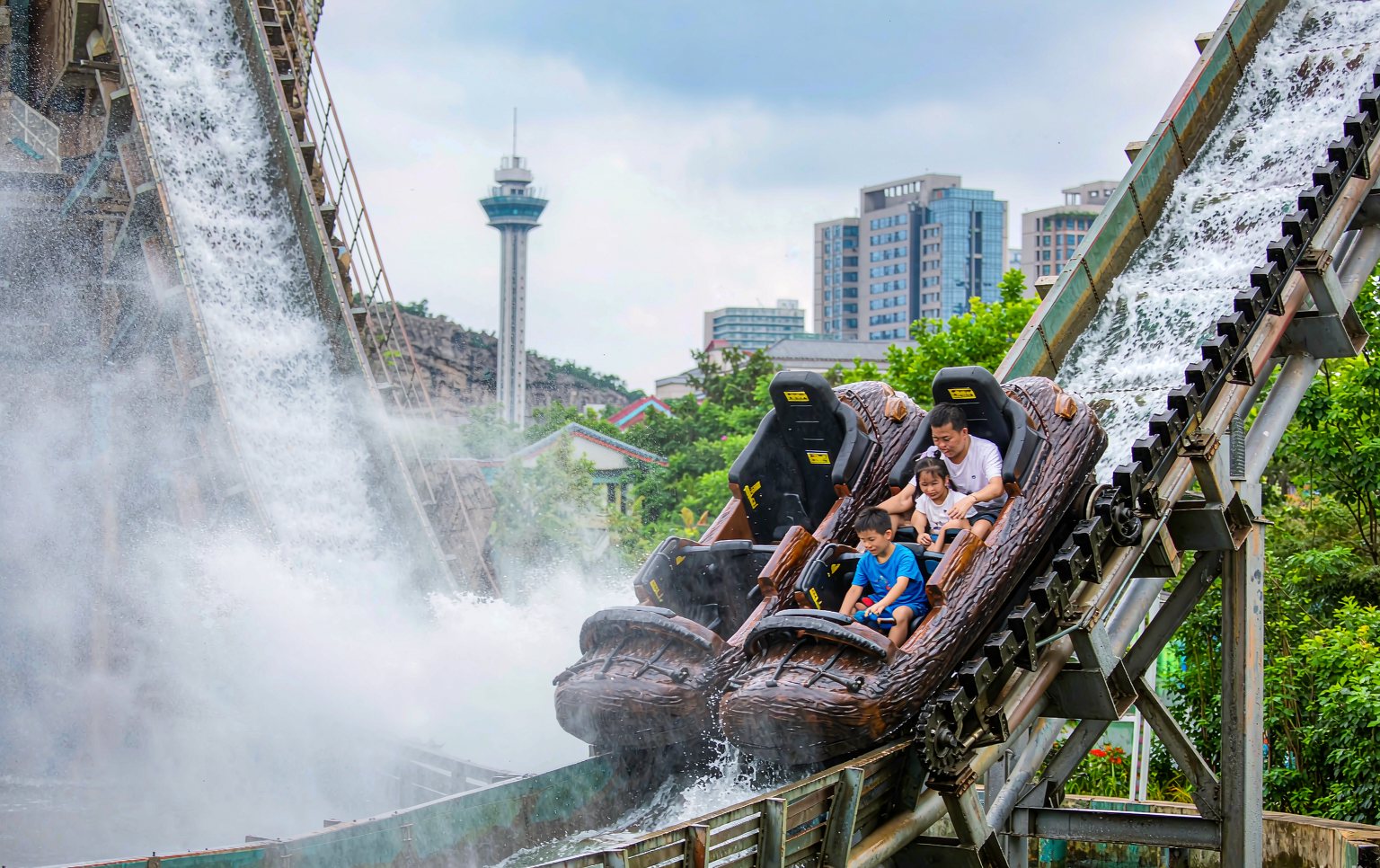
A log flume is a flume-style water coaster: passengers board fiberglass boats shaped like hollowed logs, ride a conveyor lift hill to the top, drift through themed flume channels, and plunge down one or more drops into a splash pool. The format has survived six decades of industry change because it works commercially. It attracts nearly every demographic — grandparents ride alongside teenagers — it produces a large visual splash that markets itself, and its hourly capacity often exceeds 1,000 riders when operated with multiple boats.
For park owners, the investment case is equally strong. Compared with a steel roller coaster of similar footprint, a log flume ride for sale typically costs less, requires less intensive structural engineering, and sustains fewer mechanical stress cycles. That translates into lower maintenance budgets and longer service life, which is why flumes remain a anchor attraction in parks across Asia, Europe, the Middle East, and South America. If you are building out a broader thrill zone, our thrill rides for sale overview shows how a flume complements coasters and drop towers.
How It Works: Lift Hills, Drop Heights and Fiberglass Boats
Understanding the core mechanics will make every quotation you receive easier to compare.
- Lift hill: A chain or tire conveyor carries each boat up the lift at a controlled speed, typically rising 8 to 20 meters depending on the model. Anti-rollback devices prevent backward travel in the event of a stoppage.
- Flume channel: Boats travel in a fiberglass or stainless-lined channel with a continuous water film that reduces friction. Channel geometry controls turning radius and drift speed.
- Drops: Entry-level flumes feature a single drop of 6–10 meters. Mid-size and large models add two or three drops, with the final plunge engineered for maximum splash.
- Fiberglass boats: Hulls are hand-laid or RTM-molded fiberglass with UV-resistant gelcoat, typically seating 4 to 6 guests per boat across lap-bar or seat-belt restraints. Boat quantity determines both capacity and price.
A well-specified log flume ride for sale will publish these figures in its technical dossier — lift height, drop angles, track length, boats supplied, and theoretical riders per hour. Ask for all five before comparing prices, because two flumes with the same footprint can differ dramatically in capacity.
Water Volume, Treatment and Splash Zone Management
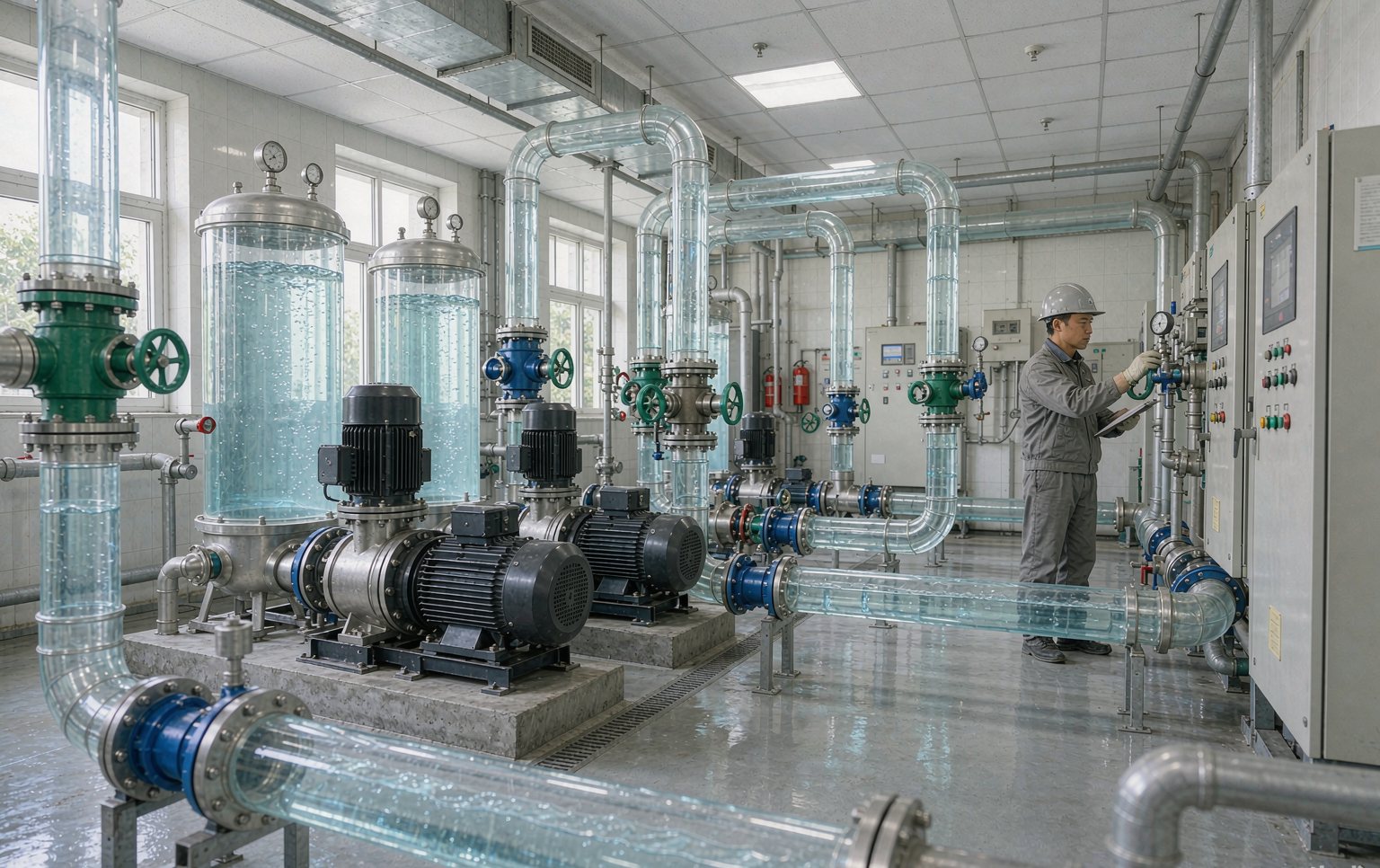
Water is the working fluid of the ride, and it deserves as much engineering attention as the boats. A typical mid-size flume circulates 600–1,200 cubic meters of water through the flume channel, lift pit, and splash pool. The main circulation pump maintains channel depth — usually 30–45 cm — so boats float freely without bottoming out.
Three subsystems matter for operators:
- Filtration and treatment: Sand filters or cartridge systems, combined with chlorine or saltwater chlorination, keep water within local health-code standards. A well-designed system turns over the full pool volume every 2–4 hours.
- Makeup and drainage: Evaporation and splash-out consume roughly 2–5% of volume daily in hot climates, so plan a makeup water line and an overflow drain sized for backwash cycles.
- Splash zone design: The final drop throws water several meters beyond the pool edge. Budget for perimeter drainage channels, non-slip guest pathways, and splash screens if adjacent walkways or queue lines sit close to the plunge point.
In cold-climate parks, ask whether the pump house and piping support complete drain-down for winterization. Any log flume ride for sale quoted by Anxin Amusement includes the circulation schematic and water-balance calculation as part of the engineering package, so your civil works team can size the pool and equipment room correctly on the first pass.
Indicative Log Flume Ride Price Bands (USD)
Pricing depends on lift height, number of drops, boat count, theming, and control-system specification. The table below shows indicative ex-works bands based on recent export configurations; final pricing is configuration dependent and confirmed only in a formal quotation.
| Configuration | Typical Spec | Indicative Price (ex-works) |
|---|---|---|
| Compact family flume | 8–10 m lift, 1 drop, 4–5 seat boats, 8–10 boats | $150,000 – $300,000 |
| Mid-size flume | 12–15 m lift, 2–3 drops, 6 seat boats, 12–16 boats | $300,000 – $650,000 |
| Large super flume | 18–20 m lift, 3 drops, splash canyon, 18–24 boats | $650,000 – $1,200,000 |
Budget beyond the ride itself: civil foundations, the splash pool and pump house, theming scenery, and installation labor typically add 25–45% to the ex-works figure. When you compare a log flume ride for sale against competing quotes, normalize for these scope items — a cheaper ride with an incomplete water package can cost more once commissioned. For a wider view of how flume pricing sits within a full park budget, see our amusement park rides price analysis.
Revenue data supports the instinct. Water attractions consistently rank among the top satisfaction drivers in guest surveys, and the flume’s splash finale keeps queues tolerable because riders perceive the wait as part of the show. Operations are equally forgiving: guests board, climb, drift, drop, get soaked, and walk away smiling, with a ride cycle that is easy to staff and simple to train. When you shortlist any log flume ride for sale, ask vendors for reference parks where the model has operated for three or more seasons — longevity in a real outdoor climate is the most reliable proof of build quality.
Site Requirements and Pre-Purchase Checklist
Flumes need more ground preparation than flat rides, so confirm these items before signing. Use this checklist during your feasibility stage:
- Footprint: 60 × 30 m minimum for a compact flume; 100 × 45 m or more for large models, including queue and splash zones.
- Foundations: Reinforced concrete foundations at lift hill, drop chutes, and pool walls, designed to your geotechnical report and local seismic/wind codes.
- Power supply: Typically 60–120 kW connected load, three-phase, plus backup power provisions for safe lift evacuation.
- Water source and drainage: Makeup water supply, backwash discharge approval, and pool drainage routing.
- Equipment room: Pump house of 30–60 m² adjacent to the splash pool.
- Evacuation plan: Walkway access along the full lift hill for safe guest retrieval.
- Operator staffing: Minimum three trained operators per shift (station, lift, and platform).
Anxin Amusement provides foundation drawings, load data, and an on-site installation team — assembly normally runs 20–30 days for a flume, following your civil works completion. If your site sits on a slope, a flume can actually work in your favor: terracing the lift hill into natural grade reduces civil cost and can shorten the ride’s footprint. Before you commit to any log flume ride for sale, commission a geotechnical survey and share the results with the manufacturer so foundation loads, anchor details, and wind ratings are engineered for your specific ground conditions rather than generic assumptions.
Lead Times, Shipping and Payment Terms
Standard flume production runs 35–60 days depending on boat quantity and customization level, with heavily themed or large super-flume configurations at the upper end. Shipping is typically arranged in flat-rack and container combinations; the fiberglass channel sections and boats nest efficiently, while the lift machinery and pump sets ship as standard freight. Allow 20–40 days of ocean transit depending on destination port, and budget roughly 10–15 days for customs clearance and inland delivery.
Commercial terms are straightforward: a 30% deposit by T/T confirms production, and the remaining 70% is settled before shipment, after your pre-shipment inspection or third-party inspection visit. Every unit is factory-tested before dispatch, and documentation packages (CE, EN 13814, ISO 9001 compliance records) accompany the shipment to smooth import approval in your market.
Plan your cash flow around these milestones. The 30% deposit triggers material procurement — steel for the lift structure, resin for the fiberglass channel sections, and pump sets — while the 70% balance is invoiced against factory test evidence. Buyers comparing a log flume ride for sale across different suppliers should also align Incoterms early: ex-works, FOB, and CIF quotes differ materially, and mixing Incoterms without adjusting for freight and insurance can distort the true landed cost by 10–20%.
Choosing a Log Flume Ride Manufacturer
The manufacturer you select matters as much as the model you buy. When you compare every log flume ride for sale on the market, evaluate suppliers on five dimensions: fiberglass build quality (ask for hull thickness specs and gelcoat process), welding and drive-system certifications, whether water treatment is engineered in-house or outsourced, the depth of spare-parts stock, and after-sales support in your time zone. A supplier with 15+ years of manufacturing experience, 200+ rides delivered across 24+ countries, and a 2-year warranty with lifetime technical support — as Anxin Amusement offers — materially reduces your operational risk.
Also consider whether your supplier can handle the surrounding project. Flumes are usually the visual centerpiece of a water or family zone, and coordinating boats, theming, landscaping, and ride control under one contract avoids the integration gaps that plague multi-vendor projects. Our custom solutions team delivers complete park packages, from master planning to commissioning.
Frequently Asked Questions
How much does a log flume ride actually cost delivered?
Ex-works pricing runs from roughly $150,000 for a compact family flume to $1.2 million for a large super flume. Delivered and installed cost typically lands 25–45% higher once civil works, pool construction, shipping, and commissioning are included. Request a configuration-specific quotation for exact figures.
How much water and what treatment system does a flume need?
Mid-size flumes circulate 600–1,200 cubic meters, turned over every 2–4 hours through sand or cartridge filtration with chlorination to meet local health codes. Daily makeup water of 2–5% covers evaporation and splash-out. Your supplier should deliver a full water-balance and treatment schematic with the ride.
What hourly capacity should I expect?
Capacity depends on boat count and load/unload discipline. A 12-boat flume cycling 4–6 seat boats typically achieves 800–1,200 riders per hour. Larger installations with 18–24 boats exceed 1,500 riders per hour, making the flume one of the highest-throughput attractions in a family or water zone.
What maintenance does a log flume ride require?
Daily checks cover water levels, water chemistry, and restraint function on every boat. Weekly tasks include pump and filter inspection; quarterly work covers lift chain tension, anti-rollback devices, and hull condition. Fiberglass hulls with quality gelcoat commonly serve 15+ years before refinishing. Anxin Amusement supplies a preventive maintenance schedule, operator training, and lifetime spare-parts support with every purchase.
Can boats and theming be customized?
Yes. Boat colorways, themed log textures, station architecture, and flume-side scenery are all configurable. Many buyers commission branded boats or region-specific theming to anchor the ride in their park’s storyline. Custom finishes add modest cost and are confirmed in the quotation before production begins.
Request a Quote for Your Log Flume Project
A log flume remains one of the most bankable attractions a park can add: broad demographic appeal, strong throughput, and a splash that doubles as free marketing. The right supplier turns it from a capital purchase into a long-term revenue asset backed by certified engineering and dependable parts supply.
Ready to move from research to procurement? Request a quote today with your site dimensions, target capacity, and market. Our engineering team will return a configuration proposal, indicative pricing, and delivery schedule — and if you are still shaping the wider park, browse our complete range of thrill rides for sale or talk to us about a turnkey package. Your log flume ride inquiry receives a response within one business day.