
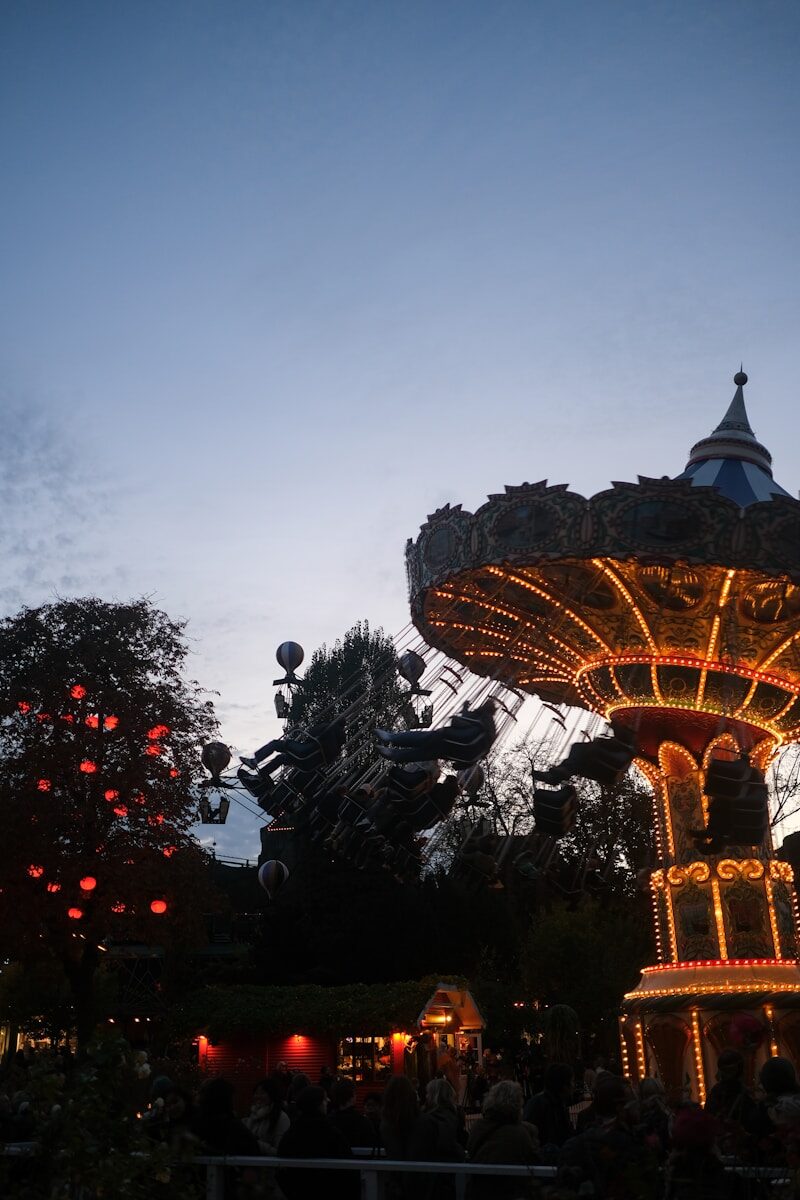
Few amusement park attractions deliver the pure, visceral sensation of weightlessness quite like a pendulum swing ride. Suspended from a massive arm that swings back and forth in an ever-widening arc, riders experience moments of intense positive g-forces at the bottom of the swing and fleeting sensations of near-zero gravity at the top. The pendulum swing ride has been a staple of amusement parks, traveling carnivals, and fairs for decades, and its enduring popularity is a testament to its elegant simplicity and powerful thrills. This article explores the mechanics, history, variations, safety considerations, and investment factors related to the pendulum swing ride.
How a Pendulum Swing Ride Works
At its core, a pendulum swing ride operates on the same physics principles as a simple pendulum, though on a dramatically larger and more powerful scale. The ride consists of a large arm mounted on a central pivot point. One end of the arm holds a passenger gondola or a series of suspended seats, while the other end is connected to a drive system that controls the swinging motion.
The ride begins with gentle oscillations. As the arm swings back and forth, the drive system adds energy to each cycle, gradually increasing the amplitude of the swing. On larger models, the arm can swing a full 360 degrees, sending riders completely over the top in a continuous loop of gravitational forces. The gondola itself may also rotate independently, adding a spinning element that intensifies the experience.
The forces experienced by riders vary throughout the swing cycle. At the lowest point, riders feel the greatest positive g-forces as the arm changes direction and accelerates upward. At the highest point, riders experience a moment of reduced gravitational pull, creating the sensation of floating. This constant shifting between heavy and weightless is what makes the pendulum swing ride so thrilling.
Historical Development
The origins of the pendulum swing ride can be traced back to early carnival attractions that used simple swinging mechanisms to entertain fairgoers. The concept evolved significantly in the mid-twentieth century as manufacturers began building larger, more powerful versions with enclosed gondolas and higher swing angles.
One of the most iconic early designs was the “Star Shape” or “Star Flyer” concept, where a star-shaped gondola carried passengers in a circular arrangement. Over time, manufacturers introduced variations with multiple arms, independent seat suspension, and combined spinning and swinging motions. Today, the pendulum swing ride exists in dozens of configurations, from compact traveling models to massive permanent installations.
Types of Pendulum Swing Rides
The pendulum swing ride comes in several distinct configurations, each offering a slightly different experience.
Standard Pendulum
The classic design features a single arm with a gondola at one end. The arm swings in a fixed plane, and riders face outward from the gondola. This is the most common type found at traveling carnivals and smaller parks.
Double Pendulum
This variation adds a second pivot point, creating a compound pendulum motion. The primary arm swings while the gondola arm rotates independently, producing unpredictable and complex movement patterns that intensify the thrill.
Frisbee Style
Named for its disc-shaped gondola, the Frisbee-style pendulum swing ride features a circular passenger platform that rotates as the main arm swings. Riders sit around the perimeter of the disc, facing outward, and experience both swinging and spinning forces simultaneously.
Giant Pendulum
These are the largest versions, often exceeding 40 meters in height and capable of full 360-degree rotations. Giant pendulum rides are typically permanent installations at major theme parks and require substantial foundation engineering.
Engineering Considerations
Designing a safe and reliable pendulum swing ride requires careful attention to several engineering disciplines.
Structural Design
The main support structure must withstand the dynamic loads generated during operation. Engineers calculate the maximum forces at every point in the swing cycle, accounting for rider weight, wind loads, and fatigue over millions of cycles. The pivot bearings are particularly critical, as they bear the full weight and dynamic forces of the entire moving assembly.
Drive Systems
Most modern pendulum swing ride models use electric motors with variable frequency drives to control the swinging motion precisely. The drive system must provide enough torque to build amplitude during the initial cycles while also maintaining smooth deceleration during the ride’s conclusion. Some designs use hydraulic actuators for additional power.
Restraint Systems
Rider restraint is a critical safety element. Depending on the intensity of the ride, restraints may include lap bars, over-the-shoulder harnesses, or a combination of both. The restraint system must secure riders firmly during negative g-force moments when they may lift out of their seats.
Foundation Requirements
Permanent pendulum swing ride installations require substantial concrete foundations. The dynamic forces generated by the swinging motion create significant lateral loads that must be transferred safely into the ground. Geotechnical analysis is essential to ensure that soil conditions can support these loads.
Safety and Maintenance
Safety is paramount for any pendulum swing ride. Regular inspection protocols should cover structural welds, pivot bearings, drive system components, restraint mechanisms, and electrical connections. Non-destructive testing methods such as ultrasonic inspection and magnetic particle testing are commonly used to detect fatigue cracks in critical structural components.
Operators must also monitor weather conditions closely. High winds can create dangerous lateral forces on the swinging arm and gondola. Most manufacturers specify maximum wind speed limits for operation, and ride control systems often include anemometers that automatically prevent operation when conditions exceed safe thresholds.
Investment and Operational Considerations
For operators considering adding a pendulum swing ride to their facility, several factors influence the investment decision.
Capacity and Throughput
The number of passengers per cycle and the cycle duration determine the ride’s hourly capacity. Larger gondolas carry more riders but require more powerful drive systems and larger foundations.
Footprint
The pendulum swing ride requires a clear zone around the swing path to ensure safety. This footprint must be factored into site planning, particularly for traveling operations where setup and teardown time are important.
Maintenance Costs
While the mechanical design is relatively straightforward, the dynamic loads mean that wear occurs faster than on gentler rides. Budget for regular bearing replacement, structural inspections, and drive system maintenance.
Guest Appeal
The pendulum swing ride appeals to a broad demographic. It is thrilling enough for teenagers and adults but typically not so extreme that it intimidates casual riders. This broad appeal makes it a reliable crowd-pleaser that can generate strong per-rider revenue.
The pendulum swing ride remains one of the most beloved and enduring attractions in the amusement industry. Its combination of elegant physics, powerful thrills, and operational reliability ensures that it will continue to delight riders for generations to come.




