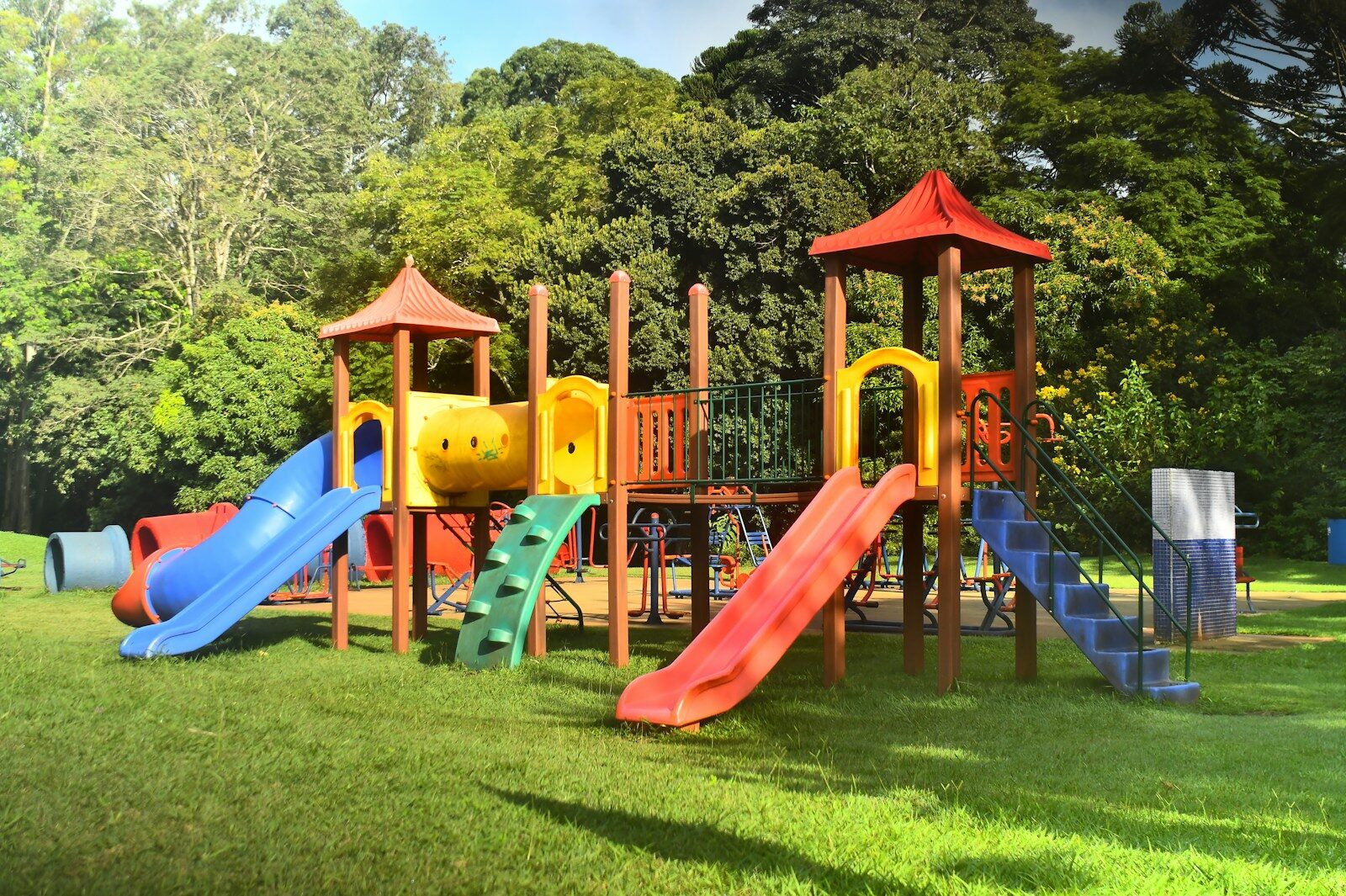
Inclusive playground design goes beyond meeting minimum accessibility requirements. It aims to create a play environment where children of different ages, abilities, sensory needs, mobility levels, and communication styles can play together, explore independently, and participate in the same social space.
An inclusive playground does not mean every piece of equipment must be usable by every child. That is rarely possible or necessary. Instead, inclusion means providing a range of play experiences, accessible routes, sensory options, resting places, supervision points, and social spaces so that more children can find something meaningful to do.
Good inclusive design benefits everyone. Clear paths, gentle slopes, shaded seating, calm areas, and well-placed equipment make the playground easier and more comfortable for children, caregivers, older adults, and visitors with temporary or permanent impairments.
Accessible Routes and Entry
Inclusion begins before children reach the equipment. Entry points, pathways, gates, and circulation routes should be easy to find, easy to use, and easy to navigate.
Paths should be wide enough for wheelchairs, pushchairs, and walkers. Surfaces should be firm, stable, and free from sudden level changes. Ramps should have appropriate gradients, handrails where needed, and resting points on longer routes. Gates should open easily and not create confusing thresholds.
An accessible route should connect the main entry to key play zones, seating areas, quiet spaces, and exit points. If the only accessible path leads to one small area while the rest of the playground remains unreachable, the design is not truly inclusive.
Play for Different Mobility Levels
Children with mobility impairments may use wheelchairs, walkers, gait trainers, prosthetics, or other aids. Inclusive playgrounds should offer opportunities for them to play alongside peers, not only observe from the edge.
Transfer points can allow children to move from a wheelchair onto low-level play equipment. Wheelchair-accessible roundabouts, swings, and activity panels can provide shared play experiences. Ramped access to raised platforms can support exploration without relying only on stairs or ladders.
Equipment should be chosen carefully. A single accessible swing is a positive feature, but it should not be the only inclusive element in the playground. A stronger design offers multiple ways to engage, move, balance, spin, rock, communicate, and interact.
Sensory Play and Neurodiversity
Inclusive design should also consider children with sensory differences, including those with autism, sensory processing differences, hearing impairments, or visual impairments.
Some children seek sensory input and enjoy movement, sound, texture, and active play. Others may become overwhelmed by noise, crowds, bright colors, or unpredictable motion. A good playground offers both.
Sensory-rich areas might include musical instruments, textured panels, spinning elements, water play, sand play, and tactile surfaces. Calmer areas might offer retreat from noise, shaded seating, enclosed spaces, softer colors, and quieter activities.
The goal is not to eliminate stimulation but to provide choice. Children should be able to move between active, social, sensory, and quiet experiences depending on their needs and mood.
Communication and Wayfinding
Clear communication helps children and caregivers understand what the playground offers. Signs, maps, symbols, and simple language can support children who find complex environments confusing.
Visual wayfinding can help users identify entry points, accessible routes, toilets, seating, quiet areas, and different play zones. Pictograms and consistent symbols are especially helpful for children with limited reading ability, language differences, or communication impairments.
For children who use augmentative and alternative communication, play panels, sound elements, and social role-play areas can support interaction. Inclusive design considers not only physical access but also the ability to understand, choose, and participate.
Social Inclusion and Shared Play
A playground is a social space. Inclusive design should help children meet, play together, take turns, and build confidence.
Social play can be supported by group activities such as roundabouts, seesaws, multi-user swings, sand and water play, role-play structures, and open spaces for games. Seating should be placed where caregivers can supervise comfortably and where children can gather naturally.
Inclusion also means avoiding design that isolates children with disabilities into separate corners. Where possible, accessible equipment should be integrated into the main play area so that children can play together rather than side by side in separate zones.
Safety Without Exclusion
Safety is essential, but it should not be used as a reason to remove challenge, risk, or independence from play. Children need opportunities to test their abilities, make choices, and develop confidence.
Inclusive safety means managing serious hazards while allowing appropriate challenge. It means providing fall protection, clear sightlines, safe surfacing, and well-maintained equipment without creating an environment that feels overly restricted or institutional.
Risk should be understandable, not hidden. Children should be able to see where they are going, recognize changes in level, and make decisions about whether to attempt an activity. Overprotection can reduce play value; poor safety can create real harm. Inclusive design balances both.
Caregiver Comfort and Supervision
Inclusion applies to adults as well as children. Caregivers, parents, teachers, and support workers need comfortable places to supervise without crowding the play area.
Seating should be located near key play zones, shaded where possible, and positioned so that supervisors can see children clearly. Some caregivers may need space beside a wheelchair user, room for medical equipment, or easy access to accessible toilets.
When caregiver comfort is considered, families are more likely to stay longer, return more often, and feel confident using the playground.
Maintenance and Long-Term Inclusion
An inclusive playground can quickly become exclusive if it is not maintained. A broken ramp, damaged accessible swing, sunken surface, missing handrail, or blocked pathway can prevent children with disabilities from using the space safely.
Routine maintenance should include checking accessible routes, surfacing firmness, ramp gradients, gate operation, equipment fixings, sensory panels, transfer points, and signage. Repairs should be prioritized where they affect access or safety.
Inclusive design is not a one-time achievement. It depends on ongoing care, inspection, user feedback, and willingness to adapt the space as community needs change.
Creating a Playground Where More Children Belong
Inclusive playground design is about creating a place where children are not simply allowed in, but can actually play, explore, socialize, and feel comfortable. It combines accessible routes, thoughtful equipment, sensory variety, clear communication, social spaces, safety, and reliable maintenance.
The most successful inclusive playgrounds do not feel like special facilities for a narrow group of users. They feel like ordinary public spaces that have been designed carefully enough for many different children to belong, participate, and enjoy play together.