
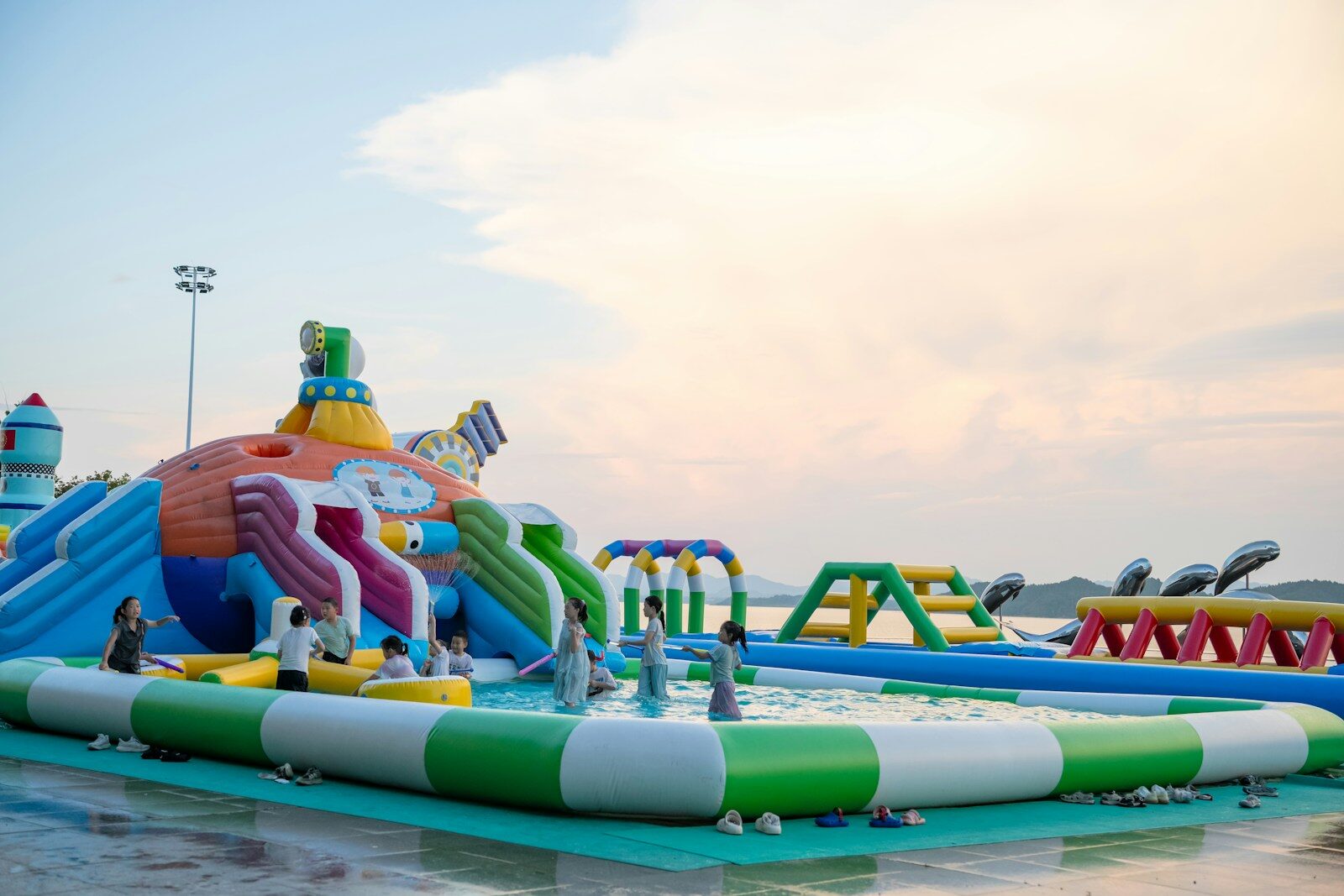
Selecting the right water park manufacturers is one of the most consequential decisions an operator will make when planning a new facility or expanding an existing one. The manufacturer you choose becomes a long-term partner whose engineering decisions, safety practices, material quality, and ongoing support directly affect your facility’s guest experience, operational costs, regulatory standing, and financial performance for years — often decades — after installation.
Unlike purchasing standardized industrial equipment, procuring water park attractions involves significant customization, site-specific engineering, complex installation, and an ongoing relationship that extends well beyond the initial delivery. The manufacturer’s role encompasses design consultation, structural and hydraulic engineering, fabrication, quality control, shipping logistics, installation supervision, commissioning, staff training, warranty service, and long-term parts availability. Understanding the full scope of this relationship helps operators evaluate water park manufacturers more effectively and make selections that protect both their guests and their investment.
Why Manufacturer Selection Matters
The water park industry includes a wide range of manufacturers, from large multinational companies with extensive product portfolios and global installation experience to smaller specialized firms that focus on specific attraction types or regional markets. Each category offers distinct advantages and limitations, and the right choice depends on the operator’s specific project requirements, scale, budget, and long-term operational strategy.
A poorly chosen manufacturer can create problems that persist throughout the facility’s operational life. Inadequate engineering can lead to structural issues, excessive maintenance costs, or safety concerns. Poor material selection can result in premature degradation, frequent repairs, and an unattractive appearance that diminishes guest perception. Limited technical support can leave operators stranded when equipment requires repair or modification. Insufficient documentation can complicate regulatory compliance and insurance requirements.
Conversely, a well-chosen manufacturer provides not only high-quality equipment but also the engineering expertise, safety culture, documentation practices, and ongoing support that enable operators to run safe, efficient, and profitable facilities. The evaluation process should be thorough, systematic, and focused on long-term value rather than short-term cost savings.
Engineering Capability and Technical Expertise
The foundation of any water park manufacturer’s value lies in its engineering capability. Operators should evaluate prospective manufacturers across several technical dimensions.
Structural engineering expertise determines whether the manufacturer can design attractions that safely withstand the dynamic loads generated by rider weight, water flow, wind forces, seismic activity, and thermal expansion. Large water slides, wave pools, and multi-level play structures all impose complex structural demands that require sophisticated analysis and conservative safety margins.
Hydraulic engineering expertise affects water flow rates, slide performance, wave generation quality, and overall ride experience. The manufacturer’s ability to model and optimize water flow directly influences whether attractions perform as intended across varying operating conditions.
Materials engineering knowledge determines how well the manufacturer selects and specifies materials for each application. Fiberglass formulations, resin systems, gel coat compositions, stainless steel grades, concrete specifications, and coating systems all require specialized knowledge to ensure durability in the demanding water park environment.
Computer-aided design and simulation capabilities enable manufacturers to optimize designs before fabrication begins, reducing the risk of costly modifications during installation and ensuring that attractions perform as designed.
Operators should request detailed information about the manufacturer’s engineering team, including qualifications, experience levels, design processes, quality control procedures, and the tools and methodologies used in design and analysis.
Safety Compliance and Certification
Safety compliance is non-negotiable in water park equipment manufacturing. Operators should verify that prospective water park manufacturers demonstrate a comprehensive commitment to safety across their entire operation.
Design standards compliance should be documented and verifiable. Manufacturers should be able to demonstrate that their products are designed in accordance with applicable industry standards, including those addressing structural integrity, entrapment prevention, slip resistance, rider positioning, and operational safety.
Third-party testing and certification provides independent verification that equipment meets claimed safety standards. Operators should request copies of relevant test reports, certifications, and compliance documentation. Manufacturers who proactively pursue third-party certification demonstrate a commitment to safety that extends beyond minimum regulatory requirements.
Manufacturing quality control ensures that fabricated equipment matches approved designs and meets material and workmanship specifications. Operators should inquire about quality control processes, inspection procedures, documentation practices, and traceability systems that link finished components to their source materials and production records.
Safety track record offers insight into the manufacturer’s real-world performance. Operators should ask about the manufacturer’s history of safety-related incidents, product recalls, field modifications, or regulatory actions. A transparent manufacturer will provide honest information about past issues and the steps taken to address them.
Product Range and Specialization
Water park manufacturers vary significantly in the breadth and depth of their product offerings. Some manufacturers produce a comprehensive range of attraction types, while others specialize in specific categories such as water slides, wave generation systems, play structures, or water treatment equipment.
Full-range manufacturers offer the advantage of single-source procurement, simplified coordination, and potentially better integration between different attraction types. However, their performance in each category may vary, and operators should evaluate each product line independently rather than assuming uniform quality across the entire portfolio.
Specialized manufacturers often bring deeper expertise and more refined products within their area of focus. A manufacturer that specializes exclusively in water slides, for example, may offer more innovative designs, better performance characteristics, and more extensive installation experience than a full-range manufacturer’s slide division.
Customization capability matters when operators have specific site constraints, thematic requirements, or experience objectives that standard products cannot address. Manufacturers with strong custom engineering capabilities can develop tailored solutions, though custom work typically requires longer lead times and higher costs.
Operators should evaluate whether the manufacturer’s product range aligns with their project needs and whether the manufacturer’s strengths match the specific attractions being considered.
Installation Support and Project Management
Manufacturing high-quality equipment is only part of the equation. Successful installation requires effective project management, clear communication, detailed documentation, and on-site technical support.
Installation documentation should include comprehensive drawings, assembly instructions, foundation specifications, utility connection requirements, and commissioning procedures. Clear, detailed documentation reduces installation errors and helps ensure that equipment is assembled correctly.
On-site technical support during installation provides access to manufacturer representatives who can address questions, resolve issues, and verify that installation proceeds according to specifications. The level and availability of on-site support varies significantly among water park manufacturers and should be clearly defined in the procurement agreement.
Project management coordination ensures that manufacturing, shipping, delivery sequencing, and installation activities are properly synchronized. Delays in any phase can create cascading problems that affect the overall project timeline and budget.
Commissioning and testing verifies that installed equipment operates correctly and safely before opening to guests. The manufacturer should provide clear commissioning protocols and participate in the testing process to confirm that all systems perform as designed.
Operators should evaluate the manufacturer’s installation support capabilities and ensure that responsibilities, timelines, and support levels are clearly documented in the contract.
Technical Support and Parts Availability
The relationship with water park manufacturers extends far beyond the initial installation. Equipment requires ongoing maintenance, periodic repairs, component replacement, and occasional modifications throughout its operational life. The manufacturer’s ability to support these needs directly affects facility uptime, guest satisfaction, and operating costs.
Technical support responsiveness determines how quickly operators can obtain guidance when equipment issues arise. Manufacturers who maintain dedicated technical support teams and provide prompt responses help operators minimize downtime and resolve problems efficiently.
Parts availability is critical for maintaining operational continuity. Equipment components wear out, sustain damage, or become obsolete over time. Manufacturers who maintain comprehensive parts inventories and can supply replacement components promptly help operators avoid extended downtime.
Parts longevity matters as well. Operators should inquire about the expected availability of parts for equipment models they are considering. Some manufacturers discontinue parts support for older models, leaving operators with equipment that cannot be properly maintained.
Technical documentation including maintenance manuals, parts catalogs, service bulletins, and troubleshooting guides should be comprehensive and readily accessible. Well-documented equipment enables operators to perform routine maintenance effectively and reduces dependence on manufacturer support for common tasks.
Training programs help operators develop internal expertise for routine maintenance and basic troubleshooting. Manufacturers who provide thorough initial training and ongoing educational resources empower operators to manage their equipment more effectively.
References and Track Record
Evaluating water park manufacturers requires looking beyond marketing materials and product specifications. Operators should conduct thorough reference checks to learn about the manufacturer’s real-world performance.
Existing customer references provide insight into product quality, installation experience, ongoing support quality, parts availability, and overall satisfaction. Operators should contact multiple references, preferably those who have operated similar equipment for several years, to understand the long-term performance of both the equipment and the manufacturer relationship.
Installation portfolio demonstrates the manufacturer’s experience with projects of similar scale, complexity, and geographic location. Manufacturers who have successfully completed projects in similar environments bring relevant experience that reduces project risk.
Industry reputation reflects the collective assessment of operators, engineers, consultants, and industry professionals who have worked with the manufacturer. While reputation alone should not drive decisions, consistent patterns of positive or negative feedback warrant serious consideration.
Financial stability affects the manufacturer’s ability to honor warranty commitments, maintain parts inventories, and continue providing support over the long term. Operators should assess the manufacturer’s financial health as part of their evaluation process.
Contract Terms and Warranty
The procurement contract defines the rights, responsibilities, and expectations for both parties. Operators should ensure that contract terms are clear, comprehensive, and protective of their interests.
Warranty coverage should clearly specify what is covered, what is excluded, the warranty duration, response time commitments, and the process for filing claims. Operators should understand whether warranty coverage includes labor, shipping, and incidental costs in addition to parts replacement.
Liability provisions should be clearly defined and reasonable. Operators should understand the manufacturer’s liability limits and ensure that appropriate insurance coverage is maintained.
Intellectual property and design ownership should be addressed, particularly for custom-designed attractions. Operators should understand who owns design rights and whether the manufacturer can sell similar designs to competing facilities.
Modification and expansion rights should be considered if the operator anticipates adding capacity or modifying attractions in the future. Contract terms should address whether the manufacturer will support future modifications and under what conditions.
Dispute resolution procedures should be clearly defined to provide a framework for addressing disagreements without resorting to litigation.
Building a Long-Term Partnership
The most successful relationships between operators and water park manufacturers are built on mutual trust, transparent communication, shared commitment to safety, and alignment of long-term interests. Operators who view their manufacturer as a strategic partner rather than a transactional vendor tend to achieve better outcomes over the life of their facility.
Manufacturers who invest in understanding their customers’ operational challenges, provide proactive recommendations, share industry insights, and respond quickly to support needs create value that extends well beyond the equipment they supply. Operators who communicate clearly, provide timely feedback, maintain equipment properly, and honor their contractual commitments enable manufacturers to serve them more effectively.
Final Thoughts
Evaluating water park manufacturers requires a comprehensive assessment that goes far beyond product catalogs and pricing. Engineering capability, safety compliance, product quality, installation support, technical support infrastructure, parts availability, customer references, contract terms, and long-term partnership potential all play critical roles in determining whether a manufacturer will deliver lasting value.
Operators who invest time and rigor in the manufacturer evaluation process position themselves for facilities that are safe, well-engineered, operationally efficient, and financially sustainable. The manufacturer you choose will be your partner for decades — choosing wisely is one of the most important decisions you will make.




