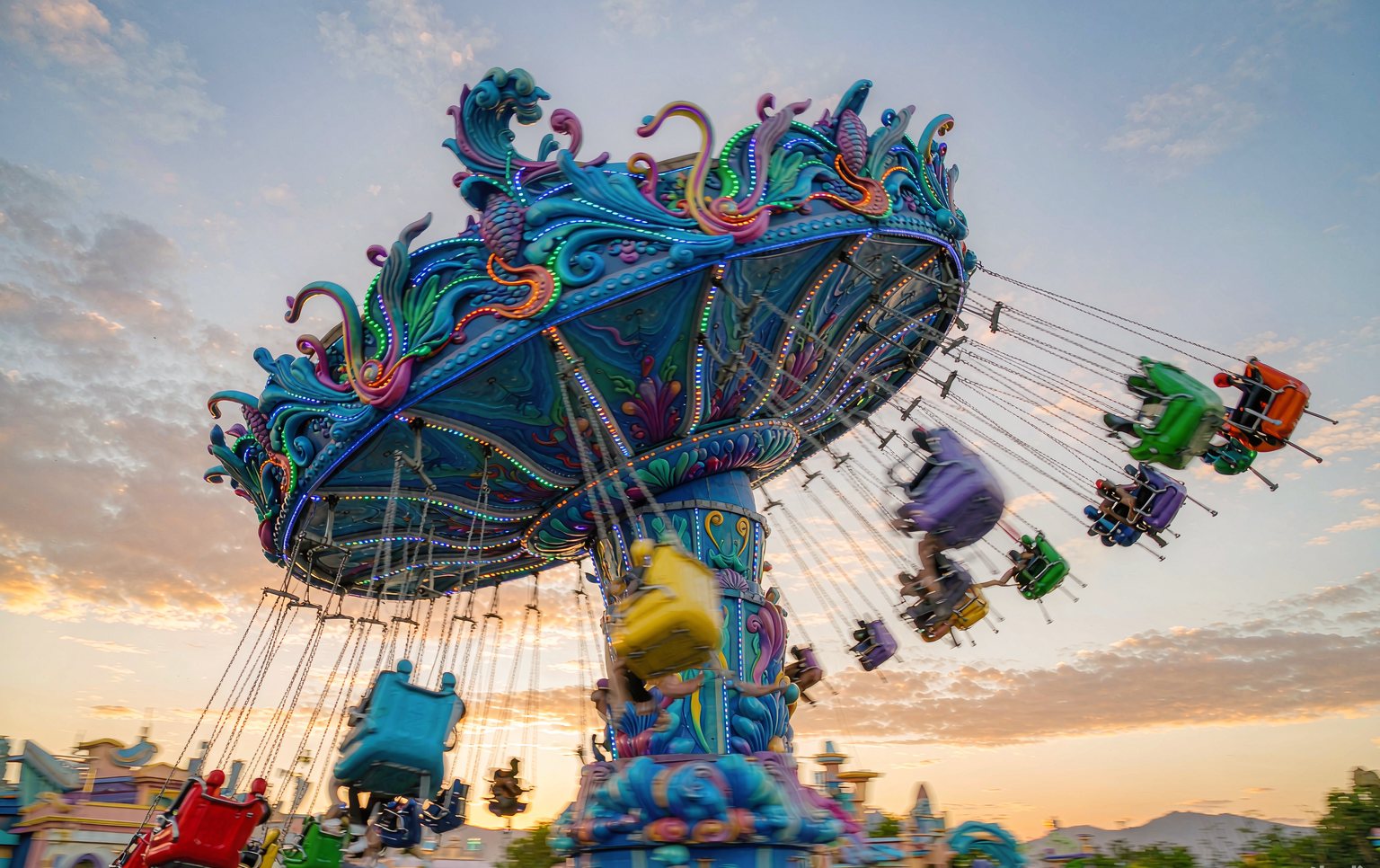
A flying chair ride is one of the most recognisable attractions in any park. It is also one of the easiest to mis-specify. A 16-metre machine and a 20-metre machine may look similar in a catalogue, yet they demand different foundations, different clearance and different wind rules. This guide gives you indicative price bands, the height and seat math, and the site checks that keep the ride viable. All figures are planning ranges — confirm with a formal quotation.
Read it before you compare quotes. Two suppliers can offer the same seat count and very different machines. The difference is usually in the drive, the restraint system and the steel spec. Those items decide your inspection result and your maintenance bill.
Why a flying chair ride still earns its place in 2026
Height sells tickets. A rotating ring of suspended chairs is visible from outside the park, so it works as a landmark and as an attraction. Visitors photograph it before they ride it. Few machines give a site the same visual return on a modest footprint.
The audience is broad. Children ride with parents, and the gentle version suits families that avoid harsh thrill devices. A wave swinger adds a stronger motion profile for teen visitors. One machine can therefore serve two market segments.
Capital cost also stays below a coaster or a large observation wheel. You can open with a 16-metre unit and expand the park around it. If the ride sits inside a larger development, our custom theme park design services can place it in the full site plan.
What a flying chair ride actually is
Buyers often use one name for several machines. The differences matter because they change the load on the foundation and the experience for the guest. Ask the supplier which of these three designs the quotation covers.
- Classic swing carousel. Chairs hang from a rotating canopy. The ride spins continuously, and centrifugal force lifts the chairs outward. It is the most common park format.
- Wave swinger. The platform tilts and oscillates while it rotates. The motion creates a wave effect. It costs more and needs a taller safety envelope.
- Mobile or trailer unit. The machine is mounted on a chassis for carnivals and fairs. Setup time and outrigger space become part of the purchase decision.
Our flying chair product range covers fixed installations, while the swing rides category groups related motion platforms. Compare the drawings, not just the photos.
Flying chair ride sizes: 12m, 16m and 20m compared
Height drives seat count, footprint and price. The figures below describe typical factory configurations for a fixed installation. They exclude civil works, freight and local inspection. Indicative range — confirm with a formal quotation.
| Config. | Seats | Clear height | Base area | Drive power | Indicative FOB (USD) |
|---|---|---|---|---|---|
| 12 m compact | 12–16 | 14 m | 10 × 10 m | 11–18 kW | 28,000 – 48,000 |
| 16 m standard | 16–24 | 18 m | 13 × 13 m | 18–30 kW | 45,000 – 78,000 |
| 20 m wave type | 24–32 | 23 m | 16 × 16 m | 30–45 kW | 75,000 – 135,000 |
| Trailer-mounted | 12–20 | 14–18 m | Plus outriggers | 11–25 kW | 40,000 – 85,000 |
Use the base area as a starting point only. Fencing, queue lines and emergency access extend the real plot. A supplier who gives only the machine diameter has not given you a layout.
What drives the price of a flying chair ride
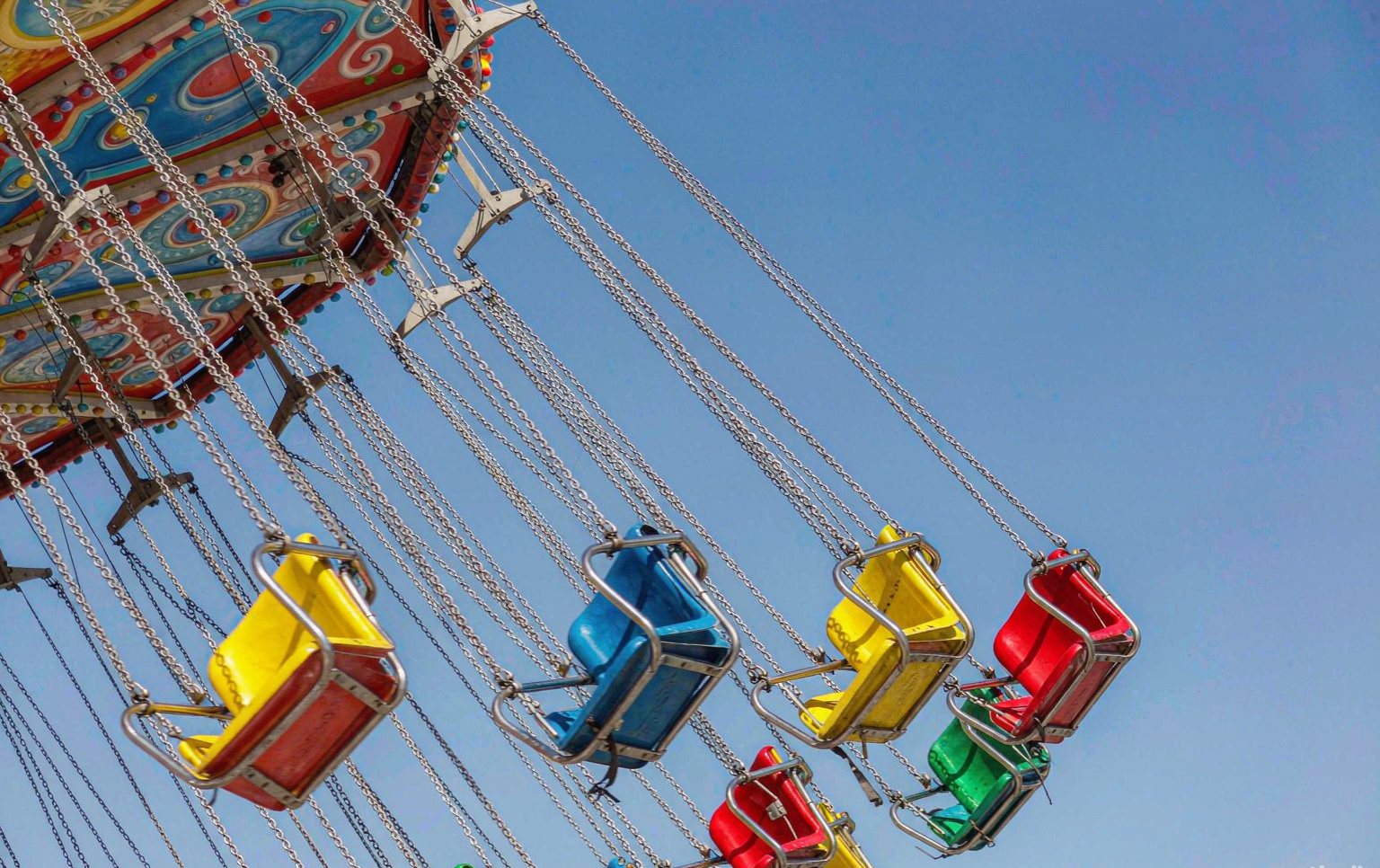
Four line items explain most of the gap between a low quote and a high one. The steel structure and the rotation bearing come first. A heavier frame and a sealed bearing cost more, but they reduce vibration and long-term wear.
The restraint system and the control cabinet come next. A redundant braking circuit, an emergency stop at the operator station and a documented PLC logic are worth paying for. Ask for them as separate lines so you can compare like with like.
- Fibreglass canopy and chair shells, including custom colours or theming.
- Lighting package, sound system and decorative trim.
- Spare chain sets, belts and a first-year wear-parts kit.
- Overseas installation supervision and operator training.
Indicative range — confirm with a formal quotation. Treat any number that excludes the drive or the control system as incomplete.
Site planning: clearance, foundation and power
Vertical clearance is the first constraint. A 16-metre ride needs roughly 18 metres of free height above the finished floor. Check tree canopies, overhead cables, building eaves and neighbouring balconies. A site survey is cheaper than cutting a canopy after delivery.
The foundation is the second constraint. Most fixed machines sit on reinforced concrete pads with anchor bolts set to the supplier’s drawing. Pad depth depends on soil bearing capacity, not on the machine catalogue. Give the local engineer the reaction loads before the pour.
Power is usually three-phase, with a supply sized above the connected load. A 20-metre wave machine may need 45 kW plus lighting. Add a distribution board near the ride and a cable route that keeps visitors away from exposed runs.
Wind limits and weather rules
Suspended chairs catch wind like sails. Every serious operating manual defines a wind speed at which the ride must stop and unload. Ask for that number in writing, and confirm how it is measured on site. Anemometer height changes the reading.
Plan the shut-down procedure before opening. You need a defined sequence for stopping the rotation, lowering chairs and clearing the platform. In exposed coastal or high-altitude sites, a wind sensor with an alarm is a sensible specification.
Heat and heavy rain affect booking patterns as well. A canopy gives some shade, but queuing areas still need cover. If your climate has a long wet season, model revenue with reduced operating days.
Capacity and payback math you can verify
Use this formula: hourly riders = seats × cycles per hour × load factor. A 24-seat machine with a five-minute cycle gives 12 cycles per hour. At 80 percent loading, that is about 230 riders per hour.
Now apply your own assumptions. At a USD 6 ticket, 230 riders produce USD 1,380 in one full hour. If the ride runs eight hours on 180 operating days, the gross figure is about USD 1.99 million. That is a theoretical ceiling, not a forecast. Deduct staffing, power, maintenance, marketing and slow days. Then compare the net figure with the delivered cost of the machine.
Run the wider park numbers through our amusement park ROI model before you sign. A single ride rarely carries a whole project on its own.
Daily operation and staffing
A typical flying chair ride needs one operator at the console and one attendant at the boarding line. The attendant checks restraints, manages the queue and watches the unloading area. Two staff keep the cycle predictable and the queue moving.
Build a short pre-opening routine. Check the chair hangers, the restraint latches, the emergency stop and the braking test before the first guest boards. Record the result. Those records help with insurance renewals and with any later incident review.
Safety systems and documents to request
Ask for the design dossier, not a brochure claim. A credible package includes structural drawings, load calculations, a wiring diagram and an operating manual. It also includes a factory inspection record for the specific machine you are buying.
Standards depend on the destination. CE marking and EN 13814 are common reference points in Europe. ASTM F2291 is widely used in North America. Confirm which framework your local authority accepts before you specify the build.
Our CE certification guide for park equipment explains what documentation buyers normally request. Use our maintenance guide for operators to shape your own service schedule.
Shipping, installation and commissioning
A 16-metre machine usually travels in two to four 40-foot containers after disassembly. The canopy, chairs and drive unit are packed separately. Confirm the packing list and the gross weight of the heaviest lift before you book a crane.
Installation begins with anchor verification, then structure assembly, then the drive and control system. A typical fixed unit takes two to four weeks on site with a competent crew. Add time for local inspection and for staff training.

Three mistakes that cost buyers money
Common pitfall one: buying on seat count alone. A 24-seat machine with slow loading can move fewer guests than a 16-seat machine with a quick cycle. Always compare cycle time and loading method.
Common pitfall two: forgetting the safety envelope. The ride needs clear air above and around the swinging chairs. Planting trees or building a roof after installation creates an expensive problem.
Common pitfall three: accepting a single price with no scope lines. Without a breakdown you cannot tell whether fencing, training or wear parts are included. Ask for a line-by-line quotation before you compare suppliers.
How to shortlist a flying chair ride supplier
A good flying chair ride supplier answers technical questions with drawings and numbers. Use a short checklist, and apply the same questions to every candidate. The answers will separate manufacturers from trading companies.
- Request the general arrangement drawing with heights, loads and anchor positions.
- Ask which components are made in-house and which are bought in.
- Request weld procedure records and the factory inspection plan.
- Confirm the restraint design and the emergency stop locations.
- Ask for the recommended spare-parts list with expected change intervals.
- Require a written wind-limit rule in the operating manual.
- Check whether installation supervision and training are quoted separately.
- Visit the factory or ask for a live video walk-through of the production line.
Then compare the total delivered cost, not the ex-works number. Freight, duty, foundation work and inspection can shift the ranking.
FAQ
How much does a flying chair ride cost?
A compact 12-metre unit is typically quoted in the USD 28,000 to 48,000 range. A 20-metre wave machine can reach USD 135,000 before freight and civil works. Indicative range — confirm with a formal quotation.
What height do I need for a 16-seat machine?
Allow about 18 metres of clear height for a standard 16-metre ride. Confirm the exact figure with the supplier’s drawing. Overhead cables and tree canopies must be included in the survey.
Can this ride operate indoors?
Only if the hall has the required clear height and the floor can carry the loads. Ventilation and noise also matter. Many indoor venues choose a smaller 12-metre unit for this reason.
How many staff does the ride need?
One operator and one boarding attendant are typical. Add staff during peak periods if the queue grows. The loading method affects the ratio more than the seat count.
What wind speed stops the ride?
The limit is defined by the manufacturer and stated in the operating manual. Do not assume a universal number. Ask how the speed is measured at your site.
How long does installation take?
Two to four weeks is typical for a fixed unit after the foundation is ready. Shipping, customs and local inspection sit outside that window. Plan the whole schedule before booking the opening date.
Planning a bumper car or amusement ride installation?
Send us your site size, expected visitor volume and budget range — our engineering team will reply within 24 hours with a layout sketch and an indicative quotation, no obligation.