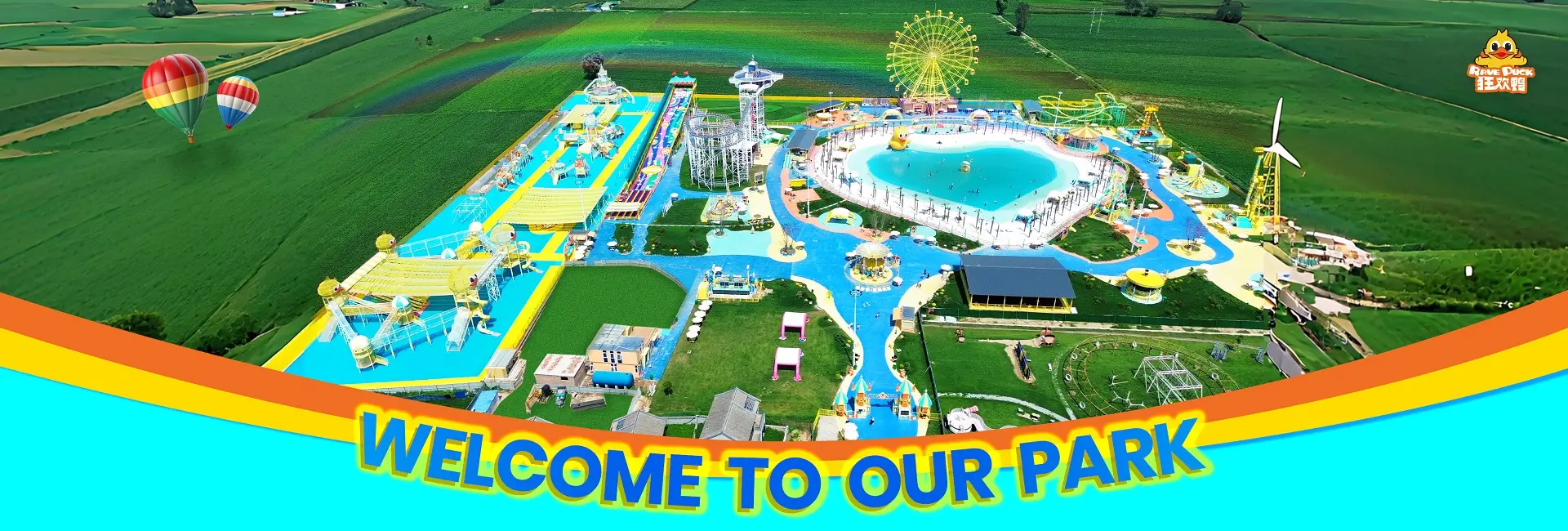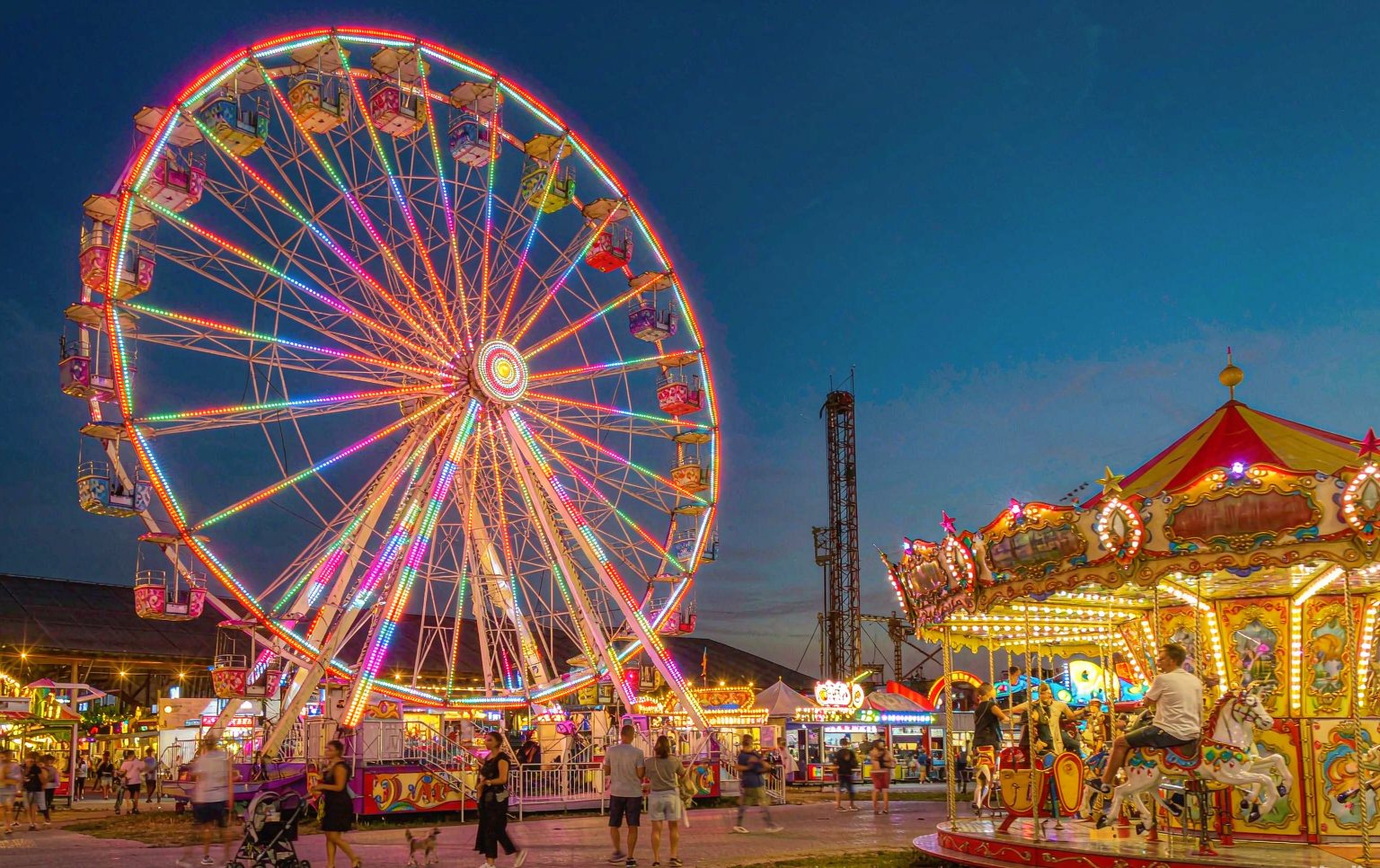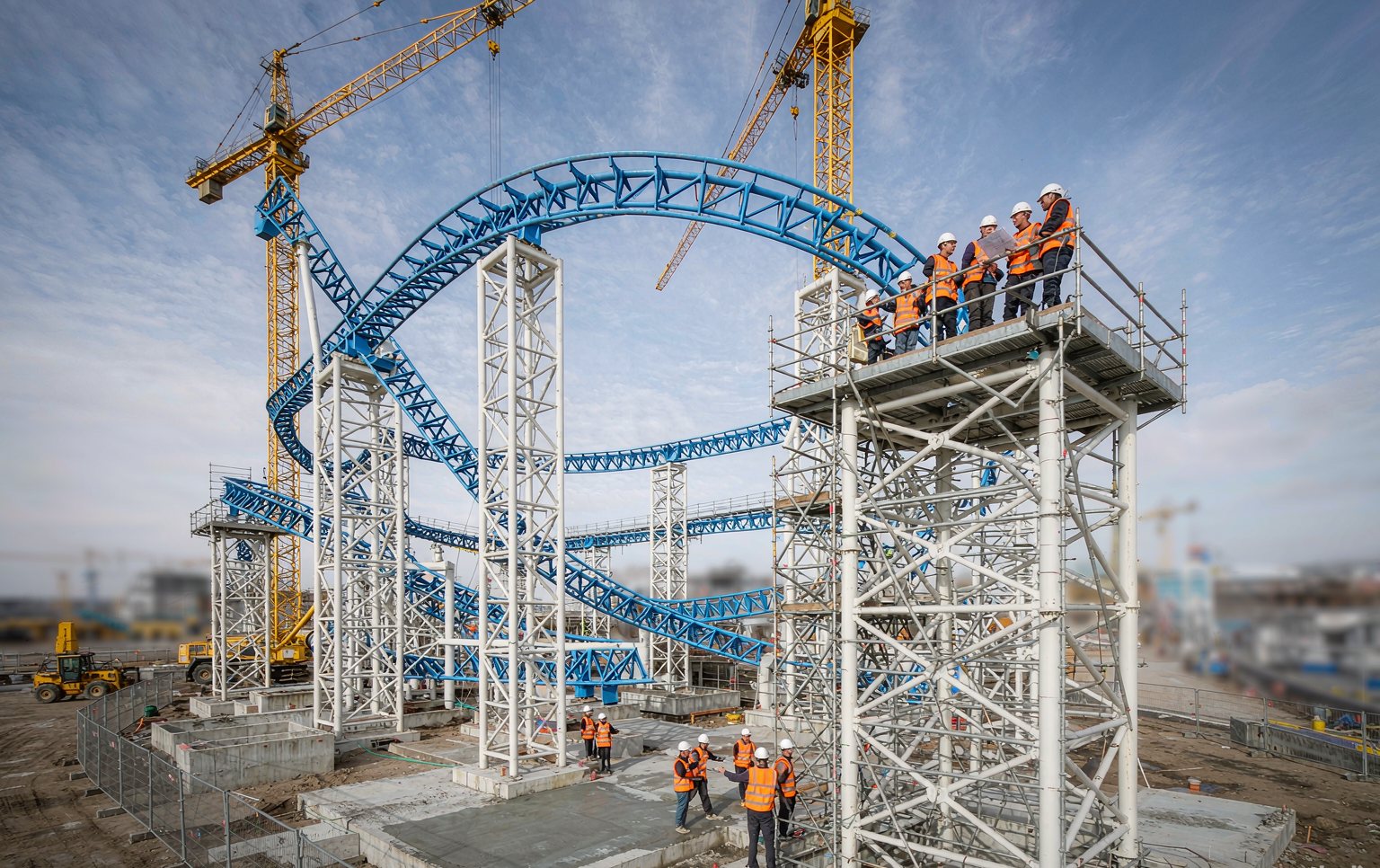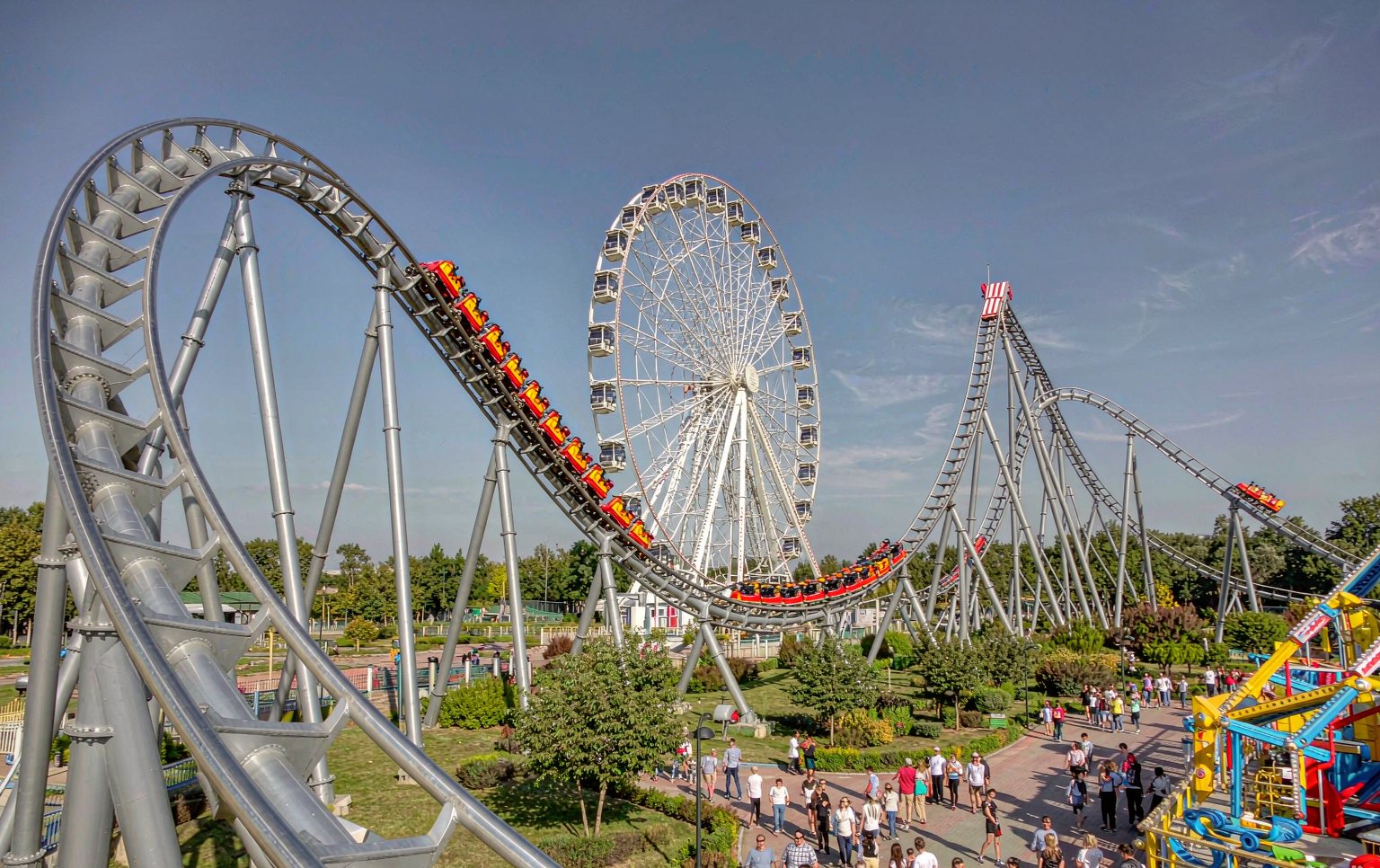
Amusement facilities are often understood as rides, but a complete park environment includes much more. Rides, play structures, game areas, food outlets, restrooms, ticketing systems, guest service counters, first aid points, parking areas, walkways, shade structures, and entertainment zones all belong to the same operational system. A visitor may remember the rides, but their overall experience depends on how well every facility works together.
A modern amusement facility must do more than attract attention. It must support safety, comfort, efficiency, and enjoyment. A beautifully designed ride can still fail if queues are confusing, restrooms are distant, signage is unclear, or maintenance is inconsistent. That is why amusement facilities should be planned as part of a complete guest journey, not as isolated attractions.
The Role of Rides in Amusement Facilities
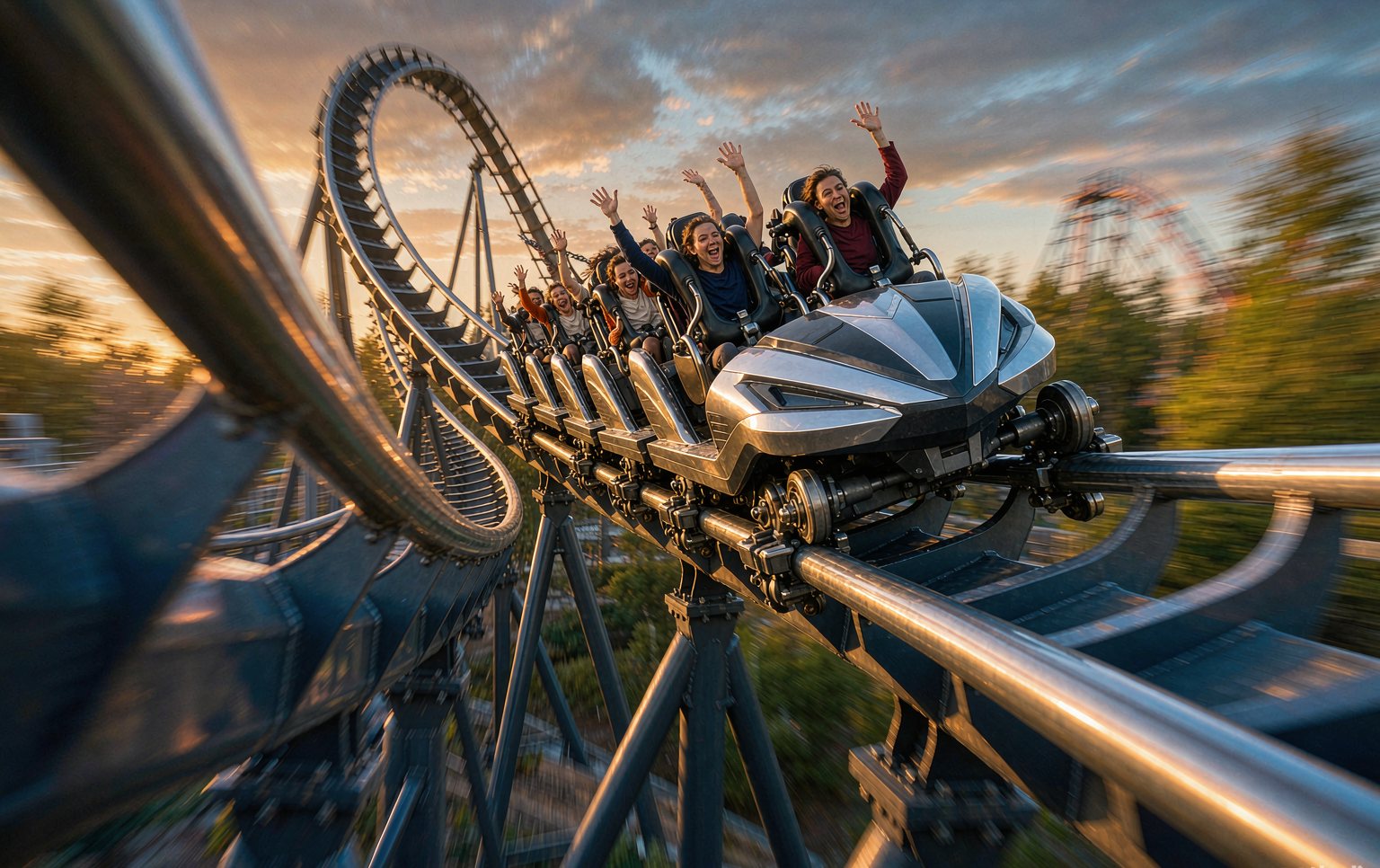
Rides remain the most visible part of amusement facilities. They create excitement, define the park’s identity, and give visitors a reason to return. However, rides also require careful planning. Each attraction affects noise levels, crowd movement, power needs, maintenance access, queue space, and theming.
A strong ride mix usually includes attractions for different ages and energy levels. Young children may need gentle rides, while teenagers may seek faster experiences. Families often prefer attractions where parents and children can participate together. Adults may enjoy scenic rides, shows, dining areas, or relaxed entertainment. When amusement facilities offer this variety, the park becomes more inclusive and commercially resilient.
Ride selection should also match the park’s theme and location. A coastal park may benefit from nautical themes, while an urban entertainment venue may favor compact attractions and strong visual identity. A regional family park may focus on accessible thrills, while a destination theme park may invest in large-scale immersive experiences.
Play Areas and Family Zones
Not all amusement facilities are mechanical rides. Play areas and family zones are essential in parks that serve young children and multi-generational visitors. These spaces often include soft play structures, climbing frames, slides, water features, sensory panels, and themed environments.
Family zones help balance the intensity of larger rides. They give younger guests a place to explore safely while allowing parents to relax nearby. A well-designed play area should have clear age guidance, safe surfacing, controlled entry points, shaded seating, and visible sightlines for supervision.
Theming can make these facilities more engaging. A jungle, pirate, castle, space, or farm theme can turn a simple play structure into an imaginative environment. Children respond strongly to storytelling, even in small spaces. When play areas feel connected to the wider park, they become more memorable and more shareable.
Food, Retail, and Service Facilities
Food and retail facilities are often underestimated, but they play a major role in visitor satisfaction. Families spend long hours in parks, and access to food, drinks, snacks, restrooms, and shaded seating affects comfort and mood. Poor food service can create frustration, while well-planned dining options can extend visit length and improve satisfaction.
Amusement facilities should place food outlets where they support natural breaks in the day. Guests should not have to leave a popular zone to find basic services. Dining areas should offer quick service options, child-friendly menus, allergy information, seating, waste bins, and shade. Retail outlets should offer items that reflect the park’s identity rather than generic souvenirs.
Service facilities also include ticketing, information desks, guest relations, lost child points, first aid rooms, baby care areas, and accessible restrooms. These spaces may not create excitement, but they build trust. When visitors feel supported, they stay longer, spend more confidently, and are more likely to return.
Safety Standards and Risk Management
Safety is the foundation of every amusement facility. Visitors expect rides, play areas, and service zones to be safe, clean, and well managed. That expectation requires more than occasional inspections. It requires a continuous system of design checks, staff training, maintenance records, emergency planning, and guest communication.
Each facility carries different risks. Rides involve mechanical movement, height, and restraints. Play areas involve climbing, falling, and active movement. Water features involve slip hazards and supervision needs. Food areas involve hygiene, temperature control, and allergen management. Service areas involve crowd flow and emergency access.
Good safety planning does not remove fun. It makes fun possible. Clear rules, visible staff, clean equipment, controlled access, and reliable maintenance help guests relax. When safety feels invisible because it is well managed, the park experience improves.
Maintenance and Operational Reliability
Amusement facilities depend on consistent maintenance. A ride that closes unexpectedly, a play structure that looks worn, a restroom that feels unclean, or a food outlet with long delays can damage trust quickly. Maintenance is not only about repairs. It is about preventing problems before they affect guests.
Preventive maintenance should cover mechanical systems, electrical systems, restraints, lighting, surfacing, plumbing, signage, and decorative elements. Records should be kept for inspections, repairs, replacements, and safety checks. Staff should know how to report issues quickly, and managers should have clear procedures for closing, inspecting, and reopening facilities when needed.
Operational reliability also affects guest flow. If one major ride closes, visitors may crowd other attractions. Parks should plan for this by offering alternative entertainment, flexible scheduling, clear communication, and service recovery options. A well-managed park can turn unexpected downtime into a controlled situation rather than a guest experience failure.
Accessibility and Inclusive Design
Amusement facilities should serve as many visitors as possible. Accessibility does not only mean wheelchair access. It includes clear signage, gentle gradients, wide pathways, accessible restrooms, quiet areas, sensory-friendly options, family restrooms, baby care facilities, and staff training for different guest needs.
Inclusive design helps families with young children, older visitors, guests with mobility needs, and visitors with sensory sensitivities. When a park makes inclusion part of its planning, it communicates respect and professionalism. It also expands its audience. Parks that are easy to navigate and comfortable for different needs often receive stronger word-of-mouth recommendations.
Accessibility should be considered early in design, not added later. A pathway that is too narrow, a queue that lacks shade, a restroom that is difficult to find, or a ride entrance with unclear instructions can create barriers. Small design decisions can have a large effect on how welcome different visitors feel.
Guest Flow and Park Layout
Amusement facilities must be arranged to support smooth guest flow. Visitors should be able to move between attractions, food areas, restrooms, exits, and entertainment zones without confusion. Poor layout can make even a high-quality park feel frustrating.
Important attractions should not block main pathways. Queue lines should not spill into narrow walkways. Food areas should not create bottlenecks near entrances. Play zones should be visible to parents but separated from high-traffic routes where possible. Service areas should be easy to find without dominating the visual experience.
Signage plays a major role in guest flow. Directional signs, maps, ride information, height requirements, health warnings, and service locations should be clear and consistent. Visitors should not need to ask staff for basic directions if the environment is well designed. Good signage reduces stress and helps guests feel in control of their visit.
Theming, Atmosphere, and Guest Memory
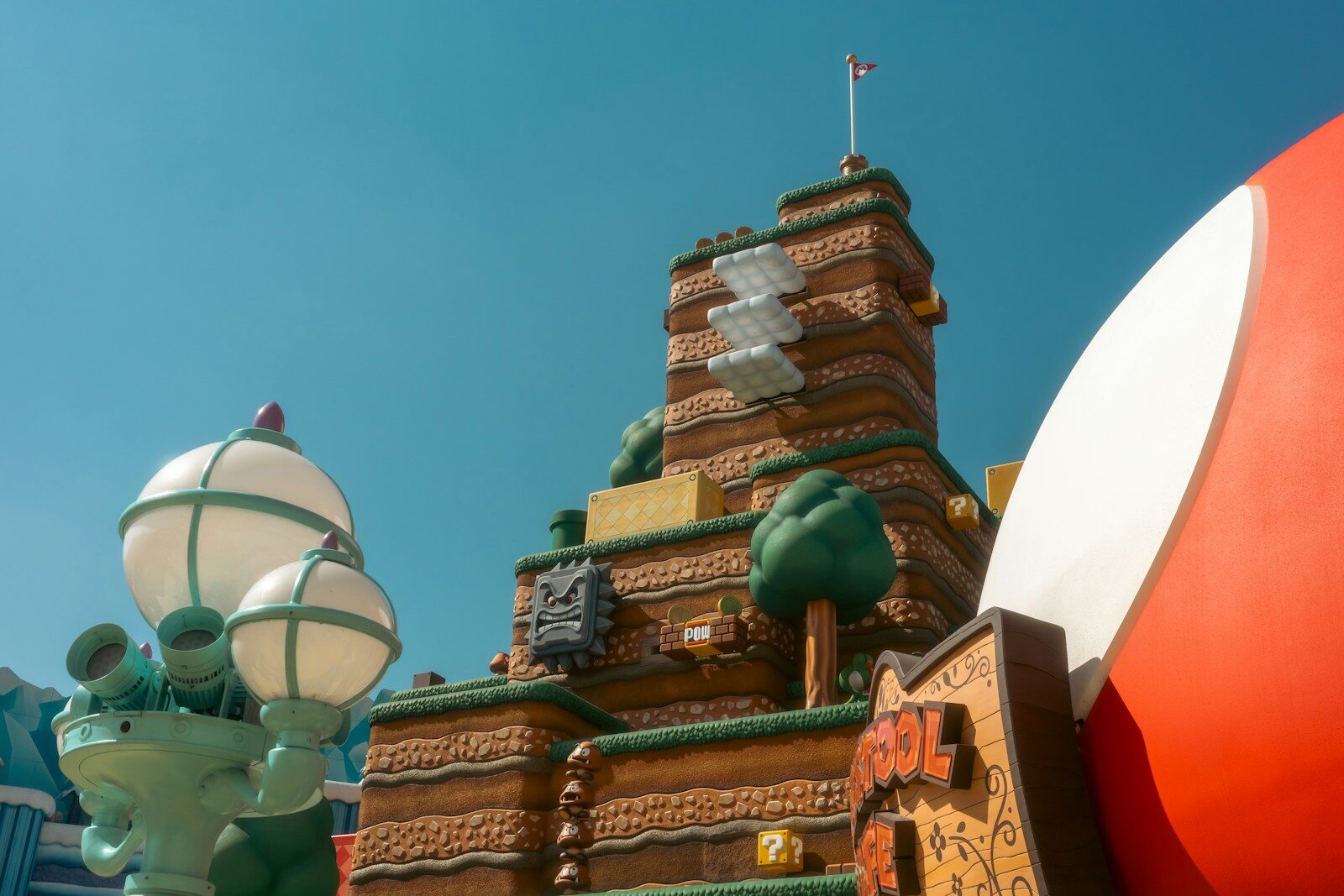
Amusement facilities become more memorable when they feel part of a larger environment. Theming can connect rides, play areas, food outlets, retail shops, music, lighting, and staff presentation into one coherent experience. A pirate-themed zone, for example, should feel different from a futuristic zone or a classic carnival area.
Atmosphere affects emotion. Color, sound, lighting, texture, landscaping, and decorative details all shape how visitors feel. A clean, colorful, well-lit environment feels welcoming. A neglected entrance, faded signage, or mismatched design can make a park feel unprofessional.
Theming also supports marketing. Visitors remember places that feel distinctive. Strong visual identity helps with photography, social sharing, and brand recognition. When amusement facilities are designed with both function and atmosphere in mind, they become more than service points. They become part of the story guests want to remember.
The Long-Term Value of Well-Planned Amusement Facilities
Amusement facilities are long-term investments. Their value is not measured only by installation cost, but by safety, durability, guest satisfaction, operational efficiency, and repeat visits. A poorly planned facility may attract attention at first, but weak maintenance, poor layout, or unclear service can reduce its value over time.
The most successful parks treat amusement facilities as part of a complete system. Rides, play areas, food outlets, restrooms, signage, maintenance routes, staff areas, and guest services must all support the same visitor experience. When every part of the park works together, guests feel cared for, entertained, and confident.
Amusement facilities should therefore be planned with both imagination and discipline. Creativity makes the park memorable. Safety, maintenance, accessibility, and service make it sustainable. Together, they create environments where families, friends, and visitors of all ages can enjoy time together without unnecessary stress or confusion.
5. Family Play Center
SEO Title:
Family Play Center Design: Safety, Theming, and Interactive Play Experiences
Slug:family-play-center
Meta Description:
Discover how a family play center supports children, parents, and park operators through safe design, themed play, interactive activities, accessibility, and guest experience planning.
Why Family Play Centers Matter in Modern Parks
A family play center is more than a children’s corner. It is a carefully designed environment where young guests can move, explore, imagine, and interact while parents feel comfortable supervising. In larger parks, family entertainment venues, shopping centers, resorts, and leisure complexes, a family play center helps balance the experience for households with younger children.
Children need space to climb, slide, crawl, touch, role-play, and test their physical abilities. Parents need safety, visibility, cleanliness, and comfort. Operators need durable equipment, manageable supervision, strong hygiene standards, and attractions that encourage repeat visits. A successful family play center meets all three needs at the same time.
Balancing Fun, Safety, and Supervision
The first responsibility of any family play center is safety. Children are active, curious, and unpredictable. Play environments must therefore be designed to reduce falls, collisions, entrapment, and overcrowding while still feeling fun and adventurous.
Safe design begins with age-appropriate zones. Toddlers need different equipment than older children. Soft flooring, rounded edges, controlled heights, secure barriers, and clear sightlines help reduce risk. Entry and exit points should be designed so children cannot leave unsupervised. Staff or parents should be able to see most of the play area from key positions.
Supervision is easier when the layout is open and readable. Hidden corners, overly complex structures, and narrow tunnels may be exciting, but they can make supervision difficult. The best family play centers create a sense of adventure without making parents feel anxious. When adults feel confident, children can play more freely.
Age Zones and Developmental Play
A strong family play center usually includes different zones for different ages and abilities. Younger children may need soft play, low steps, gentle slides, sensory panels, and simple climbing elements. Older children may enjoy taller structures, rope bridges, ball runs, interactive games, and more challenging physical activities.
Age zoning helps reduce conflict between very small children and more active older children. It also supports developmental play. Toddlers benefit from texture, color, balance, and simple cause-and-effect activities. Preschool children enjoy role-play, imagination, and moderate physical challenges. Older children may seek competition, coordination, and social play.
Clear age guidance should be visible but friendly. Instead of making rules feel restrictive, signage can explain why certain areas are designed for specific age groups. This helps parents make quick decisions and reduces confusion at busy times.
Themed Environments and Imaginative Play
Theming transforms a family play center from a functional space into a memorable experience. A jungle theme, pirate theme, castle theme, space theme, or underwater theme can give children a story to enter. Instead of simply climbing a structure, they may feel like explorers, pirates, knights, astronauts, or sea adventurers.
Theming should be consistent. Colors, shapes, materials, graphics, lighting, and sound should support the same idea. A pirate-themed family play center might include ship decks, treasure chests, rope details, flags, and nautical colors. A space-themed center might use stars, planets, metallic surfaces, glowing panels, and futuristic shapes.
Imaginative play also supports longer visits. When children are absorbed in a story, they move between activities more naturally. They may climb, slide, pretend, chat, explore, and rest without becoming bored quickly. For parents, this creates a calmer experience. For operators, it supports higher satisfaction and stronger emotional connection to the venue.
Interactive and Sensory Play
Modern family play centers often include interactive and sensory elements. These can include ball pools, water tables, light panels, sound buttons, spinning wheels, magnetic walls, soft building blocks, musical instruments, and digital game zones.
Interactive play encourages children to experiment. They learn through touch, movement, sound, and visual feedback. Sensory elements are especially valuable for younger children and for visitors with different sensory needs. Soft lighting, gentle sound, and tactile surfaces can make the environment more welcoming.
Interactive zones should be designed for durability. Children touch, pull, press, and test equipment constantly. Materials must withstand heavy use while remaining safe and easy to clean. Equipment that breaks quickly or feels unhygienic can damage trust, even if the overall design is attractive.
Parent Comfort and Visibility
A family play center is designed for children, but parent comfort is equally important. If adults feel tired, crowded, or unsure where to stand, the visit becomes less enjoyable. Good design gives parents comfortable places to sit, clear views of the play area, and easy access to restrooms, snacks, and exits.
Seating should be placed where parents can supervise without blocking play routes. Shade or indoor comfort is important in warm climates. Charging points, water fountains, and nearby restrooms improve convenience. A small café or snack counter close to the play area can also help families stay longer without leaving the zone.
Clear rules help parents feel supported. Height limits, shoe policies, sock requirements, hygiene rules, and supervision expectations should be visible at entry points. When rules are explained clearly, parents are more likely to follow them, and staff can manage the space more effectively.
Hygiene, Cleaning, and Maintenance
Cleanliness is essential in any family play center. Parents expect play areas to be safe, but they also expect them to be clean. Soft play surfaces, ball pools, interactive panels, restrooms, and seating areas should be cleaned regularly according to a clear schedule.
Maintenance should be visible where possible. Staff should check equipment before opening, repair damaged parts quickly, and remove unsafe items from use. Broken toys, torn soft panels, loose screws, sharp edges, or dirty surfaces can create safety concerns and reduce confidence.
Hygiene communication also matters. Hand sanitizing points, shoe-free zones, sock requirements, and clear cleaning schedules help parents feel reassured. A family play center that communicates its cleaning standards openly often feels more trustworthy than one that leaves visitors to guess.
Accessibility and Inclusion
A family play center should welcome children with different abilities and sensory needs. Accessibility may include ramp access, wide entry points, wheelchair-friendly viewing areas, quiet zones, reduced-noise times, tactile surfaces, and calm retreat spaces.
Inclusion does not mean removing challenge. It means offering different ways to participate. Some children may enjoy active climbing, while others may prefer gentle sensory play. Some families may need more space for mobility equipment. Others may benefit from quieter moments away from loud music or bright lights.
When a family play center considers these needs, it becomes more than a play space. It becomes a welcoming environment where different families can enjoy time together. This strengthens the venue’s reputation and supports repeat visits from diverse guest groups.
Staff, Supervision, and Guest Experience
Staff play a central role in family play center operations. They welcome guests, explain rules, monitor safety, assist parents, manage capacity, respond to incidents, and maintain cleanliness. Friendly staff can make a simple visit feel warm and professional.
Training should cover child safety, emergency procedures, hygiene standards, conflict resolution, and guest communication. Staff should know how to handle overcrowding, lost children, minor injuries, equipment issues, and anxious parents. Their presence should feel supportive rather than intrusive.
Guest experience also depends on capacity management. A family play center that becomes too crowded can feel unsafe and stressful. Timed entry, session limits, clear maximum capacity, and well-designed queue areas help maintain comfort. When visitors feel the space is managed well, they are more likely to return.
Creating a Family Play Center That Builds Loyalty
A successful family play center is judged by how families feel during and after their visit. Children should leave with happy memories. Parents should leave feeling reassured. Operators should see repeat visits, positive reviews, and stronger brand trust.
The most effective family play centers combine safety, imagination, comfort, cleanliness, and service. They give children space to play freely while giving parents confidence that the environment is well managed. When these elements work together, the family play center becomes more than an attraction. It becomes a place families plan around, recommend to others, and remember as part of a positive day out.