
Bumper cars remain one of the highest-revenue-per-square-meter attractions in the industry, and the difference between a fleet that runs for ten years and one that fails in season two usually comes down to the bumper car manufacturer behind it. This procurement guide explains how to evaluate a factory directly, what to inspect in fiberglass shells and power systems, and which price bands and payment terms you should expect when buying factory-direct in 2026.
Why Your Choice of Bumper Car Manufacturer Matters
A bumper car is a deceptively simple product: a fiberglass body, a chassis, a motor, and a power pickup. In practice, however, the quality gap between a serious bumper car manufacturer and a low-cost assembler shows up within months — cracked shells at the impact ring, burnt floor-grid joints, motors that overheat under continuous operation, and spare parts that no longer match your fleet. For an operator, those failures translate directly into downtime during peak season.
A capable manufacturer also thinks beyond the vehicle itself. Floor preparation, grid conductivity, pole and brush consumables, charging infrastructure, and operator training all affect uptime. When you compare suppliers, you are really comparing engineering depth, quality control discipline, and after-sales commitment — the same criteria outlined in our theme park manufacturers buyer’s guide.
Factory-Direct vs Trading Company: Who Are You Actually Buying From?
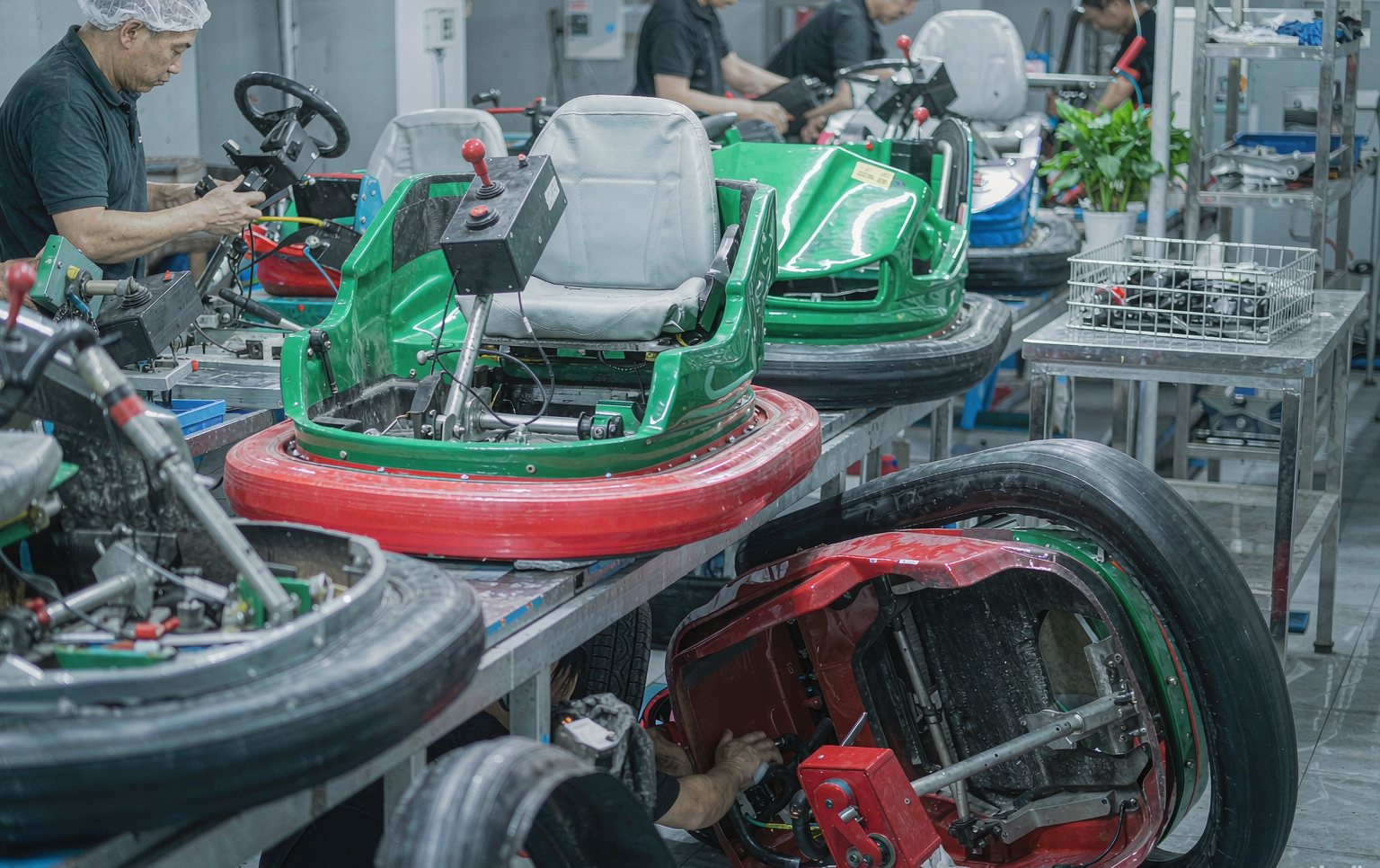
The first question every buyer should ask is whether the supplier owns the production line. A true bumper car manufacturer will happily provide a business license scope covering ride manufacturing, factory photos or a live video walk-through, and named certifications such as CE and EN 13814 compliance. A trading company, by contrast, often sources shells from one workshop, chassis from another, and assembles nothing itself.
Buying factory-direct typically delivers three advantages: lower unit cost because no intermediary margin is layered in, direct engineering communication when you need OEM changes, and accountability — the factory that built your cars is the factory that honors the warranty. Trading companies can still be useful for consolidating mixed containers, but for a core revenue ride like bumper cars, direct procurement from the bumper car manufacturer is almost always the safer path.
Verification tip: ask for the welding and lamination workshop addresses and check whether the company name on the invoice matches the name on the production facility. Mismatches are the clearest signal you are dealing with an intermediary. It is also worth reviewing the export history: a manufacturer shipping to Europe, the Middle East, and South America has already adapted to different voltage standards, safety regimes, and climates, and will anticipate questions a domestic-only seller has never faced.
Fiberglass Shell Quality: What to Inspect Before You Sign
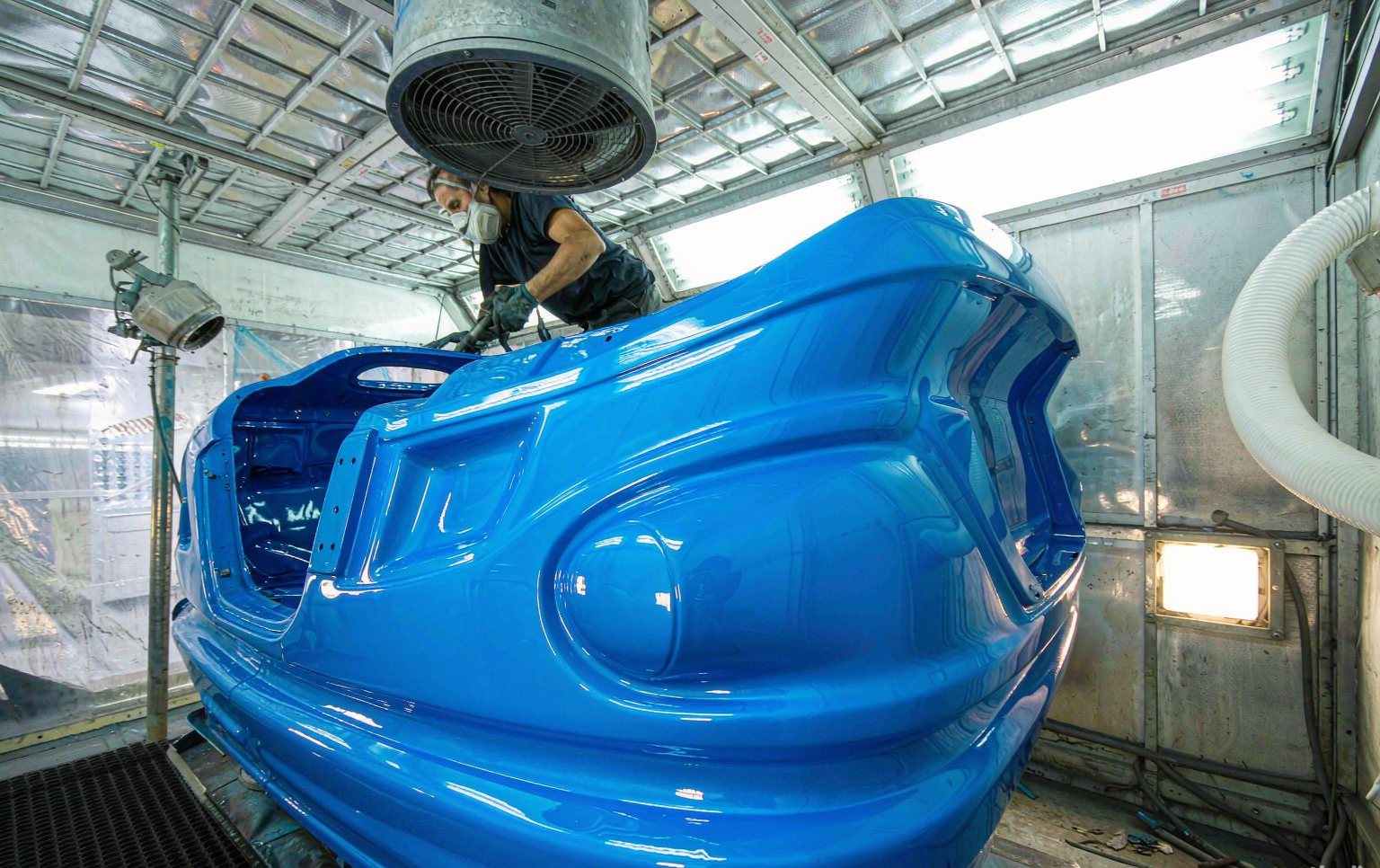
The fiberglass (FRP) shell is both the visual identity and the primary impact structure of a bumper car, so it deserves the closest inspection of any component. Reputable bumper car factories use hand-laid or machine-applied gel coat with a consistent thickness of 1.5–2 mm over a properly cured laminate, and they reinforce the most vulnerable zones — the bumper ring, seat mounts, and floor attachment points — with additional layers of chopped-strand mat.
When auditing a bumper car manufacturer, request a cut sample of the shell laminate. Look for uniform resin distribution, no dry glass areas, and a bumper ring molded as part of the structure rather than bolted as an afterthought. Cheap shells often use thinner laminate on hidden surfaces and universal polyester gel coat that chalks and fades within two outdoor seasons. Ask how many polish-and-wax cycles the mold goes through, because mold maintenance is what separates a glossy, dimensionally accurate shell from a wavy one. Quality builders back shells with a structural warranty and keep molds in production for years so that replacement bodies remain available.
Power Systems Compared: Floor Grid, Ceiling Grid and Battery
Power delivery defines both the ride experience and your site-preparation budget, and any experienced bumper car manufacturer should guide you through the three standard systems rather than pushing whichever one they happen to stock.
- Floor-grid (conductive floor) systems use a steel grid under the rink floor with positive and negative strips. They deliver constant full power with no charging downtime, making them the choice for high-throughput parks, but they require a properly leveled foundation and professional installation of the grid and isolating joints.
- Ceiling-grid (pole) systems are the classic format: power comes through a ceiling mesh, picked up by a pole on each car. They are cheaper to install in existing halls with adequate ceiling height (typically 3.5 m or more) but introduce pole wear and occasional contact interruptions.
- Battery-powered cars eliminate floor and ceiling infrastructure entirely, which suits malls, temporary events, and sites where construction is impossible. The trade-off is charging management, battery replacement cycles, and slightly lower continuous speed. Modern lithium battery fleets can run a full session on a single charge.
A capable bumper car manufacturer will model throughput per session for each option and recommend the system that matches your venue, ceiling height, and staff capacity — not simply quote the cheapest configuration.
Site preparation deserves equal attention. A seasoned bumper car manufacturer supplies detailed civil drawings for the floor-grid trench, leveling tolerances, and earthing requirements, and can dispatch an installation supervisor or a full crew. For a 300–500 square meter rink, professional installation typically takes 7–15 days including grid commissioning and a full-load test of every car. Confirm before ordering whether installation labor, local steelwork, and a step-down transformer are included or supplied by your side, because these items are a common source of budget overruns on first-time projects.
OEM and ODM Customization: Getting a Fleet That Fits Your Brand
Customization is where factory-direct buying pays for itself. With OEM service, a bumper car manufacturer applies your theme to existing molds: custom gel coat colors, airbrushed artwork, LED lighting packages, themed toppers, and branded dashboard decals. With ODM service, the factory develops new tooling — a licensed character car, a corporate-branded fleet, or an unusual footprint for a tight floor plan — which typically requires a mold investment and a longer development cycle. Both routes let you differentiate an attraction that guests can otherwise find in every mall in the region, which is exactly what justifies premium ticket pricing and strong social-media visibility.
Before committing, ask to see the factory’s mold library and two or three completed custom projects with references. Anxin Amusement, for example, supports full OEM/ODM theming through its custom ride solutions program, from concept sketches and 3D renderings to fiberglass tooling and sample approval. Insist on written confirmation of who owns the mold — for long-term buyers, owning your tooling protects your theming investment. Also agree on a sample-approval step before mass production: one finished car photographed and signed off saves weeks of dispute later, and a confident bumper car manufacturer will offer this without being asked.
What a Bumper Car Manufacturer Charges: Indicative Price Bands
Pricing varies with power system, car size, battery chemistry, and theming depth. The bands below are indicative, ex-works, and configuration dependent, based on a standard 10–20 car fleet package:
| Configuration (10–20 cars) | Typical Price Band (USD) | Best For |
|---|---|---|
| Ceiling-grid set, standard theming | $12,000 – $20,000 | Existing halls with 3.5 m+ ceiling |
| Floor-grid system incl. grid package | $18,000 – $35,000 | High-throughput permanent rinks |
| Battery-powered set, lithium option | $20,000 – $45,000 | Malls, FECs, event venues |
| Custom OEM theming / ODM molds | +15% – +40% on base | Branded and licensed fleets |
A trustworthy bumper car manufacturer quotes with an explicit specification list — motor power, battery capacity, shell thickness, charger type, and included spares — so you can compare offers line by line instead of comparing incomplete numbers.
Payment Terms, Lead Time and Shipping
Industry-standard terms for export orders are 30% deposit by T/T with the 70% balance paid before shipment, against photos and factory test records of your completed fleet. When your bumper car manufacturer issues the proforma invoice, check that it lists the full specification, unit quantities, spare parts package, and incoterm — not just a total price. Standard models ship in 25–45 days; custom theming or ODM tooling extends the lead time to 35–60 days.
Expect careful export packaging: cars are typically shipped with shells protected by foam and film, motors and controllers packed separately, and grid packages crated for sea freight. Confirm incoterms (FOB and CIF are most common), and ask the factory to provide the CE documentation, packing list, and installation manual set your customs broker and installer will need. Buyers ordering a full rink can also consolidate grid steel, rink edging, and ticketing equipment in the same container to cut freight cost per unit.
Bumper Car Manufacturer Audit Checklist
Before wiring any deposit, run this audit. A serious factory will pass every item; hesitation on more than two is a warning sign.
- Confirm the business license explicitly covers amusement ride manufacturing, not just trading.
- Request a live video factory tour showing shell lamination, welding, and final assembly areas.
- Verify CE, EN 13814, and ISO 9001 certificates by checking the issuing body, not just the PDF.
- Ask for a cut laminate sample or third-party test report for the fiberglass shell.
- Request the name of the motor, controller, and battery suppliers used in the drivetrain.
- Ask how many units of your chosen model the factory has exported in the past 24 months.
- Confirm the warranty in writing — 2 years is the benchmark, with lifetime technical support and guaranteed spare parts availability.
- Request two reference customers in your region whom you can contact directly.
- Review a sample pre-shipment inspection report, including 100% load testing of every car.
Frequently Asked Questions
How do I verify that a bumper car manufacturer actually owns its factory?
Ask for the registered business license and compare its manufacturing scope and address with the production site shown in a live video tour. Ask which workshops produce the shells and chassis, and request recent shipping documents showing direct exports under the factory’s own name. A genuine bumper car manufacturer answers these questions without hesitation.
Which power system should I choose for a new rink?
For permanent venues with high throughput, a floor-grid system delivers full power all day with no charging gaps. Ceiling-grid systems suit existing halls with sufficient height and a tighter budget. Battery cars win where construction is impossible — malls, rooftops, and traveling events. Let the bumper car manufacturer calculate sessions-per-day economics for your specific site before deciding, and request the civil-works drawings early so your contractor can pour the floor during the production lead time instead of after delivery.
What warranty and after-sales support should I expect?
The market benchmark is a 2-year warranty on the complete car, lifetime technical support, and guaranteed spare parts supply for at least 5–10 years. Stronger suppliers also provide operator training, video troubleshooting, and a stocked consumables package — poles, brushes, wheels, and fuses — shipped with the original order.
How many bumper cars do I need for a profitable rink?
Most commercial rinks operate 10–20 cars. A well-run 15-car fleet can serve 200–300 riders per hour at typical 3–5 minute sessions. Your bumper car maker should size the grid, charger capacity, and staging area around your target throughput rather than selling you the largest possible set.
Can I order a custom-themed fleet in small quantities?
Yes. OEM painting, LED lighting, and themed toppers are economical even at 10–12 cars because they reuse existing molds. Full ODM tooling for a new car shape usually becomes viable at larger quantities or with a mold investment. Discuss both routes with your bumper car maker during the quotation stage to compare cost per unit.
Conclusion: Choose the Factory, Not Just the Price
Selecting a bumper car maker is a ten-year operational decision disguised as a purchase. Compare factories on engineering depth, fiberglass quality, power-system expertise, and after-sales commitment — then compare prices. Anxin Amusement has manufactured rides for over 15 years, delivers to 24+ countries, and backs every fleet with a 2-year warranty and lifetime support. To size a fleet for your venue, request a quote with your floor dimensions and target throughput, and our engineering team will return a configuration and price within two business days.