
A trackless train ride is often the lowest-risk first attraction for a new park, mall or zoo. It needs no rail bed, it moves visitors between zones, and one operator can run a whole loop. But the price gap between a basic four-carriage unit and a themed resort model is wide. This guide gives you the indicative ranges, the seat-count math and the site rules that decide which machine fits. All figures are planning ranges only — confirm with a formal quotation.
Treat the numbers below as a framework, not a price list. Freight, duty and local inspection add real cost in every market. A supplier who quotes one round number without asking about your route or surface has not finished the job.
Why a trackless train ride earns its place in 2026
A well-placed trackless train ride solves two problems at once. It is a paid attraction in its own right. It is also a people mover that links a parking area to a zoo entrance. In a mall, it connects an atrium to a food court. Visitors accept a short wait because the ride is gentle and predictable. Parents ride with children, so the addressable audience is wider than a thrill machine can reach.
The capital commitment is also moderate compared with a coaster or a Ferris wheel. You can open with a small unit and add carriages later if demand grows. That scalability matters when you are testing a new site or a new market. It keeps the first budget defensible while you collect real visitor data. If the train is part of a larger build, our custom theme park design services can place the loop inside a full site plan.
Operating cost stays low. One driver and one boarding attendant cover most loops. Battery units avoid fuel handling indoors, and a single charge usually covers a full trading day. When labour is your largest ongoing cost, that staffing ratio is a genuine advantage.
Electric or diesel: the two power systems explained
Electric units dominate indoor and mall installations. A battery pack drives a traction motor in the locomotive, with chargers mounted at the station or in a back-of-house bay. They run quietly, produce no local exhaust, and suit venues with air-quality rules. The trade-off is a charging window. Plan a charging slot outside peak hours and keep a spare pack if the loop runs long.
Diesel units belong outdoors, on long routes or on sites where mains power is unreliable. They refuel in minutes and keep running through a full day without a charging stop. The costs are noise, exhaust and a more involved maintenance schedule. Check local emissions rules before you commit, especially for zoo and resort projects near guest accommodation.
How many carriages and seats should you specify
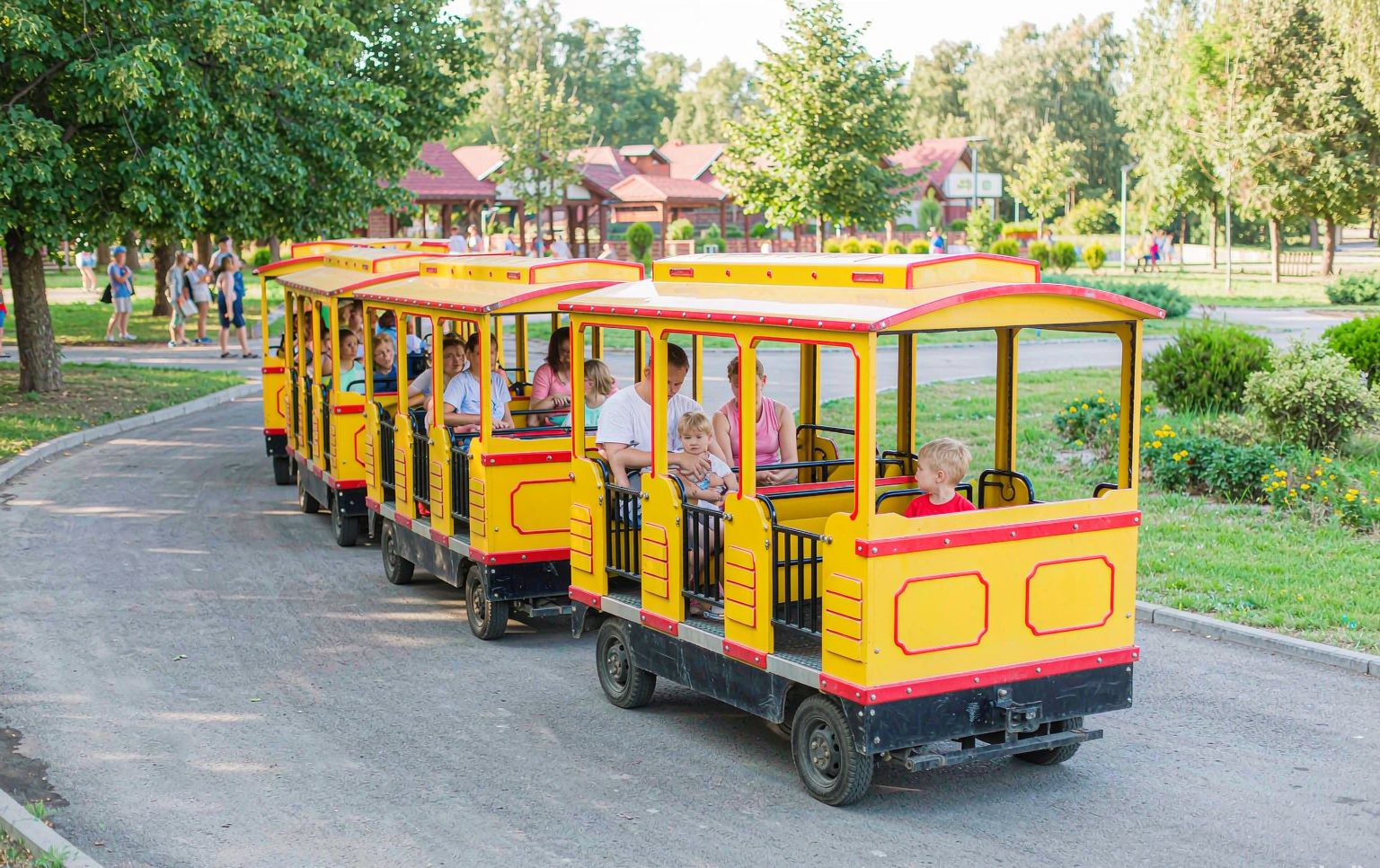
Most commercial machines run two to four passenger carriages behind a locomotive. A compact two-carriage unit carries roughly 12 to 16 riders. A four-carriage resort model can seat 32 to 40. The right number depends on your loop length and your queue space, not on the biggest catalogue photo.
Think about the loading rhythm. More carriages raise the per-cycle headcount, but they also need a longer boarding platform and a wider turning circle. If your platform only fits two carriages, a four-carriage train wastes money on seats you cannot load quickly. Match the consist to the platform first, then check the throughput math below.
Indicative 2026 price ranges by configuration
The table below shows typical factory-direct ranges for a complete trackless train package. Figures cover the locomotive, carriages, a standard battery or diesel drive, and basic lighting. They exclude freight, duty, local installation and any themed bodywork. Indicative range — confirm with a formal quotation.
| Configuration | Seats | Power | Indicative FOB range (USD) |
|---|---|---|---|
| 2-carriage compact unit | 12–16 | Battery electric | 18,000 – 32,000 |
| 3-carriage standard unit | 20–28 | Battery electric | 28,000 – 48,000 |
| 4-carriage park unit | 32–40 | Battery electric | 42,000 – 70,000 |
| 4-carriage long-route unit | 32–40 | Diesel | 45,000 – 75,000 |
| Themed resort model | 24–40 | Electric or diesel | 60,000 – 110,000 |
Three items move a quote fastest: custom fibreglass bodywork, a larger battery pack, and cold-weather or waterproofing upgrades. Ask for each as a separate line so you can drop what you do not need. A transparent breakdown is a better sign than a single low number.
Route design for parks, malls and zoos
In a theme park, the train works best as a loop that touches two or three zones. Keep the station near a decision point, such as a fork or an exit, so riders can use it as transport. A loop of 300 to 600 metres usually holds attention without tying up a carriage for too long. Add a passing bay if you run more than one train.
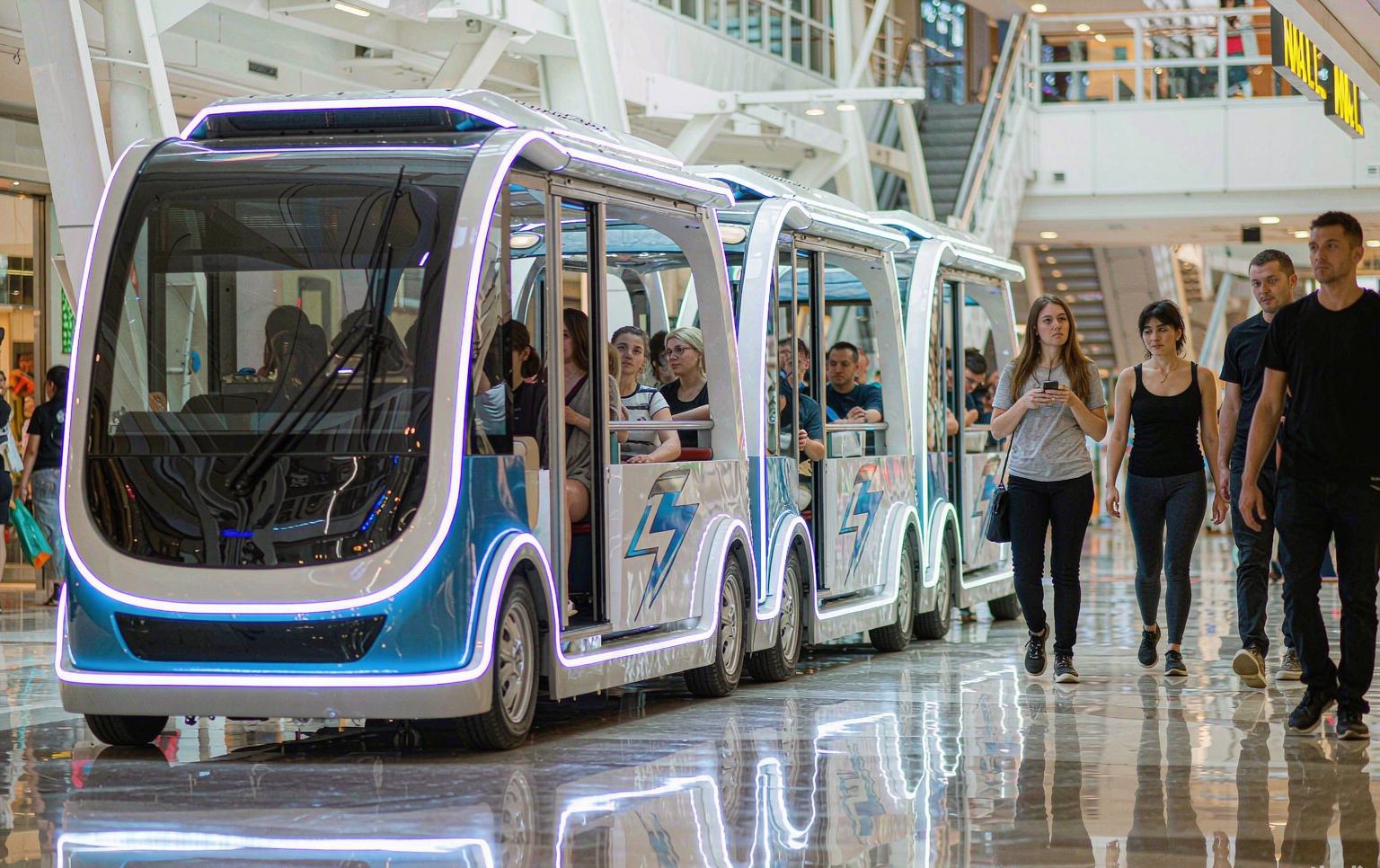
In a mall, the route is shorter and the surface is finished tile. Protect the floor with the wheel specification agreed up front, and avoid tight corners near shop fronts. Zoos need a different plan. Put the station at the entrance and run the loop past animal habitats. Keep the path wide enough for a queuing family plus a passing service cart.
Site requirements: surface, gradients and turning radius
Trackless does not mean surface-independent. Most units want a firm, level, paved surface. Small gradients are usually acceptable, but steep ramps reduce traction and accelerate tyre wear. Ask the manufacturer for the exact gradient limit and the minimum turning radius before you finalise the route. Those two numbers decide whether your planned corners work.
Check overhead clearance as well. Canopies, signage and low branches can turn a good route into a hazard. Allow space around the station for boarding, queuing and an emergency stop. If the train crosses a public walkway, you need a controlled crossing point and a clear sight line in both directions.
Capacity and payback: a worked example
Use a simple formula: riders per hour equals seats times cycles per hour times the load factor. A 24-seat train running eight cycles an hour at a 70 percent load factor carries about 134 riders an hour. At a five-dollar ticket, that is roughly 670 dollars of gross revenue per operating hour. A ten-hour trading day produces about 6,700 dollars before costs.
Now subtract staffing, power and a share of maintenance. A two-person crew and modest energy use leave a healthy contribution on a busy day. Payback depends on your real attendance, not the theoretical maximum. Run the model with a conservative load factor of 50 percent first. If the numbers still work, you have a defensible investment case.
Safety, certification and daily checks
Ask which standards the unit was built to and request the supporting documents. Buyers often work to CE marking for Europe or to ASTM ride standards in North America. The exact set depends on your destination and local regulator. Confirm what the factory actually provides instead of assuming a certificate is included.
Build a short daily checklist before the first guest boards. Check the steering, brakes, tyres, battery charge, lights, emergency stop and seat belts or lap bars. Record each check and keep the log. Good records help with insurance and with any later inspection. Train the driver on the emergency stop position on day one, not after a near miss.
Lead time, shipping and installation
A standard electric unit is usually produced in four to eight weeks, depending on the season and how much custom work is involved. Themed bodywork and large battery packs extend that window. Confirm the production slot in writing and tie it to a named model and carriage count. Ask for photos of the finished unit before it leaves the factory.
Shipping is normally by container. A compact train can share space with other equipment; a four-carriage resort unit may need its own 40HQ. On arrival, allow time for assembly, charging-system setup and a test run on your actual route. Budget for a factory technician if your team has not commissioned this type of ride before.
How to choose a trackless train manufacturer
Use this checklist when you compare suppliers. It turns a sales conversation into a factual comparison. For the wider process of sourcing, contracting and shipping from China, our complete buyer’s guide to importing amusement rides walks through each step in detail.
- Ask for the exact seat count, carriage count and gross vehicle weight of the quoted model.
- Request the minimum turning radius and the maximum gradient, then test them on your route drawing.
- Confirm the battery capacity, expected charge cycle and warranty terms in writing.
- Ask for the braking system and emergency stop layout, including a photo of the driver controls.
- Request copies of the standards and inspection documents the unit actually ships with.
- Get a spare-parts list for tyres, brushes, lights and charger components.
- Confirm what installation support and remote troubleshooting are included.
- Check whether the quoted price covers the themed bodywork shown in the proposal images.
Common mistakes to avoid
Common mistake: buying the longest train before measuring the station. A longer consist looks impressive in a brochure, but it will not pay back if your platform cannot load it quickly. Measure the boarding area and the tightest corner first, then choose the carriage count.
Another error is treating the charger as an afterthought. A battery unit with no charging plan will lose peak-hour capacity within a season. Put the charger location, power supply and charging window into the layout before you sign. Finally, do not skip the surface survey. A rough or sloped route will cost you tyres and downtime every month.
FAQ
How much does a trackless train ride cost?
A compact electric unit with two carriages usually starts around 18,000 to 32,000 dollars FOB. Larger four-carriage or themed models can reach 110,000 dollars. Freight, duty and installation are extra. Treat every figure as indicative and confirm with a formal quotation.
Can a trackless train run indoors?
Yes. Electric units are the standard choice for malls and indoor centres because they produce no local exhaust. Confirm the floor load, wheel type and charging arrangement with the supplier. Keep the charging slot outside your busiest hours.
How many riders can one train carry per hour?
A 24-seat train running eight cycles an hour at a 70 percent load factor carries about 134 riders. Use your own cycle time and expected load factor to build a realistic number. The theoretical maximum rarely happens all day.
Does a trackless train need a special licence?
Requirements vary by country and by site type. Some regions treat a train on private land as a ride; others regulate it as a vehicle. Check with your local authority before ordering and ask the supplier which documents they can provide.
How long does a trackless train take to deliver?
Standard models are commonly produced in four to eight weeks. Custom bodywork and larger batteries add time. Shipping and on-site commissioning add further weeks, so plan the whole schedule before you set an opening date.
Planning a bumper car or amusement ride installation?
Send us your site size, expected visitor volume and budget range — our engineering team will reply within 24 hours with a layout sketch and an indicative quotation, no obligation.