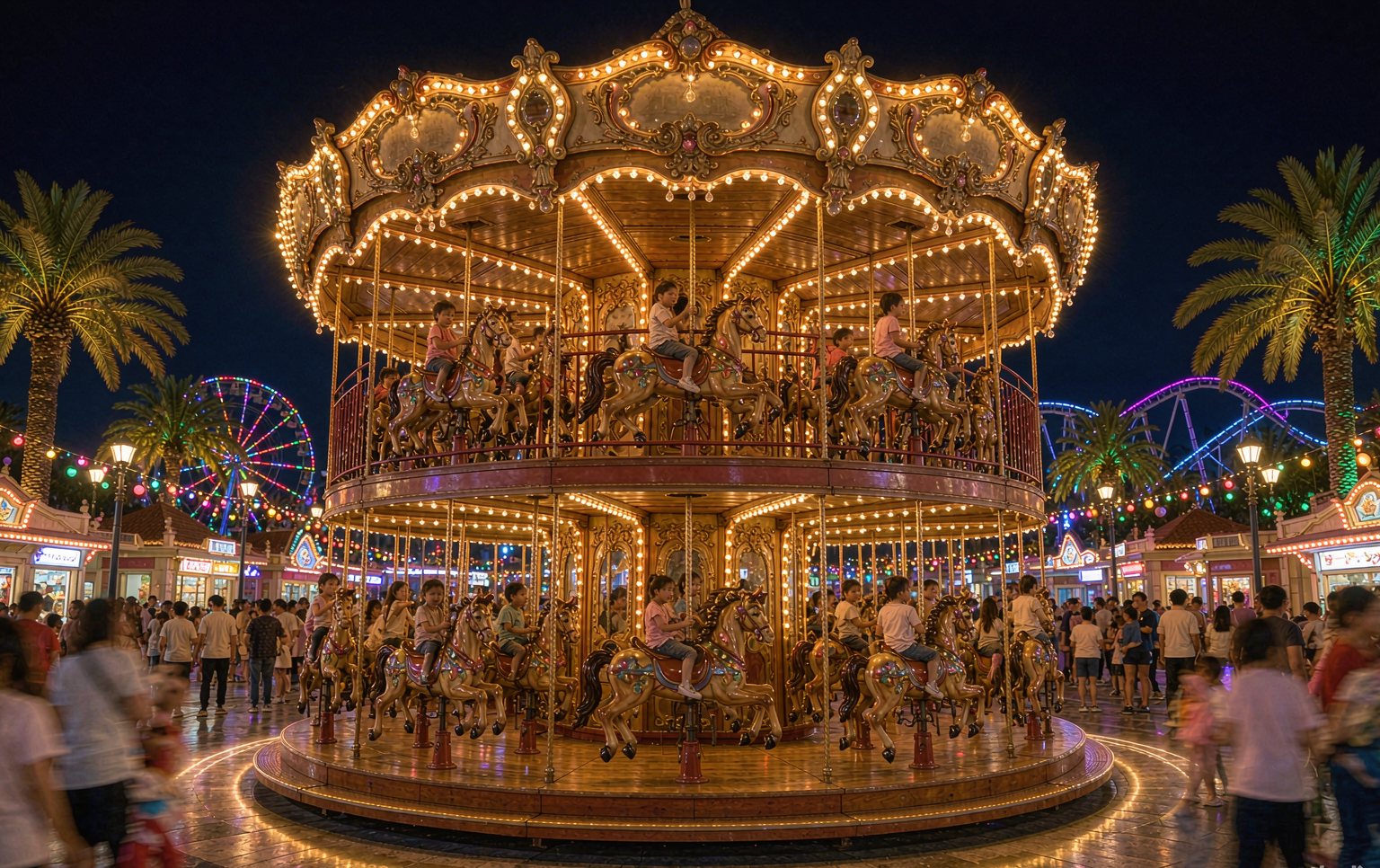
If you are researching carousel ride price levels for a new park, the useful answer is a range, not a single number. A 12-seat carousel from a Chinese manufacturer typically lands between USD 18,000 and 32,000 FOB. A 36-seat double-decker machine can exceed USD 120,000 before freight, foundation work and installation. Seat count sets the base figure, but artwork, lighting, drive type and canopy detail move the final quote by a wide margin. This guide breaks the cost into parts you can actually compare across suppliers. Every number below is indicative. Confirm all figures with a formal quotation built around your site and specification.
We will also show which costs sit outside the machine price. Foundation work, freight, assembly and local inspection can add 25 to 45 percent to a turnkey budget. Buyers who plan only for the factory price often face a funding gap after the equipment arrives. A clear scope at the enquiry stage prevents that gap.
Why carousels still earn their floor space in 2026
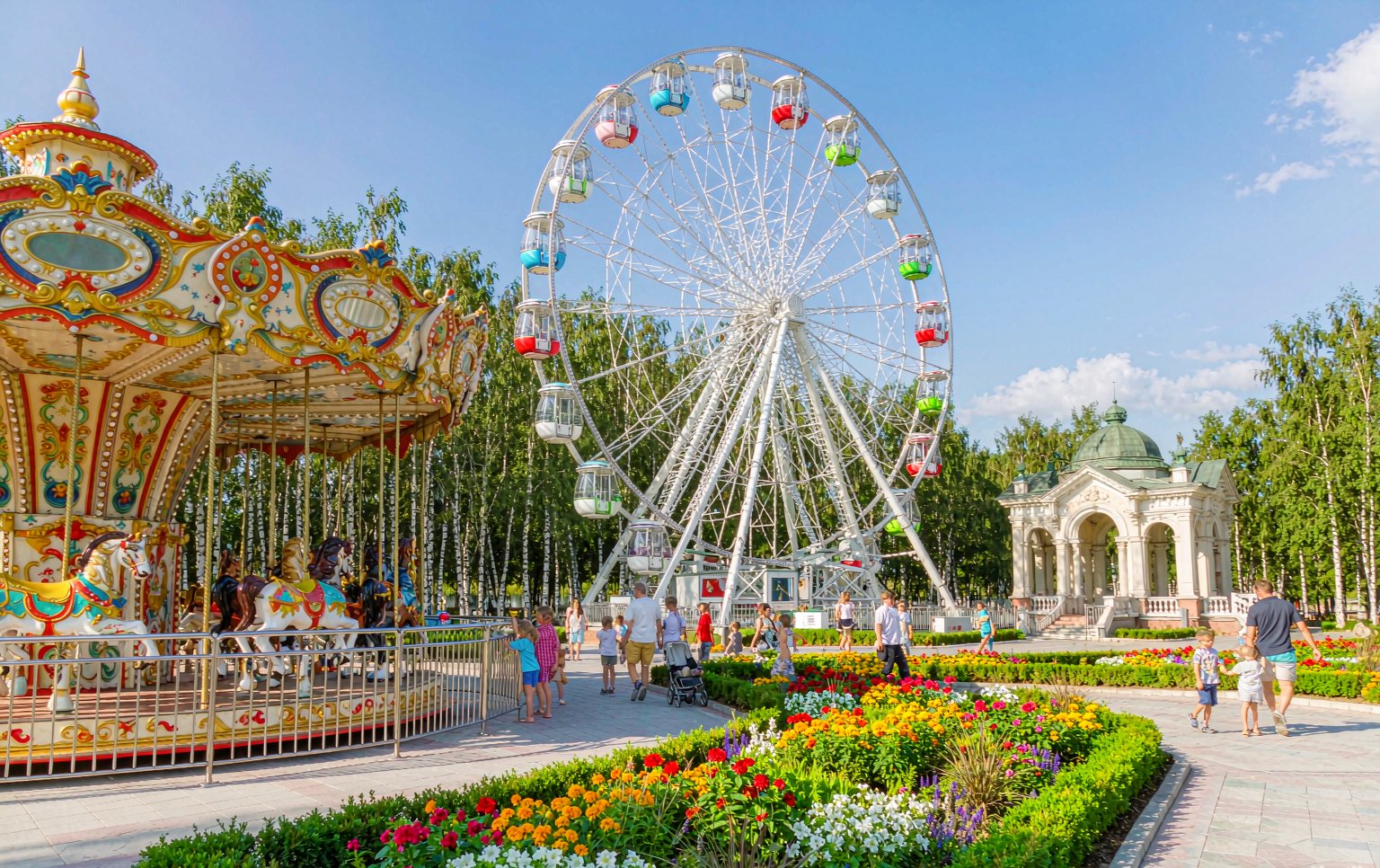
Carousels are the most recognizable ride in a park. Visitors photograph them, children ask for them by name, and grandparents can ride alongside grandchildren. That broad age appeal is hard to match with a thrill machine. A single carousel can serve three generations in the same operating day without changing the attraction.
The operating economics are equally simple. A 24-seat unit can run with two attendants, one on the platform and one managing the queue. The ride is gentle enough for long operating hours and tolerant of high repeat traffic. Maintenance is largely mechanical, so a local technician can handle routine work with parts supplied by the manufacturer.
Carousels also fit both ends of the market. A 12-seat mini model suits a mall atrium or a 300-square-meter indoor zone. A 36-seat double-decker becomes a visual anchor for a regional theme park. The same product family supports an operator who starts small and expands later. Before you fix a budget, check our amusement park ROI model to see how one ride fits into the whole park.
What the carousel ride price actually includes
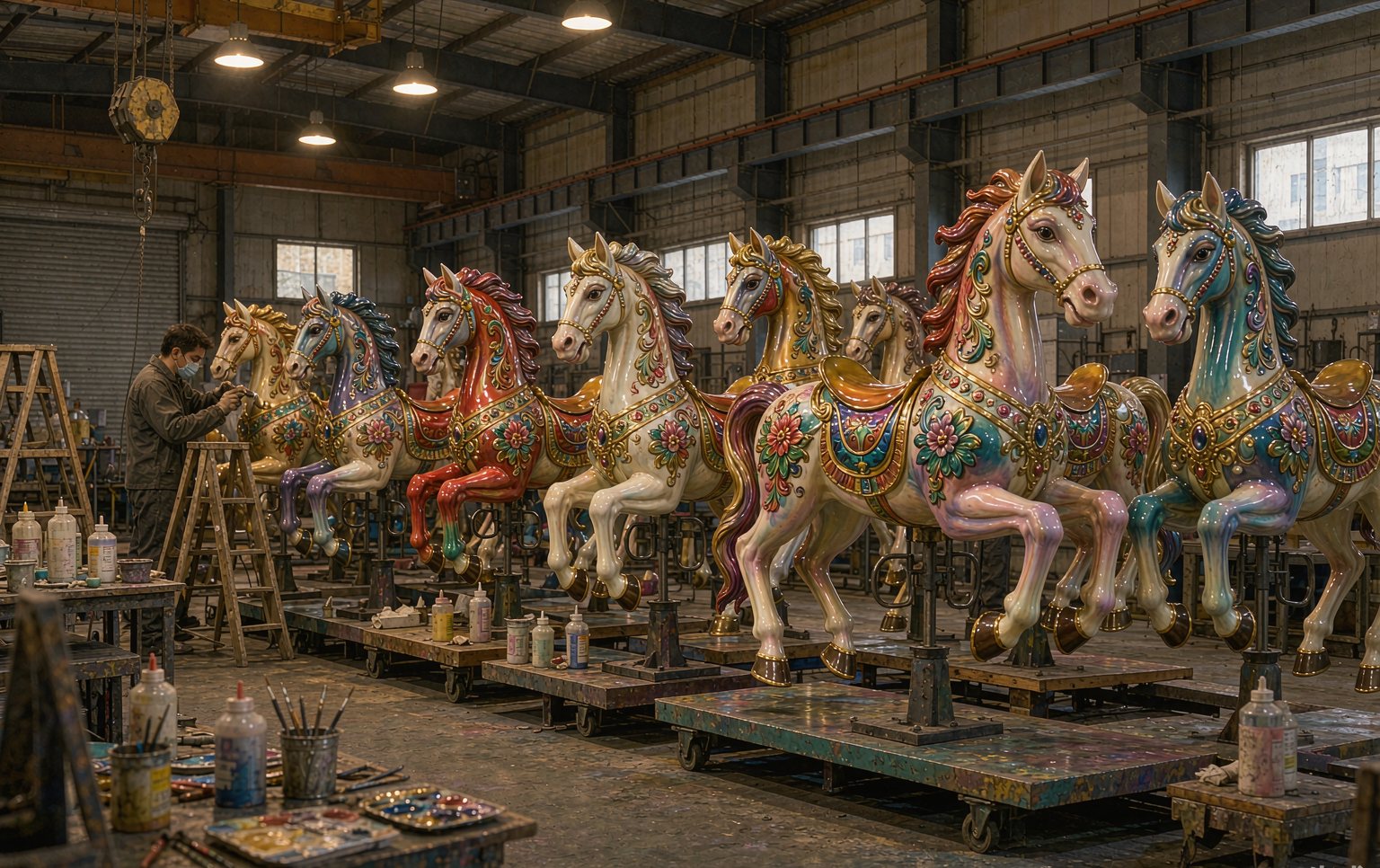
A factory quotation usually covers the rotating platform, steel column, drive system, control cabinet, fiberglass horses or figures, lighting, music and a basic set of spare parts. It may also include shipping frames and assembly drawings. Read the scope line before you compare two numbers. A lower price often excludes items that the higher price includes.
Three commercial terms change what you pay. FOB means you take over cost and risk at the Chinese port. CIF adds ocean freight and insurance to the named destination port. A turnkey or DDP arrangement adds customs, inland delivery, assembly and sometimes commissioning. Ask every supplier to quote on the same basis. Otherwise you are comparing different packages, not different prices.
Typical exclusions deserve their own budget line. These include the concrete foundation, crane or forklift hire, local permits, third-party inspection, on-site accommodation for the installation crew, and import duties. None of these are optional in practice. Set aside a contingency of at least ten percent of the machine value for site surprises.
Four size classes compared: 12, 16, 24 and 36 seats
Seat count is the first filter, because it drives the structure, the motor and the footprint. The table below uses typical configurations for electrically driven carousels. Custom theming, double decks and trailer mounting all shift the numbers.
| Class | Typical setting | Diameter | Connected power | Indicative FOB price |
|---|---|---|---|---|
| 12 seats | Mall atrium, kiddie zone | 6–7 m | 8–12 kW | USD 18,000–32,000 |
| 16 seats | Small indoor park, FEC | 8–9 m | 12–18 kW | USD 28,000–48,000 |
| 24 seats | Community park, medium FEC | 10–12 m | 18–28 kW | USD 45,000–80,000 |
| 36 seats, double deck | Regional theme park landmark | 12–14 m | 30–45 kW | USD 85,000–140,000 |
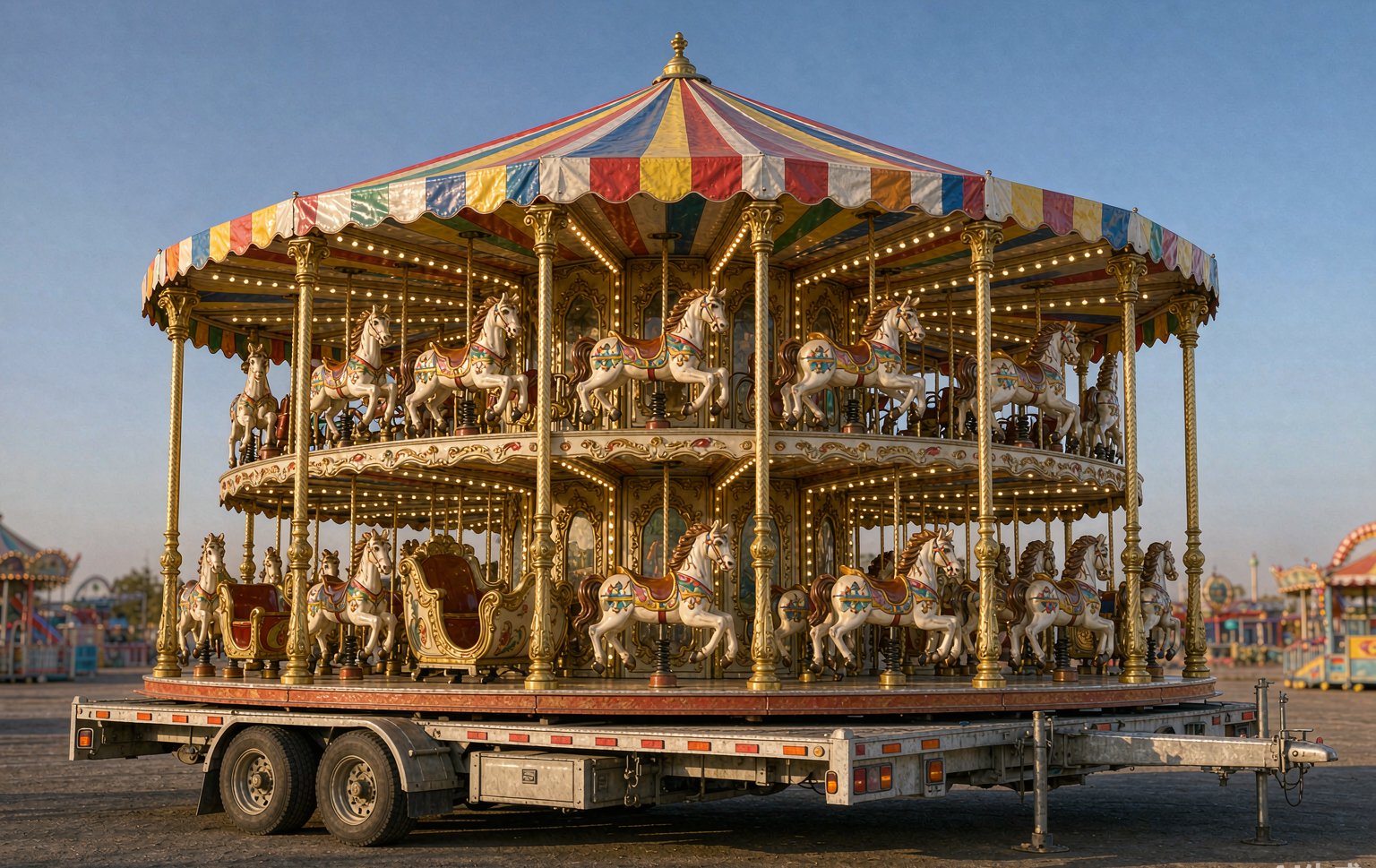
Indicative range — confirm with a formal quotation. Diameter and power vary with the manufacturer’s design, canopy style and optional effects. A trailer-mounted 24-seat unit, for example, costs more than a fixed installation because the chassis and towing system add steel and certification work.
Where the money goes: five cost components
Once you know the price band, the next question is what drives movement inside it. Five components explain most of the difference between two quotes for machines with the same seat count.
- Steel structure and platform. Heavier sections, hot-dip galvanizing and double-deck framing raise cost but extend service life outdoors.
- Fiberglass figures and artwork. Hand-painted figures, custom characters and detailed moulds are the largest source of visual differentiation.
- Drive and control system. Geared drives, variable-frequency control and redundant braking add safety and smooth operation.
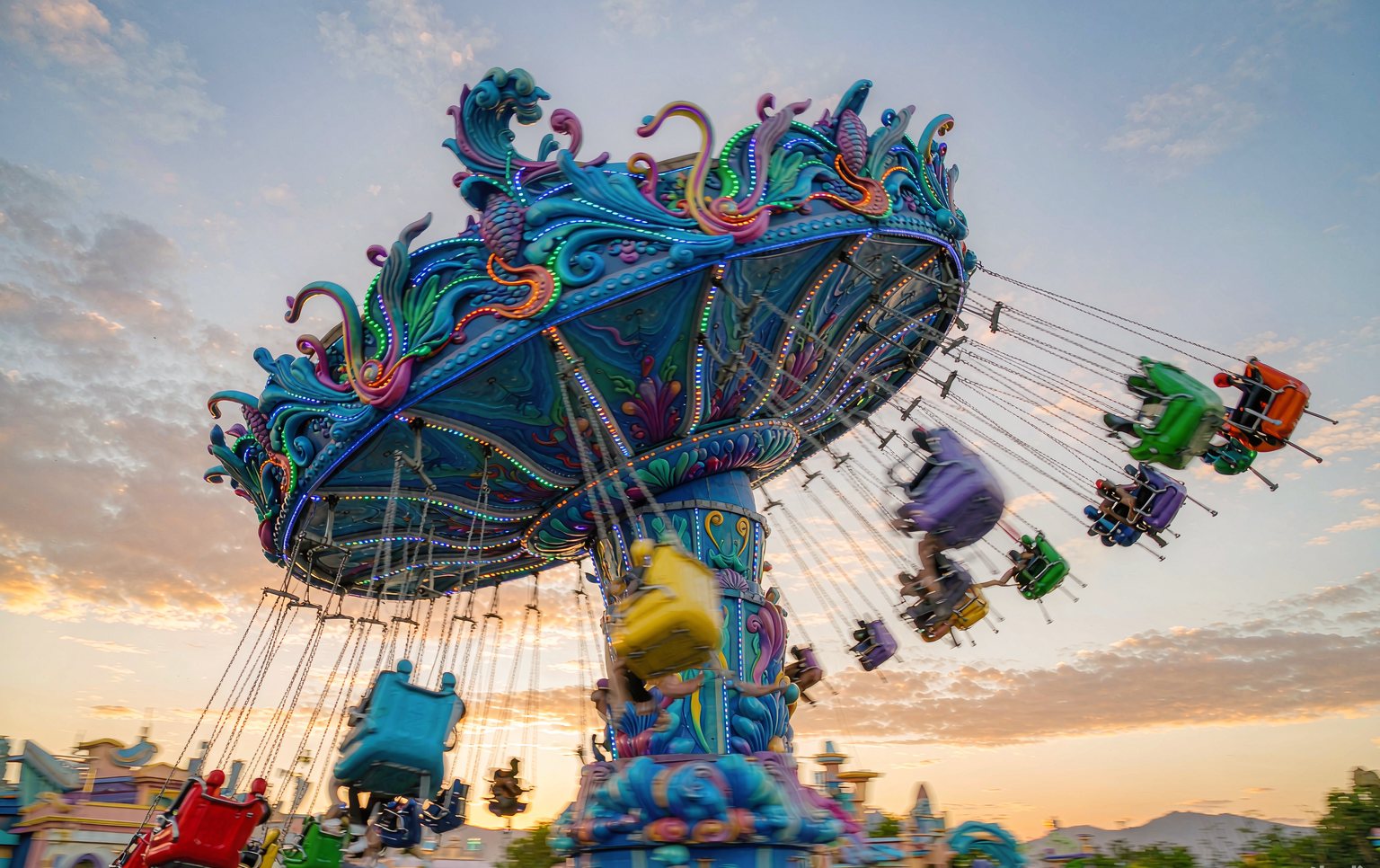
- Lighting, sound and canopy. LED schemes, music systems and sculpted canopies can add several thousand dollars to a small machine.
- Engineering and documentation. Load calculations, drawings for local approval and third-party inspection are real work, not paperwork.
Treat artwork as a commercial decision, not a decorative one. A themed carousel can support a higher ticket price and better photography, which matters for repeat visits. A standard horse set lowers capital cost and shortens lead time. Neither choice is wrong; they simply serve different business plans.
Site and utility requirements buyers miss
Allow at least 1.5 to 2 meters of clear space beyond the rotating diameter. Guests queue, staff move, and emergency access must remain open. A 12-seat carousel with a 7-meter platform therefore needs a reserved area closer to 10 by 10 meters. Tight footprints turn a good ride into a congestion point.
Check height next. A single-deck machine with a decorative canopy often needs 5 meters of clear height. A double-decker can need 7 meters or more, plus crane access during assembly. Indoor projects fail at this step when a ceiling beam or sprinkler line crosses the planned position.
The slab and power supply are the last technical gates. You need a level, reinforced concrete foundation with anchor points set from the supplier’s drawing. You also need three-phase power, correct cable sizing and a verified earth connection. Ask for the load data before you pour concrete, not after.
Throughput and payback math you can rerun
Use one formula for every carousel: riders per hour equals seats multiplied by cycles per hour, multiplied by occupancy. A five-minute cycle gives 12 cycles per hour. A 24-seat carousel running at 65 percent occupancy carries about 187 riders per hour. At eight operating hours, that is roughly 1,500 riders per day.
Now attach your own assumptions. At a USD 3 ticket and 300 operating days, the example produces about USD 1.35 million in annual gross revenue. That figure is an illustration, not a forecast. It assumes steady demand, full operating days and no downtime. Your local attendance, season and ticket price will change it.
For a simple payback check, add the machine, freight, foundation and installation costs. If that total is USD 100,000 and annual contribution after operating costs is USD 180,000, repayment takes about seven months. These are assumptions, not a forecast. Run the same calculation with conservative attendance before you commit. Link each input to evidence from your own market.
Safety, standards and inspection
Carousels are mechanically simple, but they still carry passengers. Relevant design standards include EN 13814 in Europe and ASTM F2291 in the United States. CE marking may apply depending on the destination and local rules. Ask which standard the design was checked against, and request the documents that support the claim.
A credible supplier provides drawings, load calculations, welding and inspection records, an operating manual and a parts list. Review the scope of any certificate rather than accepting a photograph of it. Confirm that the issuing body and the listed equipment match the machine you are buying. Local inspection before opening is a separate step that you must plan and budget for.
Lead time, shipping and installation
A standard 12 to 24-seat carousel usually needs 30 to 60 days of production. Custom artwork, a double deck or a trailer chassis can extend that to 60 to 90 days. Holiday periods and drawing approvals add more time. Confirm the start date in writing and tie it to signed drawings.
Shipping depends on the size of the disassembled components. Smaller carousels may fit in one 40-foot high-cube container; larger ones need two or more loads. Assembly on site typically takes three to seven days for a single-deck machine, provided the foundation and power are ready. Double-deck units need more time and often a crane.
How to choose a carousel manufacturer
Price matters, but it should be the last filter. Use this checklist to reduce risk before you transfer a deposit.
- Confirm the company manufactures the structure and figures itself, not only assembles bought-in parts.
- Ask for a live video walkthrough of the workshop and a recent loading record.
- Request the full scope of supply in writing, including spare parts and tools.
- Check the drive, braking and control layout against the stated standard.
- Ask who pays for defects during shipping, assembly and the first operating season.
- Get the foundation and power drawings before you sign the contract.
- Confirm the availability of wear parts for at least five years.
A supplier who answers these points with documents is easier to work with than one who answers with slogans. If your site is a retail environment, our carousel ride manufacturer for shopping malls page shows how compact machines are specified for atrium projects.
Common mistakes that inflate carousel ride price
The most expensive mistake is changing the specification after production starts. A request to add figures, lights or a different canopy can trigger a charge and delay shipment. Freeze the drawing set, the color scheme and the quantity of spare parts before the factory begins work.
Watch out: a very low quote often omits export packing, on-site assembly supervision or the control system spare parts. Ask for a line-by-line comparison of two quotations, including what happens if a part arrives damaged. Clarify these items before payment; fixing them after delivery costs far more.
FAQ
How much does a 24-seat carousel cost?
An indicative FOB band is USD 45,000 to 80,000 for a standard 24-seat machine. Artwork, canopy detail, drive specification and export packing move the number. Add freight, foundation and assembly to reach a turnkey budget.
What is the difference between a carousel and a merry-go-round?
In commercial supply, the words describe the same family of rotating platform rides. Suppliers may use “carousel” for larger themed machines and “merry-go-round” for compact or kiddie versions. Confirm the seat count and diameter instead of relying on the name.
How much space does a 16-seat carousel need?
A typical 16-seat platform measures 8 to 9 meters across. With queue and access clearance, plan a reserved area of about 11 by 11 meters. Check ceiling height as well if the ride will operate indoors.
Can a carousel operate outdoors all year?
Yes, if the structure, finishes and electrical cabinet are specified for outdoor use. Ask about galvanizing, drainage and weather protection for motors. In cold or coastal climates, add a maintenance plan for corrosion and seasonal shutdown.
Planning a bumper car or amusement ride installation?
Send us your site size, expected visitor volume and budget range — our engineering team will reply within 24 hours with a layout sketch and an indicative quotation, no obligation.