A Family Coaster Is the Ride That Earns From Every Generation
Every park has one ride where grandparents, parents, and ten-year-olds queue up together, and in most successful family parks that ride is the family coaster. Sitting deliberately between kiddie coasters built for small children and full-scale thrill machines, a family coaster delivers real speed, airtime, and lift-hill drama without inversions or intensity that excludes younger guests. If you are searching for a family coaster for sale, you are evaluating the category with the highest ride turnover in the entire amusement industry: broad enough demographics, short enough cycles, and gentle enough re-ride appeal that one installation serves nearly every paying guest who walks through the gate. This guide explains the models available in 2026, what they actually cost, the site requirements buyers most often underestimate, and the commercial terms you should expect before wiring a deposit.
Anxin Amusement designs and manufactures a complete family coaster range for theme parks, municipal parks, resorts, shopping complexes, and traveling funfairs. Every coaster is engineered to EN 13814 and ASTM F2291 standards, ships worldwide with installation supervision, and is backed by a guaranteed spare parts program. Request a quote and our engineering team will match a model to your site drawings within 48 hours. Below is everything we share with operators comparing the current family coaster for sale lineup, drawn from more than a decade of building coasters for parks on five continents.
Why the Family Coaster Carries the Highest Turnover in the Park
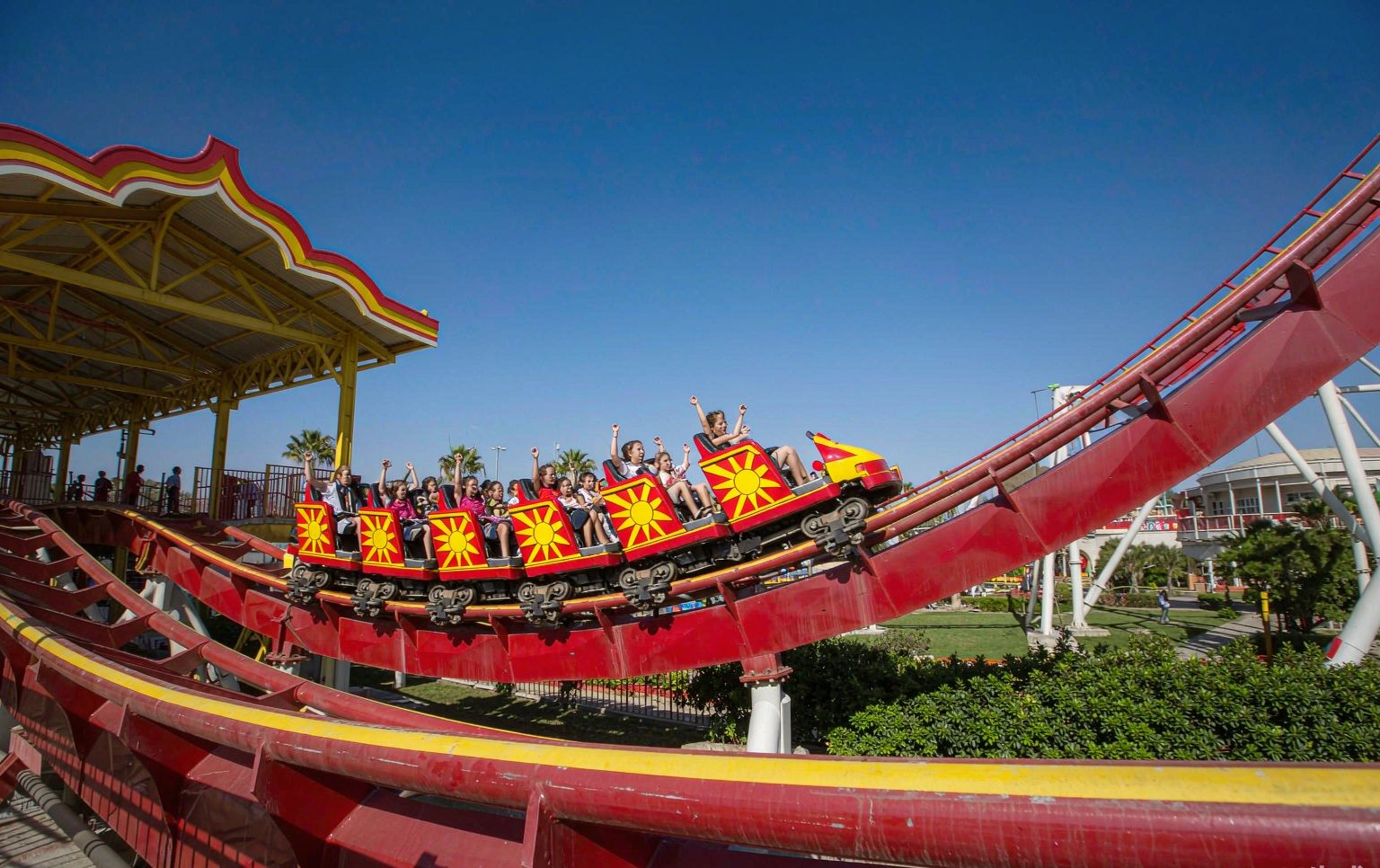
Headline thrill rides win the advertising campaigns, but the family coaster wins the daily attendance sheet. A typical model accepts riders from 105 to 120 cm tall, which means children too big for the kiddie section and adults who decline looping coasters all ride the same train, often in the same row. Parents ride beside their children, so a single admission frequently covers an entire family unit. Combine that with a ride cycle of two to three minutes and a capacity of 600 to 1,000 riders per hour, and the economics become difficult to beat.
- Widest demographic in the park: roughly ages 6 to 60, the segment that accounts for the majority of total visitation.
- Family co-riding: adults may accompany children, raising per-cycle revenue and reducing queue anxiety for younger guests.
- No inversions: simpler restraints, faster load times, easier operator training, and a rider base that never ages out of the ride.
- Indoor or outdoor: the same track system works in a climate-controlled building or on an open hillside, which protects revenue in winter markets.
- Themable: mine train, dinosaur, space, jungle, and glacier themes photograph well, drive merchandise, and anchor entire themed zones.
When operators weigh a family coaster for sale against spinning flat rides or water attractions, the coaster usually wins on throughput per dollar and on the simple fact that a coaster is a destination ride. Guests plan their visit around it. Flat rides fill gaps between destinations; a family coaster creates the destination.
Popular Family Coaster Models Available for Purchase
The family coaster market divides into three practical families, distinguished by lift technology, track height, and train style. Understanding which class suits your site and budget is the first step before comparing any specific family coaster for sale listing.
1. Chain-Lift Family Coasters
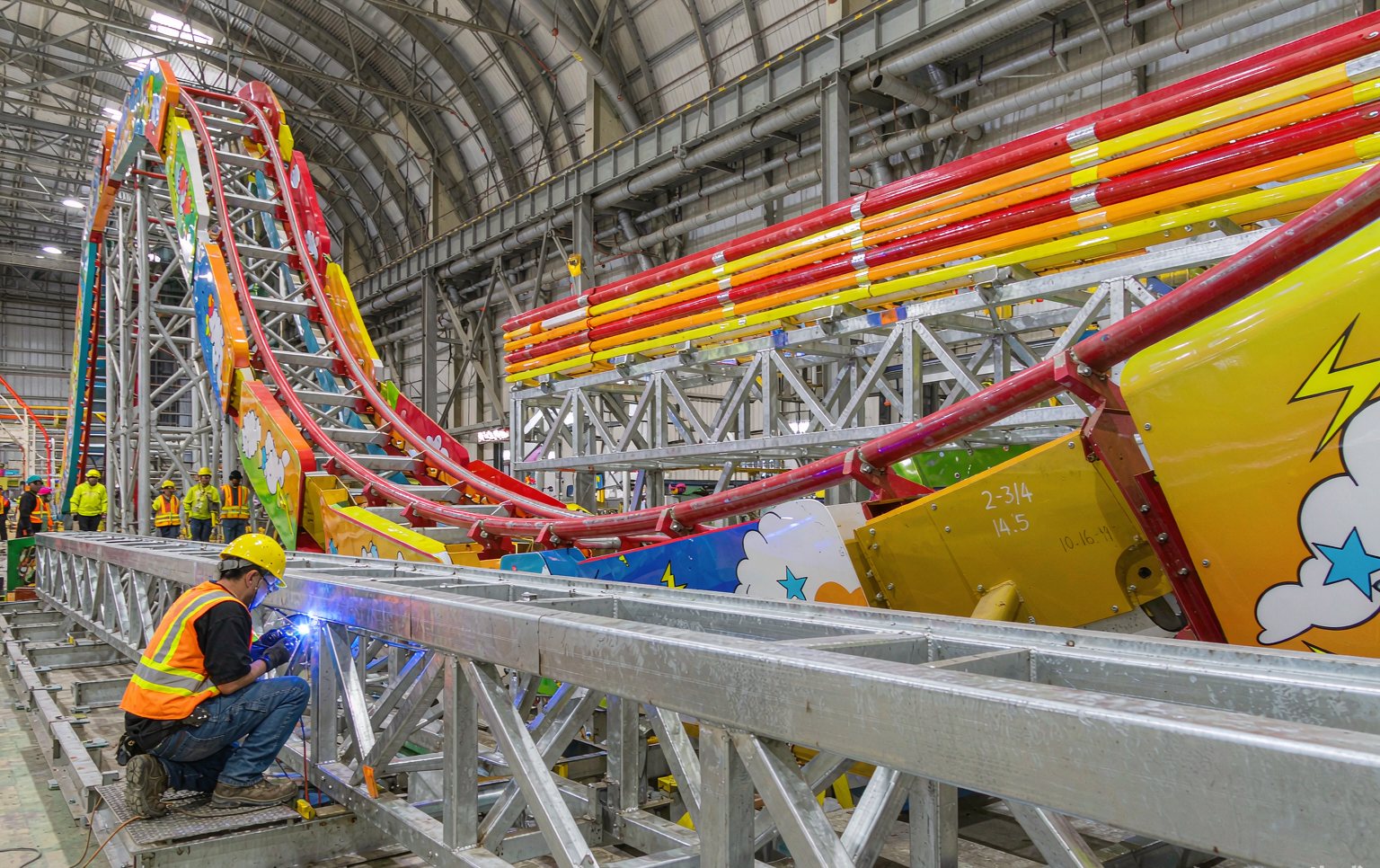
The workhorse of the category. A conventional chain lift raises the train to a first hill of 8 to 15 meters, after which gravity carries it through 250 to 500 meters of banked curves, airtime hills, and helixes at 40 to 60 km/h. Trains of four to six cars carry 16 to 24 riders. Chain-lift models are the most affordable family coaster class, the easiest to maintain, and the most familiar to inspectors everywhere, which is why they represent the majority of orders in our factory catalog. Because the layout is modular, the track can wrap around existing attractions, climb over walkways, and fit L-shaped plots that would defeat a fixed-layout machine.
2. LSM-Launched Family Coasters
Linear synchronous motor launches replace the lift hill with an electromagnetic acceleration track, pushing the train from stationary to 50 to 60 km/h in a few seconds. The visual drama of a launch, combined with a lower overall structure height, makes launched models popular for indoor parks and urban sites with height restrictions. They carry a premium of roughly 25 to 40 percent over an equivalent chain-lift machine and require more electrical infrastructure, but they deliver a sensation that no lift hill can imitate. Buyers comparing any family coaster for sale in this class should verify the facility’s power capacity early, because LSM systems typically need a dedicated transformer and drive rooms adjacent to the launch track.
3. Custom-Themed Family Coasters
For parks with a defined intellectual property or landscape concept, we build custom coasters with sculpted train fronts, themed station buildings, tunnel and rockwork effects, on-board audio, and synchronized LED lighting. A recent glacier-park project paired a 12-meter family coaster with an ice-cave tunnel, fog effects at the crest, and aurora lighting across the lift hill. Custom theming adds roughly 15 to 30 percent to the base price and extends manufacturing to 60 to 90 days, but it converts a ride into the signature photo point of the park and justifies premium ticket pricing. If you want the coaster delivered together with carousels, drop towers, and playground structures as one coordinated shipment, our team consolidates everything under a single amusement park rides price package quotation.
How Much Does a Family Coaster Cost?
Pricing depends on track length, lift height, launch type, train configuration, theming scope, and shipping terms. The table below shows indicative ex-works ranges for 2026. For context, entry kiddie coasters start around $45,000, while full-scale large coasters begin near $1.5 million; the family class occupies the profitable middle ground. Any family coaster for sale you compare should be quoted on identical terms, because a headline price that excludes motors, control systems, or spare parts is not a real price.
| Model Class | Track Length | Track Height | Top Speed | Capacity | Indicative Price (ex-works) |
|---|---|---|---|---|---|
| Chain-lift family coaster | 250–500 m | 8–15 m | 40–60 km/h | 600–900 pph | $150,000 – $600,000 |
| LSM-launched family coaster | 300–500 m | 6–12 m | 50–60 km/h | 700–1,000 pph | $350,000 – $900,000 |
| Custom-themed family coaster | 250–450 m | 8–15 m | 40–60 km/h | 600–900 pph | $250,000 – $850,000 |
Prices are indicative, ex-works, and configuration dependent. Beyond the ride itself, budget for freight, civil works, and installation. A family coaster ships in 10 to 16 standard containers depending on track length, and foundation works typically run $30,000 to $120,000 depending on soil conditions and local labor rates. Buyers comparing any family coaster for sale online should confirm that quotes include the control cabinet, station equipment, first-year spares, and certified documentation, because those line items move the true delivered cost by tens of thousands of dollars.
Site and Foundation Requirements to Check Before Ordering
Most delivery delays trace back to site preparation, not manufacturing. Before signing for any family coaster for sale, confirm these items with your local contractor and with the factory’s project engineer:
- Plot dimensions: measure usable land including the station platform, queue rails, operator booth, and maintenance access of 2 to 3 meters beyond the track envelope. Most layouts need 50 x 30 meters or more.
- Foundation loads: we supply certified foundation drawings with column reaction forces; your local engineer converts them into a pour plan. Taller lift structures may require engineered piers on poor soil.
- Power supply: chain-lift models run on 380V / 3-phase / 50Hz with 220V 60Hz variants for North America; LSM models need additional dedicated power and a drive room beside the launch track.
- Station platform: the loading platform, transfer track, and queue fencing are part of the ride envelope and must be built level and drained before track erection begins.
- Permits and inspection: confirm how your jurisdiction classifies a family coaster, and book third-party inspection before opening day rather than after.
Sites that struggle with any of the above often commission a full park planning and design service first, so the coaster is positioned correctly in the master plan instead of squeezed into leftover space.
Safety Standards, Certification and Testing
Every family coaster we ship is manufactured under EN 13814 and designed to ASTM F2291 criteria. Welded track sections pass magnetic particle and ultrasonic inspection before shipment; trains use redundant lap-bar or over-the-shoulder restraints with mechanical lock indicators, anti-roll-back dogs on the lift hill, and block brakes that trigger automatically at the station. Because there are no inversions, restraint systems stay simpler and dispatch intervals stay short, which is precisely why this category leads the park in daily throughput.
Commissioning includes a no-load run, a weighted dummy run, and a supervised test with staff volunteers. We supply the complete documentation package: certified drawings, structural calculations, material certificates, and a bilingual operation and maintenance manual, exactly what local inspectors and insurance underwriters will request. Any seller advertising a family coaster for sale should provide this package by default; if a vendor cannot produce weld inspection records, treat that as a disqualifying red flag rather than a negotiation point.

Choosing the Right Manufacturer, Not Just the Right Ride
The machine matters, but the factory behind it matters more. When you evaluate any family coaster for sale, grade the seller on these questions:
- Track record: how many family coasters are operating today, and can the seller share references you can call directly?
- In-house production: does the factory produce track, trains, and control systems itself, or broker from others?
- Engineering documentation: are certified drawings and calculations included, or sold as an extra?
- Spare parts program: guaranteed stock of wheels, motors, lift chains, restraints, and PLC components for at least 10 years?
- Installation support: are supervised installation and operator training included, or billed separately?
Standard commercial terms in this industry are a 30 percent deposit with the 70 percent balance before shipment by T/T. Manufacturing lead time for a family coaster runs 45 to 90 days because of the volume of welded steel structure involved, longer than compact kiddie models and shorter than large coaster projects; ocean freight and on-site installation add further weeks, with erection and commissioning typically taking 20 to 40 days with our supervisors on site. Be cautious of any seller asking for materially different payment terms.
Frequently Asked Questions
How much does a family coaster for sale actually cost?
Indicative ex-works pricing ranges from $150,000 for a compact chain-lift model to $900,000 for a large LSM-launched or fully themed installation. Freight, civil works, and installation typically add 25 to 40 percent depending on destination and site conditions.
What height and age can ride a family coaster?
Most models accept riders 105 to 120 cm and taller, with adults permitted and encouraged to ride alongside younger children. Exact limits are set by the manufacturer’s design calculations and must be posted at the ride entrance in accordance with local regulations.
How is a family coaster different from a kiddie coaster or a thrill coaster?
A kiddie coaster serves riders roughly 90 to 105 cm with gentle speeds under 25 km/h, while a thrill coaster exceeds 15 meters and often includes inversions at prices from $1.5 million. The family coaster sits deliberately in between: 40 to 60 km/h, 8 to 15 meter hills, no inversions, and a rider base spanning generations.
What is the delivery and installation timeline?
Standard models ship 45 to 90 days after deposit, depending on configuration and theming scope. Ocean freight adds 3 to 6 weeks, and supervised on-site installation plus commissioning takes another 20 to 40 days before your inspection date.
How much revenue can a family coaster generate?
At $5 per ticket, 700 daily riders, and 200 operating days, a family coaster grosses roughly $700,000 per year. Because the demographic spans children, parents, and grandparents, annual utilization rates routinely exceed those of single-demographic thrill rides.
Ready to Buy? Get a Same-Week Quote
A family coaster is the smartest mid-capital investment a growing park can make: broad demographics, high throughput, no-inversion safety, and a theming canvas that anchors an entire themed zone. Review the current family coaster for sale lineup, compare it with our kiddie coaster for sale range and roller coaster for sale catalog, and send us your site dimensions and power specification; we will return a matched model, layout drawing, and itemized quotation within 48 hours. Request a quote today, or explore our wider thrill rides for sale selection to complete your park’s ride mix.