If your thrill lineup needs a heavier spinner beside the spider ride, our pendulum rides guide covers frisbee and giant pendulum models, structural loads, and indicative pricing.
A Spider Ride Delivers Big-Ride Drama on a Mid-Size Budget
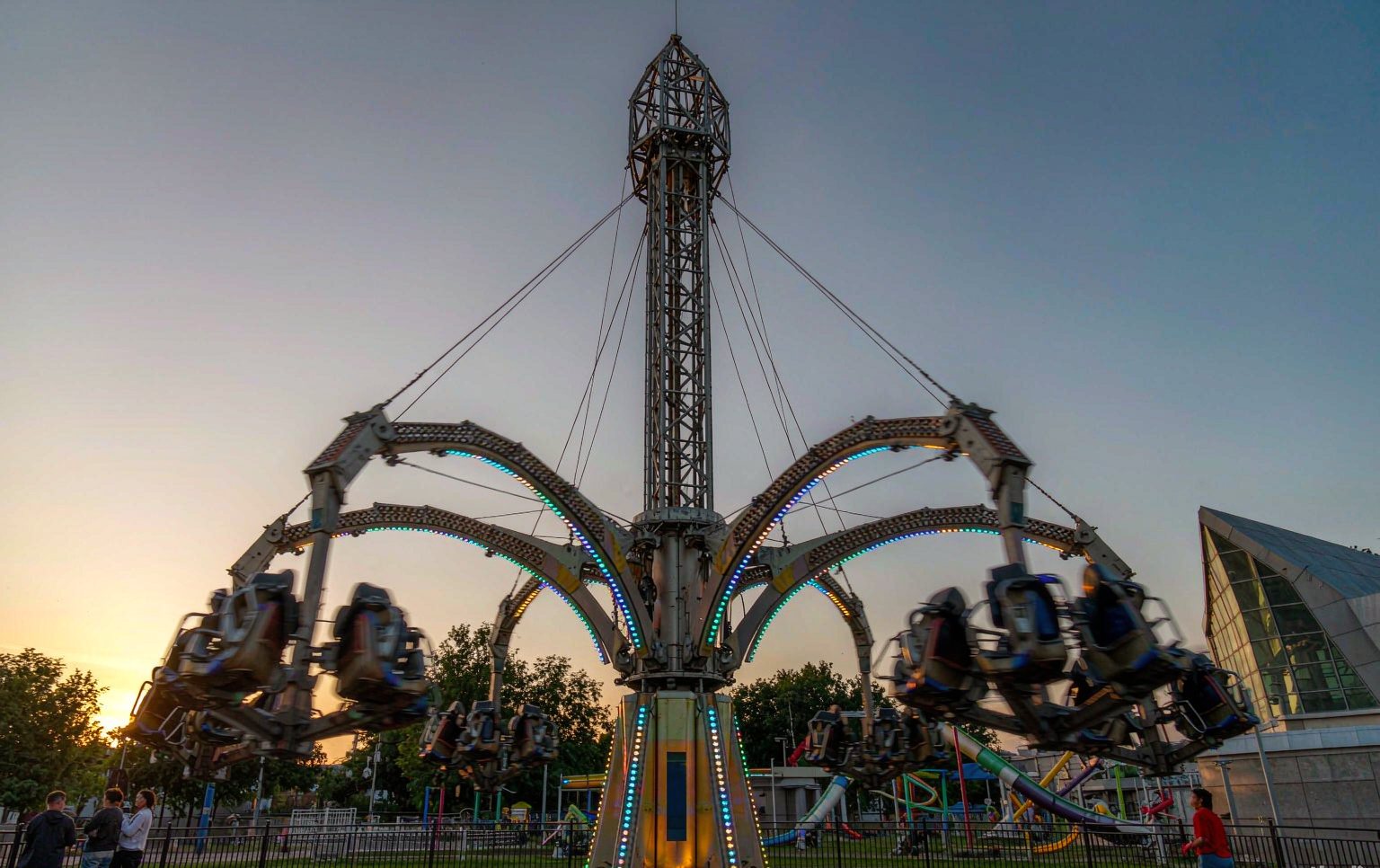
Every park needs one ride that makes people stop walking and look up. A spider ride does that job for a fraction of the cost of a coaster: a central tower, a ring of articulated arms, and suspended gondolas that lift, spread, and swing outward while the whole structure turns. From the queue line it reads as a headline attraction; from the maintenance log it reads as a simple machine with few wear points. If you are comparing a spider ride for sale against other family-thrill hardware, this guide covers the models available in 2026, realistic pricing, site requirements, throughput math, and the questions worth asking before you wire a deposit.
Anxin Amusement builds spider rides and flat rides for parks, fairs, resorts, and family entertainment centers, shipping worldwide with foundation drawings and installation supervision. Every unit is engineered to EN 13814 and detailed to ASTM F2291 criteria. Request a quote with your site dimensions and we will return a matched model, layout drawing, and itemized price within 48 hours. This is the briefing our engineers give operators who ask about the current spider ride for sale range.
What a Spider Ride Actually Is
“Spider” is a trade name, not a technical classification, and that single fact causes more mismatched quotations than anything else in this category. Two very different machines get sold under the label.
The tower-arm spider ride
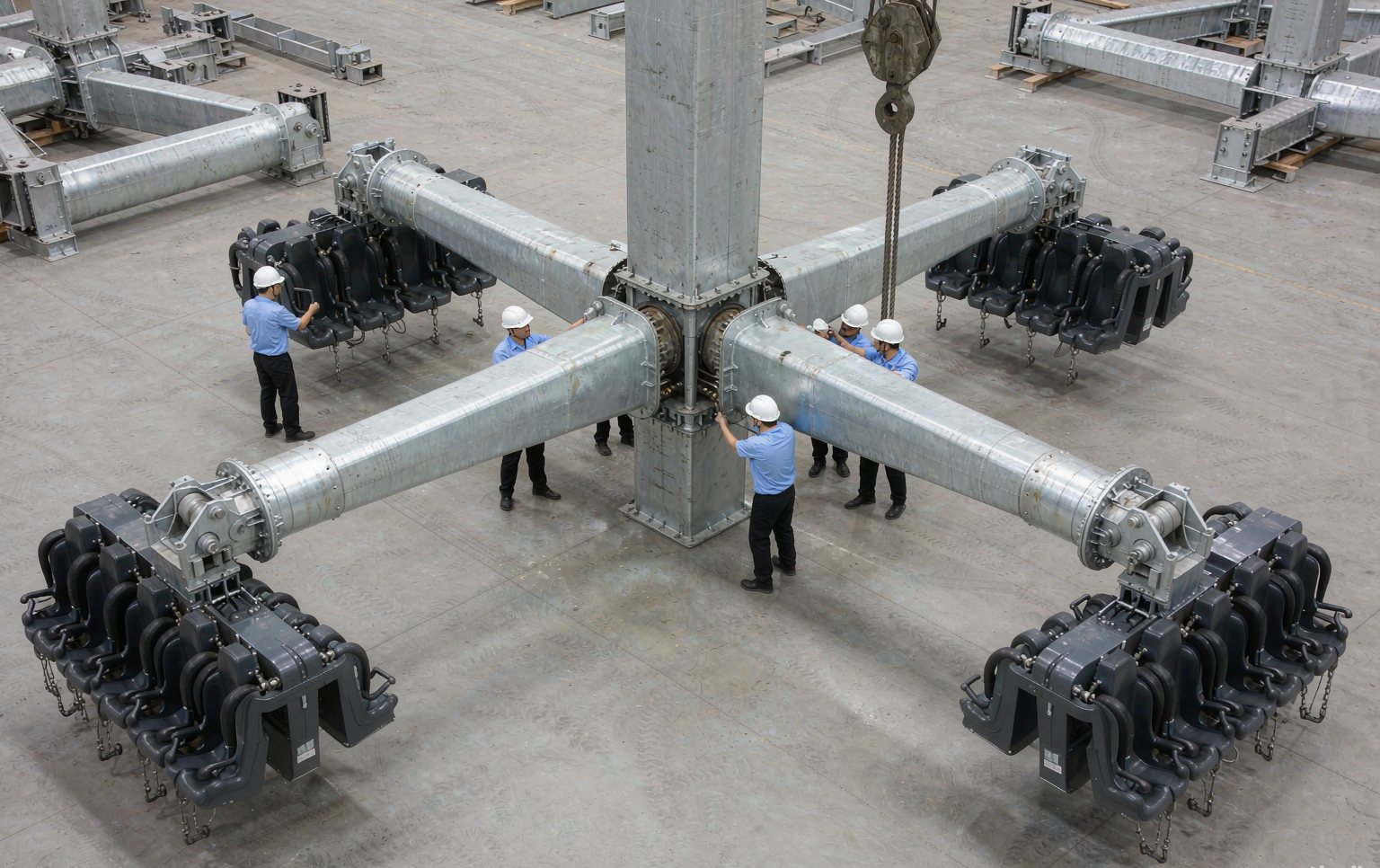
This is the model most international buyers mean. A fixed or telescoping central column carries six to eight curved arms, each ending in a two- or four-seat gondola with individual over-shoulder restraints. The tower rotates, the arms lift hydraulically or electromechanically, and centrifugal force throws the gondolas outward into a wide, tilted silhouette. Riders pass through a cycle of rise, spread, and swing at 8 to 14 meters, with a few seconds of near-weightlessness at the top of each sweep. Cycle time is typically 2.5 to 3 minutes including loading.
The Scrambler-style spider
Older carnival catalogs use “spider” for a three-arm platform ride with free-spinning cars, the machine North Americans call a Scrambler or Sizzler and Europeans call a Waltzer. It is a fine ride, but it is a ground-level spinner with a 3 to 5 meter profile, not a tower attraction. When you request a spider ride for sale quotation, send a reference photo or insist on a dimensional drawing; that one step eliminates most sourcing errors before they cost you a container of rework.
Why Operators Add One to the Lineup
Parks that already run carousels and kiddie coasters usually buy a spider ride as their first genuine thrill piece, and the commercial logic is straightforward.
- Visual marketing value: a 10 to 14 meter arm spread photographs beautifully at dusk and reads as a major attraction from the gate.
- Wide rider band: most models accept riders from 120 to 130 cm upward, so families split between parent-and-child pairings and teenagers riding together.
- Compact footprint: a 24-seat tower fits a 15 x 15 meter plot including queue and operator position.
- Low operating cost: one operator plus one attendant, one drive motor set, and no water treatment or compressed air plant.
- Long service life: galvanized structure and a proven gearbox drive deliver 12 to 18 years of seasonal operation.
Against a drop tower or a pendulum ride, the capital outlay is roughly a third to half, and inspection is lighter because the machine has fewer braking systems and no guided track. That combination is why a spider ride for sale so often appears in a new park’s first equipment package.
Models, Capacities and Specifications
The catalog splits into three practical tiers, and every spider ride for sale quote should state which tier it covers. Capacity figures assume disciplined loading by a trained attendant.
| Model Class | Arms x Seats | Capacity | Max Height | Installed Power | Indicative Price (ex-works) |
|---|---|---|---|---|---|
| Compact 16-seat | 4 arms x 4 seats | 16 riders | 8–10 m | 18–25 kW | $75,000 – $110,000 |
| Standard 24-seat | 6 arms x 4 seats | 24 riders | 10–12 m | 30–45 kW | $110,000 – $165,000 |
| Large 32-seat | 8 arms x 4 seats | 32 riders | 12–15 m | 55–75 kW | $160,000 – $260,000 |
Prices are indicative, ex-works, and configuration dependent. Theming, LED packages, custom gondola liveries, and cold-climate hydraulics all move the number. A spider ride for sale quote should itemize each option separately so you can compare offers on identical scope. Traveling-fair versions add a trailer-mounted base and quick-connect cabling; park models bolt to a concrete foundation and cost less for the same capacity.
What Ships With the Ride
A properly quoted spider ride for sale is a commission-ready package, not a structure kit. Standard scope includes the galvanized tower and arm assembly, gondolas with upholstered seats and redundant restraint locks, the slewing and lift drive units, a PLC control cabinet with operator pedestal and emergency stop chain, queue fencing and station gates, and a painted operator booth. Documentation covers certified foundation drawings with column reaction loads, electrical schematics, material certificates, weld inspection records, and a bilingual operation and maintenance manual — the exact file set your inspector and insurer will request.
Each order also includes a first-year spare kit: restraint lock assemblies, pivot bushings, proximity sensors, contactors, hydraulic seals, and indicator lamps. Optional add-ons include synchronized LED ring lighting, soundtrack modules, themed gondola shells, and a spare motor set for remote sites.
Site, Foundation and Power Requirements
Delivery delays in this category almost always come from site preparation rather than production. Before you compare any spider ride for sale offer, confirm these six items.
- Plot envelope: measure the swept circle of the arms plus 3 meters for maintenance access and queue overflow. No fence, tree, or roof may sit inside the swing radius.
- Foundation: tower loads are concentrated, not distributed. We supply drawings with uplift and overturning moments; your engineer converts them to a reinforced pad of 8 to 20 cubic meters of concrete.
- Power supply: standard export configuration is 380V / 3-phase / 50Hz, with 400V, 415V, and 220V / 60Hz variants available. Confirm grid frequency before release to production.
- Drainage: the pad should sit above surrounding grade with fall away from the tower base, otherwise standing water attacks the anchor bolts.
- Wind exposure: open and coastal sites should specify the higher wind-load rating at design stage. It costs far less than retrofitting anchors later.
- Permits: classify the ride correctly with your regulator, because the class sets inspection intervals, signage, and insurance premium.
If the ride is part of a larger build-out, our park planning and design service places attractions against sight lines, circulation, and utility routes so the tower never lands on the one spot with poor drainage.
Safety Engineering and Certification
Restraint integrity is the whole safety story on an arm-based ride, because the gondola is what holds a rider at full spread. Our gondolas use dual-lock over-shoulder restraints with a mechanical position indicator visible to the attendant, a secondary belt on every seat, and dividers that prevent riders from sharing one restraint. Critical welds undergo magnetic particle or ultrasonic inspection before painting.
Control logic includes redundant cycle-completion sensing, an automatic controlled stop on any sensor fault, and a mechanical parking brake independent of the hydraulic circuit. Commissioning follows a documented sequence: no-load rotation, partial-load arm test, full-load dummy run, then a supervised staff ride before public operation. Any credible spider ride for sale offer should include that protocol and the signed report; a vendor who treats documentation as a paid extra is telling you how the machine was built.

Throughput and Payback Numbers
The revenue math on a spider ride for sale at the 24-seat tier is easy to model. A 3-minute cycle with 1 minute of loading moves roughly 360 riders per hour. At a $5 ticket over a 10-hour day that is an $18,000 ceiling, but plan on 45 to 60 percent utilization: a realistic weekend lands at $8,000 to $11,000, a quiet weekday at $2,500 to $4,000.
Annualized: 180 operating days averaging 260 riders a day at $5 yields about $234,000 gross. Against $110,000 to $165,000 of equipment plus freight, foundation, and installation, most operators see payback inside 12 to 20 months, faster where the ride anchors a paid attraction zone. Labor, power, and maintenance typically consume 15 to 22 percent of gross revenue. Because the machine is visually loud but mechanically simple, it also lifts footfall at neighboring concessions — a benefit invisible in a ride-level spreadsheet but obvious in your F&B line.
Supplier Checks Before You Compare Prices
Most disappointment in this category traces back to the seller, not the machine. Grade every spider ride for sale offer against these five points.
- In-house fabrication: ask for video of the tower being welded in their own shop, not a stock clip. Our amusement rides for sale pages show the production line behind each product family.
- Installed base: request three references on comparable models and ask about spare-parts response time.
- Documentation: certified drawings, weld records, and load calculations inside the base price.
- Spare parts commitment: written availability of components for at least ten years, with restraint and pivot parts held in stock.
- Installation support: a supervising engineer on site for commissioning and operator training, quoted inside the offer.
Standard terms are 30 percent deposit with 70 percent before shipment by T/T. Standard models ship in 25 to 45 days, custom theming and non-standard voltages in 35 to 60 days; ocean freight adds two to six weeks and commissioning runs 7 to 12 days on site. The cheapest spider ride for sale listing online is rarely the lowest total cost — compare quotes at identical scope, terms, and included documentation.
Where It Fits Best — and Where It Does Not
A spider ride for sale makes most sense as the visual anchor of a family-thrill zone, placed where arriving guests see the arm spread against the sky. It suits parks with 150,000 to 800,000 annual visits, resorts with evening entertainment programs, and large FECs with 12 meters of clear height. It is a poor fit for tight property lines or a guest mix dominated by children under 110 cm, who cannot ride. Parks in that position usually pair a smaller chair swing ride with kiddie attractions and defer the tower until the demographic shifts.
Buyers who want the height drama with a gentler profile should look at a swing tower or wave swinger; buyers who want inversion need a top spin or pendulum class machine at two to four times the price. Any spider ride for sale offer should also be checked against our published amusement park rides price guide, which is the fastest way to sanity-check a quotation you receive.
Frequently Asked Questions
How much does a spider ride for sale cost?
Indicative ex-works pricing in 2026 runs $75,000 to $110,000 for a 16-seat model, $110,000 to $165,000 for 24 seats, and $160,000 to $260,000 for 32 seats. Freight, foundation, and installation add 25 to 40 percent depending on destination.
What height must a rider be?
Most models require 120 to 130 cm, with taller companions permitted alongside a smaller child on some configurations. Final limits are set by the design calculations and must be posted at the entrance.
How much space does the ride need?
A 24-seat tower model needs roughly 15 x 15 meters including queue and operator position, plus 3 meters of maintenance clearance outside the arm sweep.
How long does delivery and installation take?
Production takes 25 to 45 days for standard models and 35 to 60 days with custom theming. Ocean freight adds two to six weeks, and on-site assembly with our supervising engineer takes 7 to 12 days.
Can it run in winter or on a coastal site?
Yes, with the right specification. Cold-climate packages use low-temperature hydraulic fluid and heated control enclosures; coastal sites need hot-dip galvanizing with a marine-grade topcoat and a higher wind-load rating.
What maintenance does it require?
Daily restraint, sensor, and emergency-stop checks; weekly pivot lubrication; monthly torque verification on anchors and arm joints; and annual NDT inspection of critical welds. Expect 2 to 4 percent of equipment price per year.
Get a Matched Quote This Week
A spider ride delivers headline visual impact, a broad rider band, and payback under two years without demanding a specialist maintenance crew. Send your plot dimensions, clear height, grid voltage, and target capacity, and our engineers will return two or three matched configurations with layout drawings and an itemized quotation within 48 hours. Request a quote and put the numbers side by side before you commit a deposit on any spider ride for sale offer you have been shown elsewhere.