Searching for water park equipment for sale returns thousands of catalog pages, but few of them tell you what a procurement decision actually involves. Whether you are developing a municipal aquatic center, a resort lagoon, or a dedicated water park, the buying process comes down to five things: the ride mix, the fiberglass quality behind it, the water treatment plant, compliance with recognized standards, and the total landed cost. This guide walks through each of them from a B2B buyer’s perspective, with indicative price bands, lead times, and payment structures based on how export orders are actually transacted.

To round out a water zone, see what a commercial water rides manufacturer includes in a log flume package: capacity, pricing and installation scope.
The Core Product Categories in Any Water Park Equipment Quote
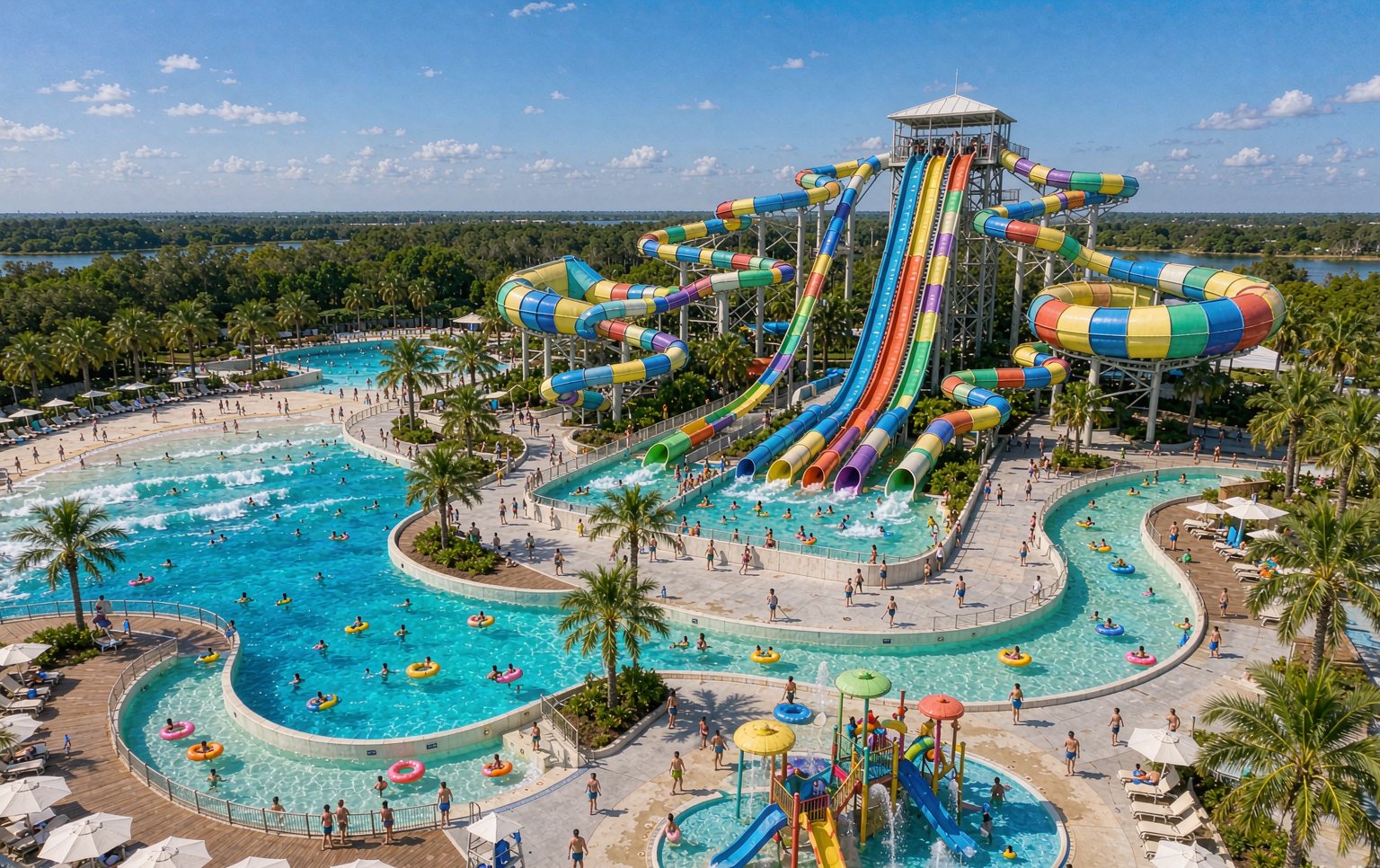
A serious water park equipment for sale inquiry should start with a defined product mix, because every category carries a different price point, footprint, and throughput. Most operators build their park around three tiers:
- Thrill slides: fiberglass slide towers, free-fall body slides, enclosed tube slides, and multi-lane racers that drive capacity and social media visibility.
- Family attractions: raft rides, lazy rivers, and interactive play structures that keep visit duration — and per-capita spend — high.
- Kids’ zones: splash pads, zero-depth play areas, and small-scale slides that broaden your audience to families with young children.
Beyond the slides themselves, a complete quote typically includes pools and structural steel, circulation pumps, filtration and disinfection systems, theme cladding, and lifeguard platforms. If a supplier’s water park equipment for sale package is missing the wet-side infrastructure, you will end up sourcing it locally at a higher cost and with integration risk.
A practical rule for sizing the mix: allocate roughly 30% of your water surface to thrill attractions, 40% to family and lazy-river products, and 30% to kids’ zones and shallow play areas. That balance supports ticket pricing across every guest segment and keeps queue lines distributed instead of concentrated on a single signature slide. Experienced exporters can model capacity against your projected attendance and recommend where a second lane or an additional run-out lane will pay for itself within two seasons.
Fiberglass Slide Towers and Multi-Lane Racers
Fiberglass (FRP) is the material that determines both the ride feel and the service life of a slide tower. When evaluating water park equipment for sale, ask the manufacturer three specific questions. First, what is the gel coat and laminate specification — a proper structural laminate uses layered roving and mat with UV-stabilized gel coat, not a thin cosmetic shell. Second, how are the tower joints sealed and bolted, since leaks at flanges are the most common warranty complaint in the industry. Third, is every tower load-tested before shipment, or only sample units?
Multi-lane racers deserve special attention because they are the highest-throughput slide category. A six-lane racer can move 500 to 700 riders per hour under good dispatch discipline, which directly improves your revenue per square meter. Look at the run-out design as well: longer deceleration lanes reduce lifeguard interventions and downtime. Manufacturers such as Anxin Amusement produce slide towers, racers, and bowl slides in-house, which matters when you need matched colors, consistent laminate quality, and one party responsible for structural calculations.
Family Raft Rides, Splash Pads and Wave Pools
Family raft rides — typically four- to six-person cloverleaf rafts on wide flume sections — are the workhorses of modern water parks. They deliver a thrill experience that guests of nearly all ages can share, and their throughput of 400 to 600 riders per hour competes with dedicated thrill slides. Wave pools sit at the other end of the footprint spectrum: they consume the most land and the most capital, but they also anchor the entire guest experience and justify premium admission and cabana pricing.
Wave pools deserve a technical note. The equipment package centers on the wave generator — pneumatic, hydraulic, or vacuum chamber systems — and the choice drives both capital cost and energy consumption per wave cycle. Pneumatic systems are the most common for mid-size parks because they scale modularly, while vacuum systems deliver larger surf-style waves at a higher price point. Confirm the energy draw per hour of operation during design, because utilities for a wave pool can rival the entire power demand of the rest of the park.
Splash pads and interactive water playgrounds are the quiet profit engines, especially for municipal and resort buyers. They have no standing water above ankle depth in most configurations, which dramatically lowers lifeguard staffing and insurance exposure. When comparing water park equipment for sale across suppliers, price the complete zone — structure, spray features, filtration, and surfacing — rather than the play structure alone, because the hidden wet-side items are where quotes diverge most.
Water Treatment: The System That Keeps Your Park Open
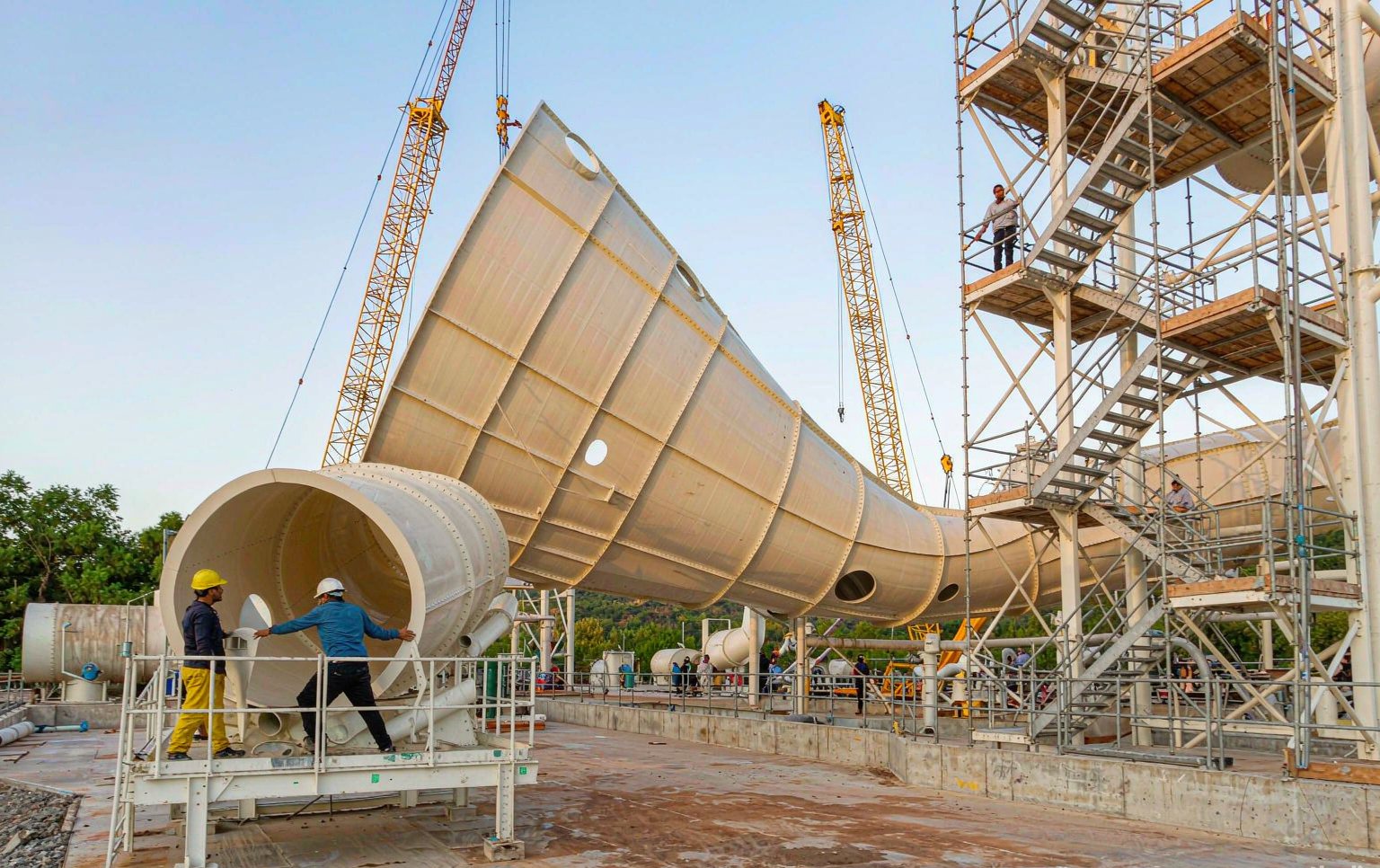
No piece of water park equipment for sale generates more operational headaches than an undersized treatment plant. Your filtration and disinfection loop must be engineered against peak bather load, not average attendance. The baseline specification for most export projects includes high-rate sand filtration, automatic pH and chlorine dosing, and backwash recovery. Many jurisdictions now require or strongly encourage supplemental disinfection — UV or ozone — for spray grounds and wave pools, so confirm the code in your market before signing.
Ask suppliers to quote the treatment plant as an engineered package with pump curves, tank sizing, and pipe isometrics rather than a one-line price. Anxin Amusement and comparable turnkey manufacturers integrate water treatment into the overall park design, which ensures the hydraulic balance between slides, pools, and surge tanks is calculated by one engineering team instead of three contractors blaming each other at commissioning.
Standards Compliance: ASTM, EN and What to Verify
For international buyers, standards compliance is the difference between a smooth opening and a stalled permit process. Regulators in most export markets will not issue an operating permit until the documentation file matches the installed water park equipment for sale on site, so lock the standards question into the contract, not the commissioning phase. The key references are:
- EN 1069 — European standard for water slides larger than 2 meters, covering structural design, flume geometry, and rider safety.
- ASTM F2376 — U.S. consumer safety specification for water play equipment, widely referenced for splash pads and interactive structures.
- ASTM F24 committee documents — the umbrella series governing amusement ride and device safety, frequently required by U.S. and Middle East regulators.
Request the design calculation package, welding certificates for steel structures, and factory test reports as a condition of payment, not a courtesy. Reputable exporters of water park equipment for sale hold CE marking and EN 13814 compliance for their mechanical rides and can document EN 1069 conformity for slides; if a supplier cannot produce these documents, treat the price advantage as a liability transfer to you.
Indicative Price Bands: What Water Park Equipment Actually Costs
The table below gives indicative ex-works (EXW) price bands in USD for typical configurations. All figures are configuration dependent — tower height, lane count, theming, and treatment plant size move the number significantly — and exclude shipping, foundations, and installation.
| Equipment Category | Typical Configuration | Indicative Price (USD, EXW) |
|---|---|---|
| Fiberglass slide tower (single body/tube slides) | 8–12 m tower, 2–3 slides | $100,000 – $250,000 |
| Multi-lane racer | 4–8 lanes, 10–15 m start height | $180,000 – $450,000 |
| Family raft ride | 4–6 person rafts, enclosed flume | $250,000 – $800,000 |
| Interactive play structure + splash pad | Kids’ zone with spray features | $60,000 – $200,000 |
| Wave pool (equipment package) | Wave generator, circulation, treatment | $500,000 – $1,500,000+ |
| Water treatment plant | Sand filtration + dosing, sized to load | $50,000 – $300,000 |
| Inflatable aqua park (floating) | Modular PVC system with anchoring | $20,000 – $150,000 |
Indicative, ex-works, configuration dependent. Request a formal quotation for project-specific pricing.
As a rule of thumb, wet-side infrastructure and treatment add 20–35% on top of the slide package, and shipping plus installation typically adds another 15–25% for export projects. Budget the whole envelope before you commit to a slide mix. It is also worth comparing water park equipment for sale on total cost of ownership rather than ex-works price alone: a cheaper tower that consumes more gel coat repairs, more chlorine, and more lifeguard interventions will cost more over five seasons than a better-engineered system.
Delivery, Installation, Lead Times and Payment Terms
Standard slide towers and play structures ship in 25–45 days after drawing approval; custom large-format attractions such as family raft rides and wave generation systems run 35–60 days. On-site installation takes 10–25 days depending on scope, and a professional installation team with supervisor-led local labor is the most cost-effective model for overseas projects.
Standard export payment terms are 30% deposit / 70% before shipment by T/T, with LC available for larger government and resort tenders. Before you wire the deposit, run this checklist:
- Confirm the slide layouts, tower heights, and pool dimensions on stamped GA drawings.
- Verify standards certificates (EN 1069, ASTM, CE) and factory test reports for every unit.
- Agree the packing list, container loading plan, and Incoterms (EXW, FOB, or CIF).
- Confirm the 2-year warranty scope, spare parts availability, and operator training days.
- Lock the treatment plant hydraulic design against your expected peak bather load.
Anchor your schedule to drawing approval, not the contract date — most “delayed” water park projects lost their weeks waiting for the client to sign off on theming colors and flume routing. Well-organized suppliers of water park equipment for sale will issue a production schedule with milestone photos so you can track fabrication without flying to the factory. Plan your civil works in parallel: foundations, machine rooms, and pool shells should be poured while equipment is in production, which is only possible if the supplier releases foundation drawings within the first two weeks after approval.
Frequently Asked Questions
What is the minimum investment to open a small water park?
A compact municipal or resort splash zone with a small slide tower, play structure, and treatment plant can be equipped for roughly $250,000–$500,000 in equipment terms, excluding civil works. A mid-size park with racers and a raft ride typically lands between $1.5 million and $4 million all-in. Treat every figure as indicative until a layout is engineered.
How long does water park equipment take to manufacture and deliver?
Standard slide towers and play structures: 25–45 days production after drawing approval. Custom large attractions: 35–60 days. Add 20–40 days of ocean freight depending on destination, then 10–25 days for on-site installation before commissioning and staff training.
Which safety standards should water park equipment comply with?
For water slides, EN 1069 is the European benchmark; for interactive play equipment and splash pads, ASTM F2376 and the ASTM F24 series are the reference in the U.S. and many Gulf markets. Always confirm your local regulator’s requirements early, and make certificate submission a payment milestone.
Can I buy water park equipment for a hotel or resort project?
Yes. Resorts most commonly buy compact slide towers, multi-lane racers, splash pads, and floating inflatable aqua parks that integrate with an existing pool. Manufacturers can engineer around existing pool shells and deck levels if you provide accurate as-built drawings, which avoids expensive demolition.
What warranty and after-sales support should I expect?
Industry-standard coverage is a 2-year warranty on structural and mechanical components, with lifetime technical support and spare parts supply. Also negotiate operator training during commissioning and a recommended spare parts kit — gel coat repair materials, flange gaskets, and dosing pump spares — so minor issues never close a slide during peak season.
Request a Quote for Your Water Park Project
Buying water park equipment for sale is ultimately a systems decision: the slides, the treatment plant, the standards file, and the installation plan have to arrive as one coherent package. Anxin Amusement manufactures fiberglass slide towers, multi-lane racers, family raft rides, splash pads, and complete water treatment plants in-house, backed by 15+ years of manufacturing, 200+ rides delivered to 24+ countries, CE and EN 13814 compliance, a 2-year warranty, and full operator training.
Send us your site dimensions, target capacity, and budget range, and our engineers will return a layout proposal with an itemized quotation. Request a quote today to receive indicative pricing for your market within one business day. For broader attraction planning beyond the water zone, see our guides to theme park equipment suppliers and amusement rides for sale, or explore our custom park solutions.