Playground surfacing is the component buyers most often under-specify and inspectors most often fail. The equipment gets the attention; the surface underneath controls fall injuries, accessibility, maintenance budgets, and how the playground looks after two winters. This guide compares the four dominant surfacing systems and explains how to match surface to equipment, budget, and climate.
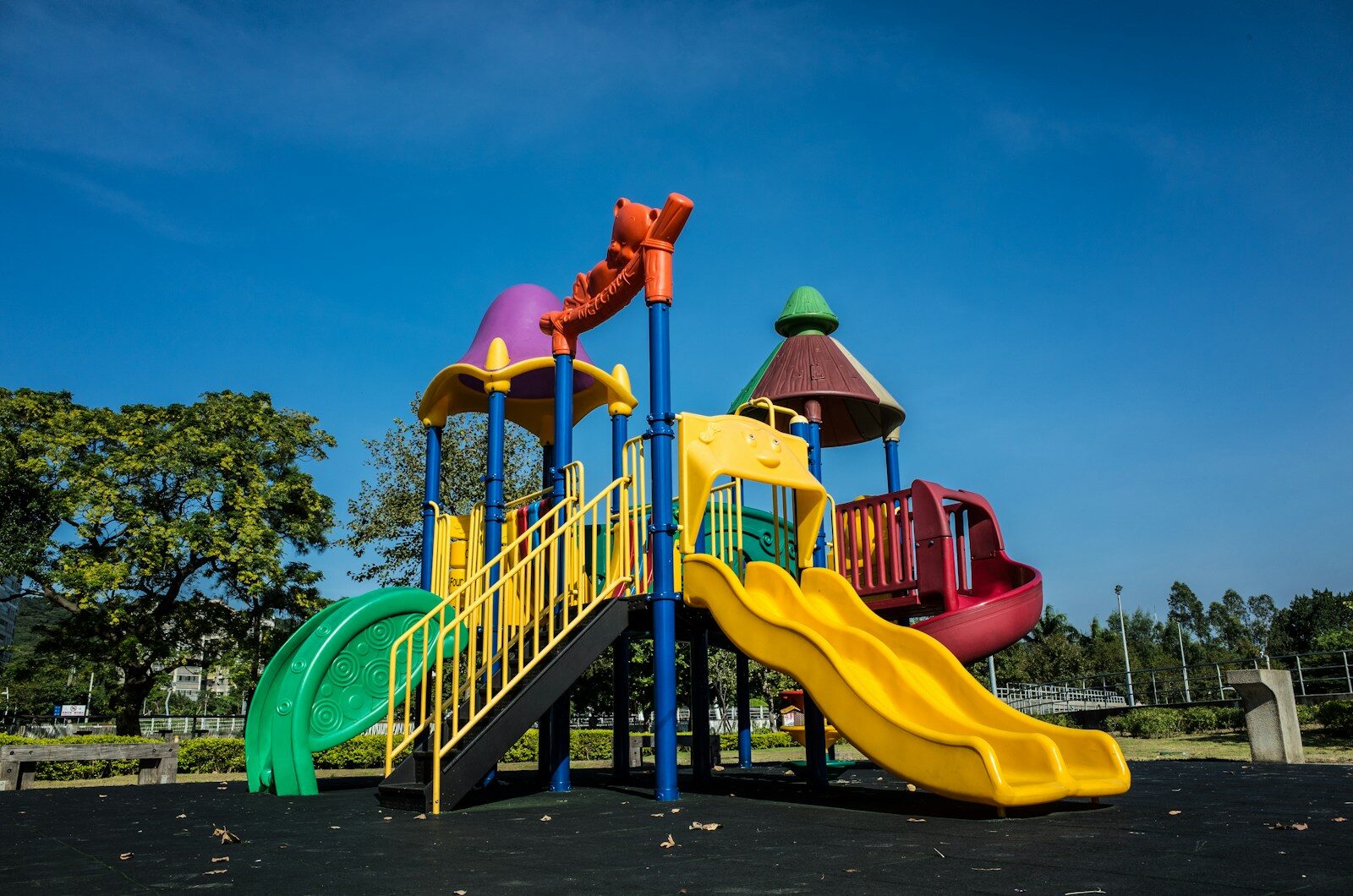
Why Surfacing Is a Safety System
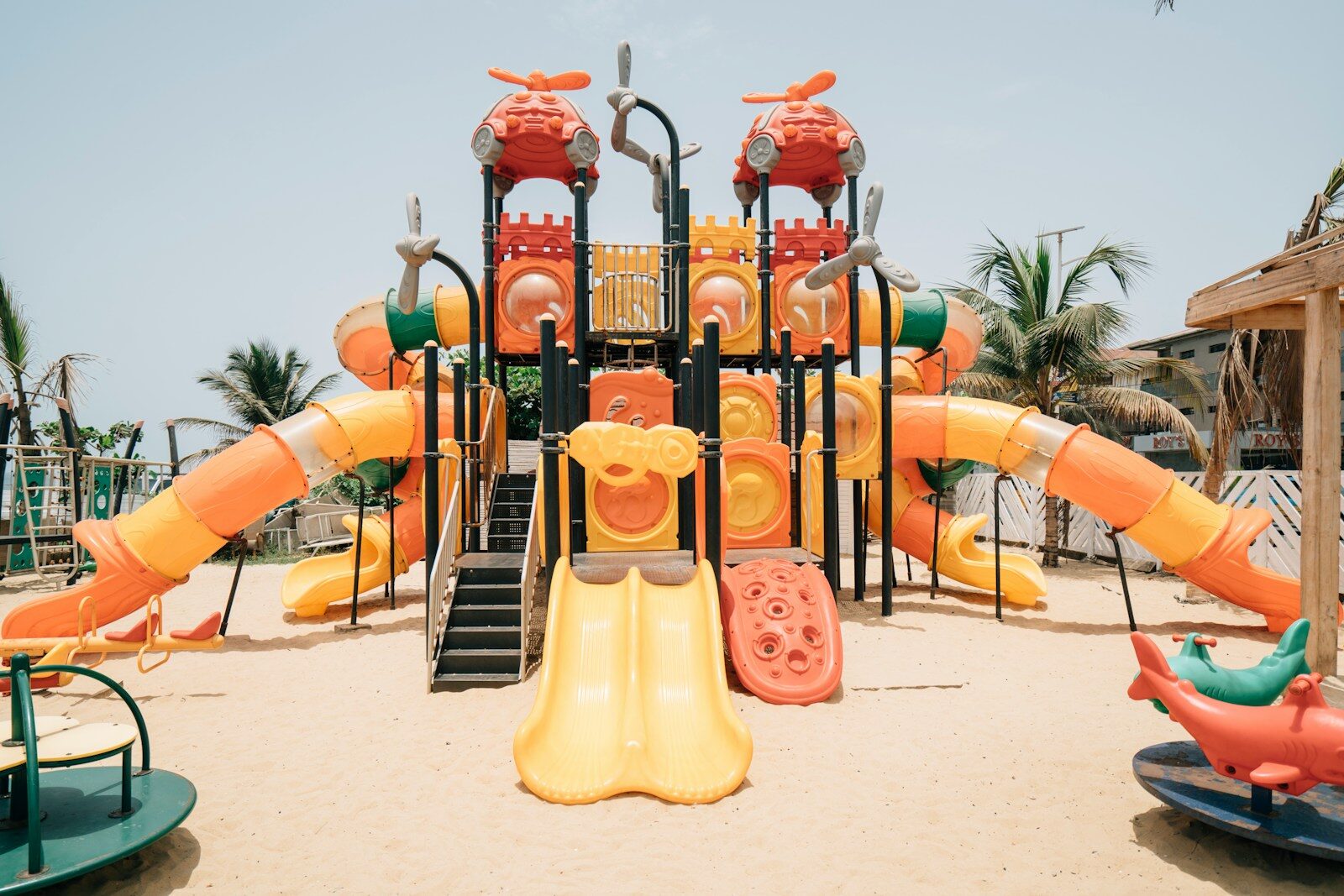
The most serious playground injuries are falls. Every major standard — EN 1177 in Europe, ASTM F1292 in the US — rates surfacing by critical fall height: the maximum height from which a head-first fall still meets impact criteria. Your tallest play structure therefore dictates your surface. Buying certified equipment and then installing inadequate surfacing is the single most common compliance failure in new playgrounds.
The Four Main Systems Compared
1. Engineered Wood Fiber (EWF) and loose fill
- Cost: lowest material cost; needs containment edging and periodic top-ups.
- Pros: inexpensive, good impact absorption at proper depth, natural look.
- Cons: displaced by play and wind, compacts, hides debris, poor accessibility for wheelchairs, requires raking and depth checks — a surface compliant at opening can fail within months without maintenance.
2. Rubber tiles
- Cost: moderate to high, depending on thickness.
- Pros: factory-controlled thickness gives consistent, certified fall-height ratings; easy to inspect; replaceable per tile; good accessibility.
- Cons: seams and sub-base quality decide performance; cheaper tiles fade and harden under UV.
3. Poured-in-place rubber (EPDM/TPV granules with polyurethane binder)
- Cost: highest, driven by on-site labor.
- Pros: seamless, fully accessible, unlimited shapes and graphic inlays — the premium look for destinations and themed areas; thickness tuned per zone to match each fall height.
- Cons: quality depends entirely on the installation crew; base moisture or wrong binder ratios cause bubbling and delamination; repairs need specialists.
4. Artificial turf (with shock pad)
- Cost: moderate.
- Pros: clean appearance, no sand or mud, good for toddler and family zones; combined with an engineered shock pad it can achieve meaningful fall-height ratings.
- Cons: heat build-up in full sun, drainage design is critical, and not all turf systems are rated for high fall heights — always match the pad to the equipment.
Matching Surface to Project Type
- Municipal and school playgrounds: rubber tiles or poured rubber in fall zones with turf elsewhere balances budget, accessibility, and maintenance.
- Commercial FECs and indoor venues: poured-in-place or thick tiles — cleanability and appearance matter as much as ratings.
- Large destination parks: poured rubber with themed graphics turns the floor into part of the show.
- Budget-limited community projects: EWF is legitimate if the maintenance program (raking, topping up, depth checks) is funded and assigned to someone.
What to Check When Buying
- Tested critical fall height for the exact thickness installed — not a brochure maximum. Ask for lab reports referencing EN 1177 or ASTM F1292 as applicable.
- Sub-base design. Drainage and base preparation cause most surfacing failures; insist on the supplier’s or installer’s base specification.
- UV and warranty terms. Fading is cosmetic; hardening is a safety issue. Know which is covered.
- Accessibility. Standards and regulations increasingly require accessible routes; unitary surfaces (tiles, poured rubber) meet this; loose fill generally does not.
- Maintenance schedule in writing — inspection frequency, cleaning agents, and repair procedures.
Common Mistakes
- Specifying surfacing after the equipment order instead of with it, so fall heights and zones never get reconciled.
- Choosing loose fill without a maintenance budget — the cheapest option becomes the least safe within a year.
- Accepting the lowest poured-rubber bid without checking crew references; installation quality is the product.
- Ignoring edges and transitions, where tiles lift and trip hazards form.
Final Thoughts
Surfacing should be engineered in the same breath as the play structures: rated to your tallest fall height, suited to your climate and maintenance capacity, and installed by crews with references. Done right, it disappears from the conversation — and that is exactly the point.
Anxin Amusement supplies playground structures and matching surfacing systems with certified fall-height documentation and installation guidance. Contact us to align your equipment and surfacing specification.