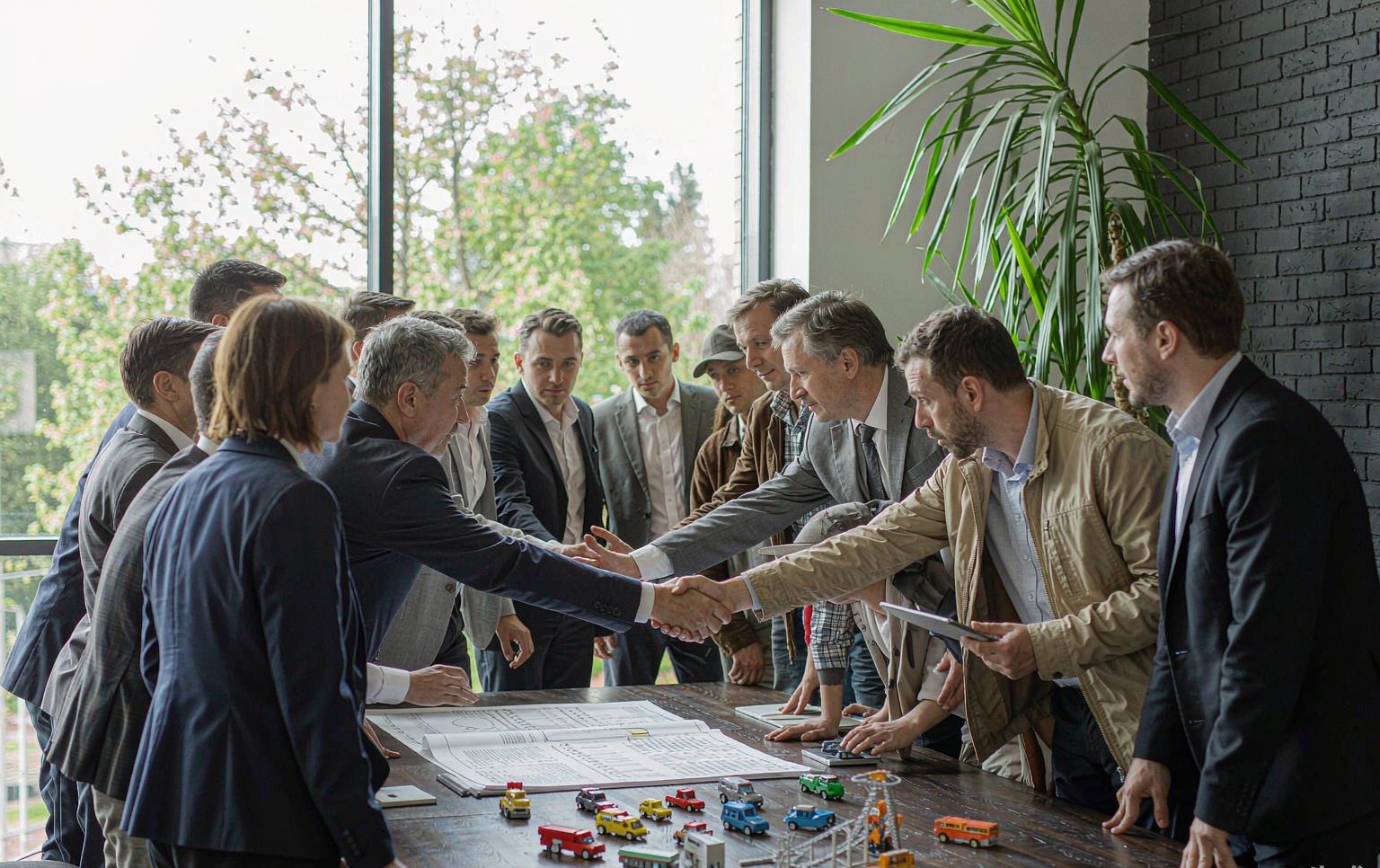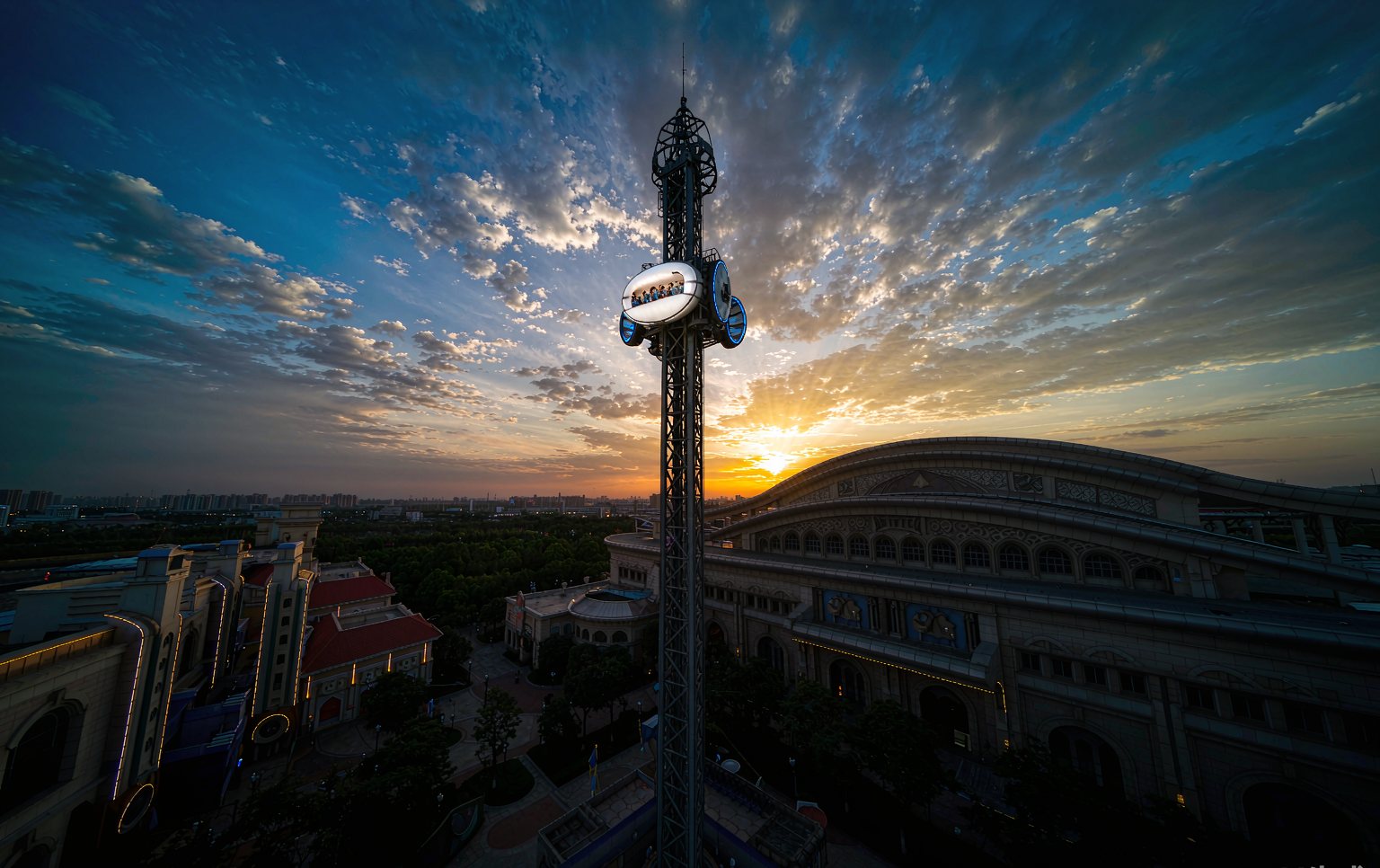
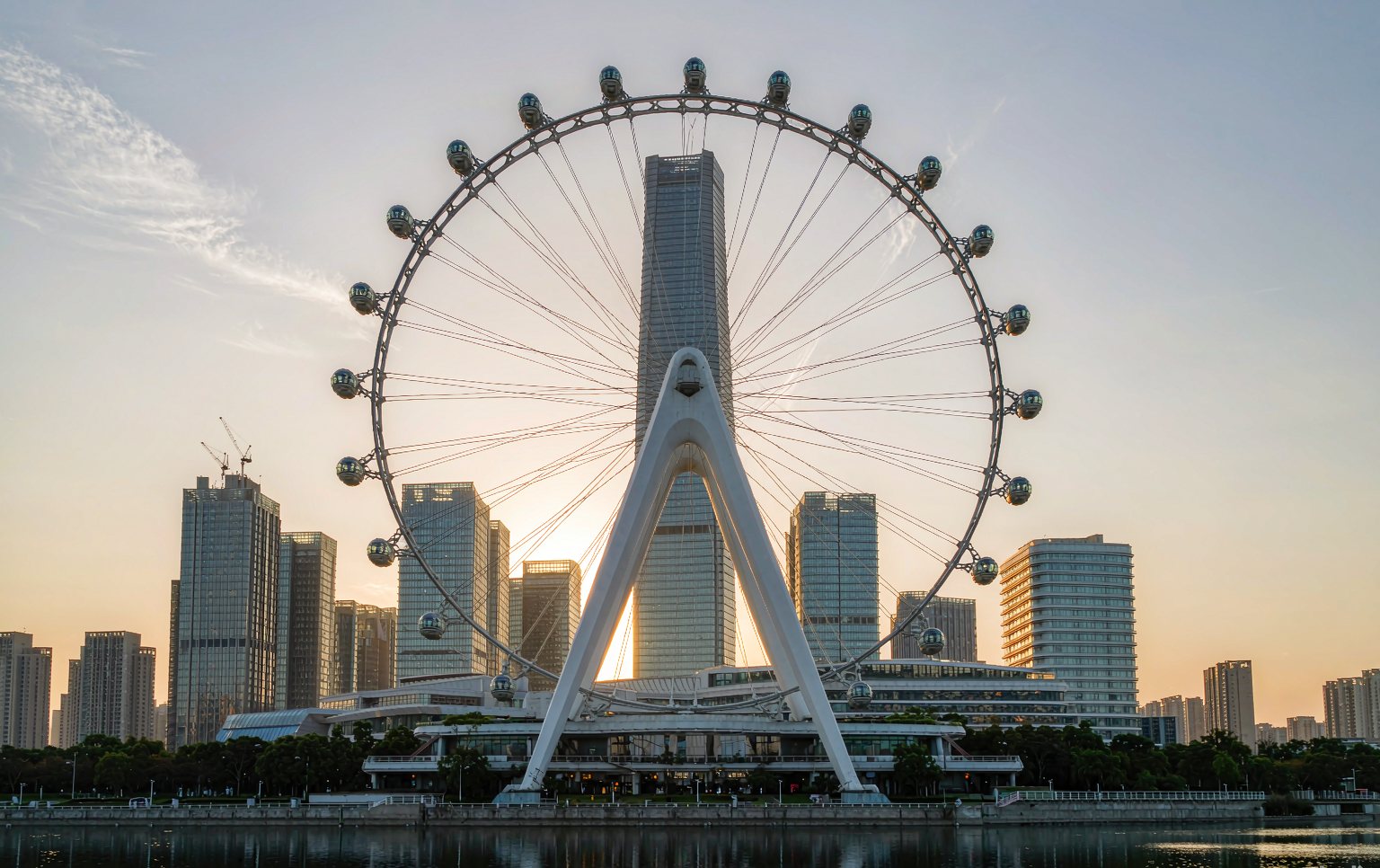
A ferris wheel for sale is rarely an impulse purchase. Whether you are adding a landmark to a city waterfront, upgrading a family park, or sourcing equipment for a traveling fairground, the decision involves structural engineering, customs paperwork, and a capital commitment that will sit on your balance sheet for fifteen years or more.
This guide covers what drives the price, how diameters from 42 m to 66 m translate into gondola counts and hourly throughput, and what to prepare on site before the first truck arrives. Every figure is indicative — final pricing depends on configuration, finish, and delivery terms — but it will let you budget with confidence and ask sharper questions when you request a quote.
What You Are Actually Buying When You Search for a Ferris Wheel for Sale
The first mistake buyers make is comparing quotes that cover different scopes. Two prices for a ferris wheel for sale can differ by 40 percent because one supplier is quoting a bare structure ex-works and the other is quoting a turnkey installation with foundations, cabling, and commissioning.
A complete observation wheel breaks into six subsystems, each with its own cost weight:
- Foundation interface — anchor bolt cages, base plates, and embedded steel.
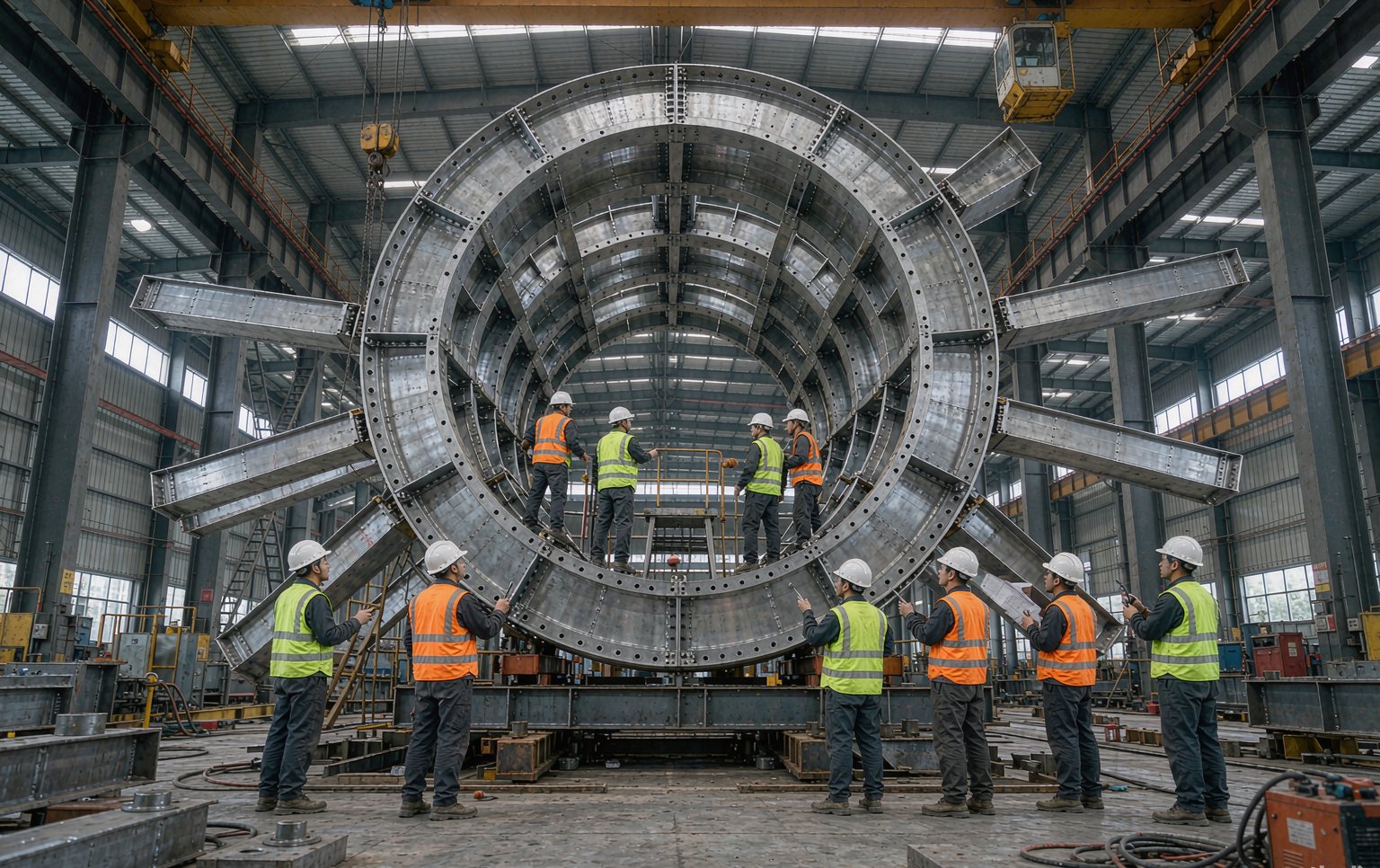
- Mast and wheel structure — tower, rim trusses, spokes, and bracing in structural steel.
- Gondolas — open or enclosed cabins with heating, ventilation, lighting, and intercom.
- Drive and brakes — motor, gearbox, VFD, service brake, anti-rollback device.
- Control and safety — PLC, anemometer, position sensors, e-stop network, evacuation drive.
- Boarding infrastructure — platform, gates, queue line, fencing, and cladding.
When you evaluate a ferris wheel for sale, ask for a line-item scope sheet rather than a lump sum. It is the only way to compare offers honestly.
Wheel Sizes and Gondola Capacity: 42 m to 66 m
Diameter is the anchor specification, because it determines everything downstream: gondola count, steel tonnage, foundation load, power draw, and skyline impact. Anxin Amusement builds observation wheels across the 42 m to 66 m band, where capacity scales almost linearly with height.
42 m to 46 m. The entry point for regional parks and FEC developments. Expect 18 to 21 gondolas at 4 to 6 passengers, giving roughly 100 to 130 riders per revolution. A three-rotation cycle runs 12 to 14 minutes, so hourly capacity lands near 450 to 600 guests. This size usually clears local permitting without a full wind-tunnel study.
50 m to 53 m. The sweet spot for mid-size city parks and mixed-use retail. Twenty-four to twenty-six gondolas at 6 passengers produce 144 to 156 riders per cycle, with throughput around 650 to 800 per hour. Above this height, enclosed climate-controlled cabins become the norm.
58 m to 62 m. Landmark territory. Thirty to thirty-two gondolas at 6 to 8 passengers yield 180 to 256 riders per cycle, and throughput crosses 900 per hour with an efficient boarding platform. Towers in this range normally require a structural engineer of record on the buyer’s side and a site-specific wind study.
66 m. The top of our standard range. Thirty-six gondolas at 8 passengers deliver 288 riders per cycle and more than 1,000 per hour at peak. At this scale the business case shifts from ride revenue to anchoring a district — food and beverage, events, sponsorship, and naming rights all enter the model.
One operational variable matters as much as capacity: whether the wheel stops to board or rotates continuously. Continuous motion with a slow boarding zone typically adds 15 to 25 percent to real throughput.
Indicative Price Bands in USD
The table below gives planning-level ranges for a ferris wheel for sale in standard configuration. Figures are indicative, ex-works, and exclude freight, foundation construction, installation labor, duties, and local certification. A 66 m wheel with custom cladding, VIP cabins, and architectural lighting can exceed the top of its band considerably.
| Wheel diameter | Gondolas | Riders per cycle | Indicative price (USD, ex-works) | Typical application |
|---|---|---|---|---|
| 42 m | 18 | 72–108 | 350,000 – 550,000 | Family park, FEC |
| 46 m | 21 | 84–126 | 420,000 – 650,000 | Regional park |
| 50 m | 24 | 96–144 | 550,000 – 850,000 | City park, mall |
| 53 m | 26 | 104–156 | 620,000 – 950,000 | Waterfront development |
| 58 m | 30 | 120–240 | 800,000 – 1,250,000 | Landmark attraction |
| 62 m | 32 | 128–256 | 1,000,000 – 1,600,000 | Destination wheel |
| 66 m | 36 | 144–288 | 1,300,000 – 2,200,000 | City icon, tourism anchor |
Three levers move the price of a ferris wheel for sale more than anything else: gondola specification, steel finish, and lighting. Open benches versus enclosed cabins with HVAC can swing the total by 15 to 25 percent. Hot-dip galvanizing plus a two-coat polyurethane topcoat costs more but stretches the repaint cycle from five to twelve years. Programmable LED facades range from outline lighting to full media mesh and can add six figures.
Site, Foundation, Wind Load and Power Requirements
Foundation design is where optimistic budgets break. A 58 m wheel transmits substantial overturning moment into a small footprint, and the concrete volume — typically a reinforced raft or pile-supported mat of several hundred cubic meters — is larger than buyers expect.
Commission a geotechnical survey before you sign: bearing capacity, groundwater level, frost depth. Sandy or reclaimed coastal ground frequently pushes the design toward piling, adding 20 to 30 percent to civil costs. We supply anchor bolt layouts and load cases so your local engineer can design to local code.
Wind governs the load case for any ferris wheel for sale above 50 m. Two numbers must be separated clearly: the operating limit, above which the ride must stop and disembark passengers, and the survival wind speed the structure must withstand parked and empty. Operating limits typically sit near 15 m/s; survival design follows local building code and may reach 50 m/s or higher in cyclone regions. Every wheel ships with an anemometer interlocked to the control system, and the response procedure must be written into staff training.
Power follows the drive rating. Most wheels run on 380–400 V / 50 Hz or 440–480 V / 60 Hz three-phase, with installed demand between 30 and 90 kW depending on size and lighting. Specify a dedicated feeder, surge protection, and a standby generator sized to complete a full evacuation cycle — regulators increasingly want proof that a power failure cannot strand passengers aloft.
Oversized Freight: Shipping a Ferris Wheel for Sale Overseas
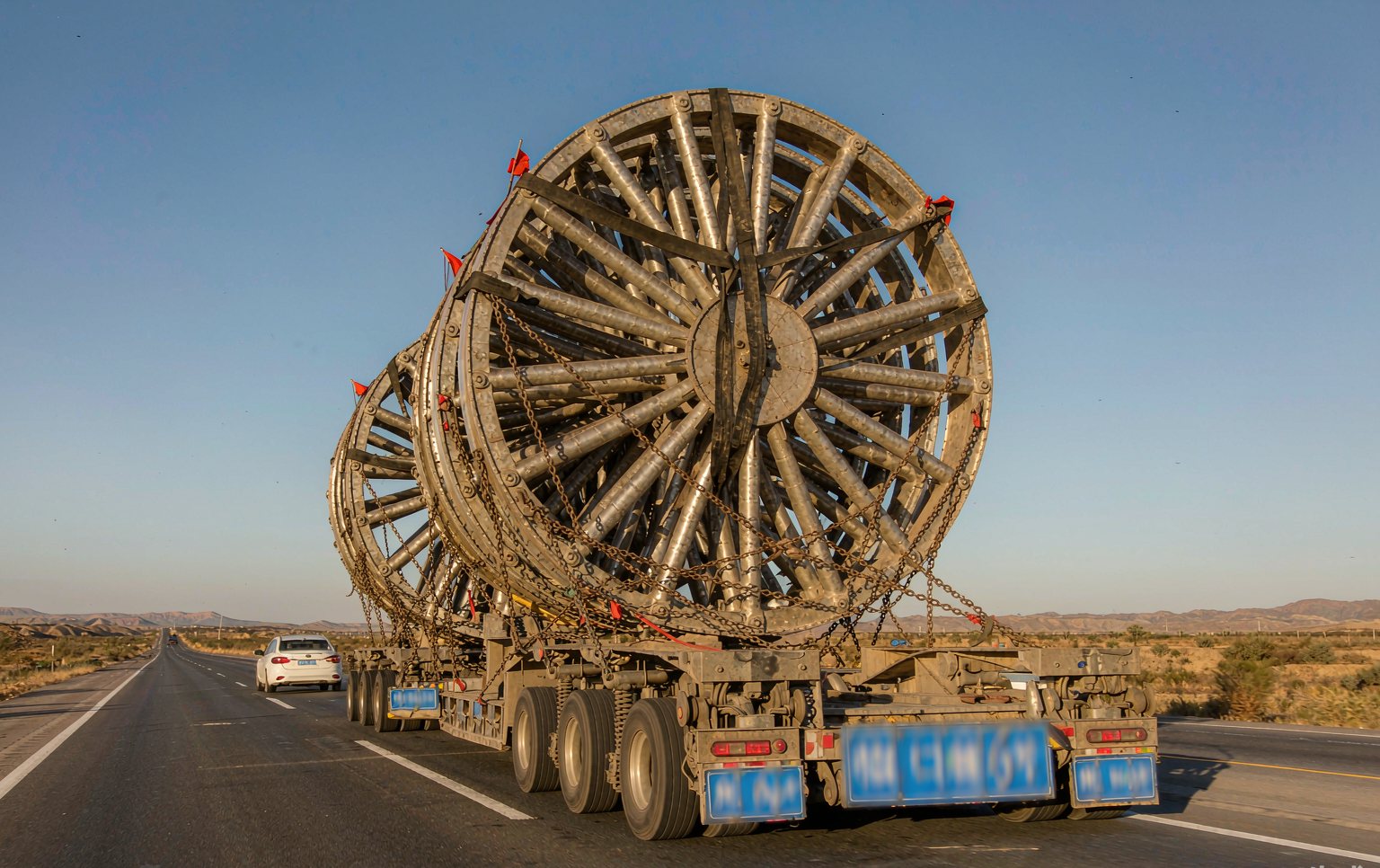
Wheel sections do not fit standard containers. Rim segments, the mast, and gondola frames travel as flat-rack and open-top cargo, and a 66 m unit may need break-bulk handling with heavy-lift cranes at both ends. A typical 50 to 58 m wheel occupies eight to fourteen 40-foot equivalents and weighs 60 to 120 tonnes.
Incoterms matter here. FOB gives you control of freight and usually the lowest total cost if you have a competent forwarder. CIF is simpler for first-time importers but hides the inland leg, and port-to-site trucking is often the hardest part of the journey. Before committing to any ferris wheel for sale, run a route survey: bridge heights, road widths, weight limits, and crane capacity at your site gate. A wheel that cannot physically reach its foundation is an expensive warehouse ornament.
Documentation should ship with the hardware, not after it: packing list, HS classification under 9508, CE Declaration of Conformity, EN 13814 design and test reports, structural calculations, foundation drawings, and an operations manual in your language. Missing paperwork at customs can hold a shipment for weeks.
Payment Terms, Lead Times, Installation and Warranty
Standard terms on a ferris wheel for sale are 30 percent deposit with order and 70 percent before shipment by T/T. Above roughly USD 500,000, an irrevocable letter of credit at sight is common and protects both sides. Milestone structures — deposit, steel fabrication complete, factory acceptance test, pre-shipment — tie payments to verifiable progress.
Lead time for a standard wheel runs 35 to 60 days from drawing approval, with custom cladding, VIP cabins, or non-standard voltages pushing toward the upper end. Before shipment we run a factory acceptance test, with your engineers present or on video: full rotation under load, brake performance, evacuation drive, and control interlocks.
On-site assembly takes 10 to 25 days depending on diameter and site access. The client provides a mobile crane, rigging labor, site power and water, and local permits; we supply supervisory engineers, torque specifications, and a staged assembly sequence signed off at each milestone.
Every unit carries a 2-year warranty on structural, mechanical, and control defects, backed by lifetime technical support and guaranteed spare parts. Operator training covers daily inspection, wind protocols, evacuation drills, and logbook discipline.
Procurement Checklist Before You Request a Quote
Prepare a brief like this and suppliers will quote accurately on the first pass instead of the third:
- Site plan with coordinates, boundary dimensions, and adjacent structures.
- Geotechnical report showing bearing capacity and groundwater level.
- Target diameter, and whether height is driven by planning permission or business case.
- Gondola specification — open or enclosed, passengers per cabin, HVAC, VIP finish.
- Throughput target — peak hourly riders and average dwell time.
- Power supply — voltage, frequency, available capacity, generator provision.
- Design wind speed and any seismic requirement.
- Certification scope — CE, EN 13814, ASTM, or national equivalent.
- Delivery terms — FOB or CIF, destination port, inland transport constraints.
- Budget ceiling and opening date, so lead time and payment schedule can match.
Send that package to two or three qualified manufacturers and you will receive comparable numbers. Without it, you will receive three different guesses. Browse our landmark and city rides range to see the configurations available in each diameter.
Frequently Asked Questions
How much does a ferris wheel for sale cost in total, including installation?
Budget the equipment price plus 30 to 45 percent for foundation, freight, cranage, installation, and commissioning. A 50 m wheel quoted at USD 550,000 to 850,000 ex-works therefore represents a total project cost closer to USD 800,000 to 1.2 million. Local labor rates and port distance are the biggest variables.
Can a ferris wheel for sale be installed on an existing concrete slab?
Occasionally, but only after structural verification. The slab must handle overturning moment and dynamic loads, which are far higher than static weight suggests. In most cases a purpose-built raft or pile cap is required. Never accept a supplier’s assurance that an existing slab is adequate without a stamped calculation from a local engineer.
What is the typical lead time from order to opening?
Allow four to six months in total: 35 to 60 days for manufacturing, 25 to 40 days for ocean freight and customs, and 10 to 25 days for assembly and testing. Permitting and foundation construction run in parallel but frequently slip, so order in the shoulder season to secure better production slots.
How many staff are needed to operate one wheel?
A 42 m to 53 m wheel typically runs with three to four people per shift: one control operator, one or two platform attendants, and a maintenance technician on call. Larger landmark wheels with multiple boarding zones need six to ten. All operators require documented training and, in most jurisdictions, a formal ride inspection certificate.
What warranty and after-sales support come with a ferris wheel for sale?
Anxin Amusement provides a 2-year warranty on structural, mechanical, and control components, lifetime technical support, and guaranteed spare parts availability. Support includes remote diagnostics, annual inspection guidance, and optional on-site service visits. With more than 200 rides delivered across 24+ countries, spare parts logistics are already established on most major routes.
Turning a Quote into an Opening Date
Operators who get the best outcome from a ferris wheel for sale treat it as an engineering procurement exercise rather than a shopping transaction. They arrive with a geotechnical report, a throughput target, and a realistic total-project budget. They compare line-item scopes instead of headline prices, and they insist on a factory acceptance test before the container doors close.
Anxin Amusement has manufactured amusement rides for more than 15 years, with CE, EN 13814, ISO 9001, and ASTM compliance and factory testing on every unit. Every ferris wheel for sale in our range is built to your site conditions, shipped FOB or CIF, and commissioned by our own engineers.
Request a Quote. Send your site plan, target diameter, and opening date, and our engineering team will return an indicative price band, a foundation load summary, and a delivery schedule within two working days. Visit our custom solutions page to start the conversation, or read about our manufacturing and delivery record before you shortlist.