Buying amusement rides for sale is a capital decision, not a shopping decision. A single unit can carry a six-figure price tag, cross an ocean in a 40-foot container, and anchor your park’s revenue model for the next fifteen years. That is why serious operators treat amusement rides for sale listings as the opening move in a due-diligence process rather than the finish line of one.
The 2026 Market for Amusement Rides for Sale
Supply has consolidated around three clusters. Chinese manufacturers in Henan, Guangdong and Zhejiang now build the majority of new mid-market equipment shipped globally, European builders in Italy, Germany and the Netherlands dominate high-thrill custom work, and a smaller group of North American fabricators serves domestic replacement and retrofit demand. For a buyer comparing options, that geography matters less than what sits behind each quotation: in-house steel fabrication, an engineering department that stamps drawings, and a factory that will let you inspect before you pay.
The category has also matured commercially. Ten years ago, a park outside the established markets had two choices — pay a premium to a European brand or accept undocumented equipment with no certification file. Today a credible manufacturer ships CE and EN 13814 documentation as standard, provides load calculations, and runs a full cycle test before the ride is crated. That shift is the single biggest reason the volume of cross-border transactions has grown so quickly.
What Is Actually Available
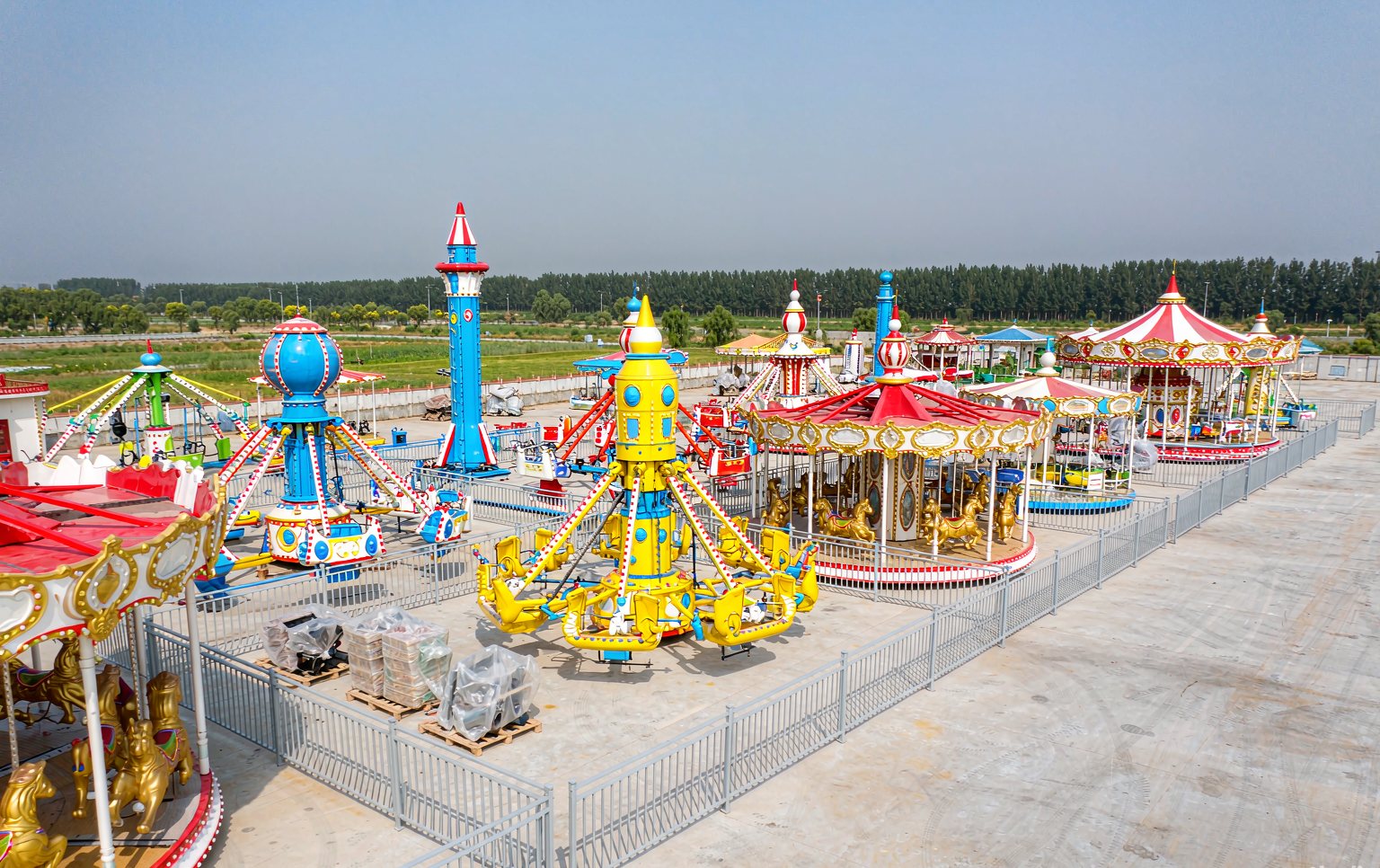
Most buyers arrive with a category in mind, so it helps to map the market for amusement rides for sale before requesting prices. Six groups cover the vast majority of transactions:
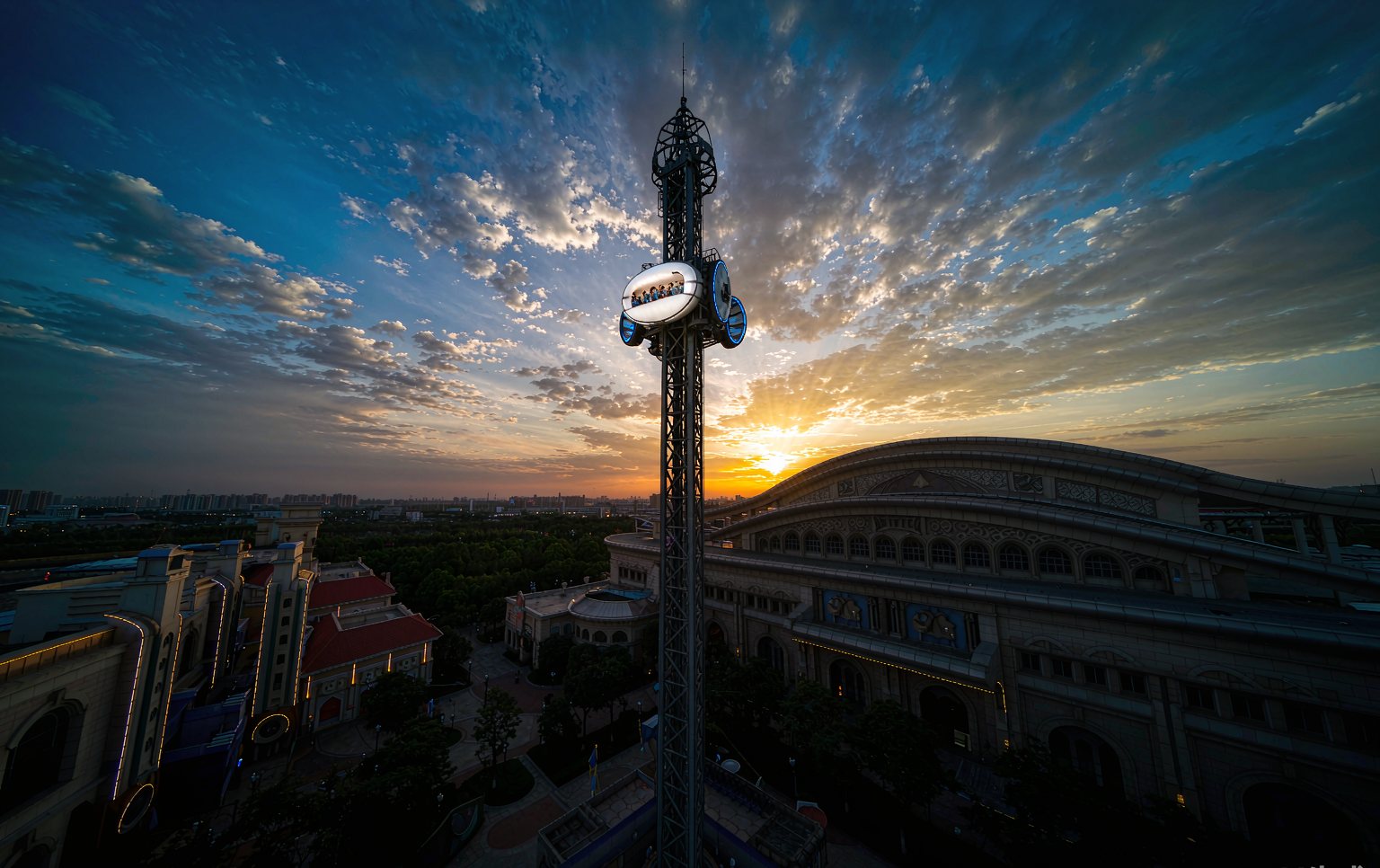
- Thrill rides — drop towers, top spins, swinging gyroscopes, pirate ships and high-G spinners. These carry the highest capex and the highest throughput per square meter.
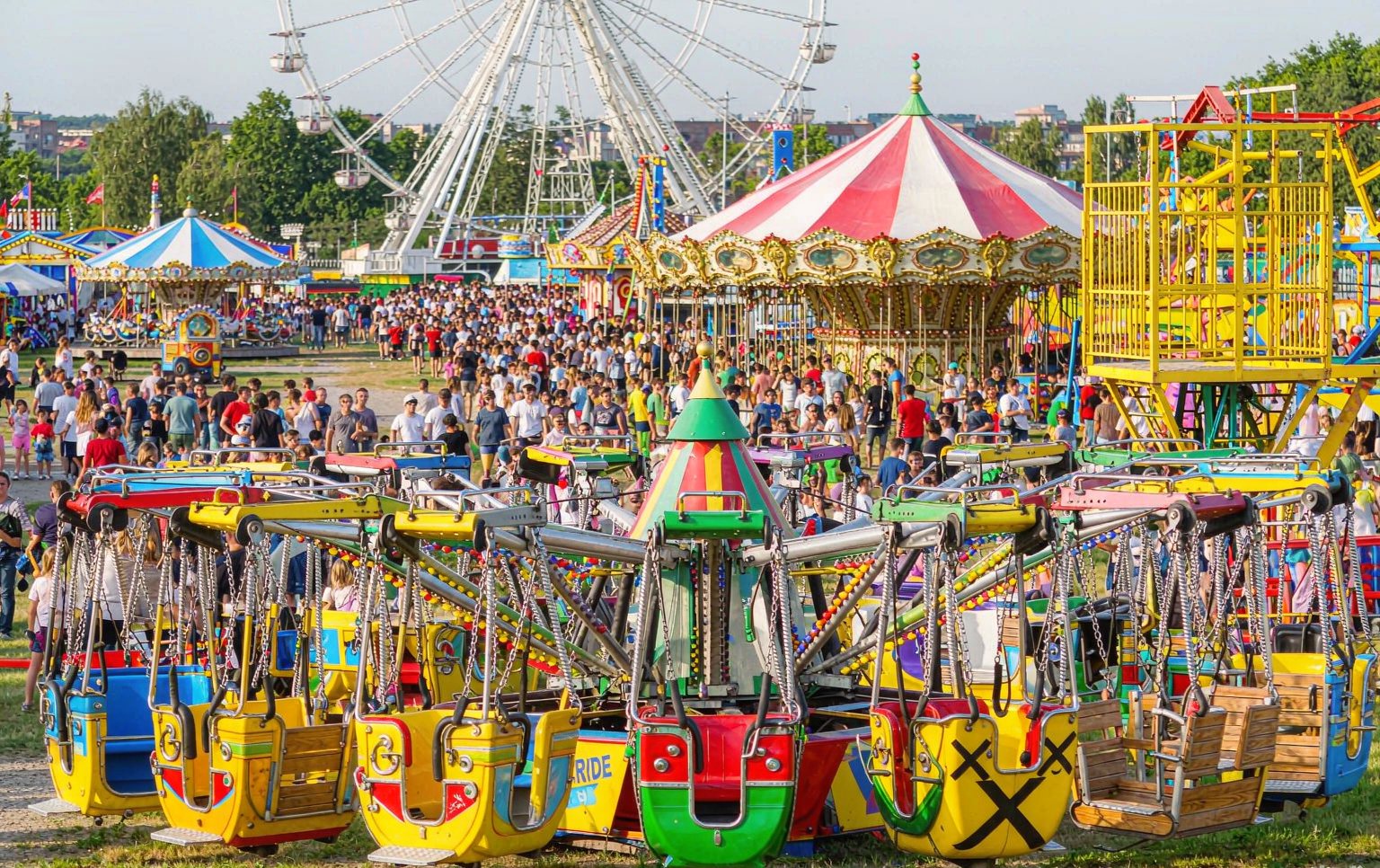
- Family and kiddie rides — carousels, mini trains, jumping stars, tea cups, bumper cars and small family coasters. Lower capex, faster payback, shorter installation.
- Landmark rides — Ferris wheels from roughly 42 m to 66 m, observation wheels and signature towers that function as much as branding as they do as attractions.
- Power-free playground equipment — non-powered obstacle courses, rope structures and adventure nets. Almost no operating cost, ideal for resorts and scenic sites.
- Mountain and scenic rides — alpine coasters, cable-lifted slides and terrain-following track systems for hillside sites.
- Supporting assets — inflatable attractions, sightseeing trains, ticketing hardware and queue-line theming.
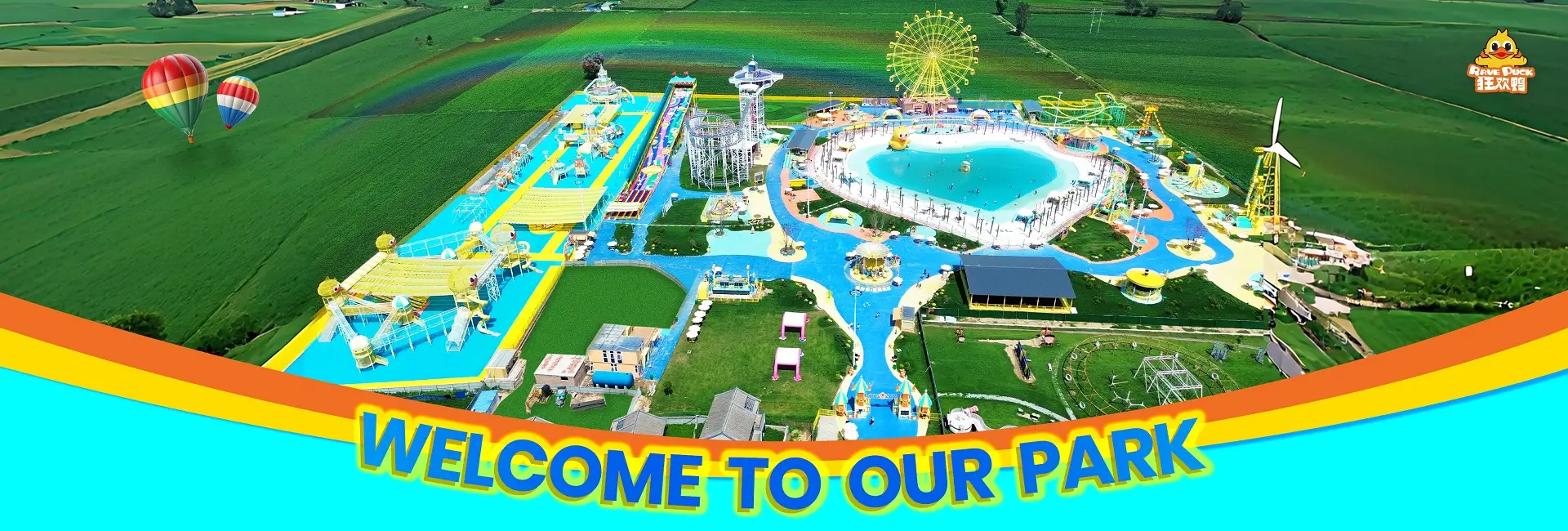
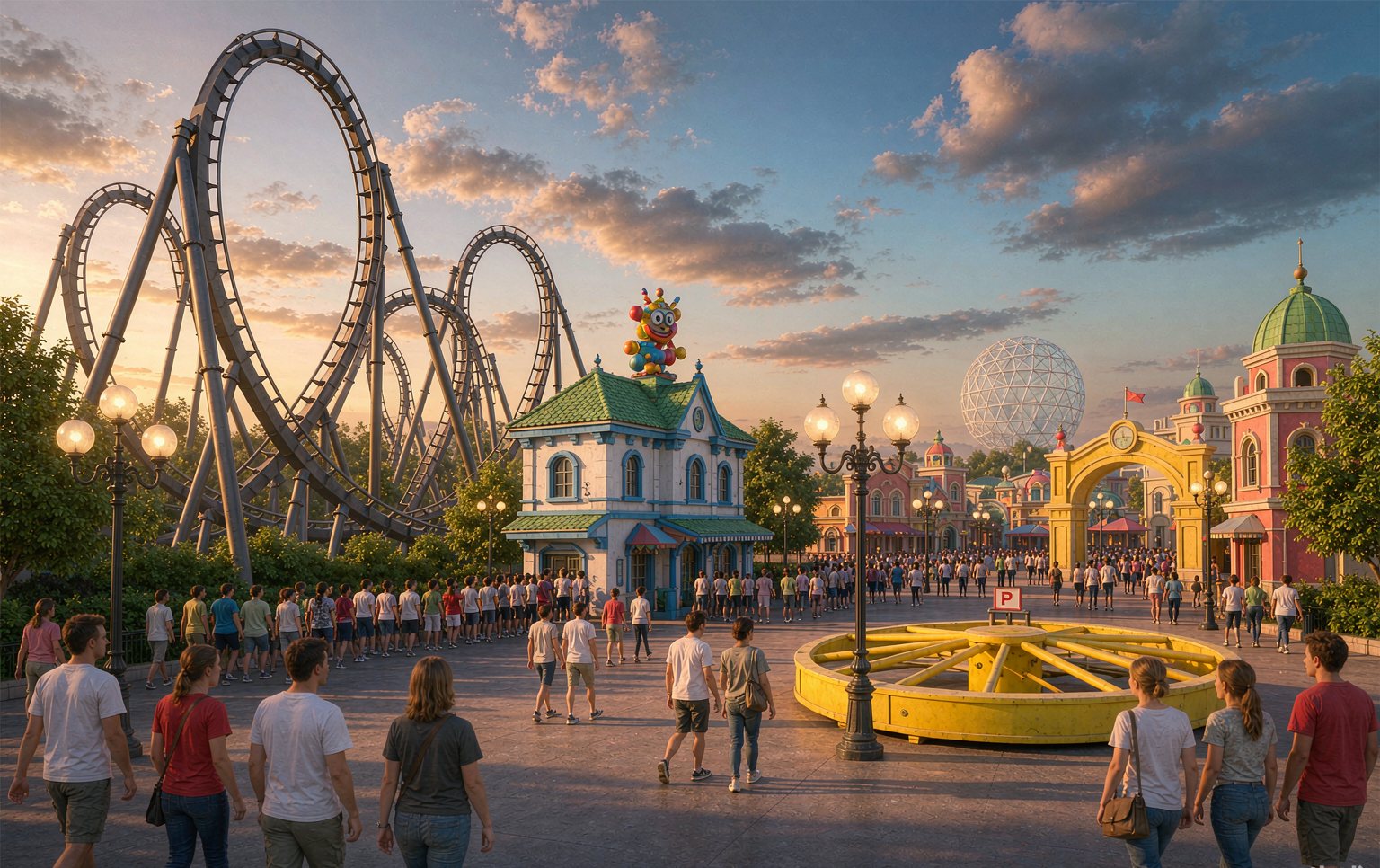
A well-designed park rarely buys one category. The commercially strongest projects we see pair one high-impact anchor with a cluster of family product around it, because the anchor generates the visit and the family rides generate the dwell time. You can review the current thrill ride range and the family and kiddie ride range side by side to see how the mix is usually structured.
Indicative Price Bands for Amusement Rides for Sale
No responsible manufacturer publishes a firm price list, because two rides of the same model can differ by 40% once you change the theming, the restraint system, the drive package or the finish. The bands below are indicative, quoted ex-works in USD, and exist to help you size a budget before you open negotiations — not to replace a quotation.
| Ride type | Typical capacity | Indicative price (USD, ex-works) |
|---|---|---|
| Kiddie and small family rides | 12–24 riders | 8,000 – 60,000 |
| Carousel, 12–24 m | 24–48 riders | 45,000 – 180,000 |
| Pirate ship, 24–40 seats | 24–40 riders | 60,000 – 150,000 |
| Drop tower, 20–30 m | 12–24 riders | 180,000 – 450,000 |
| Ferris wheel, 42 m | 144–216 riders | 450,000 – 900,000 |
| Ferris wheel, 52–66 m | 216–324 riders | 900,000 – 2,500,000 |
| Family coaster | 400–800 pph | 350,000 – 1,200,000 |
| Launch or inverted coaster | 800–1,200 pph | 2,000,000 – 8,000,000+ |
| Power-free playground | 40–150 users | 15,000 – 120,000 |
| Sightseeing train | 40–80 seats | 80,000 – 250,000 |
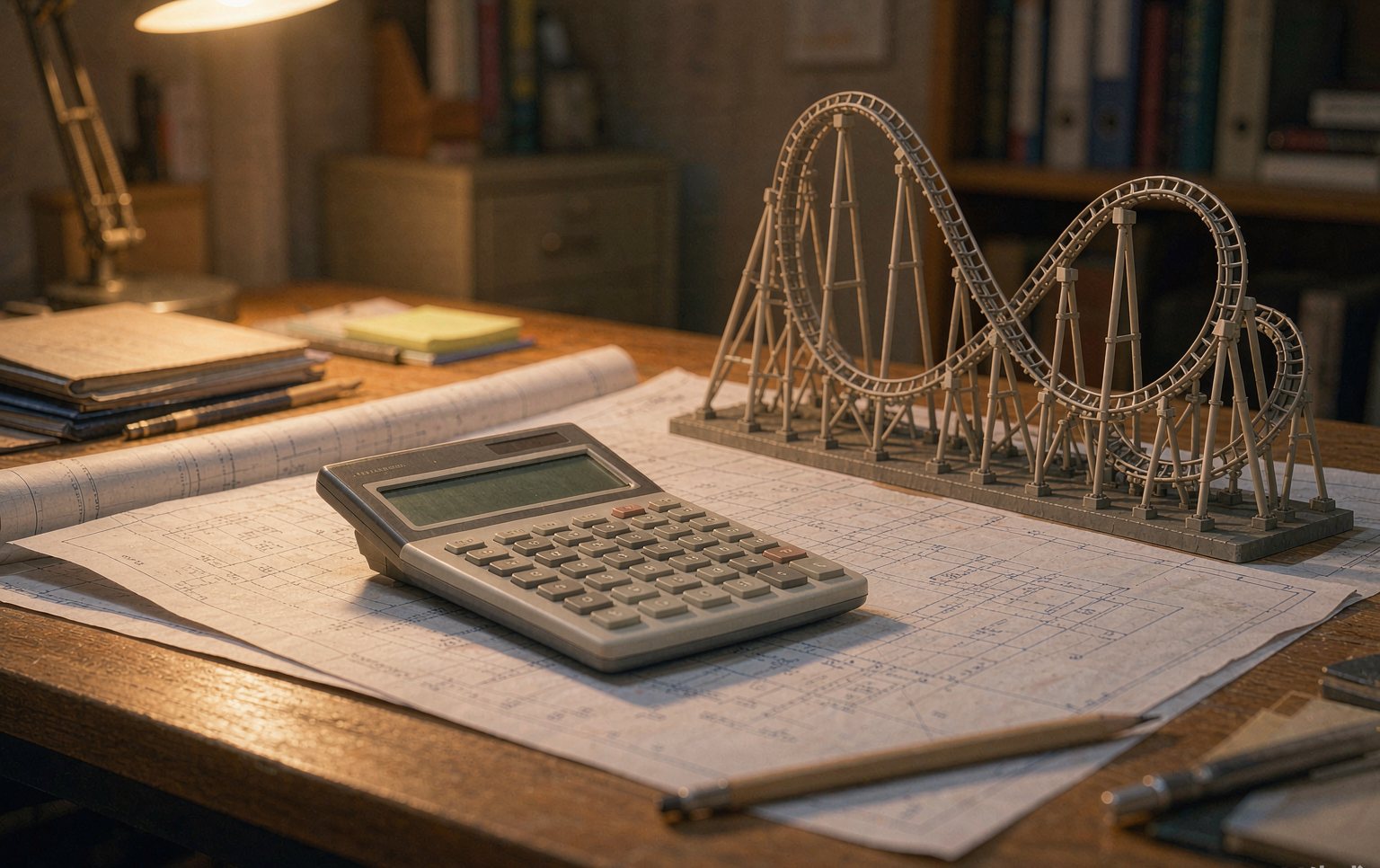
Five variables move a quote more than anything else: structural steel weight, drive and control systems, restraint and safety hardware, thematic finish, and certification scope. A buyer who specifies “CE certified, with full technical file and foundation drawings” in the first email will usually get a more accurate number than one who asks for “best price.”
It also pays to think in payback terms rather than sticker terms. A USD 120,000 family ride running 200 paid cycles a day at a USD 3 ticket returns roughly USD 1,800 per operating day before costs, which is why mid-priced family equipment often outperforms a headline thrill attraction on capital efficiency. When you compare amusement rides for sale at different price points, model the revenue per square meter and the annual maintenance reserve, not just the invoice.
How to Evaluate a Listing Before You Commit
The listings that cause trouble are rarely obvious fakes. They are real products from real factories, sold by intermediaries who cannot answer a technical question and disappear when a part fails. Work through this checklist for any set of amusement rides for sale before a single deposit leaves your account:
- Confirm who actually manufactures. Ask for the business license, the factory address and a live video walk-through of the welding and assembly bays.
- Verify the certification trail. CE declaration, EN 13814 compliance report, ISO 9001 certificate and, for US-bound equipment, ASTM F2291 documentation — all in the buyer’s language.
- Request the load and stress calculations. A manufacturer that cannot produce stamped structural calculations is assembling, not engineering.
- Watch a factory test video of your specific unit. Not a stock clip — your serial number, your paint scheme, your date.
- Ask for three installed references in comparable markets. Then call them and ask about downtime, not satisfaction.
- Inspect the spare parts list. Bearings, PLCs, hydraulics and restraint cylinders should have stated brands, not “equivalent.”
- Check the documentation package. Operation manual, maintenance schedule, electrical schematics and a rider height and weight matrix.
- Confirm the foundation and site drawings arrive before shipping. Civil work is on your critical path, not theirs.
- Agree on a third-party inspection. SGS, TÜV or Bureau Veritas at pre-shipment is cheap insurance on a six-figure order.
- Clarify what “installation included” actually means. Engineers on site, or a PDF and a phone number.
Lead Times, Shipping and Import Logistics
Standard amusement rides for sale typically ship in 25–45 days from deposit and drawing approval. Custom or large equipment — Ferris wheels, coasters, heavily themed installations — runs 35–60 days, and a landmark wheel can stretch further once steel procurement and site-specific engineering are included. Add 10–25 days of on-site assembly, and a realistic opening date becomes visible.
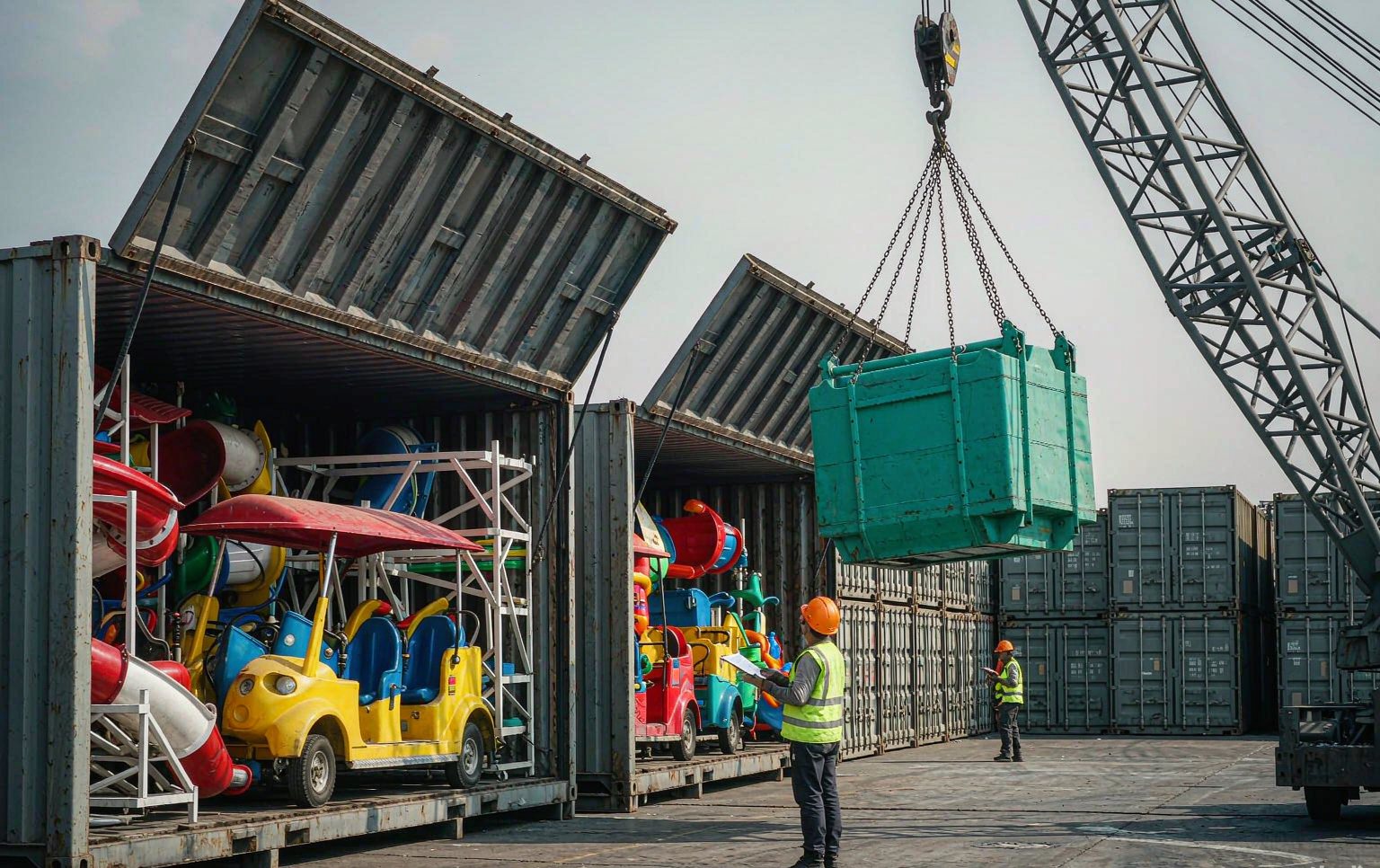
On shipping, most first-time importers underestimate the container math. A 24-seat pirate ship may travel in two 40HQ containers; a 42 m wheel needs a dozen or more plus heavy-lift cranes at both ends. FOB is the simplest starting point because it keeps control of freight with you, while CIF suits buyers without a forwarder relationship. Budget separately for ocean freight, marine insurance, port handling, inland trucking, import duty and VAT — on a mid-size order these can add 8–18% to the landed cost. Rides usually clear under HS 9508, but confirm the code with your broker, and check whether your market requires a local re-certification inspection before the ride can legally open.
Payment Terms and Contract Protection
The market standard for amusement rides for sale is 30% deposit with the balance due before shipment, released against a pre-shipment inspection report. That structure is fair on both sides, provided the contract defines what “ready to ship” means. For orders above roughly USD 150,000, many buyers move to a letter of credit or a milestone schedule — deposit, steel fabrication complete, factory test passed, shipment booked.
Three clauses are worth arguing over. First, a delay penalty tied to a percentage of contract value per week, capped at 5–10%. Second, a retention of 5–10% held until commissioning and handover. Third, a spare parts commitment that fixes pricing on a named critical-parts list for five years. If a supplier refuses all three, the price is not the real problem. Also pin the Incoterm and named port in writing, and state which party pays for engineer visas, flights and accommodation during installation.
Two smaller items deserve a line in the contract as well. Cargo insurance should be in place from the moment the equipment leaves the factory, with the ride named on the policy and a claims process you have read. And if you are paying in USD against a local currency budget, fix the exchange rate at signing rather than at shipment — a three-month production window is long enough for a currency swing to erase the discount you negotiated.
Warranty, Spare Parts and Operator Training
A credible warranty on amusement rides for sale is 12 to 24 months from commissioning, covering manufacturing defects rather than wear items. Anxin Amusement ships every unit with a 2-year warranty, lifetime technical support and a guaranteed spare parts supply line — and backs it with CE, EN 13814, ISO 9001 and ASTM compliance, plus a full factory test on every ride before crating.
Warranty value is decided by response time, not by the number of months on the certificate. Ask how quickly a failed PLC or restraint cylinder can be dispatched, whether air freight is available for AOG situations, and who pays the duty on warranty parts. Then ask about training. Operator training is not a nice extra: it is the difference between a ride that runs 300 days a year and one that sits idle waiting for a technician. Confirm that the installation team delivers classroom and hands-on training, that manuals are in your operating language, and that a competency sign-off is issued for each operator and maintenance technician.
FAQ: Amusement Rides for Sale
What is the minimum order quantity?
One unit. Most manufacturers of amusement rides for sale will build a single ride, though the economics favor combining several models into one shipment. Mixing three or four family rides in shared containers can cut per-unit freight by 20–30%, and consolidated orders often qualify for better pricing than the same rides bought separately.
How long does delivery take from order to opening?
For standard rides, plan on 25–45 days of production, three to six weeks of ocean freight, two to four weeks of customs clearance and inland delivery, then 10–25 days of installation and testing. A realistic end-to-end window is four to six months. Custom coasters and large wheels should be planned at nine to eighteen months.
Can I buy used amusement rides for sale instead of new?
You can, and the savings are real — often 40–60% of new price. The trade-off is documentation. Used equipment frequently arrives without a valid certification file, original structural calculations or a spare parts source, which can make local registration impossible. If you go used, budget for a full NDT inspection, restraint replacement and re-certification before you sign.
What certifications should I insist on?
At minimum: CE marking with a declaration of conformity, EN 13814 compliance for the structural and safety design, and ISO 9001 for the manufacturing process. For the United States, request ASTM F2291 documentation. For projects in the Gulf, Eastern Europe or Southeast Asia, confirm your local authority’s acceptance of the CE file in advance, because some markets require a domestic inspection body to re-approve the design.
Do you provide installation and staff training?
Yes. Every project includes an on-site installation team, commissioning tests, operator and maintenance training, and a full documentation package. Installation typically takes 10–25 days depending on ride complexity. Travel, accommodation and visa costs are quoted transparently as a separate line so you can see exactly what the service costs.
Next Step: Request a Quote
The fastest way to get a usable number is to send four things: your site dimensions and soil conditions, your target capacity and demographic, your budget range, and your opening date. With those in hand, a manufacturer can propose a ride mix from the amusement rides for sale catalogue that fits your footprint, confirm what is feasible within your lead time, and issue an itemized quotation covering equipment, freight, installation and training — with no ambiguity about what is included.
Anxin Amusement has spent 15+ years building rides for operators in more than 24 countries, with over 200 units delivered. If you are shortlisting amusement rides for sale and want a configuration and price band for your site, request a quote and project consultation — you will get a technical response, not a brochure.