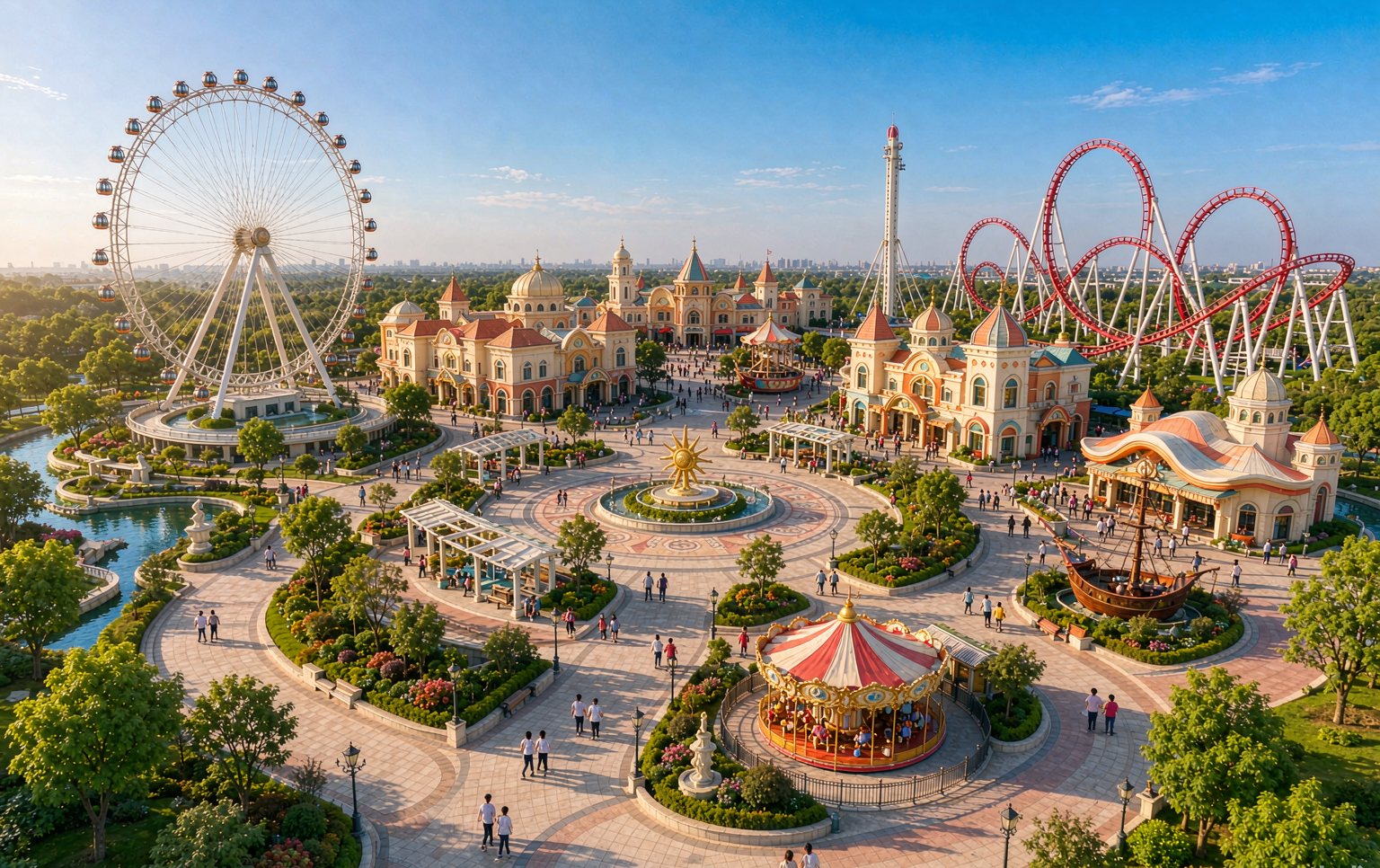
Sourcing rides is one of the largest capital decisions a fairground, carnival, or theme park operator will ever make. The fairground ride manufacturers you choose determine what your site looks like on opening day — and how reliably it earns for the next decade. This guide explains how fairground ride manufacturers work, what to compare before you sign, and how to select a partner who delivers on time, on budget, and to code.
What Fairground Ride Manufacturers Really Do
The term covers a wide range of businesses. Some fairground ride manufacturers are large engineering houses that design roller coasters and giant Ferris wheels from a blank sheet; others specialize in travelling showman equipment and compact family rides. The real dividing line is control over the full chain: concept design, structural engineering, fabrication, factory testing, shipping, installation, and lifetime spare-parts supply. A firm that outsources most of that work is effectively a trading company, not a manufacturer.
That distinction matters because it shapes accountability. When one partner owns design and build together, engineering changes stay inside the same team, quality checks happen before shipment, and nobody points fingers when something needs adjusting on site. It also shapes your schedule. A vertically integrated supplier can pull a delivery forward or absorb a design tweak without negotiating with three other vendors along the way.
Geography plays a role too. Manufacturing capacity has shifted heavily toward Asia over the past two decades, and buyers now have far more choice than they did when a handful of European and American names dominated the market. That choice is a good thing, but it means due diligence matters more than brand recognition. The strongest suppliers today export to dozens of countries, hold internationally recognized certifications, and staff English-speaking project managers who can walk a client through drawings, load calculations, and shipping documentation without delay.
Why Your Choice of Fairground Ride Manufacturers Drives ROI
A ride is a revenue machine, and its uptime is the single biggest lever on payback. Operators who evaluate fairground ride manufacturers purely on sticker price often discover that downtime, slow spares, and re-engineering costs erase the initial saving within two seasons. Reliable units run more hours per day, need fewer unplanned shutdowns, and hold their resale value far better.
When you screen fairground ride manufacturers, weight after-sales support and parts availability as heavily as the purchase price. A machine that sits idle in peak season is the most expensive asset a park can own.
Rule of thumb: a ride that costs 10% more but runs 400 extra hours a year usually repays the difference before the first warranty period expires.
Total cost of ownership is the honest way to judge any supplier. The purchase price is only the first line item. Add shipping and duties, foundation and civil works, installation labor, electricity and maintenance, downtime during inspections, and the cost of holding spare parts. A machine sourced cheaply but supported poorly can generate more cost over ten years than a premium unit that never surprises you. Ask each vendor for a simple cost model covering those lines, and compare them side by side.
Payback also depends on your pricing strategy. A headline thrill ride allows premium ticketing and drives social reach, while a cluster of family rides spreads risk and lifts dwell time. The right mix, produced by a partner who understands throughput and guest flow, compounds into higher revenue per visitor rather than just a fuller skyline.
Ride Categories Built by Fairground Ride Manufacturers
Reputable fairground ride manufacturers build across several tiers, and most park budgets spread across more than one of them. Understanding the tiers helps you match a supplier’s strengths to your audience and your available land. The most successful operators treat the ride mix as a portfolio: one or two headline attractions that draw visitors, plus a broader base of rides that keep them on site and spending.
Thrill Rides
Drop towers, roller coasters, pirate ships, and spinning rides anchor the thrill tier. These carry the highest engineering load and the strictest testing regimes, so choose partners with genuine structural experience rather than a catalog of look-alike machines. Review our thrill rides range as a reference point for what a complete tier should include.
Family and Kiddie Rides
Carousels, teacups, bumper cars, and small tracked rides keep families on site longer and lift per-capita spend. They launch faster, cost less to maintain, and broaden the age range your park serves — which is exactly why operators rarely buy thrill rides alone.
Landmark and Observation Rides
Ferris wheels between 42 m and 66 m, sightseeing trains, and mountain or scenic rides become visual anchors. They are the rides people photograph and share, and they can justify premium ticketing on their own.
How to Compare Fairground Ride Manufacturers
Buyers rarely compare apples to apples, which is why one vendor can look cheaper than another while quietly costing far more over five years. The fastest way to separate strong fairground ride manufacturers from weak ones is a structured scorecard covering engineering depth, references, and commercial terms. Score each category in writing, keep the evidence on file, and revisit the sheet when you shortlist for your next phase — the discipline pays off the second time around.
It helps to bring more than one stakeholder into the review. Operations, finance, and maintenance all see different risks, and a supplier that satisfies all three is usually the one worth signing. Include your insurer early as well; their appetite for your chosen ride model can shape the whole decision.
| Criteria | What to Ask | Green Flag | Red Flag |
|---|---|---|---|
| Engineering | Is design and structural calculation done in-house? | Own engineering team, calculations shared | Vague answers, subcontracted design |
| References | Can you contact operators running your rides today? | Named parks in several countries | No reachable references |
| Certifications | Which standards apply to my market? | CE, EN 13814, ISO 9001, ASTM on file | Claims only, no certificates |
| Lead time | What is the committed shipping window? | Written schedule with milestones | Open-ended promises |
| Warranty | How long, and what exactly is covered? | Two-year warranty with clear terms | Short or verbal warranty |
| Spares & support | How fast are parts shipped in peak season? | Stocked parts, regional support | Every part made to order |
| Installation | Do you send a supervised installation team? | On-site assembly in 10–25 days | Equipment-only shipping |
| Custom work | Can you engineer to a theme or footprint? | Proven custom projects | Catalog-only, no custom capability |
Use the table as a filter, not a formality, and ask each of the shortlisted fairground ride manufacturers to provide verifiable evidence for every row. Written answers, live references, and factory reports count; verbal assurances do not.
Certifications, Testing, and Safety Compliance
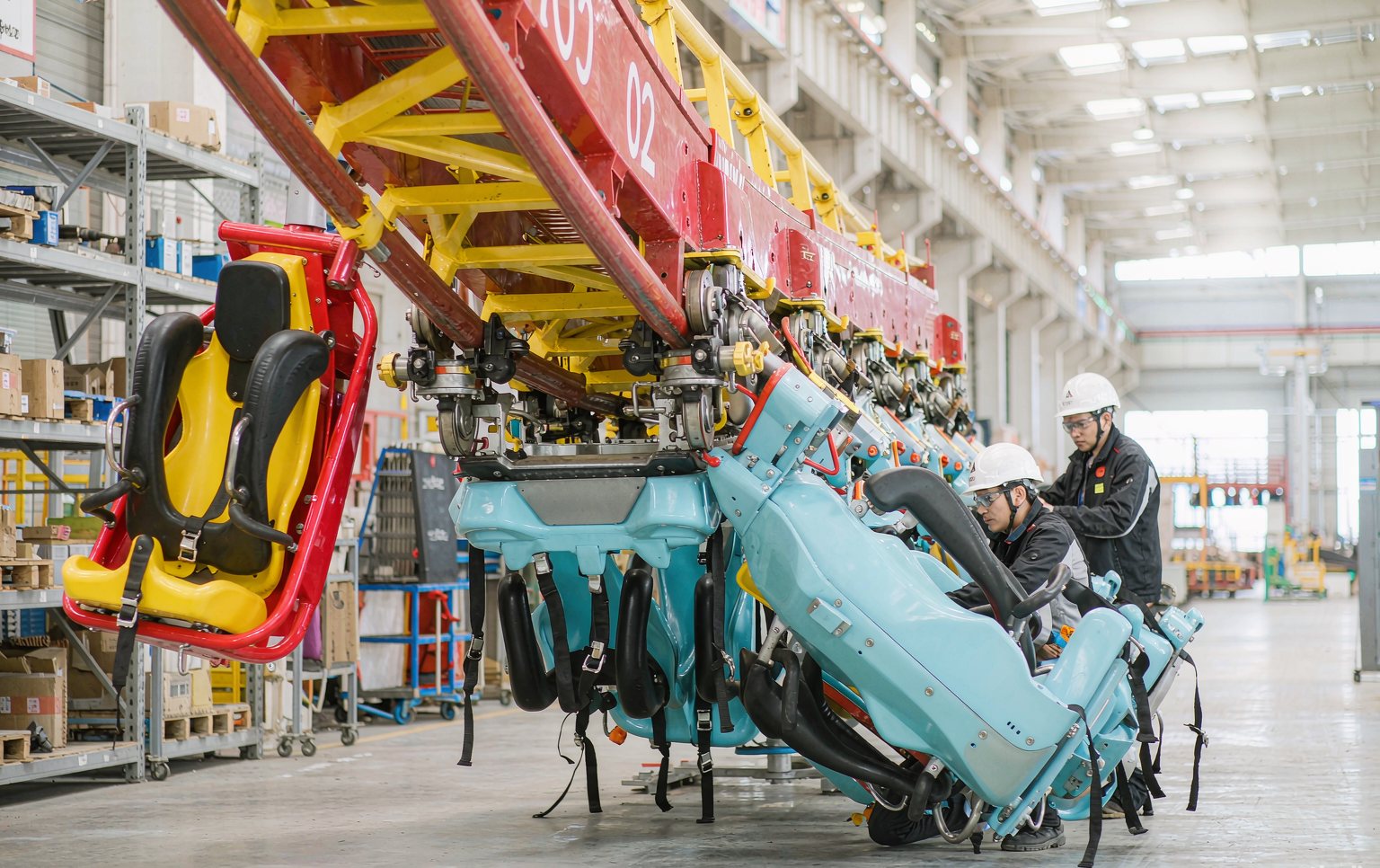
Compliance is non-negotiable, and the burden ultimately falls on the operator. Insurers and local authorities increasingly demand documented conformity before a ride opens to the public. Look for CE marking, EN 13814, ISO 9001, and ASTM compliance depending on your market, and ask each of the fairground ride manufacturers you consider for factory test reports, load calculations, and material certificates — not just a brochure claim.
A supplier that hesitates on documentation is a supplier that will hesitate when a regulator comes knocking. Treat the paper trail as a preview of the whole relationship. Reputable exporters keep conformity files organized by market, because requirements differ: a rig that clears inspection in one country may need additional load cases or fire documentation in another. Ask how the supplier handles that variation, and confirm who is responsible for translation and local sign-off.
Ongoing compliance is not a one-time event either. Annual inspections, NDT testing on critical joints, and record-keeping fall to the operator after handover. A good partner supplies the manuals, maintenance schedules, and inspection checklists that make those duties straightforward, and keeps a technical contact reachable for the life of the ride.
Lead Times, Installation, and After-Sales Support
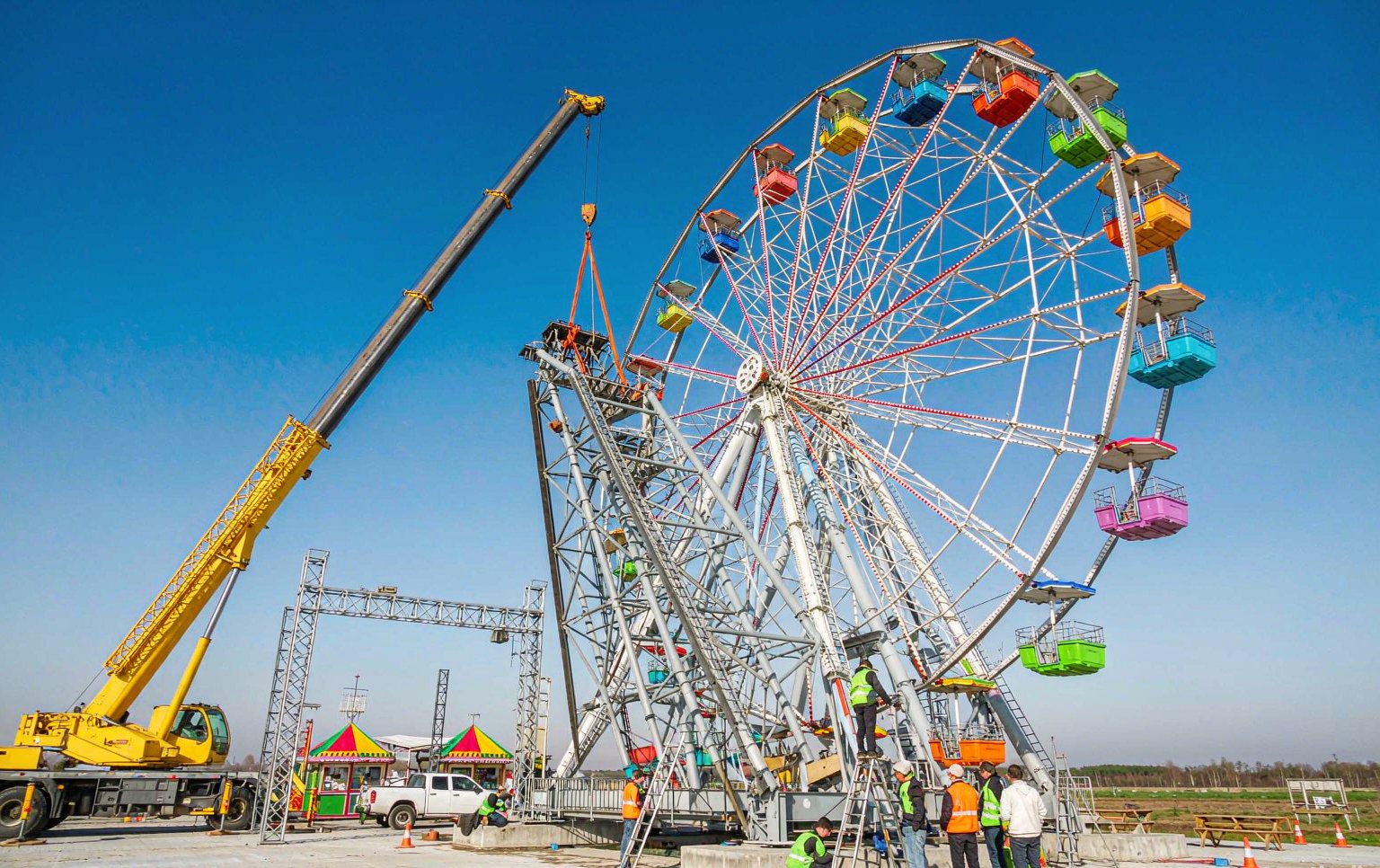
Timelines decide whether you hit your season. Standard rides typically ship in 25–45 days, while custom and large equipment such as Ferris wheels or roller coasters run 35–60 days, with on-site assembly adding 10–25 days on top. Strong fairground ride manufacturers publish these windows and commit to them in writing, with milestones and, where appropriate, penalties for slippage.
Beyond delivery, confirm the warranty length — a two-year warranty is a reasonable benchmark — along with spare-parts supply and operator training. Ask how quickly a replacement part can reach your site in peak season. That single answer reveals how serious a partner really is. Experienced exporters maintain stock of high-wear components precisely so that a worn bearing or a failed sensor does not cost you a weekend of trading.
Shipping and logistics deserve the same scrutiny. Large rides travel as multiple containers or as oversized freight, and the routing matters. A supplier that plans the packing, handles customs paperwork, and coordinates with your receiving team saves weeks of confusion. Confirm Incoterms, insurance, and who clears the goods at your end before you sign, and ask how they have handled shipments into your region previously.
Custom Solutions vs. Catalog Rides
Not every project needs a bespoke machine, but many need a ride that fits an unusual footprint, a specific theme, or a tight season deadline. The best fairground ride manufacturers offer both: catalog models for speed and budget, and custom engineering for flagship attractions. Before committing, run a short checklist.
- Site survey and soil/foundation data available
- Ride footprint and height limits confirmed with local zoning
- Power supply and hourly throughput targets defined
- Theming, color palette, and guest-flow plan specified
- Budget split clearly between ride, civil works, shipping, and installation
- Spare-parts and operator-training plan agreed up front
When a supplier can move between catalog and custom work without friction, you keep control of both cost and identity — and you avoid the compromise of forcing a standard ride into a site that deserves something better. A manufacturer that offers turnkey custom solutions will usually flag these decisions early, before they become expensive.
Frequently Asked Questions
How do I verify that fairground ride manufacturers are legitimate?
Check company registration, years in operation, and factory address, then ask for references. The strongest signal is reaching operators already running their rides — and calling them. Legitimate fairground ride manufacturers welcome site visits and factory tours rather than deflecting them.
What certifications should a supplier hold?
At minimum, CE and EN 13814 for Europe, ISO 9001 for quality management, and ASTM for US projects. The paperwork should be specific to your ride model rather than a generic certificate, and it should be available before you pay a deposit.
How long does it take to receive a ride?
Standard rides usually ship in 25–45 days. Large or custom equipment such as Ferris wheels and roller coasters takes 35–60 days, plus 10–25 days for on-site assembly. Always confirm the schedule in the contract, not just in a quote email.
Do all fairground ride manufacturers offer installation and training?
No. Capable partners send an installation team, train your operators, and then supply spare parts and technical support for the life of the ride. If a vendor only ships equipment, you will need to budget separately for a qualified third-party installer.
What is a realistic budget for a new ride?
Budget the ride, civil and foundation works, shipping, duties, installation, and a contingency for spares and signage. Comparing fairground ride manufacturers on total installed cost rather than unit price is the only way to avoid unpleasant surprises halfway through a project.
Final Thoughts: Choosing the Right Partner
Selecting among fairground ride manufacturers is a long-term decision, not a one-off purchase. The right partner brings engineering depth, disciplined documentation, and support that lasts the life of the ride. The wrong one leaves you chasing spare parts while your guests queue for a machine that should be running.
Anxin Amusement has spent 15+ years manufacturing rides and complete theme park solutions, with 200+ rides delivered to 24+ countries and full CE, EN 13814, ISO 9001, and ASTM compliance. Every unit is factory-tested, backed by a two-year warranty, and supported for life. Learn more about Anxin Amusement and tell us about your site — we will help you scope the right ride for your budget, your land, and your season.