
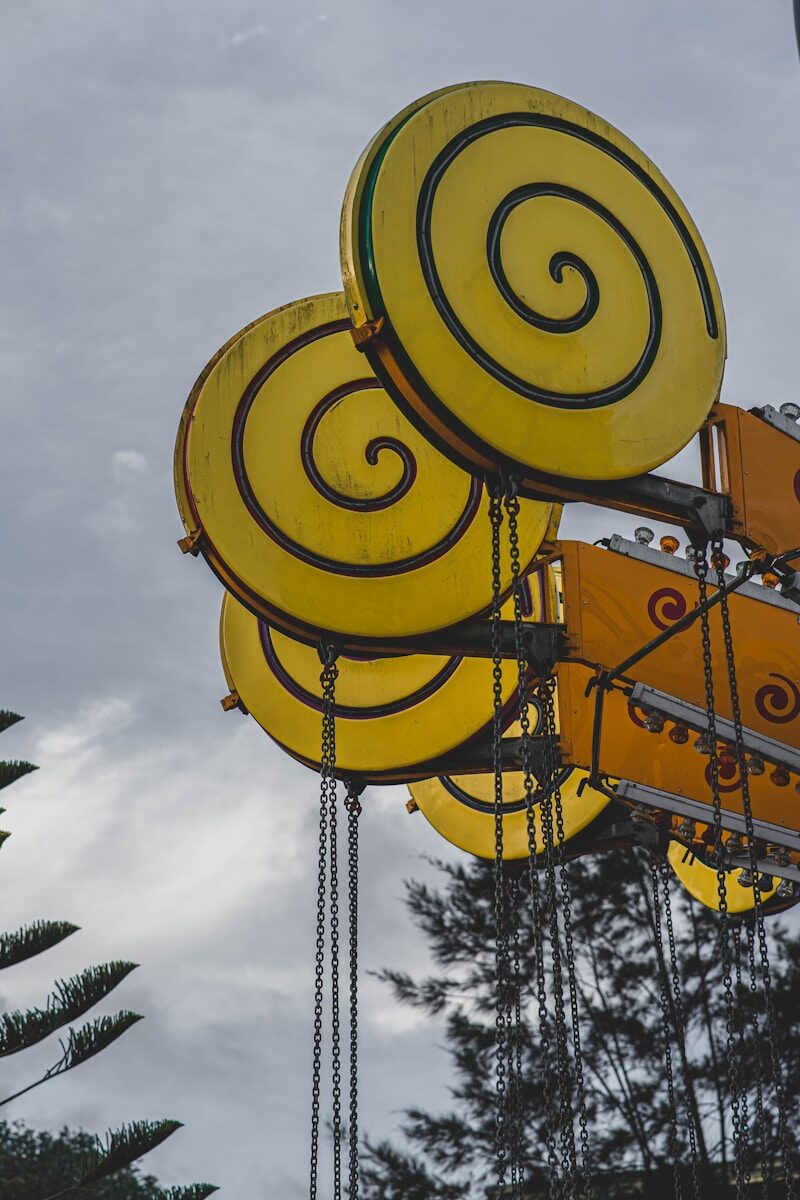
Few attractions in the amusement industry command attention quite like the pendulum amusement ride. Whether towering over a park skyline as a massive gondola swings riders through sweeping arcs, or spinning as a compact traveling unit at a regional fair, the pendulum amusement ride delivers a distinctive combination of weightlessness, gravitational force, and visual spectacle that has kept it relevant for decades.
The appeal of a pendulum amusement ride lies in its deceptive simplicity. The concept — a suspended vessel swinging back and forth on a pivot — is one of the oldest principles in physics. Yet modern manufacturers have transformed this fundamental motion into a spectrum of ride experiences ranging from gentle family attractions to extreme thrill machines that subject riders to forces exceeding four times the pull of gravity. Understanding what makes a pendulum amusement ride work, how it has evolved, and what operators should consider when selecting one reveals why this ride type remains a staple of parks and events worldwide.
The Physics That Powers the Experience
At its core, a pendulum amusement ride operates on the same principles that govern a grandfather clock or a playground swing. A mass suspended from a fixed pivot point oscillates under the influence of gravity, converting potential energy at the peak of each swing into kinetic energy at the lowest point, then back again. The rider experiences this energy exchange as alternating sensations of weightlessness at the top of each arc and intense gravitational pressure at the bottom.
Modern pendulum amusement ride designs amplify these natural forces through powered rotation. Rather than allowing the pendulum to swing freely and gradually lose momentum, drive systems actively push the gondola through each arc, increasing the amplitude with every pass until the ride reaches its maximum designed angle. Some models swing riders past the horizontal plane and into full 360-degree rotations, creating moments where riders are completely inverted at the top of the arc.
The forces experienced on a pendulum amusement ride vary depending on the model, the swing angle, and the rotational speed. At the bottom of a large-amplitude swing, riders can experience sustained positive G-forces that press them firmly into their seats. At the top of the arc, particularly on rides that achieve full rotation, riders experience negative G-forces that create the sensation of floating or lifting out of the seat. This alternating pattern of heavy and weightless sensations is what gives the pendulum amusement ride its distinctive character.
Evolution of the Pendulum Amusement Ride
The history of the pendulum amusement ride stretches back several decades, with early models offering relatively modest swing angles and gentle motion profiles. These first-generation rides served primarily as family attractions, providing mild excitement suitable for children accompanied by adults.
The second generation introduced powered drive systems that increased swing amplitude beyond what gravity alone could achieve. Manufacturers began experimenting with larger gondolas, higher pivot points, and more aggressive motion profiles. The pendulum amusement ride evolved from a gentle rocking experience into a legitimate thrill attraction capable of competing with roller coasters for rider excitement.
The third generation brought full-rotation capability. Rides such as the Frisbee, the Booster, and various proprietary designs added a secondary rotation axis to the gondola, allowing it to spin independently while the main arm swung through its arc. This dual-motion configuration created complex, unpredictable force profiles that made each ride cycle feel different from the last.
Current-generation pendulum amusement ride designs incorporate computerized control systems that allow operators to select from multiple ride programs. A gentle program might swing riders to 90 degrees with smooth acceleration, suitable for family audiences. An extreme program might push the gondola through full rotations with rapid directional changes, targeting thrill-seeking riders. This programmability allows a single pendulum amusement ride to serve multiple audience segments across different operating periods.
Major Variants Within the Category
The pendulum amusement ride category encompasses several distinct configurations, each offering a different rider experience and suited to different park environments.
Standard Pendulum Rides feature a single gondola suspended from a swinging arm that oscillates on a fixed pivot. The gondola typically seats between 20 and 40 riders arranged in rows facing outward. These rides offer a pure pendulum experience with straightforward back-and-forth motion and are among the most common configurations at regional parks and traveling events.
Double Pendulum Rides add a secondary pivot point, creating a compound pendulum motion where the gondola swings relative to the arm while the arm itself swings relative to the base. This configuration produces more complex, less predictable motion patterns that many riders find more exciting than standard pendulum movement.
Rotating Pendulum Rides combine pendulum swinging with gondola rotation. The gondola spins on its own axis while the main arm swings, creating a spiraling motion that subjects riders to forces from multiple directions simultaneously. These rides often feature gondolas designed to rotate freely or under controlled power, adding a disorienting element that intensifies the experience.
Tower Pendulum Rides mount the pendulum mechanism atop a tall tower structure, allowing the gondola to swing at significant height above the ground. The visual impact of a gondola carrying dozens of riders swinging through the air at the top of a tower creates a dramatic landmark visible from across the park, serving both as an attraction and as a marketing tool.
Compact and Portable Models are designed for traveling operators who need rides that can be transported, assembled, and disassembled efficiently. These pendulum amusement ride variants use modular construction and hydraulic or electric drive systems that minimize setup time while maintaining the core swinging experience.
Structural Engineering and Safety Systems
The engineering demands placed on a pendulum amusement ride are substantial. The structure must withstand enormous dynamic loads generated by a fully loaded gondola swinging at high speed through large arcs. These loads are not static — they change direction, magnitude, and distribution with every moment of the ride cycle, requiring structural analysis that accounts for fatigue over millions of operating cycles.
The main support structure of a pendulum amusement ride typically uses welded steel construction with tubular or box-section members designed to resist both compressive and tensile forces. The pivot bearing at the top of the structure is a critical component, requiring precision machining and regular inspection to ensure smooth rotation without play or binding.
The gondola frame must be both rigid and lightweight. Excessive weight increases the structural demands on the main arm and drive system, while insufficient rigidity allows flex that can compromise rider comfort and safety. Modern gondolas use tubular steel space frames that distribute loads efficiently while minimizing material weight.
Restraint systems on a pendulum amusement ride must secure riders against both positive and negative G-forces. Over-the-shoulder harnesses, lap bars with secondary locking mechanisms, and individual seat belts work in combination to keep riders safely positioned throughout the full range of motion. Redundant locking systems ensure that a single mechanical failure cannot result in restraint release.
Computerized control systems monitor ride parameters in real time, tracking swing angle, rotational speed, gondola position, wind speed, and structural vibration. If any parameter exceeds safe operating limits, the control system initiates a controlled deceleration and stop sequence. Wind monitoring is particularly important for pendulum amusement ride installations, as high winds can create unpredictable forces on the large surface area of a swinging gondola.
Site Requirements and Installation Considerations
Installing a pendulum amusement ride requires careful attention to site conditions, foundation design, and surrounding environment. The dynamic forces generated during operation create significant loads on the foundation, which must be engineered to resist both vertical and horizontal forces without settlement or movement.
Foundation requirements vary based on the size and configuration of the pendulum amusement ride. Smaller portable models may operate on temporary ballasted foundations suitable for event use, while permanent installations at theme parks typically require deep concrete foundations with reinforced steel anchoring. Geotechnical analysis of the installation site determines the appropriate foundation design and ensures long-term stability.
Clearance zones around the ride must account for the full sweep of the gondola at maximum amplitude, plus additional safety margins. Overhead clearance must consider the gondola at its highest point plus any vertical extension from rider restraints or loose articles. Underground utilities, drainage systems, and nearby structures must all be evaluated to ensure they fall outside the required clearance envelope.
Noise and vibration from the drive system and swinging structure can affect nearby attractions and guest areas. Acoustic analysis during the design phase helps determine whether sound barriers, vibration isolation mounts, or operational scheduling restrictions are necessary to maintain guest comfort throughout the park.
Operational Considerations for Park Owners
For park operators, the pendulum amusement ride offers several operational advantages. The ride typically achieves high throughput, processing large numbers of riders per hour due to relatively short cycle times and high-capacity gondolas. This efficiency helps manage crowd flow and keeps wait times at acceptable levels during peak attendance periods.
The visual prominence of a pendulum amusement ride makes it an effective crowd attractor. Guests can see the ride operating from significant distances, creating natural draw that helps distribute attendance across the park rather than concentrating all visitors in a single area. The dramatic motion of the swinging gondola generates organic social media content as riders share videos and photos, providing free marketing exposure.
Maintenance requirements for a pendulum amusement ride are manageable when operators follow manufacturer-recommended schedules. Daily pre-operation inspections check restraint systems, pivot bearings, drive mechanisms, and control system functionality. Weekly and monthly maintenance addresses lubrication, bolt torque verification, structural inspection, and electrical system testing. Annual comprehensive inspections by qualified engineers ensure that the ride continues to meet all safety and performance specifications.
Staff training for pendulum amusement ride operation focuses on restraint verification, ride cycle monitoring, emergency stop procedures, and guest evacuation protocols. The relatively straightforward operational profile of these rides means that trained attendants can manage safe operation effectively, though the high-visibility nature of the attraction demands consistent professionalism and vigilance.
Selecting the Right Pendulum Amusement Ride
Choosing a pendulum amusement ride for a specific location involves evaluating several factors beyond the ride’s visual impact and thrill level.
Target audience determines the appropriate size, swing amplitude, and motion intensity. A family-oriented park may benefit from a moderate-amplitude pendulum amusement ride with gentle acceleration profiles, while a thrill-focused park should consider full-rotation models with aggressive programming options.
Available space constrains the maximum size of the installation. The pendulum amusement ride footprint includes not only the structure itself but also the required clearance zones, queue areas, loading platforms, and maintenance access paths. Accurate site surveys conducted early in the selection process prevent costly compatibility issues during installation.
Budget parameters should account for the total cost of ownership, including purchase price, shipping, foundation construction, installation labor, insurance, maintenance, and eventual decommissioning. The least expensive pendulum amusement ride may carry higher long-term costs through increased maintenance requirements or shorter service life.
Manufacturer reputation provides important assurance regarding product quality, safety record, parts availability, and technical support. Established manufacturers with extensive installation histories offer documentation, training, and ongoing support that newer or less experienced suppliers may not provide.
The Enduring Appeal
The pendulum amusement ride endures because it delivers an experience that is simultaneously simple and profound. The sensation of swinging through the air, feeling gravity shift from crushing pressure to complete weightlessness, creates a primal thrill that resonates with riders regardless of age or cultural background. Modern engineering has amplified and refined this experience without losing the fundamental appeal that made the original pendulum rides popular decades ago.
For park operators, the pendulum amusement ride offers a compelling combination of visual impact, operational efficiency, rider capacity, and maintenance practicality. Whether serving as the centerpiece of a major theme park or as a traveling attraction at regional events, the pendulum amusement ride continues to prove that sometimes the most powerful experiences come from the most elegant mechanical concepts.




