
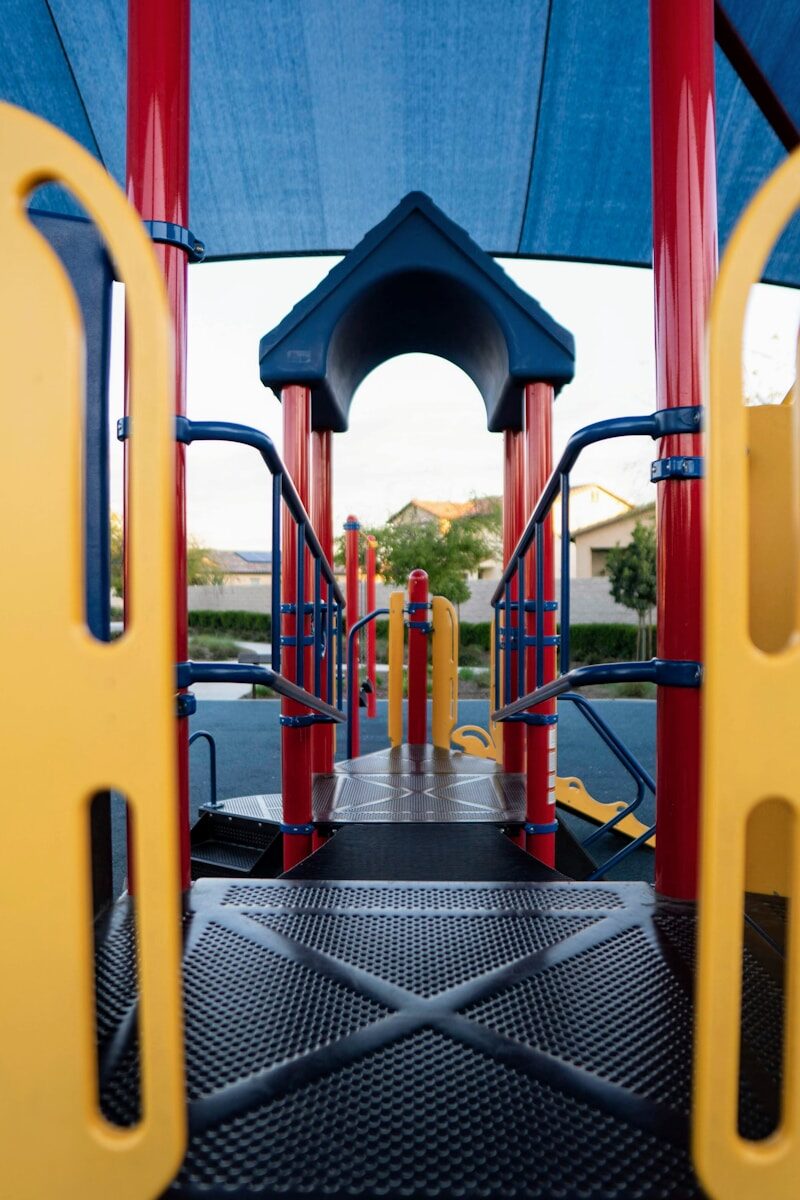
Playgrounds have always served a dual purpose. They are places where children develop physical skills, forge friendships, and explore the boundaries of their growing bodies. But the expectations placed on playgrounds have expanded significantly in recent years. Parents, urban planners, and public health advocates now demand more than a slide and a swing. They want environments that promote sustained physical activity across all age groups, and playground fitness equipment has emerged as the answer to that demand.
Unlike traditional playground structures that focus primarily on imaginative play, playground fitness equipment integrates structured exercise into the play environment. Pull-up bars, climbing walls, balance beams, overhead traverses, and multi-grip fitness stations sit alongside classic play elements, creating hybrid spaces where a child climbing a cargo net and a teenager performing pull-ups share the same environment without conflict. This convergence of play and fitness represents one of the most significant shifts in recreational space design over the past decade.
The Problem Playground Fitness Equipment Solves
Childhood obesity rates continue to climb in many parts of the world. Screen time displaces outdoor activity at increasingly young ages. Meanwhile, adults in the same communities struggle to find convenient, accessible exercise options that fit into busy schedules. Traditional playgrounds address neither of these challenges effectively. A standard play structure engages children for brief periods and offers nothing for adolescents or adults.
Playground fitness equipment changes this dynamic by creating spaces that serve multiple demographics simultaneously. A parent waiting to watch a younger child on the swings can use an adjacent elliptical trainer or parallel bars. A teenager can challenge themselves on a climbing wall while younger siblings explore age-appropriate play structures nearby. The entire family benefits from a single trip to the park, and the fitness equipment becomes a natural part of the outing rather than a separate destination requiring additional motivation.
Public health researchers have documented the impact of this approach. Parks that incorporate fitness elements alongside traditional play equipment see higher overall usage rates, longer average visit durations, and more diverse user demographics than parks with standard playground installations alone. The presence of playground fitness equipment signals to the community that the space is designed for active use, not passive observation.
Types of Playground Fitness Equipment Available Today
The range of products in this category has grown substantially, and manufacturers now offer solutions tailored to virtually every age group and fitness objective.
Upper Body Strength Stations include pull-up bars in multiple configurations, climbing ropes, overhead ladders, and monkey bars. These elements develop grip strength, shoulder stability, and upper body coordination. They appeal strongly to children and adolescents who enjoy testing their physical limits in a playful context.
Balance and Coordination Elements feature balance beams at varying heights, wobble bridges, stepping posts, and rotating disc challenges. These components develop proprioception and core stability, skills that transfer directly to sports performance and injury prevention. Balance elements are particularly valuable for younger children whose vestibular systems are still developing.
Cardiovascular Play Elements bring aerobic exercise into the playground setting. Mini elliptical trainers, pedal-powered stations, and spring-loaded rowing simulators allow users of various ages to engage in sustained cardiovascular activity. These playground fitness equipment pieces often incorporate playful design elements that make the exercise feel like a game rather than a workout.
Multi-Station Fitness Circuits combine several exercise types into a single integrated structure. A typical circuit might include a pull-up station, a dip station, a leg press, and a stretching bar arranged in a compact footprint. These circuits serve teenagers and adults who visit the park specifically for exercise while remaining visually integrated with the surrounding play environment.
Inclusive Fitness Elements are designed for users with disabilities or limited mobility. Transfer-friendly platforms, wheelchair-accessible upper body stations, and sensory-rich climbing surfaces ensure that playground fitness equipment serves the broadest possible audience. Inclusive design is no longer an afterthought but a central consideration in modern playground planning.
Safety Standards and Compliance
Any discussion of playground fitness equipment must address safety. These installations serve users ranging from toddlers to adults, and the forces generated during exercise exceed those produced by typical play activity. Manufacturers and installers must navigate a complex landscape of safety standards and regulatory requirements.
In Europe, playground fitness equipment falls under EN 16630, a standard specifically developed for permanently installed outdoor fitness equipment. This standard addresses structural integrity, entrapment risks, fall heights, impact attenuation requirements, and user instruction clarity. Compliance with EN 16630 is increasingly required by municipal procurement departments and represents the baseline for responsible product selection.
In the United States, playground fitness equipment must satisfy requirements from both ASTM F1487 (covering playground equipment) and ASTM F3101 (covering outdoor fitness equipment). The distinction matters because fitness equipment introduces movement patterns and force vectors that traditional playground standards do not fully address. A pull-up bar, for example, generates dynamic loads that differ significantly from the loads produced by a child swinging on a playground bar.
Fall zone calculations for playground fitness equipment often differ from those for standard play structures. Exercise movements can propel users in unexpected directions, and safety surfacing must extend accordingly. Rubber mulch, poured-in-place rubber, and bonded rubber systems all serve as appropriate impact-absorbing surfaces, but the required depth and extent vary based on the specific equipment and its intended user group.
Professional installation by certified teams ensures that anchoring, surfacing, and spatial relationships all meet the manufacturer’s specifications and applicable safety standards. Attempting to install playground fitness equipment without professional guidance creates liability exposure and compromises user safety.
Designing Spaces Where Fitness and Play Coexist
The physical arrangement of playground fitness equipment within a park setting requires careful planning. Simply placing fitness stations adjacent to a playground does not automatically create a successful multi-use environment. Several design principles guide effective integration.
Age-appropriate zoning separates equipment intended for young children from stations designed for teenagers and adults. A three-year-old should never need to navigate past a pull-up bar to reach a sandbox. Clear physical boundaries, changes in surface color, and strategic use of landscaping create natural separations without erecting barriers that fragment the space.
Sightline management ensures that caregivers supervising young children can simultaneously monitor the fitness area. Open layouts with minimal visual obstructions allow parents to watch multiple children across different zones. This consideration is particularly important in community parks where unaccompanied teenagers may use fitness equipment while parents watch younger siblings nearby.
Traffic flow planning prevents congestion at popular stations. Pull-up bars and climbing walls attract queues during peak hours, and the surrounding area must accommodate waiting users without blocking pathways or creating collision risks with active play zones.
Shade and shelter extend the usability of playground fitness equipment during hot weather. Structures positioned without any sun protection become unusable during midday hours in warm climates. Tensile fabric canopies, shade sails, and strategically placed trees all contribute to comfort while protecting equipment surfaces from excessive UV exposure.
Lighting enables early morning and evening use, which is when many adults prefer to exercise. Solar-powered LED fixtures positioned along pathways and near fitness stations provide adequate illumination without requiring extensive electrical infrastructure.
The Economic Argument for Parks and Developers
Municipalities evaluating playground fitness equipment investments should consider the broader economic impact. Parks that offer diverse, well-designed fitness and play environments attract higher visitor volumes, which in turn drives economic activity in surrounding areas.
Residential developments that incorporate playground fitness equipment into their amenity packages report measurable advantages in sales velocity and property values. Homebuyers increasingly evaluate neighborhood quality of life factors, and visible investment in health-oriented infrastructure sends a powerful signal about community priorities.
Commercial districts adjacent to active parks benefit from increased foot traffic. Visitors who come for exercise often purchase food, beverages, and other goods from nearby businesses. The economic ripple effect of a well-designed park extends well beyond its physical boundaries.
Maintenance costs for quality playground fitness equipment remain modest relative to the value delivered. Galvanized steel frames with powder-coated finishes resist corrosion and vandalism. Sealed bearings and self-lubricating bushings minimize mechanical maintenance. Most manufacturers provide detailed maintenance schedules that, when followed, keep equipment in excellent condition for fifteen to twenty years or more.
Trends Shaping the Next Generation of Playground Fitness
Several emerging trends are pushing playground fitness equipment into new territory.
Technology integration is beginning to appear in premium installations. Solar-powered counters that track usage, displays that show exercise instructions, and Bluetooth-enabled stations that connect to fitness apps represent the leading edge. While still relatively uncommon, these features appeal to younger demographics accustomed to data-driven fitness tracking.
Natural play integration blends fitness elements with organic materials and landscape features. Climbing holds embedded in natural rock faces, balance beams crafted from treated timber, and fitness stations surrounded by native plantings create environments that feel less institutional and more inviting.
Community-driven design involves local residents in the selection and placement of playground fitness equipment. Parks departments that conduct community surveys and public design workshops consistently report higher usage rates and stronger community ownership of the resulting spaces. When residents feel that the equipment reflects their specific needs and preferences, they become advocates for the park and informal stewards of the equipment.
Modular expansion systems allow communities to start with a core installation and add elements over time. This phased approach makes playground fitness equipment accessible to organizations with limited initial budgets while providing a clear pathway for growth as usage data justifies additional investment.
Making Informed Selection Decisions
Choosing the right playground fitness equipment for a specific location requires understanding the user population, the available space, the budget, and the long-term maintenance capacity of the organization responsible for the installation.
Start with a demographic analysis of the community the park will serve. The equipment mix for a park adjacent to a senior living facility will differ substantially from one serving a university campus or a young-family neighborhood.
Request comprehensive documentation from suppliers, including material specifications, load testing certificates, safety compliance declarations, warranty terms, and maintenance requirements. Reputable manufacturers provide all of this information readily and welcome technical questions.
Engage a professional playground designer or landscape architect to develop a site plan that optimizes safety, accessibility, traffic flow, and aesthetic integration. The upfront cost of professional design pays for itself many times over through reduced liability exposure and higher long-term user satisfaction.
Final Thoughts
Playground fitness equipment represents a meaningful evolution in how communities design and use public recreation spaces. By merging the joy of play with the benefits of structured exercise, these installations create environments that serve children, teenagers, adults, and seniors within a single cohesive space.
The parks that will define the next generation of community recreation are not those with the tallest slides or the most elaborate play structures. They are the spaces that recognize physical activity as a lifelong need and provide the tools, the environment, and the invitation for everyone to participate. Playground fitness equipment makes that vision achievable, accessible, and sustainable for communities of every size and budget.




