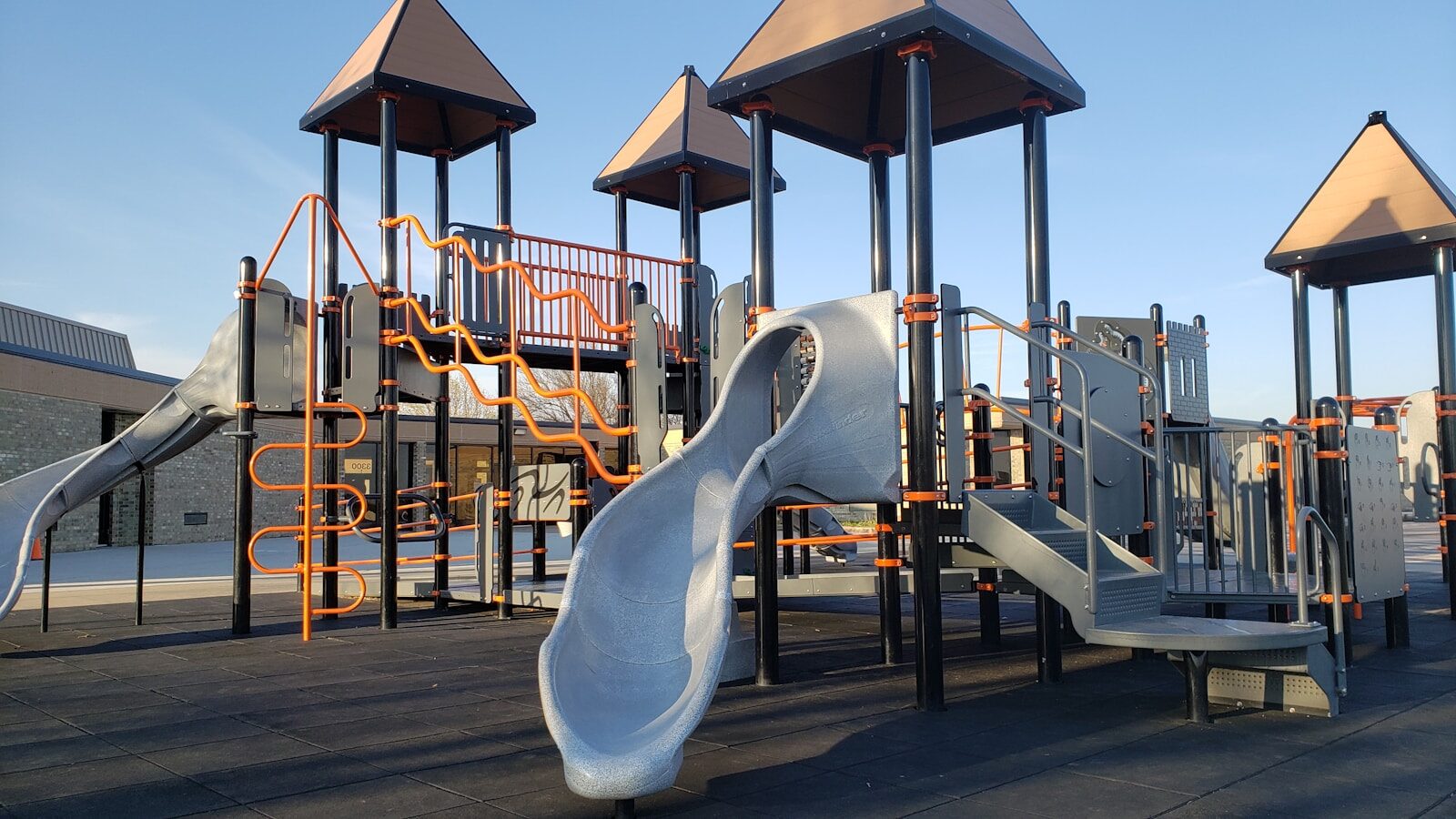
Playground fencing and boundaries define where the play area begins and ends. They help separate children from roads, car parks, water features, steep slopes, railways, cycle paths, construction zones, and other hazards. They also support supervision, security, and a clearer sense of place.
A well-designed boundary does not simply enclose a playground. It helps children stay within a safe area, helps caregivers see where the play zone ends, and helps operators manage access, maintenance, and risk. Poor boundary design can create confusion, restrict accessibility, or give a false sense of security.
Safety and Hazard Separation
The most important role of playground fencing is safety. Boundaries should reduce the chance that children leave the play area unintentionally and enter a dangerous zone.
Common hazards that may require separation include:
- Roads and vehicle access areas
- Car parks and service roads
- Water features, ponds, canals, or drainage channels
- Steep slopes, retaining walls, or drop-offs
- Cycle paths and busy pedestrian routes
- Railway lines or industrial areas
- Construction zones or temporary site risks
The type of boundary needed depends on the risk. A low decorative fence may be suitable where the main goal is to define the play area visually. A stronger, taller, or more secure fence may be needed where children could reach a serious hazard.
Supervision and Sightlines
Boundaries should support supervision, not block it. Caregivers, teachers, and staff need to see children clearly from seating areas, entry points, and surrounding spaces.
Solid walls, tall panels, dense planting, or poorly placed fencing can create hidden areas where children are difficult to monitor. Open or semi-open fencing often works better in public playgrounds because it allows natural surveillance while still defining the boundary.
Good sightlines also help children feel oriented. When boundaries are clear and visible, children are more likely to understand where they can play and where they should not go.
Security and Vandalism Prevention
Fencing can support security by discouraging unauthorized vehicle access, reducing vandalism, and helping operators control opening hours where appropriate. In some locations, fencing may also help prevent misuse of equipment after dark.
However, fencing alone is not a complete security solution. It works best when combined with lighting, maintenance, active use, clear sightlines, and community ownership. A playground that feels cared for and regularly used is often more secure than one that is isolated or neglected.
Boundary design should also avoid creating opportunities for climbing, trapping, or hiding. Tall vertical bars, decorative features, and gate details should be checked for climbability, entrapment risks, and sharp edges.
Accessibility and Inclusive Access
Playground boundaries must support accessibility. Fencing should not create barriers for children, caregivers, or supervisors with mobility aids, visual impairments, or other access needs.
Gates should be wide enough for wheelchairs, strollers, and walkers. Paths through gates should be level or gently sloped. Gate hardware should be usable by adults and, where appropriate, by older children. Gates should not create confusing thresholds or unexpected steps.
For children with autism, sensory differences, or elopement risks, boundary design may need additional consideration. Clear, consistent boundaries can help some children understand the limits of the play area. However, fencing should not create a prison-like environment. The goal is safety and clarity, not restriction.
Gate Design and Controlled Access
Gates are often the most important part of a playground boundary. They control entry and exit, support supervision, and affect accessibility.
Good gate design considers:
- Width for wheelchairs, strollers, and emergency access
- Opening direction and clear space on both sides
- Latch height and ease of use
- Self-closing mechanisms where appropriate
- Visibility through or around the gate
- Safety around hinges, gaps, and moving parts
- Emergency access for staff or responders
Gates should not create pinch points, sharp edges, or entrapment risks. Self-closing gates can help prevent children from wandering into roads or hazards, but they should be designed so they do not close too forcefully or create finger-trap risks.
Materials and Durability
Playground fencing materials should be durable, safe, and appropriate for the local environment.
Metal fencing is common because it can be strong, long-lasting, and visually open. Steel and aluminum are widely used, but corrosion resistance depends on material grade, coating, and maintenance.
Timber fencing can create a warm, natural appearance. It may suit parks, schools, and community settings. However, timber requires maintenance and may deteriorate faster in wet or high-use environments.
Mesh and wire systems can provide strong boundaries with good visibility. They should be designed to avoid sharp edges, climbability, and entrapment risks.
Boundary planting can soften appearance and support biodiversity, but it should not be the only safety measure where serious hazards exist. Plants take time to grow, may require maintenance, and may not provide reliable separation from roads, water, or steep drops.
Installation and Site Integration
Fencing should be installed as part of the wider playground design. It should connect naturally with pathways, entrances, seating, equipment zones, drainage, and surfacing.
Installation should consider ground conditions, post fixings, underground services, tree roots, drainage paths, and long-term settlement. Poorly anchored posts can become unstable. Fencing that blocks drainage can create puddles, erosion, or surfacing damage.
Boundaries should also respect the surrounding environment. A fence that is too dominant can make a playground feel closed off. A fence that is too low or broken may fail to perform its safety role. The design should balance protection, openness, appearance, and maintenance.
Maintenance and Long-Term Care
Playground boundaries need regular maintenance. Over time, posts can loosen, gates can sag, latches can fail, paint can chip, metal can corrode, timber can rot, and vegetation can grow into fencing.
Routine checks should include gate operation, latch security, post stability, sharp edges, loose fixings, damaged panels, climbable features, and entrapment risks. Gates should be tested regularly because they are used frequently and are more likely to develop faults than static fence panels.
Maintenance records help operators track recurring problems and plan repairs before they affect safety. A boundary that looks well maintained also supports confidence. Families, schools, and community users are more likely to trust a playground where the perimeter, gates, and access points are clearly cared for.
Creating Clear, Safe, and Welcoming Boundaries
Playground fencing and boundaries should protect without isolating, define without confusing, and support supervision without creating hidden areas. When designed well, they become an invisible part of a safe play environment.
The most successful boundary designs consider safety, accessibility, supervision, security, materials, installation quality, and long-term maintenance together. A strong perimeter helps children play with freedom, helps caregivers supervise with confidence, and helps operators manage the playground as a safe and lasting community space.