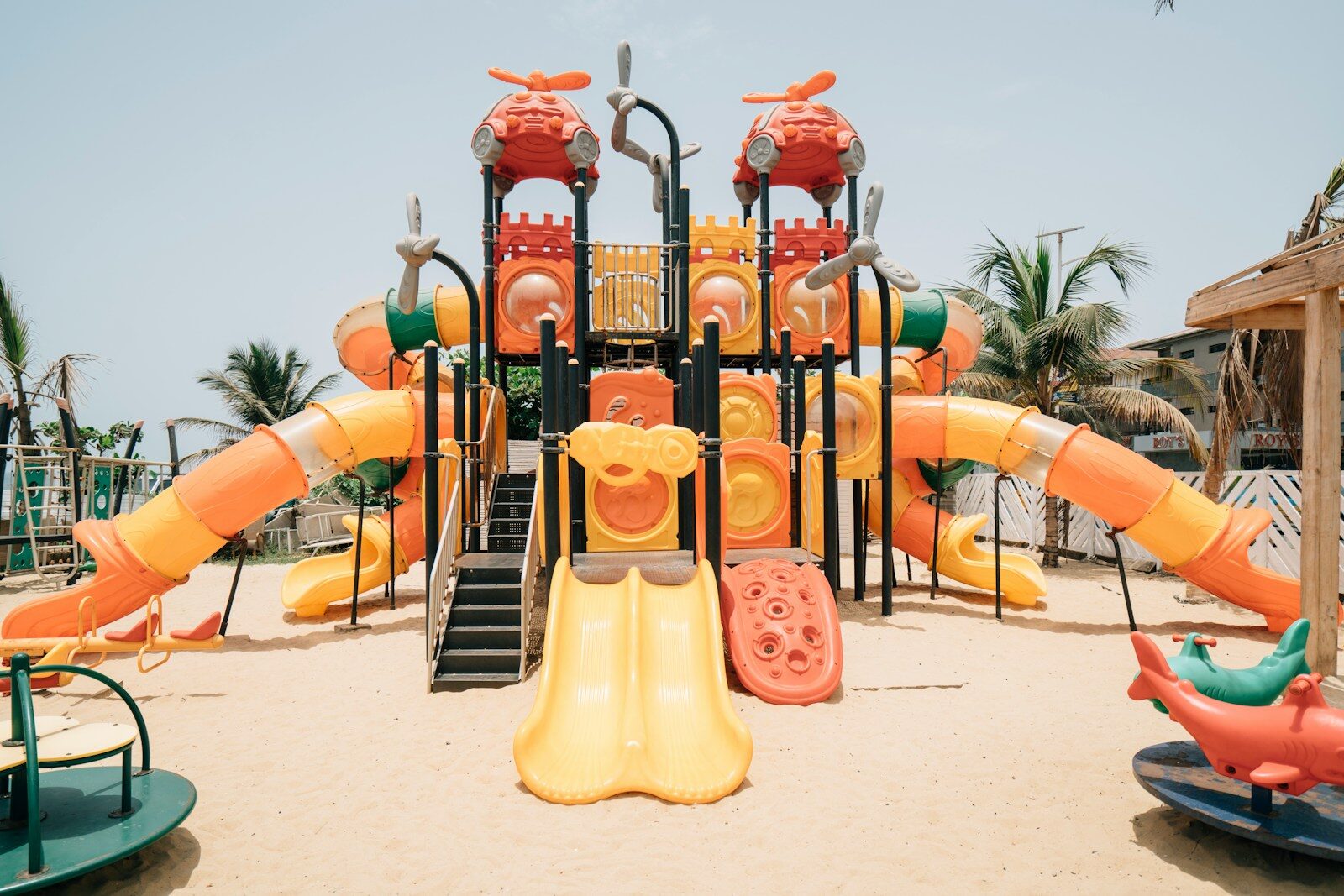
Playground lighting extends the usable hours of a play area, but it must be designed carefully. A playground that is too dark can feel unsafe, discourage use, and hide hazards. A playground that is too bright, poorly positioned, or badly aimed can create glare, light spill, visual discomfort, and disturbance for nearby residents.
Good playground lighting supports safe movement, supervision, security, and accessibility after dark. It should help users see equipment, pathways, steps, changes in level, surfacing edges, and other people clearly, without creating harsh shadows or blinding brightness.
Lighting is not simply about adding poles and fixtures. It is part of the overall safety, security, and user experience of the playground.
Safety and Visibility
The primary purpose of playground lighting is safety. Children, young people, and caregivers need to see where they are walking, sitting, playing, and waiting. Poor visibility increases the risk of trips, falls, collisions, and misjudged movements.
Important areas for lighting include:
- Equipment platforms, steps, ladders, and ramps
- Slide exits and swing zones
- Pathways between play areas
- Entry and exit points
- Seating and supervision areas
- Changes in level, edges, and drainage channels
- Accessible routes and tactile guidance areas
Lighting should be even enough to support safe movement, but it does not need to make the playground as bright as daytime. Excessive brightness can create glare and reduce visibility rather than improve it.
Security and Crime Prevention
Lighting can also support security. A well-lit playground is more visible from surrounding areas, which can discourage vandalism, antisocial behavior, and unsafe activity. It can also help caregivers and staff feel more confident using the space in the evening.
However, lighting alone does not prevent crime. It works best when combined with clear sightlines, active surroundings, appropriate fencing, maintenance, and community use. A playground that is well maintained and regularly used often feels safer than one that is isolated, neglected, or poorly lit.
Lighting should avoid creating dark corners, deep shadows, or hidden areas where problems can go unnoticed. At the same time, it should not flood nearby homes, streets, or natural areas with unnecessary light.
Light Levels and Uniformity
Different parts of a playground may need different light levels. Equipment zones, pathways, seating areas, and entry points should be considered separately.
Uniformity is important. If some areas are very bright and others are very dark, eyes must constantly adjust, which can reduce comfort and visibility. Sharp contrasts between lit and unlit areas can also hide hazards.
Lighting design should aim for consistent coverage across main play and circulation areas. It should avoid pools of bright light surrounded by darkness, uneven patches, or strong shadows beneath equipment. Careful fixture placement and aiming help create a more balanced visual environment.
Glare, Light Spill, and Neighborhood Impact
Glare occurs when light is too bright or poorly directed, making it difficult to see clearly. In a playground, glare can affect children, caregivers, and supervisors. It can also affect drivers or pedestrians nearby if light spills beyond the site boundary.
Good lighting design controls glare by using appropriate fixtures, shielding, mounting heights, and aiming angles. Fixtures should direct light where it is needed, not into users’ eyes or toward nearby properties.
Light spill is especially important near homes, hotels, schools, hospitals, wildlife areas, and natural environments. Excessive light at night can disturb residents, affect sleep, and impact nocturnal wildlife. Responsible lighting balances playground safety with respect for the surrounding environment.
Energy Efficiency and Smart Controls
Playground lighting should be energy efficient. LED fixtures are commonly used because they offer good light output, long life, and lower energy consumption than older lighting technologies.
Smart controls can improve efficiency further. Motion sensors, timers, dimming systems, and dusk-to-dawn controls allow lighting to respond to actual use and natural light levels. In low-use periods, lights can dim rather than remain at full brightness. In busier periods, they can increase to support safety and security.
Controls should be designed carefully. Lighting that switches off suddenly in an active playground can create confusion or risk. Dimming is often a better approach than abrupt changes. Emergency or safety lighting requirements should also be considered where applicable.
Accessibility and Visual Comfort
Lighting supports accessibility by helping people with different needs move through the playground safely. Clear lighting helps users identify steps, ramps, handrails, pathway edges, and equipment boundaries.
For people with visual impairments, consistent lighting and reduced glare are especially important. Strong shadows, flickering lights, and uneven brightness can make navigation more difficult. Lighting should support wayfinding without creating visual confusion.
Lighting design should also consider children and adults with sensory sensitivities. Very bright, flickering, or harsh lighting can be uncomfortable. A calm, even lighting environment usually supports better use than an overly intense one.
Installation and Electrical Safety
Playground lighting installation requires qualified electrical contractors. Fixtures, cables, controllers, and power supplies must meet applicable electrical safety standards and local regulations.
Cables should be installed safely and protected from damage. In playgrounds, this means considering children’s activity, digging, vehicle access, landscaping, surfacing work, and future maintenance. Exposed or poorly protected wiring creates serious safety risks.
Fixtures should be robust enough for public environments. They may need to resist impact, weather, vandalism, moisture, dust, and temperature changes. The level of protection required depends on location, climate, and mounting position.
Maintenance and Long-Term Performance
Lighting systems need ongoing maintenance. Lamps lose output over time, fixtures can become dirty, sensors may need adjustment, and electrical connections can deteriorate.
Routine maintenance should include checking light levels, cleaning fixtures, replacing failed lamps or drivers, inspecting poles and fixings, testing controls, and confirming that lighting has not shifted out of position. Vegetation growth can also block light over time, so landscape maintenance should be considered.
A lighting maintenance plan helps operators respond before problems affect safety. Replacing failed fixtures promptly prevents dark areas from developing. Recording maintenance activity also supports accountability and long-term planning.
Creating a Safe Evening Play Environment
Good playground lighting makes outdoor play safer, more secure, and more accessible after dark. It should be designed around people, not just around brightness levels.
The best results come from balancing visibility, comfort, energy efficiency, security, accessibility, and environmental responsibility. When lighting is planned as part of the wider playground design, it supports a space that remains welcoming, safe, and useful well beyond daylight hours.