
In the B2B procurement of heavy amusement machinery, price is often the most contentious point of negotiation. However, simply asking for a “better price” is rarely effective. To truly optimize your procurement budget, you must understand the anatomy of the amusement ride factory direct price and employ strategic negotiation tactics.
This guide pulls back the curtain on manufacturing costs and provides a playbook for securing the best value without compromising on safety or quality.
1. Deconstructing the Price: Where Does Your Money Go?
When a manufacturer quotes you a price, it is not an arbitrary number. It is a reflection of their internal cost structure. Understanding this breakdown empowers you to identify where savings are possible and where cutting costs would be dangerous.
A. Raw Materials (40% – 50%)
This is the largest cost component. It includes the steel for the structure, fiberglass for the decorative bodies, and the electronic components (motors, PLCs, sensors).
- Market Fluctuation: Steel and copper prices fluctuate globally. A smart buyer tracks these commodity markets. If steel prices drop, you have leverage to negotiate a lower price.
- Quality Variance: This is where “cheap” rides become dangerous. Unscrupulous manufacturers may use thinner steel pipes or lower-grade fiberglass to cut costs. Always demand material certificates (e.g., Q235B steel) to ensure the price reflects genuine material quality.
B. Labor and Manufacturing (20% – 30%)
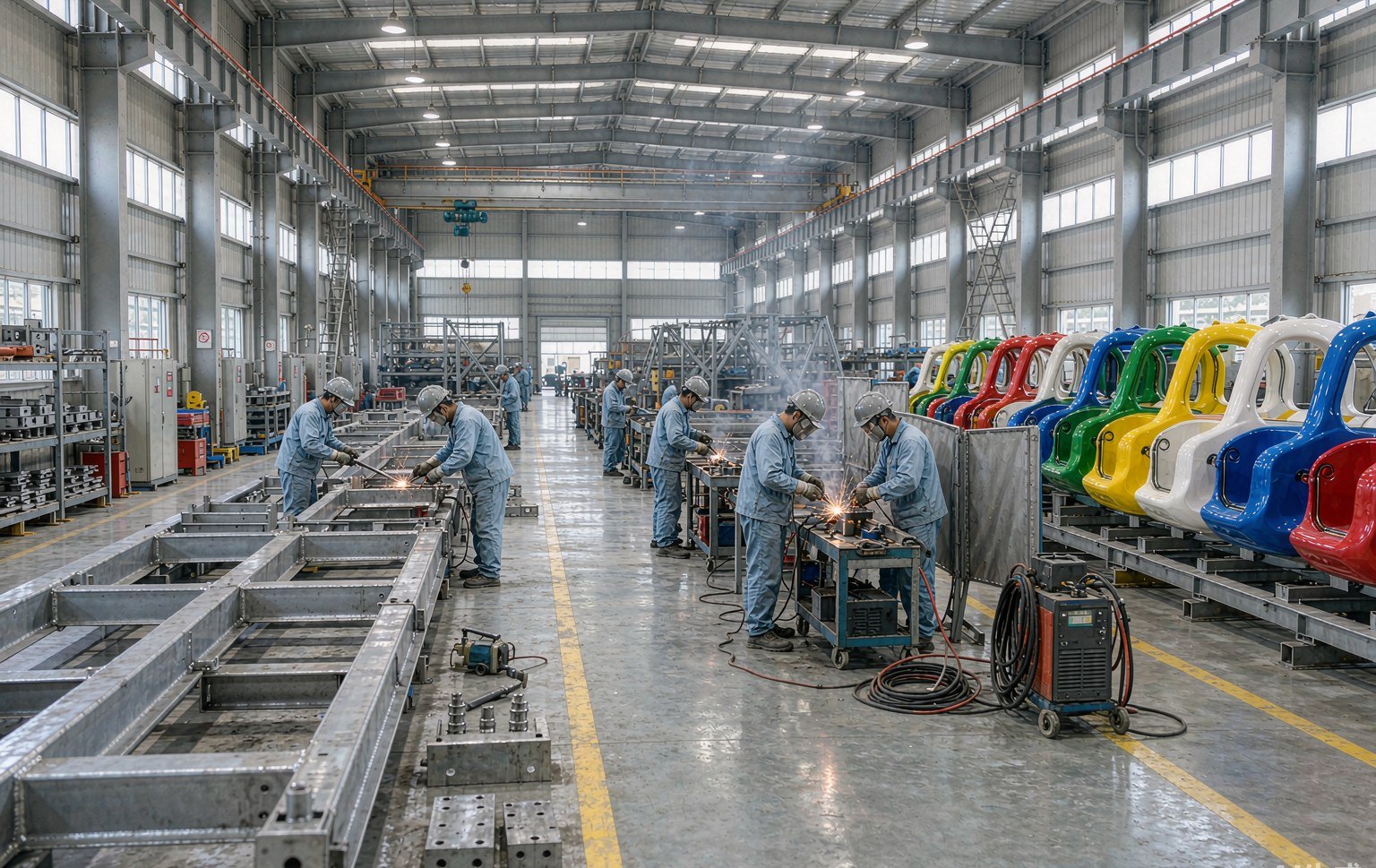
This covers the wages of welders, painters, assemblers, and engineers.
- Craftsmanship: High-quality welding and hand-painted details require skilled labor, which costs more. A significantly lower quote often indicates the use of unskilled labor, leading to poor finish and structural weaknesses.
C. Overhead and Profit (10% – 20%)
This includes the factory’s operational costs (rent, electricity, administration) and their net profit margin.
- The “Red Line”: Most reputable factories operate on a 10% to 15% net profit margin. If a supplier offers a price that implies a margin below 5%, they are likely operating at a loss or planning to cut corners on quality control.
D. Logistics and Packaging (5% – 10%)
Export-grade packaging (wooden crates, bubble wrap, stretch film) and inland transportation to the port are significant costs.
- Optimization: You can negotiate this by optimizing the loading plan. A well-designed ride can be disassembled to fit more units into a single container, drastically reducing the per-unit shipping cost.
2. Strategic Negotiation Tactics
Once you understand the cost structure, you can move from “price haggling” to strategic negotiation. Here are proven tactics to use when discussing the amusement ride factory direct price.
A. The “Should-Cost” Analysis
Do not go into a negotiation blind. Before talking to the supplier, estimate the cost of the ride yourself.
- Calculate the Steel Weight: Estimate the weight of the steel structure and multiply it by the current market price of steel.
- Check Component Prices: Look up the cost of standard motors (e.g., Siemens or Chinese brands) and PLCs.
- The Leverage: When the supplier quotes you, you can say, “Based on current steel prices and the motor model you specified, my calculation suggests the cost should be closer to X. Can you explain the discrepancy?” This shows you are a serious, informed buyer and forces them to justify their margin.
B. Volume and Bundle Consolidation
Manufacturers love efficiency. If you are buying multiple rides, use this to your advantage.
- The “Package Deal”: Instead of negotiating the price of a carousel and a bumper car separately, bundle them. “I am willing to sign a contract for both rides today if you can offer a 10% discount on the total package.”
- Standardization: If you are buying multiple units of the same ride (e.g., 5 bumper cars), remind them that the mold and setup costs are already covered. The marginal cost for the 2nd, 3rd, and 4th unit is lower, so the unit price should reflect that.
C. Payment Terms as a Negotiation Chip
Cash flow is king for manufacturers. You can use your payment terms to secure a lower price.
- Deposit Leverage: Standard terms are often 30% deposit and 70% before shipment. If you have strong liquidity, offering a 50% deposit can sometimes secure a 2-3% discount on the total price.
- Speed of Payment: “If I can release the final payment within 3 days of the Bill of Lading date, what kind of discount can you offer?”
D. The “Silence” and “Walk Away” Tactics
- Strategic Silence: After they give you a price, do not respond immediately. Let the silence hang for a few seconds. Often, the salesperson will feel the pressure and offer a concession or a “manager’s special discount” to fill the silence.
- The BATNA (Best Alternative to a Negotiated Agreement): Always have a backup supplier. Let the current supplier know (subtly) that you are comparing their quote with two other factories. “I have a quote from Factory B that is 15% lower for similar specs. I prefer your quality, but I need you to be competitive.”
3. Avoiding the “Low Price Trap”
In the amusement industry, the lowest price is rarely the best value. It is often a “loss leader” or a trap.
The Hidden Costs of Cheap Rides:
- Safety Failures: Cheap rides use inferior brakes and sensors. The cost of a single accident far outweighs the initial savings.
- Maintenance Nightmares: Low-quality paint chips in months; cheap fiberglass cracks. You will spend your first year repairing the ride rather than operating it.
- Resale Value: A ride from a reputable manufacturer with a transparent price structure holds its value. A “no-name” cheap ride is almost worthless on the secondary market.
The “Total Cost of Ownership” (TCO) Argument:
When negotiating, shift the focus from “Purchase Price” to “Total Cost of Ownership.” A slightly more expensive ride that is energy-efficient, requires less maintenance, and lasts 5 years longer is actually cheaper in the long run.
4. Conclusion
Mastering the amusement ride factory direct price is about more than just getting a discount. It is about understanding the value chain, ensuring material integrity, and building a partnership based on transparency. By deconstructing the costs and using smart negotiation tactics, you can secure a fair price that ensures your park is safe, durable, and profitable for years to come.