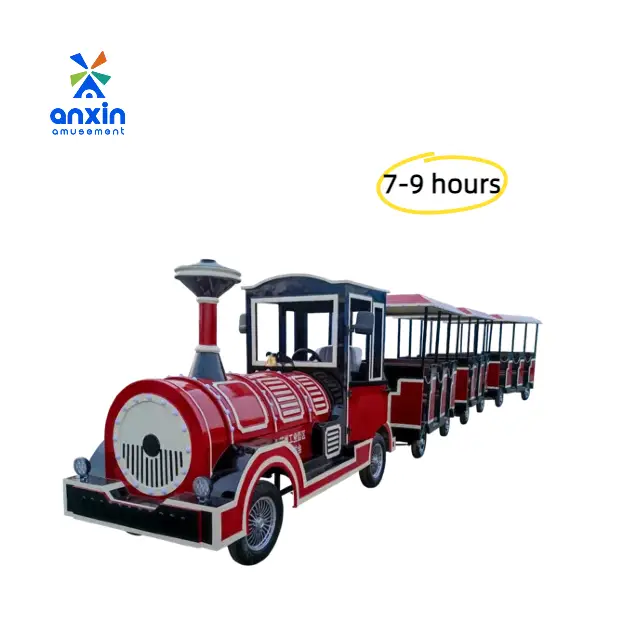
For amusement parks, shopping centers, resorts, tourist attractions, family entertainment venues, and event operators, a royal trackless train for sale can be an attractive addition. Trackless trains are popular because they combine visual charm, guest mobility, and a gentle ride experience that appeals to families, children, tourists, and casual visitors.
However, finding a royal trackless train for sale is only the beginning. The more important question is whether the train matches the venue’s layout, audience, safety expectations, operating model, theming, and long-term financial goals. A visually impressive train may not suit every location, and a lower purchase price should never override safety, build quality, compliance, and after-sales support.
This article explores what buyers should consider when evaluating a royal trackless train for sale, from ride design and passenger capacity to power systems, safety features, maintenance, installation, theming, and total cost of ownership.
Why Trackless Trains Are Popular in Modern Venues
Trackless trains have become a common sight in parks, resorts, shopping centers, waterfront areas, zoos, museums, festivals, and tourist destinations. Unlike traditional fixed-track trains, trackless trains do not require rails embedded in the ground. This makes them more flexible for venues that want to add a ride experience without major construction.
A royal trackless train for sale often appeals to operators because it can create a strong visual identity. The royal design style usually suggests elegance, classic charm, and a premium guest experience. This makes it suitable for venues that want to create a welcoming atmosphere rather than an aggressive thrill environment.
Trackless trains can also serve practical purposes:
- Moving guests between attractions, parking areas, and entry points
- Creating a scenic tour route through a large venue
- Adding family-friendly entertainment to a mixed-use space
- Encouraging longer visits by offering a relaxing ride experience
- Supporting themed environments such as royal, vintage, European, or fantasy settings
- Providing a recognizable attraction that guests may photograph and share
- Helping venues appeal to children, parents, seniors, and tourists
For many operators, a trackless train is not just a ride. It is a mobile attraction that improves guest flow, adds atmosphere, and creates a memorable experience.
Understanding the Royal Design Style
The term “royal” in a royal trackless train for sale usually refers to a design language rather than a single technical specification. Royal-style trains often feature decorative elements, elegant color schemes, ornamental details, and a classic or heritage-inspired appearance.
Common design characteristics may include:
- Gold, red, blue, white, or cream color combinations
- Decorative trim and ornamental detailing
- Classic locomotive-style front sections
- Elegant carriage shapes
- Themed lighting
- Vintage or fantasy-inspired styling
- Premium-looking seating areas
- Eye-catching visual presence
This style works well in resorts, heritage-themed parks, royal or palace-inspired attractions, shopping promenades, cultural venues, and tourist areas where atmosphere matters.
However, buyers should remember that appearance is only one part of the decision. A royal trackless train for sale may look impressive in photos, but its real value depends on safety, capacity, reliability, maintenance needs, power efficiency, and supplier support.
Where a Royal Trackless Train Works Best
Not every venue needs the same type of trackless train. The right choice depends on space, guest flow, audience, operating hours, theming, and whether the train will run indoors, outdoors, or in mixed environments.
Amusement Parks and Family Parks
In amusement parks, a royal trackless train can serve as a gentle family attraction. It works well in areas designed for children, families, and casual visitors who may not want intense thrill rides.
Shopping Centers and Retail Destinations
Shopping centers often use trackless trains to create entertainment value and encourage longer visits. A royal-style train can add charm to retail promenades, outdoor plazas, and family-oriented shopping areas.
Resorts and Hotels
Resorts and hotels may use trackless trains to move guests between facilities while creating a premium experience. A royal design can support luxury, heritage, or themed resort environments.
Tourist Attractions and Cultural Sites
Tourist attractions benefit from rides that combine sightseeing with entertainment. A royal trackless train for sale can become part of the visitor experience, especially in historical, cultural, or scenic locations.
Zoos, Aquariums, and Museums
Zoos, aquariums, and museums often have large layouts. A trackless train can help guests move between exhibits while adding an enjoyable ride experience for children and families.
Festivals, Fairs, and Seasonal Events
For temporary or seasonal events, a trackless train can create strong visual appeal without permanent infrastructure. Mobility, setup time, and transportability become especially important in these settings.
Choosing a royal trackless train for sale that matches the venue helps reduce costly mistakes and improves the overall guest experience.
Capacity, Size, and Passenger Flow
Capacity is one of the most practical factors when evaluating a royal trackless train for sale. A train that is too small may create long waiting times during busy periods, while a train that is too large may be difficult to operate in tight spaces.
Buyers should consider:
- How many passengers each carriage can hold
- How many carriages are included
- The total length of the train
- The turning radius and maneuverability
- Whether the train fits through gates, pathways, and loading areas
- Whether the route has narrow sections or steep slopes
- Whether boarding and exit points are safe and visible
- Whether staff can supervise passengers effectively
- Whether the train supports continuous operation during peak hours
Capacity affects more than guest numbers. It also affects queue management, staffing, revenue potential, and guest satisfaction. A well-sized train can move guests efficiently while still feeling like a special attraction.
For venues with high foot traffic, throughput matters. A royal trackless train for sale should be evaluated not only by how it looks, but also by how many guests it can serve safely and comfortably during peak operating times.
Power Options: Electric, Battery, and Diesel
Power type is an important technical consideration. The best choice depends on the venue’s operating environment, noise expectations, maintenance capacity, route length, and local regulations.
Electric and Battery-Powered Trains
Electric or battery-powered trackless trains are often preferred for indoor venues, shopping centers, resorts, parks, and tourist areas where noise, exhaust, and air quality matter. They can offer quieter operation and may be more suitable for family-friendly environments.
Buyers should check:
- Battery life and operating duration
- Charging time
- Battery replacement costs
- Motor performance
- Range per charge
- Performance on slopes
- Suitability for indoor or outdoor use
Diesel-Powered Trains
Diesel-powered trackless trains may be suitable for large outdoor venues, long routes, or locations where charging infrastructure is limited. However, they may produce more noise, exhaust, and maintenance requirements.
Venues should confirm whether diesel-powered equipment is appropriate for their location, especially in indoor areas, crowded public spaces, or environmentally sensitive sites.
The right power option depends on the route, operating schedule, guest expectations, and long-term operating costs.
Safety and Compliance Should Shape the Purchase
Safety is the most important factor when purchasing any amusement ride, including a royal trackless train for sale. Even though trackless trains are generally gentler than thrill rides, they still carry passengers, move through public areas, and require responsible operation.
Key safety considerations include:
- Braking system performance
- Speed control
- Emergency stop functions
- Driver visibility
- Passenger seating safety
- Entry and exit safety
- Child supervision requirements
- Route safety and surface conditions
- Weather and slope limitations
- Electrical system safety
- Battery or fuel system safety
- Operator training
- Clear passenger instructions
- Routine inspection requirements
Compliance requirements vary by country, state, and local jurisdiction. Buyers should confirm which standards apply to their location and whether the manufacturer or supplier can provide the necessary documentation.
A responsible supplier should be transparent about safety design, testing, inspection requirements, and maintenance procedures. If safety documentation is unclear or incomplete, that should be treated as a serious concern.
Evaluating Build Quality and Durability
Build quality affects safety, appearance, reliability, and long-term operating costs. A royal trackless train for sale may look attractive in marketing images, but its real value depends on materials, construction, mechanical components, electrical systems, and finishing quality.
When evaluating build quality, buyers should consider:
- The strength of the chassis and frame
- The durability of carriage connections
- The quality of welding and structural joints
- The reliability of the steering system
- The performance of brakes and motors
- The quality of seating and passenger restraints
- The durability of paint, trim, and decorative elements
- Resistance to weather, corrosion, and UV exposure
- The quality of lighting and electrical wiring
- The clarity of technical documentation
Outdoor trains need stronger weather resistance. Coastal venues may require better corrosion protection. Indoor trains may need tighter turning ability, lower noise levels, and cleaner power systems.
Appearance also matters. A royal-style train should look polished and well maintained. Faded paint, loose trim, uneven lighting, or worn seating can reduce the premium feel that makes this style attractive.
Theming, Lighting, and Guest Experience
A royal trackless train for sale often appeals to buyers because of its visual identity. Theming helps the attraction feel connected to the venue and creates a stronger emotional experience for guests.
Effective theming can include:
- Custom color schemes
- Decorative trim and ornamental details
- Themed lighting
- Music or sound effects
- Branded signage
- Carriage naming
- Seasonal decoration options
- Photo-friendly design elements
- Matching station or boarding area design
For royal-style trains, theming often focuses on elegance, heritage, fantasy, or classic amusement appeal. A well-themed train can become a recognizable part of the venue’s identity.
Lighting is especially important for evening operation. Decorative lighting can improve visibility, create atmosphere, and make the train more attractive after dark. However, lighting should be designed safely, with durable wiring and weather-resistant components where needed.
Route Planning and Site Requirements
A trackless train needs a suitable route. Even though it does not require fixed rails, it still needs safe paths, adequate space, proper surfaces, and controlled operating conditions.
Buyers should evaluate:
- Route length and layout
- Path width and turning space
- Surface condition and slope
- Pedestrian crossing points
- Queue and boarding areas
- Loading and unloading safety
- Proximity to vehicles or service areas
- Weather exposure
- Noise impact on nearby areas
- Accessibility for guests with mobility needs
- Emergency access and stopping points
A poorly planned route can reduce safety and guest comfort. Narrow paths, steep slopes, uneven surfaces, heavy pedestrian traffic, and unclear boarding areas can all create operational challenges.
For venues with complex layouts, it is worth planning the route before confirming the purchase. A royal trackless train for sale should fit the venue, not force the venue to adapt to an unsuitable ride.
Installation, Testing, and Operator Training
Installation is more than delivery. A royal trackless train for sale should be properly assembled, tested, and prepared before it carries passengers.
A strong setup process should include:
- Site inspection
- Route safety review
- Structural and mechanical checks
- Battery, motor, or fuel system inspection
- Brake and emergency stop testing
- Steering and control system verification
- Lighting and electrical system checks
- Passenger seating and safety review
- Operator training
- Maintenance staff training
- Test runs before public operation
- Final safety inspection
Operator training is especially important. Drivers and attendants should understand normal operation, speed control, passenger boarding rules, child safety, emergency procedures, weather limitations, and incident reporting.
Poor training can reduce safety and service quality. A well-prepared team helps guests feel confident, especially families with young children.
Maintenance and Long-Term Reliability
Maintenance determines whether a royal trackless train for sale remains safe, attractive, and profitable over time. A strong maintenance program reduces downtime, extends equipment life, and protects guest trust.
A practical maintenance plan should include:
Daily Checks
- Visual inspection of structure, carriages, and connections
- Brake and emergency stop verification
- Tire and wheel inspection
- Battery or fuel level check
- Lighting and sound system check
- Cleaning of passenger areas
- Operator safety briefing
- Route condition review
Weekly Checks
- Mechanical component inspection
- Electrical connection review
- Battery health check
- Steering and control system inspection
- Documentation of findings
Monthly and Annual Checks
- Detailed mechanical inspection
- Professional safety audit
- Replacement of worn components
- Battery or power system evaluation
- Operator retraining
- Compliance record review
Maintenance logs should be detailed and consistent. If the same component fails repeatedly, it may indicate a design issue, installation problem, or operational mistake that needs correction.
Appearance also matters. A royal-style train should look clean, polished, and well maintained. Guests notice faded paint, loose decorations, dirty seating, or unusual sounds, even if the ride is mechanically functional.
After-Sales Support and Spare Parts
One of the most important differences between suppliers is the quality of after-sales support. A reliable manufacturer should provide more than a completed sale. They should also support the venue throughout the life of the attraction.
Important after-sales factors include:
- Availability of spare parts
- Technical documentation
- Remote troubleshooting support
- On-site service when needed
- Maintenance training
- Warranty terms
- Service response time
- Battery or motor replacement options
- Long-term parts availability
- Clear communication channels
If spare parts are difficult to source, even a short failure can become a long shutdown. For venues that depend on weekends, holidays, school breaks, or seasonal events, downtime can be especially costly.
Before making a decision, buyers should ask specific questions about service commitments, not just product appearance or purchase price.
Budgeting Beyond the Purchase Price
The purchase price is only one part of the total investment. A realistic budget should include every cost required to operate and maintain the attraction over time.
Important cost factors include:
- Train purchase price
- Shipping and import logistics
- Route preparation
- Charging or fuel infrastructure
- Theming and lighting upgrades
- Staff training
- Insurance and compliance documentation
- Spare parts inventory
- Routine maintenance
- Battery replacement or power system costs
- Cleaning and daily operation
- Future upgrades or retheming
A lower upfront price may look attractive, but it can become more expensive if spare parts are difficult to source, maintenance requirements are high, or the supplier provides limited technical support.
Smart buyers evaluate total cost of ownership, not just the initial quotation.
Common Mistakes to Avoid
Avoiding common mistakes can save time, money, and operational stress.
Choosing Only by Appearance
A royal trackless train for sale may look impressive, but appearance alone does not guarantee safety, reliability, or suitability for the venue.
Ignoring Route Conditions
An attractive train may not work well on narrow paths, steep slopes, uneven surfaces, or routes with heavy pedestrian traffic.
Underestimating Maintenance
Trackless trains still require regular inspection, cleaning, battery or fuel management, and mechanical checks. Ignoring maintenance can increase costs and reduce safety.
Overlooking Operator Training
Drivers and attendants should understand safety rules, emergency procedures, passenger supervision, and service standards.
Forgetting the Guest Experience
Boarding comfort, seating space, visibility, noise level, and queue flow all affect how guests perceive the attraction.
Choosing a Supplier Without After-Sales Support
Reliable spare parts, technical support, and maintenance documentation are essential. Without them, small problems can become long shutdowns.
Questions to Ask Suppliers
Before making a decision, buyers should ask clear and specific questions. The answers help reveal whether a supplier is truly prepared to support the project.
Useful questions include:
- What capacity does the train support?
- What power system does it use?
- What is the battery life or operating range?
- What is the maximum slope the train can handle?
- Can the train be used indoors, outdoors, or both?
- What safety documentation is available?
- What training is provided for operators?
- Are spare parts available locally or internationally?
- What is the recommended maintenance schedule?
- What warranty terms are included?
- Can the train be customized for theming, color, or branding?
- How long does delivery and setup take?
These questions help move the conversation beyond marketing images and into practical project planning.
Trends Shaping the Trackless Train Market
The amusement and hospitality industries are placing more value on guest experience, visual identity, and flexible attractions. Trackless trains fit well into this trend because they can add movement, atmosphere, and family appeal without permanent track infrastructure.
Royal and heritage-style designs remain popular because they create a classic, elegant, and photogenic experience. Venues are also paying more attention to lighting, theming, and branded design, especially in resorts, shopping destinations, and tourist attractions.
Electric and battery-powered options are becoming more common, especially in venues where noise, emissions, and guest comfort matter. At the same time, operators are looking for equipment that is easier to maintain, more energy-efficient, and supported by reliable spare parts.
Technology is also influencing ride operation. Improved control systems, better battery management, and clearer safety monitoring can help operators reduce downtime and improve the guest experience.
Building a Strong Partnership, Not Just a Purchase
The best decisions involving a royal trackless train for sale are not made as one-time purchases. They are made as long-term partnerships.
A strong partnership means the manufacturer or supplier understands the venue’s goals, audience, site conditions, safety requirements, and operational reality. It also means the buyer communicates clearly, plans realistically, and supports proper maintenance and training.
When both sides work together, the result is more than a finished attraction. It is a safer, smoother, more memorable guest experience — and a stronger foundation for the venue’s long-term success.
For parks, resorts, shopping centers, tourist attractions, family entertainment venues, and event operators, the right royal trackless train does not simply add another ride to a site. It helps turn a space into a destination where guests feel welcomed, entertained, and eager to return.