
A theme park ride is far more than a collection of steel tracks, motors, and seats—it is a carefully choreographed experience that blends engineering precision, creative storytelling, and sensory immersion to create moments of joy, fear, and wonder. From the gentle sway of a carousel to the heart-stopping drop of a hypercoaster, every theme park ride is the product of years of research, design, and testing. Understanding what goes into creating these attractions reveals just how remarkable they truly are.
The modern theme park ride industry is dominated by a handful of specialized manufacturers, each with its own area of expertise. Vekoma Rides Manufacturing, headquartered in the Netherlands, holds approximately 29% of the global market share in custom roller coaster installations and is known for its partnerships with Disney and Universal Studios. Their multi-launch system used in Shanghai Disneyland’s TRON Lightcycle Power Run exemplifies how cutting-edge magnetic propulsion technology can be seamlessly integrated with narrative-driven theming. Bolliger & Mabillard (B&M), based in Switzerland, controls 23% of the high-thrill segment and is renowned for producing some of the smoothest inverted and hypercoasters in the world. Cedar Point’s Top Thrill 2, standing at 170 meters tall with a 120 mph hydraulic launch, showcases B&M’s ability to push the boundaries of what is physically possible.
Intamin Amusement Rides, founded in Liechtenstein in 1967, accounts for 18% of installations focused on custom hydraulic and LSM (linear synchronous motor) launch systems. Universal Orlando’s VelociCoaster, designed by Intamin, combines free-fall drops with rapid inversions to create a multi-dimensional experience that has been praised as one of the most intense coasters in the world. Other notable manufacturers include Mack Rides, which holds 15% of the market and is known for water-coaster hybrids and family-friendly designs, and S&S Sansei Technologies, which leads in compressed-air launch systems with a 12% global market share.
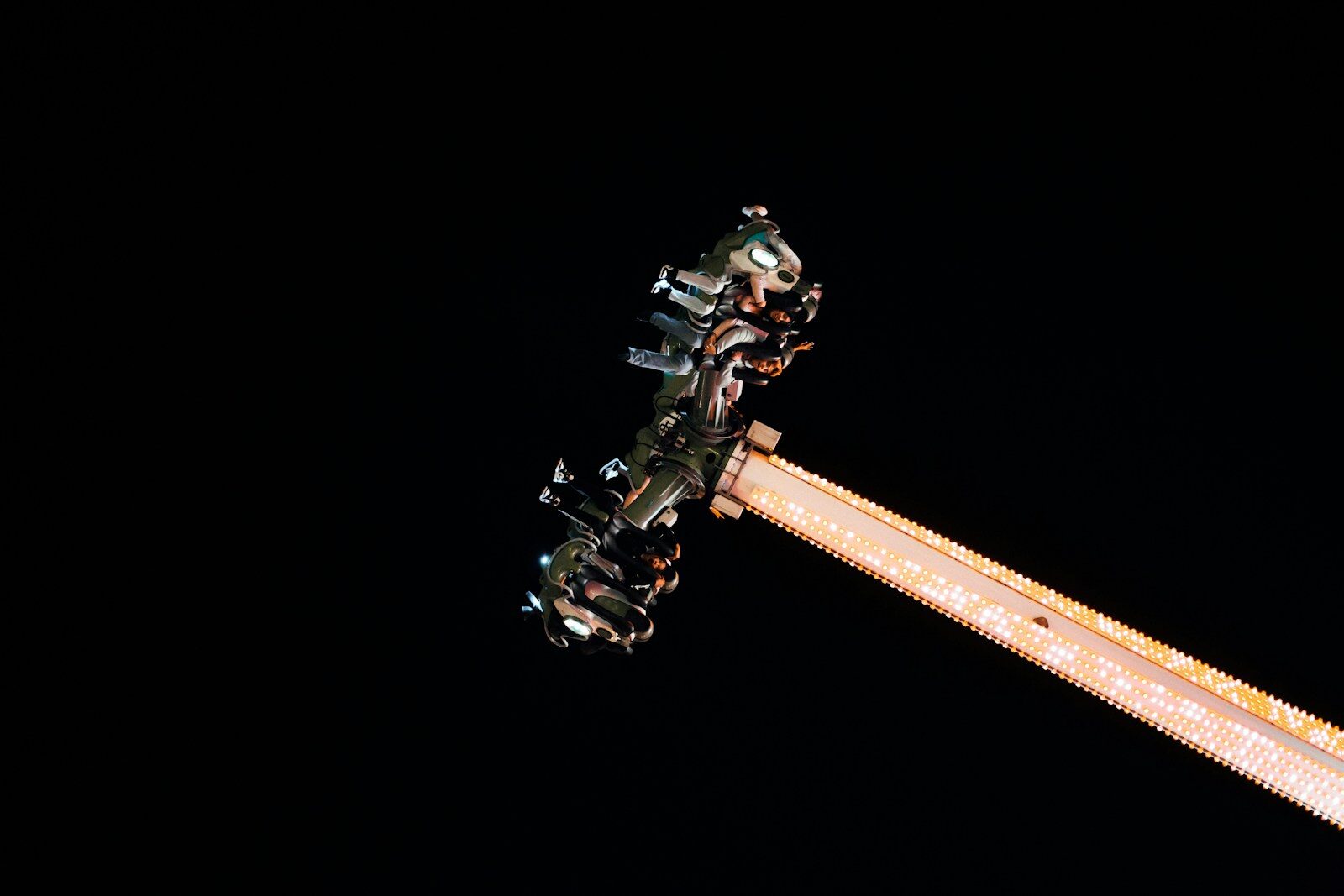
Beyond roller coasters, the theme park ride landscape includes a diverse array of attraction types. Flat rides such as the Tilt-A-Whirl, Scrambler, and Gyro Swing provide spinning, centrifugal thrills that have remained popular for decades. The Tilt-A-Whirl, invented by Herbert Sellner in 1926, uses seven cars attached to a rotating platform that raises and lowers, creating a chaotic spinning motion driven by centrifugal force and gravity. Sellner Manufacturing has built more than 1,000 Tilt-A-Whirls since its inception, and the ride remains a carnival staple worldwide.
Water-based theme park rides have also evolved significantly. Attractions such as log flumes, river rapids, and water coasters combine the thrill of speed with the refreshing splash of water, making them particularly popular in warm climates. Mack Rides has been a pioneer in this category, creating hybrid attractions that merge roller coaster elements with water-based effects. Europa-Park’s Icon coaster in Germany, which features five inversions followed by a dramatic water splashdown, is a prime example of this innovative approach.
The integration of technology has transformed the theme park ride experience in recent years. Virtual reality (VR) headsets can be added to existing rides to create entirely new narrative experiences, while augmented reality (AR) overlays digital elements onto the physical environment. Dark rides, which take place in enclosed spaces with controlled lighting and special effects, have become increasingly sophisticated, using animatronics, projection mapping, and interactive elements to immerse riders in fully realized story worlds. Disney’s Star Wars: Rise of the Resistance and Universal’s Harry Potter attractions are prime examples of how narrative and technology can converge to create unforgettable experiences.
Safety remains the paramount concern in theme park ride design. Every ride undergoes rigorous testing, including computer simulations, physical stress tests, and thousands of trial runs before opening to the public. Manufacturers adhere to international safety standards such as EN 13814, and parks conduct daily inspections and maintenance to ensure that every component functions correctly. Height restrictions, restraint systems, and emergency stop mechanisms are all designed with rider safety as the top priority.
As the industry looks to the future, the next generation of theme park rides promises even greater levels of immersion, personalization, and interactivity. From AI-driven experiences that adapt to each rider’s preferences to sustainable ride systems that minimize energy consumption, the theme park ride continues to evolve as one of the most exciting intersections of art, science, and entertainment.




