Sourcing trampoline park equipment for sale is very different from buying a single ride: you are purchasing an engineered system of courts, foam pits, and challenge zones that must work together as one safe, profitable floor plan. Whether you are opening your first 600 m² family park or expanding a 2,000 m² franchise location, this guide explains what to buy, what it costs, and how to turn square meters into revenue.

What Trampoline Park Equipment for Sale Actually Includes
When manufacturers quote trampoline park equipment for sale, the package is far more than mats and springs. A typical turnkey scope includes:
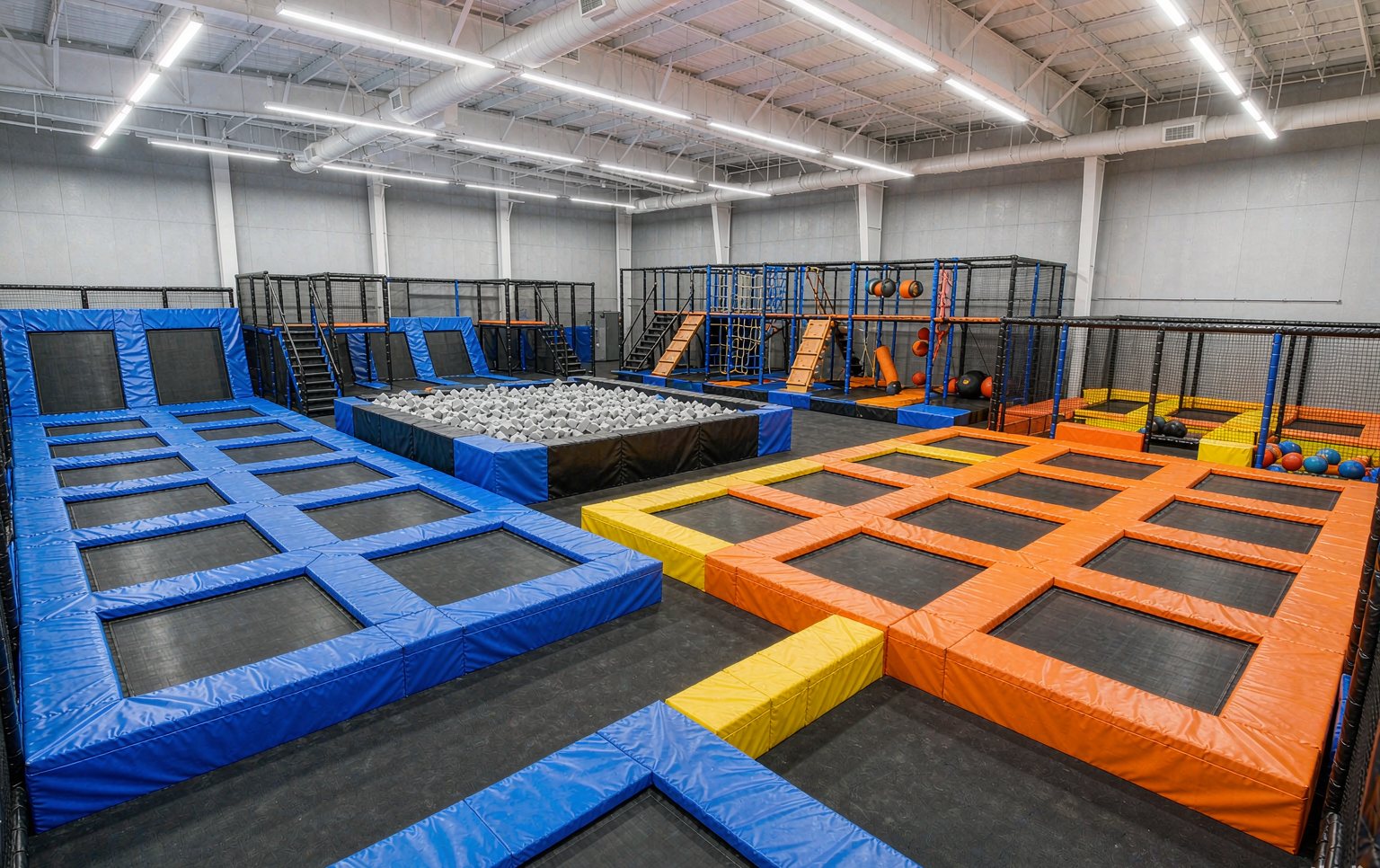
- Jump courts — interconnected trampoline beds in standard and angled configurations
- Performance zones — Olympic-style beds, tumble tracks, and jump towers with airbags
- Foam pits and airbags — landing systems with soft-play blocks or inflatable bags
- Dodgeball courts — trampoline courts enclosed with padded walls for ball games
- Ninja warrior courses — obstacle rigs, warped walls, cargo nets, and ropes
- Slam-dunk lanes — basketball hoops mounted above trampoline lanes
- Steel framing and padding — galvanized structures, PVC-coated pads, and safety netting
- Support systems — grip socks vending, queue fencing, and ADA-compliant entry ramps
Established amusement ride manufacturers such as Anxin Amusement supply the full package — steel, beds, mats, netting, and installation supervision — so buyers are not left stitching together components from five different vendors. That matters, because in ASTM F2970 audits, mixed-origin components are the most common source of failed inspections.
ASTM F2970 Compliance: What Buyers Must Verify
ASTM F2970 is the Standard Practice for Design, Manufacture, Installation, Operation, and Maintenance of Trampoline Courts, and it is the de facto benchmark for parks in the United States, the Middle East, and much of Asia. European buyers should also check EN 13219, the standard governing gymnastic trampolines. Before signing a purchase contract, ask every supplier for:
- Written confirmation that bed, frame, and padding designs are tested to ASTM F2970
- Material certificates for springs, galvanized steel, and flame-retardant padding
- Installation drawings stamped for your local building loads (wind, seismic, mezzanine live loads)
- Operator and maintenance manuals, plus daily inspection checklists
A supplier that cannot produce test reports for trampoline park equipment for sale should be removed from your shortlist regardless of price. The cost of one non-compliant court — in injuries, insurance claims, or forced closure — dwarfs any discount. It is also wise to review how prospective theme park equipment suppliers document quality: CE, EN 13814, and ISO 9001 certification on the factory floor is a strong signal of consistent welding and padding standards.
Performance Beds vs Recreation Grids
The single biggest technical decision in any trampoline park equipment for sale package is the choice between recreation-grade grids and performance beds. Recreation grids use smaller bed modules (typically 1.1 × 2 m) with softer bounces, designed so that a first-time jumper can control landings safely. Performance beds are larger, tighter-weave mats with stiffer response, letting trained athletes generate height for flips and wall tricks.
The practical rule: dedicate roughly 70–80% of jump square footage to recreation grids and 20–30% to performance beds. Recreation zones carry the volume — birthday parties, school groups, casual walk-ins — while performance zones attract the teenagers and social-media content that keep a park culturally relevant. If your market includes gymnastics clubs or cheer academies, consider adjoining the performance area to a separate entry lane so athletes can warm up without crossing recreational traffic. Note that ASTM F2970 expects enhanced supervision and, in many jurisdictions, signed waivers for performance areas, so budget for extra court monitors if you expand the athlete share.
Foam Pits, Dodgeball and Ninja Zones
Beyond the open courts, three zones drive most of the repeat visits, and each has distinct engineering requirements when you evaluate any park package.
Foam pits. A compliant foam pit pairs a trampoline bed with a padded pit filled with soft-play blocks, with pit depth and block density specified by ASTM F2970 based on jump height. Pit trampolines wear fastest in an entire park — expect bed and spring replacement every 12–24 months at high throughput — so buy pits with quick-change bed systems. Many new parks are replacing one of two pits with an inflatable airbag, which cuts maintenance dramatically and photographs better.
Dodgeball courts. Enclosed trampoline courts with padded walls turn open jumping into organized sport, which is why dodgeball consistently ranks among the highest dwell-time zones. Allocate 80–120 m² for a two-court setup, specify high-density wall pads, and choose netting that stops balls without blocking spectator sightlines for parents.
Ninja courses. Ninja warrior rigs — floating steps, monkey bars, warped walls, cargo climbs — share steel structure with the trampoline field but are not trampolines themselves, so verify the supplier designs the steel to both ASTM F2970 and the playground standards your insurer references. A well-built ninja zone costs less per square meter than courts and appeals strongly to the 8–15 age group.
Trampoline Park Equipment for Sale: Price Bands by Park Size
So what does trampoline park equipment for sale actually cost? Chinese factory-direct pricing in 2026 clusters into three tiers depending on floor area and zone mix. The figures below are indicative, ex-works, configuration dependent — they exclude shipping, mezzanine steel, HVAC, and flooring outside the jump areas.
| Park Size | Typical Zone Mix | Indicative Price (USD, ex-works) |
|---|---|---|
| 500–800 m² (small urban park) | Open courts, 1 foam pit, slam dunk, toddler area | $80,000 – $140,000 |
| 800–1,200 m² (standard FEC park) | Courts, dodgeball, foam pit, small ninja, party rooms | $140,000 – $220,000 |
| 1,200–2,000 m² (destination park) | Full zone mix incl. performance beds, airbag, large ninja, climber | $220,000 – $350,000 |
Three line items move these bands the most. First, zone count: each additional specialty zone (airbag tower, warped wall, interactive react-lighting) typically adds $8,000–$30,000. Second, bed quality: premium competition-grade beds cost 30–50% more than recreation grids but last longer under heavy use. Third, theming: custom color schemes, printed padding, and branded graphics usually add 5–10% to the equipment total. Buyers comparing quotes should also read our amusement park rides price breakdown to understand how freight and installation change ex-works numbers.
Capacity per m²: Layout and Revenue Mix
Capacity planning separates profitable parks from crowded money-losers. The industry planning benchmark is one jumper per 4–5 m² of trampoline surface, which means a 1,000 m² park with 55–60% jump coverage comfortably rotates 130–160 simultaneous jumpers per session. Design your layout so staff can see every zone from one control point, and keep the toddler area physically separated — both are ASTM F2970 supervision expectations and reduce incident risk.
Revenue mix matters as much as equipment. Mature parks typically derive:
- 50–60% from general admission and jump sessions
- 20–25% from birthday parties (the highest-margin line)
- 10–15% from memberships and fitness classes
- 5–10% from grip socks, café, and arcade
This mix is why zone selection in your trampoline park equipment for sale shortlist should favor party-friendly layouts: dodgeball courts and ninja zones near party rooms, café sightlines to the main courts, and a dedicated check-in flow. If you are still deciding whether a trampoline park or a broader family entertainment center fits your market, our amusement park planning and design service models attendance, capacity, and payback before you commit capital.
Payment Terms, Lead Times and Installation
Factory-direct trampoline park purchases follow the same commercial pattern as ride procurement. Standard terms are 30% deposit with order and 70% balance before shipment (T/T), with letter of credit available for larger destination-park orders. Production lead time runs 25–45 days for standard configurations and 35–60 days for custom layouts or heavily themed parks. Sea freight adds 20–40 days depending on destination, so a realistic order-to-opening timeline is 3.5–5 months.
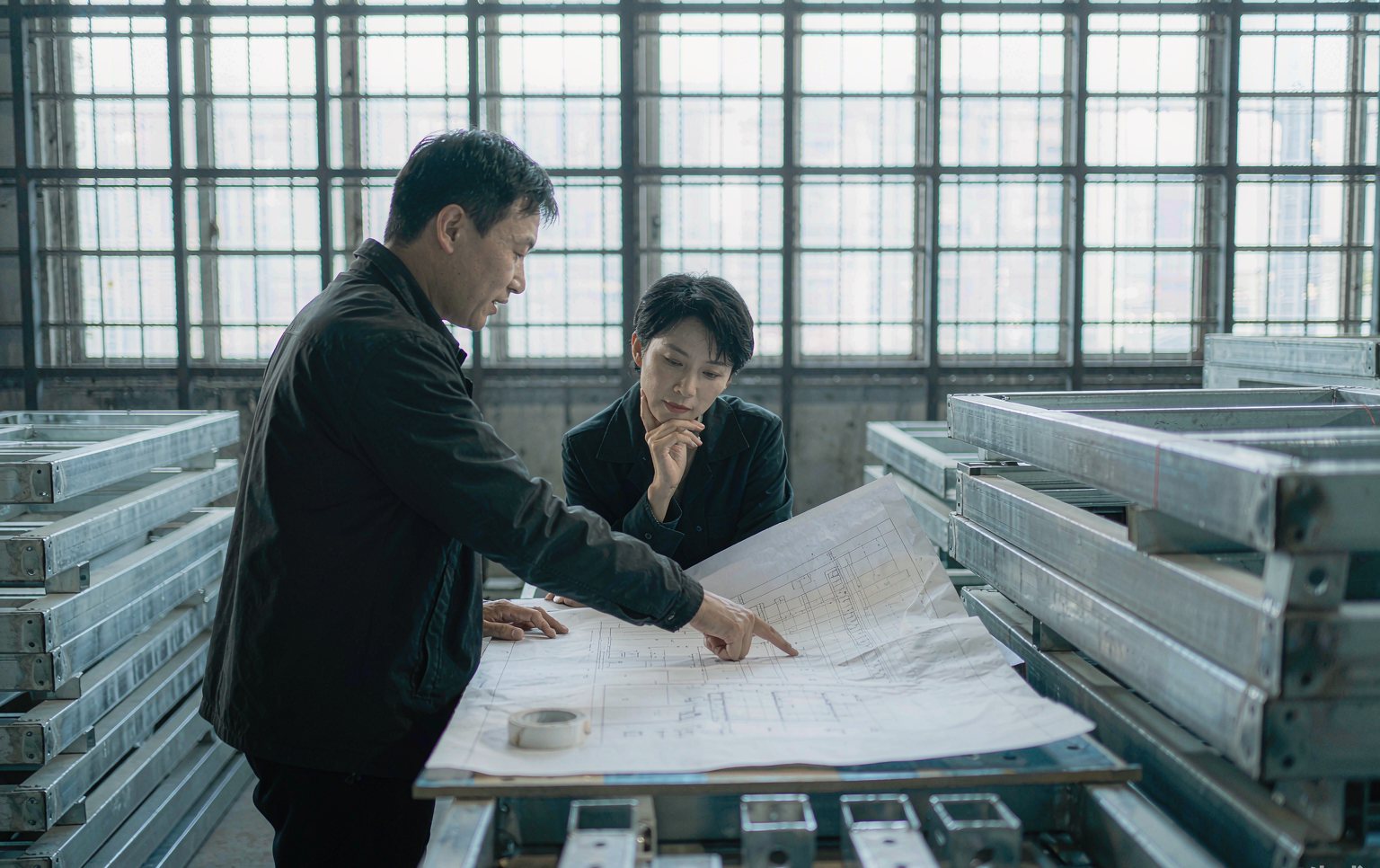
Installation is the step buyers most often underestimate. A 1,000 m² park takes a professional crew 15–25 days to assemble; supplier-supervised installation with your local labor is the cost-efficient model. Confirm before ordering that the supplier provides numbered component drawings, on-site supervision, operator training, and a warranty of at least two years with lifetime spare-parts support — Anxin Amusement includes all four as standard, backed by 15+ years of manufacturing and deliveries to 24+ countries. Also confirm who handles site preparation: floor flatness, electrical drops, and fire-suppression tie-ins should be finished before the container arrives to avoid idle crew days.
Buyer’s Checklist and How to Request a Quote
Before you send floor plans to any factory, complete this checklist so quotes are comparable and nothing gets discovered at installation:
- Measured floor plan — exact dimensions, column positions, ceiling height (minimum 5 m clear, 6.5 m+ for performance zones)
- Building approvals — landlord and fire authority sign-off for assembly occupancy
- Target zone mix — percentage split between courts, pits, dodgeball, ninja, and toddler areas
- Capacity target — expected peak jumpers per session, which drives court count
- Budget envelope — equipment, freight, installation, and 10% contingency separated
- Compliance documents requested — ASTM F2970 test reports, material certificates, insurance references
- Opening date — working backward from your lease and marketing plan
With this list in hand, requesting trampoline park equipment for sale quotes from three or four vetted factories becomes a two-week exercise instead of a two-month one.
Frequently Asked Questions
How much does trampoline park equipment for sale cost per square meter?
Factory-direct pricing typically lands between $160 and $220 per m² of total park area, with jump-surface coverage of 50–60%. A 1,000 m² park therefore budgets $140,000–$220,000 ex-works, before freight and installation. Denser zone mixes (more airbags, performance beds, interactive lighting) push toward the top of the band.
Is ASTM F2970 compliance mandatory for buying trampoline park equipment?
ASTM F2970 is a voluntary standard in most jurisdictions, but it is referenced by insurers, lenders, and courts across the US and increasingly in the Middle East and Asia. Parks built to non-compliant equipment routinely struggle to obtain liability insurance at reasonable rates, so in practice the standard functions as a mandatory gate for any credible park purchase.
What is the difference between recreation grids and performance beds?
Recreation grids are modular trampoline beds with a softer, more forgiving bounce designed for general jumpers; performance beds are tighter-weave mats that return more energy for trained athletes attempting aerial tricks. A balanced park allocates 70–80% of jump area to recreation grids and reserves performance beds for supervised zones with waivers and enhanced court-monitor coverage.
How long does it take to manufacture and install a trampoline park?
Standard equipment is manufactured in 25–45 days; custom or themed layouts take 35–60 days. Sea freight adds 20–40 days depending on destination, and on-site installation of a 1,000 m² park takes a professional crew 15–25 days. Plan 3.5–5 months from deposit to grand opening.
What payment terms do trampoline park manufacturers accept?
The prevailing structure is 30% deposit upon order confirmation and 70% balance before shipment, paid by T/T. Established factories also accept letters of credit for larger orders. Always confirm the warranty (aim for two years), spare-parts availability, and installation supervision in the same contract as the trampoline park equipment itself.
Choosing the right trampoline park equipment comes down to three things: verified ASTM F2970 compliance, a zone mix matched to your market, and a factory that stands behind the install with training and spare parts. Anxin Amusement manufactures complete park packages — courts, foam pits, dodgeball zones, ninja courses, and theming — with CE and ISO 9001 certified production, a 2-year warranty, and installations across 24+ countries.
Send us your floor plan and budget through our Request a Quote form, and our design team will return a zone-by-zone 3D layout and an itemized quotation within a few working days.