
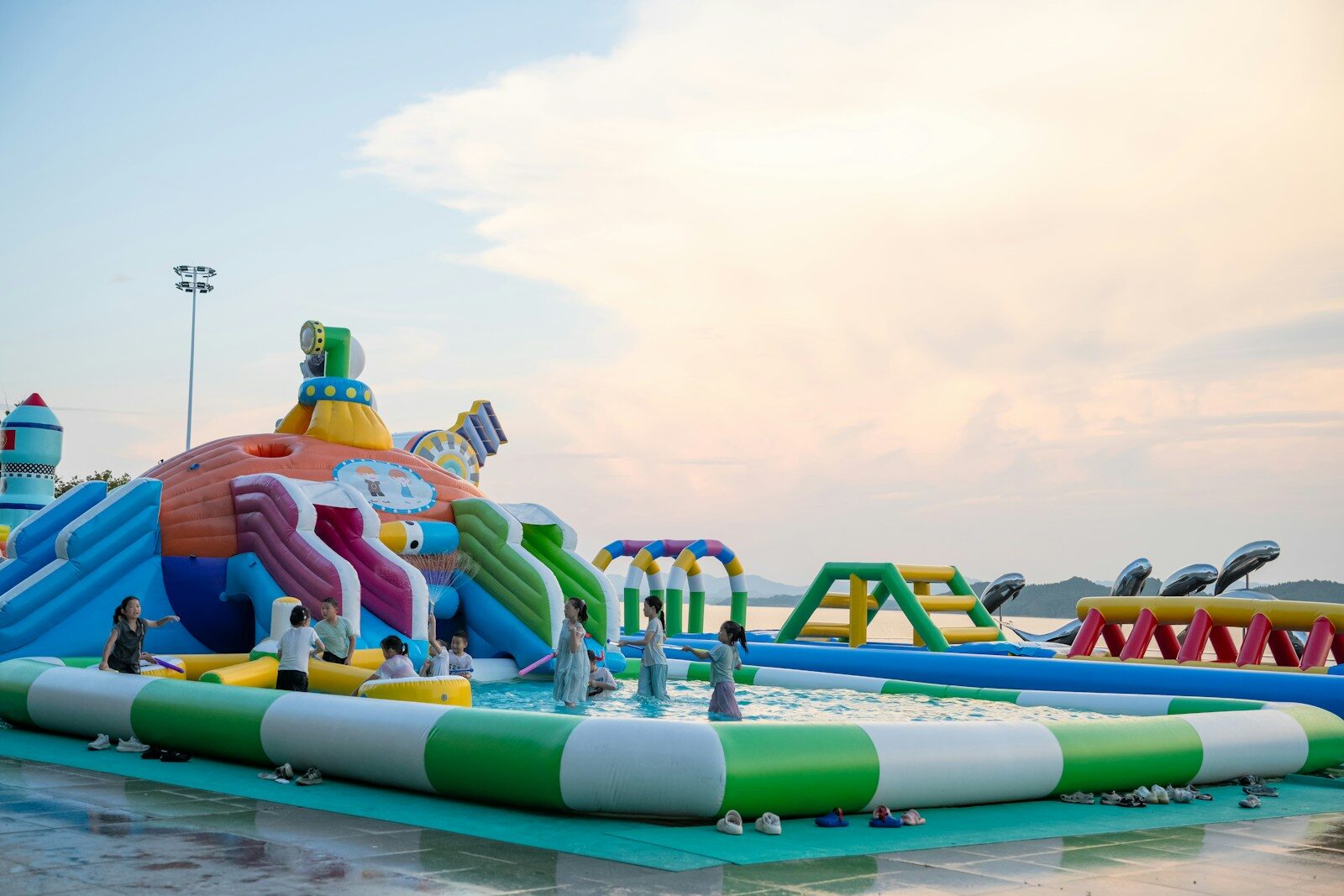
Inflatable water park equipment has become one of the fastest growing attractions for beaches, lakes, resorts, swimming pools and summer tourism projects. It is colorful, easy to photograph and attractive to families, which makes it useful for social media marketing. However, running inflatable water park equipment is not as simple as inflating it and selling tickets. Operators need to manage setup, supervision, weather changes, daily checks, repairs, storage and customer communication. A well-run floating park can bring strong seasonal income, while a poorly managed one can cause accidents and bad reviews.
The first step is choosing the right inflatable water park equipment for the venue. A small private pool may only suit a compact floating slide or a small water trampoline. A beach resort may need a larger obstacle course with climbing nets, slides, swings and jumping areas. A lake venue should consider waves, wind, water depth and distance from the shore. Buying an oversized product just because it looks impressive can create anchoring problems, staff pressure and higher electricity costs.
Setup should follow the supplier’s instructions carefully. Before inflation, the area should be checked for sharp stones, broken glass, shells, metal edges and rough surfaces that can damage the material. During inflation, operators should confirm that the correct blower is used and that air flows steadily. A product that looks only partially inflated may have a blocked valve, a torn seam or a blower problem. Running inflatable water park equipment in poor condition can quickly turn a small issue into a large tear.
Anchoring is one of the most important safety steps. Floating attractions can move with wind, currents and waves. If anchors are too few, too light or poorly connected, the structure may drift toward swimmers, rocks, boats or the shore. Operators should check anchor points, ropes, knots and connection rings every day. After strong wind or heavy rain, the whole anchoring system should be inspected again before opening. If the venue cannot guarantee stable anchoring, the attraction should remain closed.
Staff supervision is essential. Even the best inflatable water park equipment can become dangerous if guests ignore rules. Staff should monitor the number of users, prevent adults from using products designed for children, stop rough jumping, and make sure guests do not run on wet surfaces. A clear ratio between staff and visitors should be planned, especially when children are present. Supervisors should also know basic water rescue procedures and how to contact emergency services quickly.
Weather rules must be strict. Wind, thunderstorms, heavy rain and sudden waves can make floating attractions unsafe. Operators should check weather forecasts before opening and monitor conditions during the day. If thunder is heard, wind becomes strong, or visibility drops, the park should be closed and guests should leave the water immediately. Some owners hesitate because they do not want to lose ticket income, but one accident can damage the business far more than one closed day.
Guest rules should be visible and easy to understand. Signs can explain age limits, weight limits, maximum users per section, no diving, no flipping, no food near the structure, no sharp objects and adult supervision for young children. Staff should politely enforce the rules even when guests complain. Clear communication helps guests understand that the venue cares about safety, and parents are more likely to return to a place that feels well managed.
Daily checks should become a routine. Before opening, operators should inspect inflatable water park equipment for cuts, leaks, loose handles, damaged slides, weak seams, faded material and blocked drainage. Blowers, power cables and electrical connections should also be checked, especially in wet environments. During operation, staff should listen for unusual air leaks and watch for sagging sections. After closing, the surface should be rinsed if possible, dried and stored properly.
Repair handling can extend the life of the equipment. Small cuts should be repaired early before they expand. Most suppliers provide repair patches, glue and instructions, but the surface must be clean and dry before repair. If a tear is near a stress point, such as a handle, slide edge or anchor ring, the product should not be used until the repair is strong enough. Ignoring damage may cause the structure to fail while guests are on it.
Cleaning is important for hygiene and material protection. Sunscreen, sweat, sand, salt and chlorine can affect the surface over time. Regular cleaning helps prevent odors, mold and material degradation. For venues serving many families, cleanliness also affects customer trust. Parents notice dirty surfaces, sticky handles and bad smells quickly, and they may share their experience online. Clean inflatable water park equipment usually looks newer and lasts longer.
Storage should not be rushed. If the equipment is folded while wet, mold and unpleasant odors can develop. It should be fully dried, cleaned and folded carefully, avoiding sharp folds that may crack the material. Storage areas should be cool, dry and away from direct sunlight, chemicals and rodents. For off-season storage, operators can keep a record of inspections, repairs and replaced parts, which makes the next season easier to prepare.
Customer service can increase repeat visits. Fast entry, clear instructions, clean changing areas, shade, drinking water and friendly staff all improve the experience. If a guest is injured or frightened, staff should respond calmly, provide help and record the incident. Handling problems professionally can reduce negative reviews. On the contrary, arguing with guests or ignoring complaints often spreads quickly on social media.
Revenue can be improved beyond single tickets. Venues can create family packages, all-day passes, birthday events, school camp sessions, resort guest discounts and photo packages. Some operators combine inflatable water park equipment with kayaking, paddleboarding, snack bars, swimwear rental or beach games. These additional services can increase average spending per visitor and reduce dependence on one attraction.
Marketing works well when it shows real conditions. Short videos of guests sliding, jumping and laughing can attract attention, but promotional content should also show supervision, safety signs and clean equipment. This helps build trust with parents. Parks can also post weather closure policies in advance, so guests understand that safety comes first. Honest marketing may reduce some impulse visits, but it improves long-term reputation.
When choosing a supplier, buyers should ask whether the company provides anchoring advice, repair kits, operation checklists, blower recommendations and after-sales support. A good supplier understands that inflatable water park equipment is part of a complete operating system, not just a product in a box. If the supplier only focuses on selling and cannot answer safety or maintenance questions, buyers should be careful.
In summary, successful operation depends on planning, supervision and consistent maintenance. The right inflatable water park equipment can attract families, create social media buzz and support seasonal income, but it must match the venue, weather and staffing ability. Operators should control setup, anchoring, guest rules, daily checks, repairs, cleaning and storage carefully. With strong management and a reliable supplier, an inflatable water park can become a safe, profitable and memorable attraction for both local visitors and tourists.




