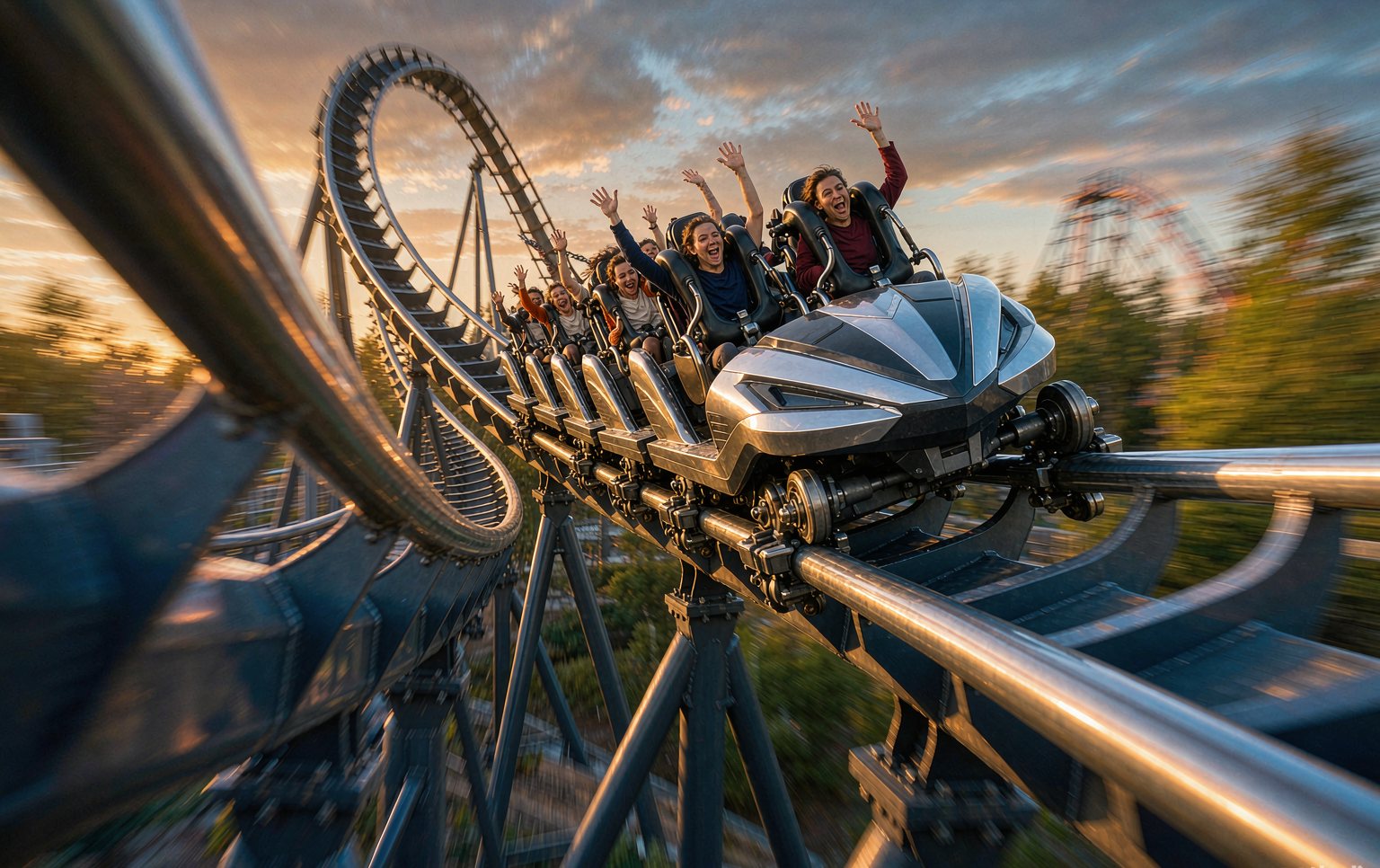
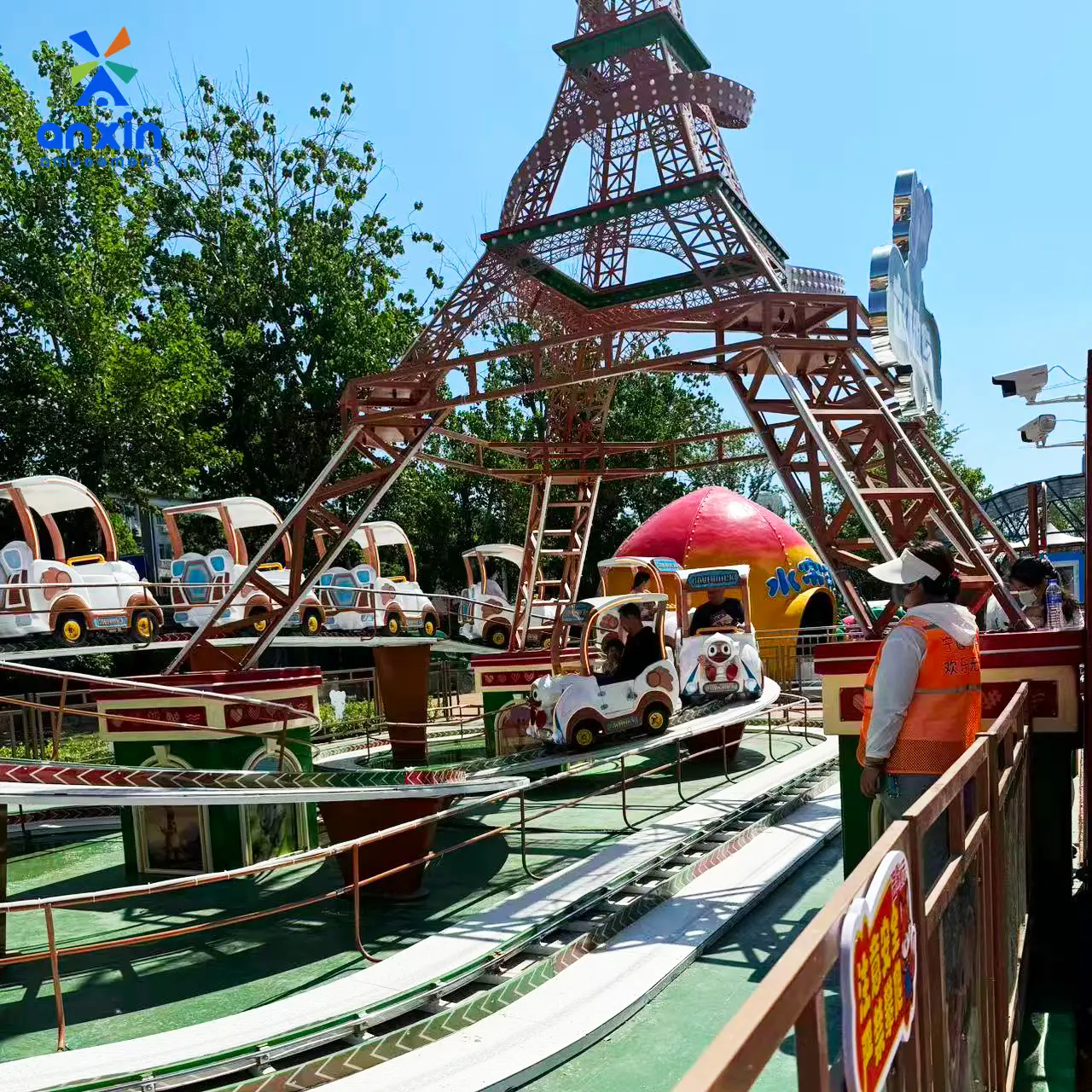
A roller coaster factory is where the idea of a thrilling ride becomes a real, engineered attraction. It is not simply a place where metal is cut and welded. A roller coaster factory brings together design, engineering, manufacturing, testing, safety planning, and project coordination. Every curve, drop, support beam, train, restraint, and control system must be planned carefully before a single piece leaves the facility.
When a theme park orders a new roller coaster, the process begins long before construction starts on site. Designers imagine the experience. Engineers calculate forces, speed, height, and structural loads. The roller coaster factory then turns those plans into physical components. The result is a ride that must feel exciting to guests while remaining safe, reliable, and precisely controlled.
A roller coaster factory is therefore both a creative workshop and a technical production center. It shapes the attractions that become the centerpieces of theme parks around the world.
Why Roller Coaster Factories Matter
Roller coasters are among the most complex attractions in the entertainment industry. They combine large structures, moving vehicles, high speeds, changing forces, electronic controls, and guest safety systems. A roller coaster factory exists to manage that complexity.
Without a specialized factory environment, it would be difficult to produce components with the precision needed for a safe ride. Tracks must align closely. Trains must move smoothly. Restraints must lock and release reliably. Control systems must respond correctly in normal and emergency situations.
A roller coaster factory also allows manufacturers to build rides more efficiently. Components can be designed, tested, and assembled in controlled conditions before being shipped to the park. This reduces uncertainty during installation and helps ensure that the final attraction meets safety and performance standards.
For theme parks, working with a roller coaster factory means gaining access to engineering expertise, manufacturing capacity, and experience from previous projects. For manufacturers, it means being able to create rides that are faster, taller, smoother, more immersive, or more innovative than before.
From Concept to Ride Experience
The creation of a roller coaster usually begins with a concept. A park may want a family-friendly coaster, a record-breaking thrill ride, a children’s coaster, a launched coaster, an inverted coaster, or an immersive themed attraction.
The roller coaster factory works with the park to understand the goals of the project. Important questions include:
- Who is the target audience?
- How much space is available?
- What height, speed, and intensity are expected?
- Should the ride be indoor, outdoor, or partly enclosed?
- Is theming part of the experience?
- What is the budget and timeline?
- What safety and regulatory standards apply?
- How will guests queue, board, and exit?
- How will maintenance be handled?
These decisions shape every part of the design. A coaster built for young families will feel very different from one designed for thrill seekers. A compact family coaster may focus on smooth movement and playful theming. A large thrill coaster may focus on height, speed, inversions, and dramatic layout.
The concept stage is where creativity and engineering begin to meet. The ride must be exciting, but it must also be possible to build, operate, and maintain.
The Role of Design and Engineering
Design and engineering are at the heart of every roller coaster factory project. Designers create the visual identity and guest experience. Engineers ensure that the ride can be built safely and perform as intended.
The design process may include:
- Track layout planning
- Train design
- Support structure design
- Station and platform planning
- Brake and launch system design
- Restraint system selection
- Control system planning
- Theming and visual design
- Sound and lighting integration
- Accessibility planning
- Maintenance access planning
Engineers must calculate many factors, including speed, weight, wind load, vibration, braking distance, structural strength, and guest forces. Every part of the ride must work together. A change to the track layout may affect train speed. A change to the train design may affect restraint systems. A change to the theming may affect maintenance access.
This is why roller coaster design is not only about excitement. It is about precision. A successful ride feels thrilling because its engineering is carefully controlled.
Manufacturing the Components
Once the design is approved, the roller coaster factory begins manufacturing the physical components. This stage turns drawings and digital models into real parts that will form the ride.
Common components include:
- Track sections
- Support columns
- Train cars
- Wheels and axles
- Restraint systems
- Brake fins
- Launch system parts
- Station platforms
- Control panels
- Sensors
- Wiring and power systems
- Themed panels and decorative structures
Each component must meet strict quality standards. Track pieces must align accurately so trains move smoothly. Structural supports must handle heavy loads. Restraints must lock securely. Sensors must detect train position correctly. Control systems must communicate with brakes, launches, stations, and safety devices.
Manufacturing also includes careful labeling and documentation. When thousands of parts are shipped to a construction site, each piece must be easy to identify and install in the correct location.
Testing Before Installation
Testing is one of the most important stages in a roller coaster factory. Components and systems are checked before they are sent to the park. This helps reduce problems during installation and commissioning.
Testing may include:
- Structural inspections
- Weld quality checks
- Dimensional measurements
- Train assembly trials
- Restraint function tests
- Brake system checks
- Sensor calibration
- Control system simulation
- Electrical safety checks
- Emergency stop testing
- Load testing
- Fit checks for track sections
Some manufacturers also build small sections of track or full prototype systems to test how trains move, how restraints behave, and how control systems respond. This allows engineers to identify issues early, when changes are easier and less costly.
Testing does not remove the need for on-site checks after installation. However, it creates a strong foundation for safety and reliability.
Installation at the Theme Park
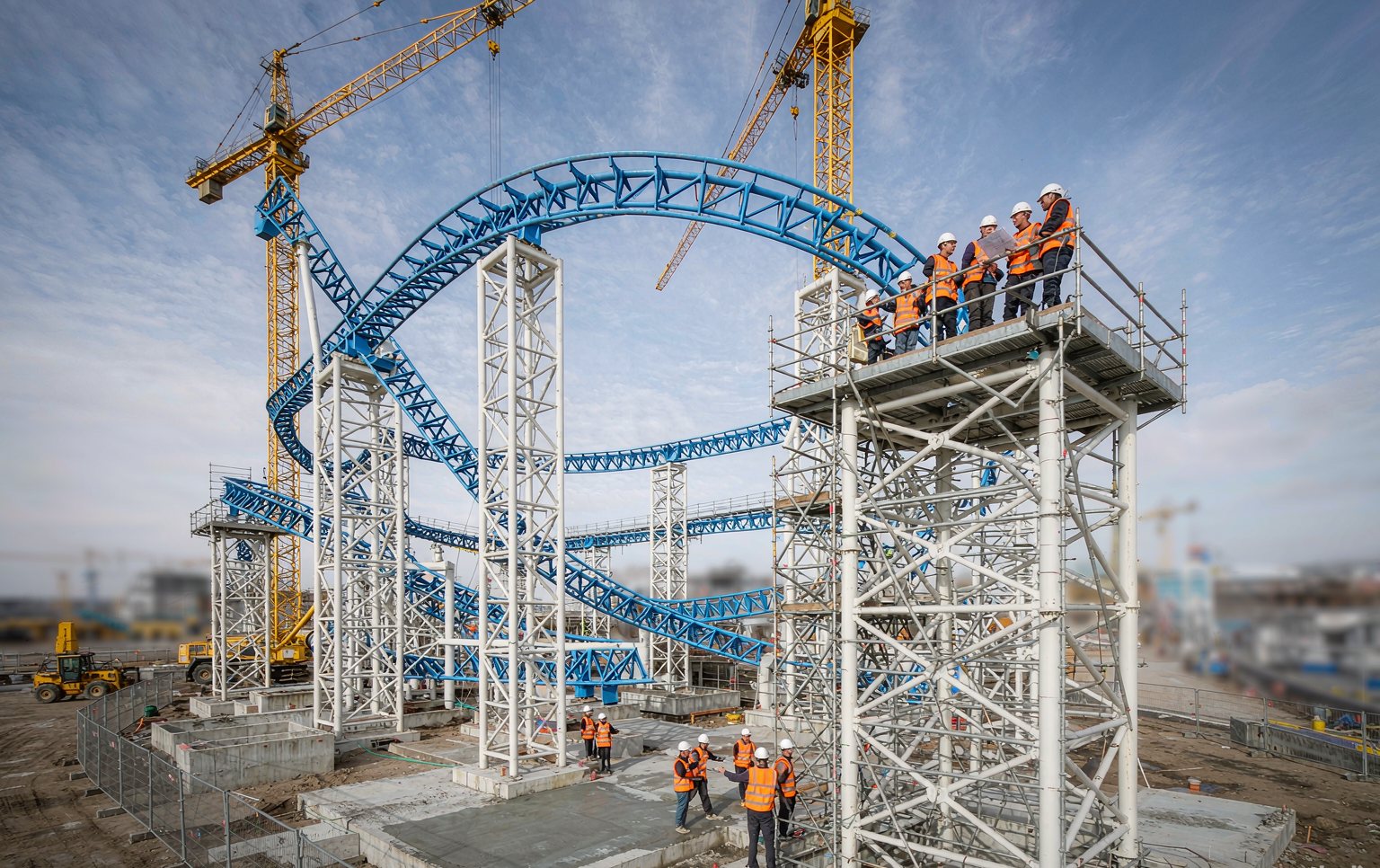
After manufacturing and testing, the components are transported to the theme park. Installation is a major phase of the project. It requires coordination between the manufacturer, the park, contractors, engineers, and safety inspectors.
Installation may involve:
- Preparing the site
- Building foundations
- Installing support structures
- Assembling track sections
- Placing trains on the track
- Installing station equipment
- Connecting power and control systems
- Adding theming elements
- Setting up safety barriers
- Testing guest flow areas
- Training ride operators
- Conducting final inspections
The installation process can take weeks or months, depending on the size of the coaster. Large coasters require careful planning because heavy components must be lifted into place safely. Indoor coasters may require coordination with building structures. Themed coasters may involve additional work for scenery, lighting, sound, and special effects.
During installation, precision remains essential. Even small alignment issues can affect ride smoothness, noise, or safety.
Commissioning and Final Testing
After installation, the ride enters a commissioning phase. This is when the complete system is tested as a whole. The roller coaster factory team, park operations team, and safety inspectors may all be involved.
Commissioning usually includes:
- Empty train test runs
- Weighted test runs
- Brake performance checks
- Launch system checks
- Emergency stop tests
- Evacuation procedure tests
- Sensor and control system verification
- Restraint system checks
- Operator training
- Ride cycle timing
- Noise and vibration checks
- Final safety inspections
This stage is different from factory testing because the ride is now operating in its permanent location. Weather, site conditions, power supply, guest areas, and park operations all become part of the environment.
Only after successful commissioning and approval does the ride open to guests. The goal is to ensure that the attraction is safe, reliable, and ready for daily operation.
Safety Standards and Quality Control
Safety is the most important responsibility of any roller coaster factory. A roller coaster must be exciting, but it must never depend on chance. Every component, system, and procedure should be designed with safety in mind.
Important safety practices include:
- Following recognized engineering standards
- Using quality materials
- Inspecting welds and structural connections
- Testing restraint systems
- Calibrating sensors and brakes
- Documenting design changes
- Training operators and maintenance staff
- Planning emergency procedures
- Scheduling regular inspections
- Keeping maintenance records
- Monitoring ride performance
- Replacing worn components before failure
Quality control is not a single step. It runs through design, manufacturing, testing, installation, commissioning, and ongoing operation. A strong safety culture means that problems are reported early, documentation is clear, and no detail is treated as unimportant.
Parks and manufacturers also work with regulators and inspectors to confirm that the ride meets local safety requirements. These requirements can vary by country and region, so experienced manufacturers plan for compliance from the beginning of the project.
Innovation Inside the Roller Coaster Factory
Modern roller coaster factories are not only producing traditional steel coasters. They are also developing new ride experiences that combine technology, storytelling, and guest interaction.
Common areas of innovation include:
- Launch systems
- Magnetic braking
- Inverted and suspended trains
- Multi-dimensional seating
- Virtual reality integration
- Projection mapping
- Interactive ride elements
- Synchronized music and lighting
- Immersive queue experiences
- Smaller footprint designs
- Family thrill coasters
- Hybrid wooden and steel coasters
These innovations allow parks to create attractions that feel different from older coasters. A launch coaster can accelerate quickly without a traditional lift hill. A virtual reality coaster can combine physical movement with digital scenery. An interactive coaster can let riders influence part of the experience.
The roller coaster factory plays a central role in turning these ideas into practical rides. Innovation must always be balanced with reliability, maintenance access, and guest safety.
Theming and Guest Experience
A roller coaster factory does not only build tracks and trains. It also helps create the experience that guests remember. Theming can turn a mechanical ride into a story-driven attraction.
Theming may include:
- Entrance design
- Queue scenery
- Station atmosphere
- Train colors and shapes
- Sound effects
- Lighting effects
- Fog or water effects
- Projected images
- Themed buildings
- Character elements
- Story-based ride moments
- Photo opportunities
A well-themed coaster can make riders feel like they are entering another world. A jungle coaster may feel like an expedition. A space coaster may feel like a launch into orbit. A haunted coaster may use darkness, sound, and surprise to build tension.
For the roller coaster factory, theming adds complexity. Decorative elements must not interfere with safety systems. Maintenance access must remain available. Lighting and sound must be integrated with control systems. When these details are handled well, theming strengthens the ride instead of distracting from it.
Maintenance and Long-Term Operation
A roller coaster does not stop needing attention after it opens. Long-term maintenance is essential for safety, reliability, and guest satisfaction.
Routine maintenance may include:
- Daily safety checks
- Track inspections
- Train inspections
- Wheel replacements
- Brake system checks
- Restraint inspections
- Sensor calibration
- Electrical system checks
- Cleaning of stations and platforms
- Lubrication of moving parts
- Structural inspections
- Software and control system updates
A roller coaster factory often supports parks by providing spare parts, technical documentation, training, and engineering advice. Some manufacturers also offer long-term service agreements.
Good maintenance helps rides run smoothly. It also reduces unexpected downtime. Guests may not notice when maintenance is done well, but they quickly notice delays, rough rides, or closed attractions.
Common Misunderstandings About Roller Coaster Factories
Many people imagine a roller coaster factory as a place where rides are fully assembled and then shipped to parks. In reality, most large coasters are manufactured in sections and assembled on site.
Another common misunderstanding is that design and manufacturing are separate from safety. In a professional roller coaster factory, safety is part of every stage. Engineers, designers, manufacturers, and testers all share responsibility for creating a ride that is both exciting and reliable.
Some people also assume that bigger coasters are always more impressive. Size can create drama, but a successful coaster also depends on layout, smoothness, theming, reliability, and guest comfort. A smaller coaster with strong design can be more memorable than a larger coaster with weak execution.
Who Works Inside a Roller Coaster Factory
A roller coaster factory depends on many different specialists. No single person designs, builds, tests, and installs a complete ride.
Common roles include:
- Ride designers
- Mechanical engineers
- Structural engineers
- Electrical engineers
- Control systems engineers
- Welders and fabricators
- Machinists
- Painters and finishers
- Quality control inspectors
- Project managers
- Safety specialists
- Theming artists
- Software developers
- Installation supervisors
- Technical trainers
- Maintenance consultants
Each role contributes to the final experience. A creative layout needs engineering to make it safe. A strong structure needs fabrication to bring it to life. A finished ride needs operators and maintenance teams to run it well.
This teamwork is one reason why roller coaster manufacturing is so complex. The factory is not only producing parts. It is coordinating many technical and creative disciplines into one working attraction.
How Parks Choose a Roller Coaster Manufacturer
When a theme park plans a new coaster, choosing the right manufacturer is a major decision. The park must consider more than price or size.
Important factors include:
- Safety record
- Engineering experience
- Ride smoothness
- Design creativity
- Manufacturing quality
- Maintenance support
- Spare parts availability
- Training programs
- Installation experience
- Compliance with local regulations
- Ability to meet timelines
- Previous projects of similar type
- Guest experience quality
A park may also consider whether the manufacturer can create the type of ride it wants. A company experienced in family coasters may not be the best choice for a record-breaking launched coaster. A manufacturer strong in outdoor steel coasters may need additional experience for immersive indoor attractions.
The strongest partnerships between parks and roller coaster factories are built on clear communication, realistic planning, and shared safety standards.
The Future of Roller Coaster Factories
Roller coaster factories are likely to become more focused on experience, efficiency, and technology. Parks want attractions that are exciting, immersive, reliable, and easy to maintain. Manufacturers are responding with new designs, better control systems, and more flexible ride concepts.
Future trends may include:
- More immersive themed coasters
- Greater use of virtual and augmented reality
- Smoother ride dynamics
- More energy-efficient systems
- Compact layouts for smaller parks
- Hybrid designs combining wood and steel
- Interactive ride elements
- Improved accessibility planning
- Better maintenance monitoring
- Stronger integration between ride, queue, and story
The roller coaster factory will remain central to these developments. As guest expectations grow, manufacturers must continue to balance creativity with engineering discipline.
Final Thoughts
A roller coaster factory is where imagination becomes engineering, and engineering becomes experience. It is a place where creative ideas are tested, shaped, manufactured, and prepared for the real world.
The work inside a roller coaster factory is not only about building rides. It is about building trust. Parks trust manufacturers to deliver safe, reliable attractions. Operators trust the systems to perform day after day. Guests trust that the thrill they feel is controlled, designed, and carefully managed.
The most successful roller coasters are not judged only by height, speed, or inversions. They are judged by how smoothly they run, how safely they operate, how memorable they feel, and how often guests want to ride again. Behind every great coaster is a roller coaster factory where design, precision, safety, and creativity come together.