Introduction: The Age-Old Question
Walk into any amusement park, fairground, or shopping mall, and you are almost guaranteed to see one of the most iconic attractions in the entertainment industry: the spinning ride with horses. But what do you call it? Is it a carousel or a merry-go-round?
For the average park guest, these terms are often used interchangeably. However, for park owners, historians, and ride manufacturers, there are distinct differences between a carousel and a merry-go-round. Understanding the nuance between these two classic rides is not just a matter of semantics; it reflects the engineering, history, and regional preferences that define the amusement industry.
In this comprehensive guide, we will explore the history, mechanics, and regional distinctions to finally settle the debate: carousel vs. merry-go-round.
📜 The Historical Origins
To understand the difference, we must first look at the history of these beloved attractions.
The Carousel: A Military Tradition
The word “carousel” originates from the French word carrousel, which itself was derived from the Italian carosello, meaning “little war.” In the 12th century, Arabian and Turkish horsemen would ride in a circle while tossing clay balls to one another as a training exercise. When this tradition made its way to Europe, it evolved into a tournament where knights would joust and perform equestrian skills.
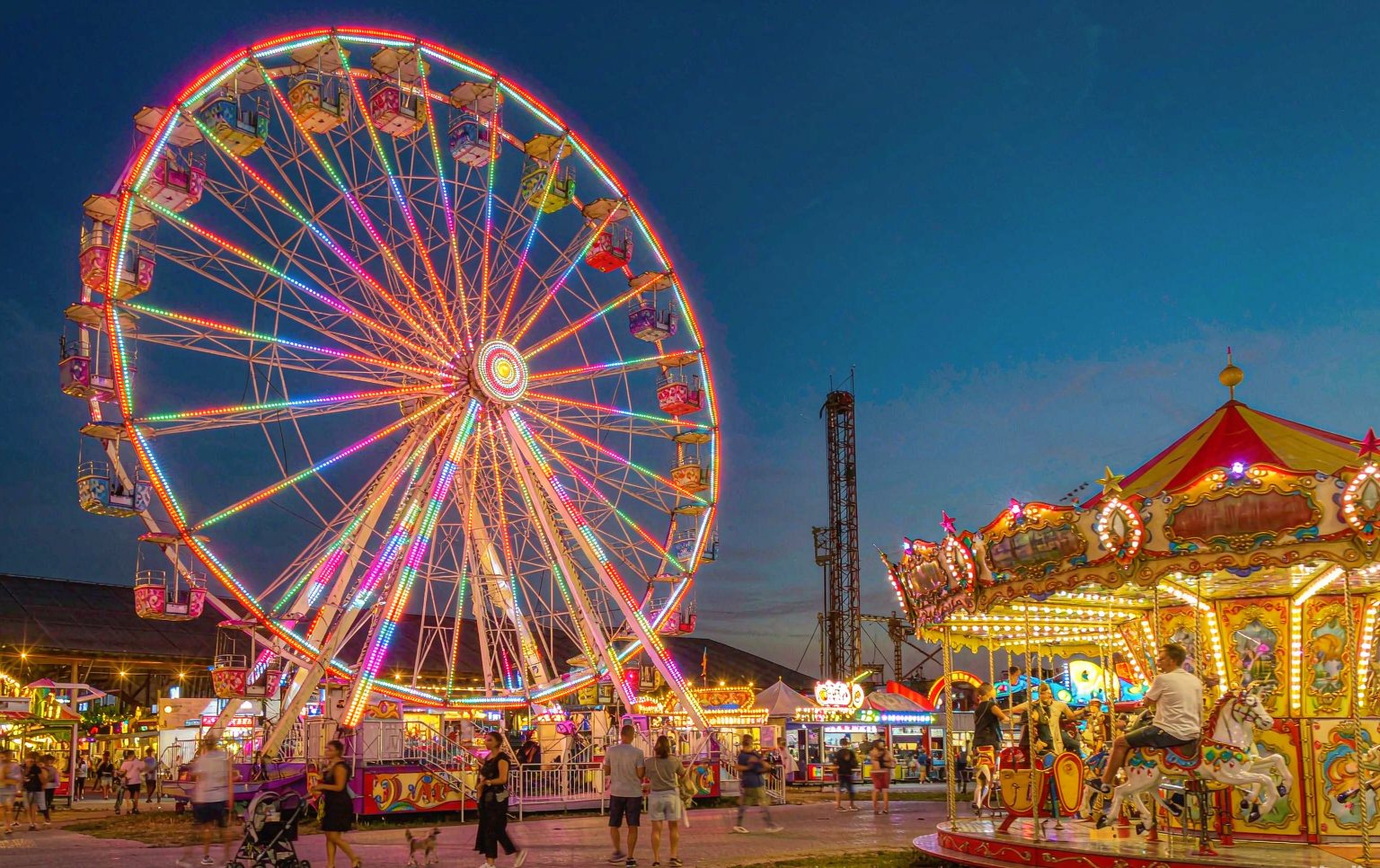
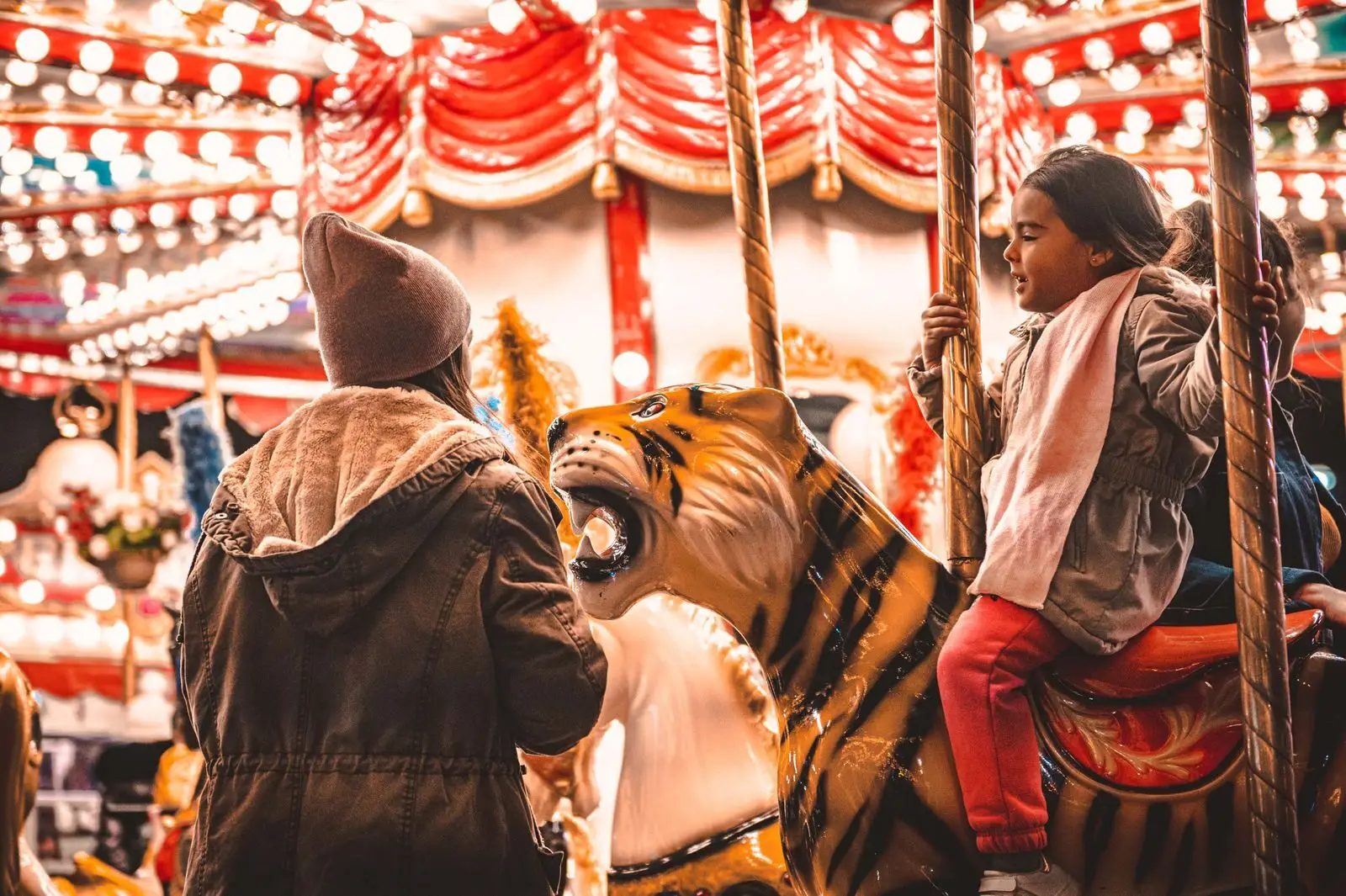
By the 17th century in France, the “carousel” had transformed into a leisure activity for the nobility. The clay balls were replaced by wooden horses suspended from a central pole. Therefore, the term carousel has historically been associated with a more elaborate, elegant, and often larger-scale ride, frequently featuring intricate carvings and menagerie animals (like tigers, zebras, or dragons) rather than just horses.
The Merry-Go-Round: A Playground Staple
The term “merry-go-round” is much more literal and colloquial. It simply describes the action of the ride: it goes round and round, and it is merry (happy). This term became popular in the United States and the United Kingdom to describe simpler, often smaller versions of the ride.
Historically, a merry-go-round often referred to the playground equipment—a simple circular platform that children would push with their feet. In the context of amusement parks, it came to represent the simpler, more accessible version of the ride, often without the elaborate chariots or complex gearing found on grand carousels.
⚙️ Mechanical and Design Differences
While modern manufacturing has blurred the lines, traditionalists and industry experts still recognize specific mechanical and design differences between a carousel and a merry-go-round.
1. The Direction of Rotation
One of the most fascinating technical distinctions lies in the direction the ride spins.
- European Tradition: In Europe, traditional carousels typically rotate clockwise.
- American Tradition: In the United States, the standard carousel rotates counter-clockwise.
This difference is largely attributed to the history of jousting. In the US, the counter-clockwise motion allowed the rider (typically right-handed) to have their right arm on the outside of the circle, making it easier to spear the ring (a common game played on American carousels).
2. The Animals and Mounts
- Carousel: A true carousel is known for its elaborate menagerie. While horses are the most common, a carousel often features a wide variety of animals, including pigs, zebras, tigers, and mythical creatures like unicorns or dragons. Furthermore, the horses on a carousel are often “jumpers” (fixed in a jumping position) or “prancers,” and they are mounted on brass poles that move up and down via a complex gearing system.
- Merry-Go-Round: A merry-go-round is generally simpler. The animals are often “standers” (stationary) or have a simpler up-and-down motion. The figures might be more generic, and the ride may lack the elaborate chariots or gondolas found on a grand carousel.
3. The Music
While both rides feature music, the carousel is traditionally associated with elaborate band organs or calliopes that provide a loud, distinct circus atmosphere. A merry-go-round might simply use a recorded sound system or a simpler mechanical music box.
🌍 Regional Terminology: Where in the World Are You?
The biggest difference between a carousel and a merry-go-round today is largely geographical. The terminology you use often depends on which side of the Atlantic you are standing on.
In the United States
In North America, the term carousel is often used to describe the larger, more elaborate, and historic rides found in major theme parks (like Disney or Six Flags). The term merry-go-round is used more casually, often referring to smaller rides at county fairs, carnivals, or playgrounds. However, in casual conversation, Americans use both terms interchangeably.
In the United Kingdom and Europe
In British English, the term merry-go-round is the standard colloquial term for the ride. However, you will also frequently hear the term roundabout. If you ask for a “carousel” in a UK park, people will know what you mean, but “merry-go-round” is the everyday language.
In Australia
Interestingly, in some parts of Australia, you might hear the term hurdy-gurdy used to describe a simple, often hand-cranked or smaller version of the ride, though “merry-go-round” is also widely understood.
📊 Comparison Table: Carousel vs. Merry-Go-Round
To help you visualize the differences, here is a quick comparison table:
表格
下载为表格
导出为图片
| Feature | Carousel | Merry-Go-Round |
|---|---|---|
| Origin | French/Italian (Military training) | English (Descriptive colloquialism) |
| Complexity | High (Elaborate carvings, brass poles) | Low to Medium (Simpler design) |
| Animals | Menagerie (Horses, tigers, dragons) | Usually horses or generic figures |
| Motion | Complex up-and-down galloping | Simple rotation or basic movement |
| Region | Preferred in US & formal contexts | Preferred in UK & casual contexts |
| Rotation | US: Counter-clockwise / EU: Clockwise | Varies by region |
💰 Why This Matters for Park Owners and Buyers
If you are in the business of buying and selling amusement rides, understanding the distinction between a carousel and a merry-go-round is important for marketing and inventory.
1. Marketing and Perception
If you are selling a high-end, hand-carved wooden ride with brass fittings and a band organ, you should market it as a carousel. This term implies luxury, history, and a premium experience. It appeals to park owners looking to create a “Disney-like” atmosphere.
Conversely, if you are selling a durable, fiberglass, easy-to-assemble ride for a traveling carnival or a shopping mall, the term merry-go-round might be more appropriate. It suggests fun, accessibility, and family-friendly entertainment without the expectation of a museum-quality antique.
2. SEO and Search Intent
From a digital marketing perspective, both terms are valuable. When optimizing your website, you should target both keywords. A customer searching for “mini carousel for sale” might be looking for something slightly more upscale than someone searching for “merry-go-round for sale.” By understanding these nuances, you can tailor your product descriptions to match the specific intent of the buyer.
3. Maintenance and Parts
The mechanical complexity of a carousel often requires more specialized maintenance. The gearing systems that create the galloping motion are intricate. A merry-go-round, being mechanically simpler, often has lower maintenance costs and is easier to repair, making it an attractive option for operators with limited technical staff.
🎢 The Modern Evolution: Trackless and Mini Rides
In recent years, the line between the carousel and the merry-go-round has evolved with new technology.
Mini Carousels
We now see a surge in “mini” versions of these rides. These are perfect for indoor play centers, restaurants, and small arcades. They often feature modern characters (like cars or space themes) rather than traditional horses. Whether you call them mini carousels or mini merry-go-rounds, they serve the same purpose: providing a gentle, engaging ride for toddlers and young children.
Trackless Rides
While not strictly a carousel, the technology behind modern trackless trains shares the same DNA: a rotating or moving platform that provides a scenic tour. These rides offer the same nostalgic feel as a carousel but with the flexibility to move through different environments, from shopping malls to zoos.
🎡 Conclusion: Which One Should You Choose?
So, what is the real difference between a carousel and a merry-go-round?
Historically, a carousel is the more elaborate, European-rooted ride with complex mechanics and menagerie animals, while a merry-go-round is the simpler, colloquial term often used for playground equipment or traveling fair rides. However, in the modern amusement industry, the terms are largely interchangeable, with regional preferences dictating which word is used.
For park owners and investors, the most important factor is not the name, but the quality, safety, and appeal of the ride. Whether you choose to install a grand, hand-carved carousel as the centerpiece of your theme park or a durable, colorful merry-go-round for your family entertainment center, you are investing in a timeless attraction that has brought joy to millions for centuries.
Are you looking to add a classic spinning ride to your park? Contact us today to explore our range of high-quality carousels and merry-go-rounds for sale.