Bumper cars are the undisputed “cash cows” of the amusement industry. They are universally loved, offer high replay value, and can operate in a relatively small footprint. Whether you are outfitting a seaside pier, a shopping mall family entertainment center (FEC), or a traveling carnival, understanding the bumper car ride price for sale is essential for budgeting and financial planning.
However, the price of a bumper car is not a single fixed number. It varies significantly based on the power system, build quality, and customization. This guide breaks down the pricing structure, compares the different technologies, and helps you calculate the potential Return on Investment (ROI).
1. The Three Main Types of Bumper Cars and Their Costs
The most significant factor influencing the bumper car ride price for sale is the power collection system. There are three main categories, each with distinct price points and installation requirements.
A. Battery-Powered (Electric) Bumper Cars
- Price Range: $2,000 – $6,000 per car.
- How it Works: These cars run on rechargeable batteries (usually lead-acid or lithium). They do not require any special flooring or ceiling grids.
- Pros: Lowest upfront cost. Can be operated on any flat surface (concrete, tile, wood). Highly flexible for indoor and outdoor use.
- Cons: Requires daily charging (downtime). Batteries need replacement every 1–2 years. Performance may degrade as the battery drains.
- Best For: Small FECs, rental businesses, and operators with limited budgets.
B. Ground Grid (Floor Pickup) Bumper Cars
- Price Range: $4,000 – $8,000 per car (plus high installation costs).
- How it Works: The floor is fitted with a grid of conductive metal strips carrying low-voltage electricity. The car picks up power through contact brushes on its underside.
- Pros: Continuous power (no charging downtime). No ceiling obstructions, allowing for high ceilings and open aesthetics.
- Cons: The specialized conductive floor is expensive to install and maintain. The floor strips can wear out over time.
- Best For: Modern indoor parks and shopping malls where ceiling aesthetics are important.
C. Sky Net (Ceiling Pickup) Bumper Cars
- Price Range: $3,500 – $7,000 per car (plus installation costs).
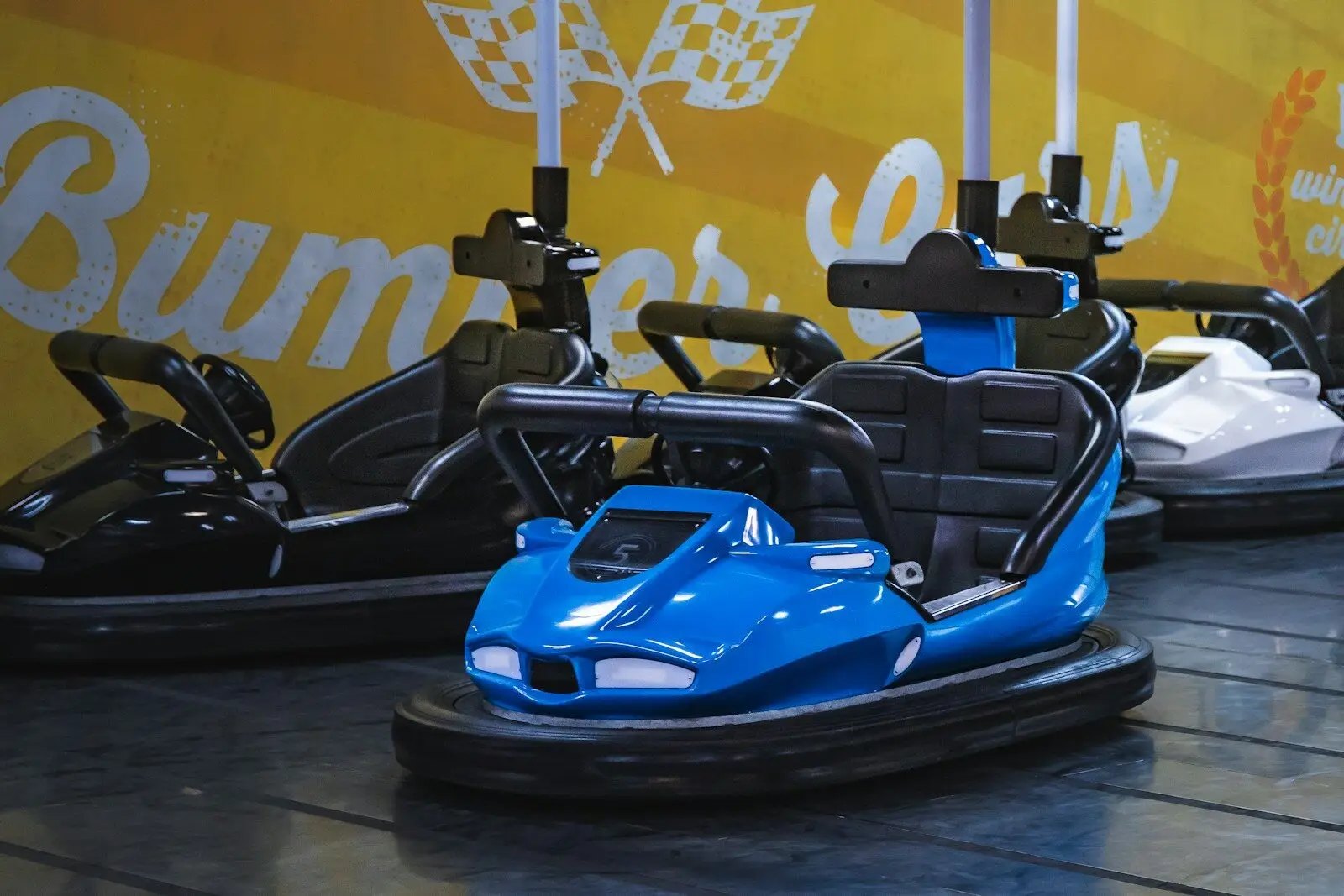
- How it Works: A conductive wire mesh (the “net”) is installed above the ride area. The car has a pole on its back that touches the net to draw power.
- Pros: Continuous power. The floor can be simple and inexpensive (just a smooth surface).
- Cons: The ceiling net can feel industrial and block sightlines. It limits the maximum height of the ride area.
- Best For: Traditional amusement parks and carnivals where ceiling height is not a concern.
2. Factors Influencing the Price of a Single Car
Beyond the power system, several other factors determine the final bumper car ride price for sale.
1. Body Material and Durability:
- Economy Models: Often use thinner fiberglass or even hard plastics. These are prone to cracking upon heavy impact.
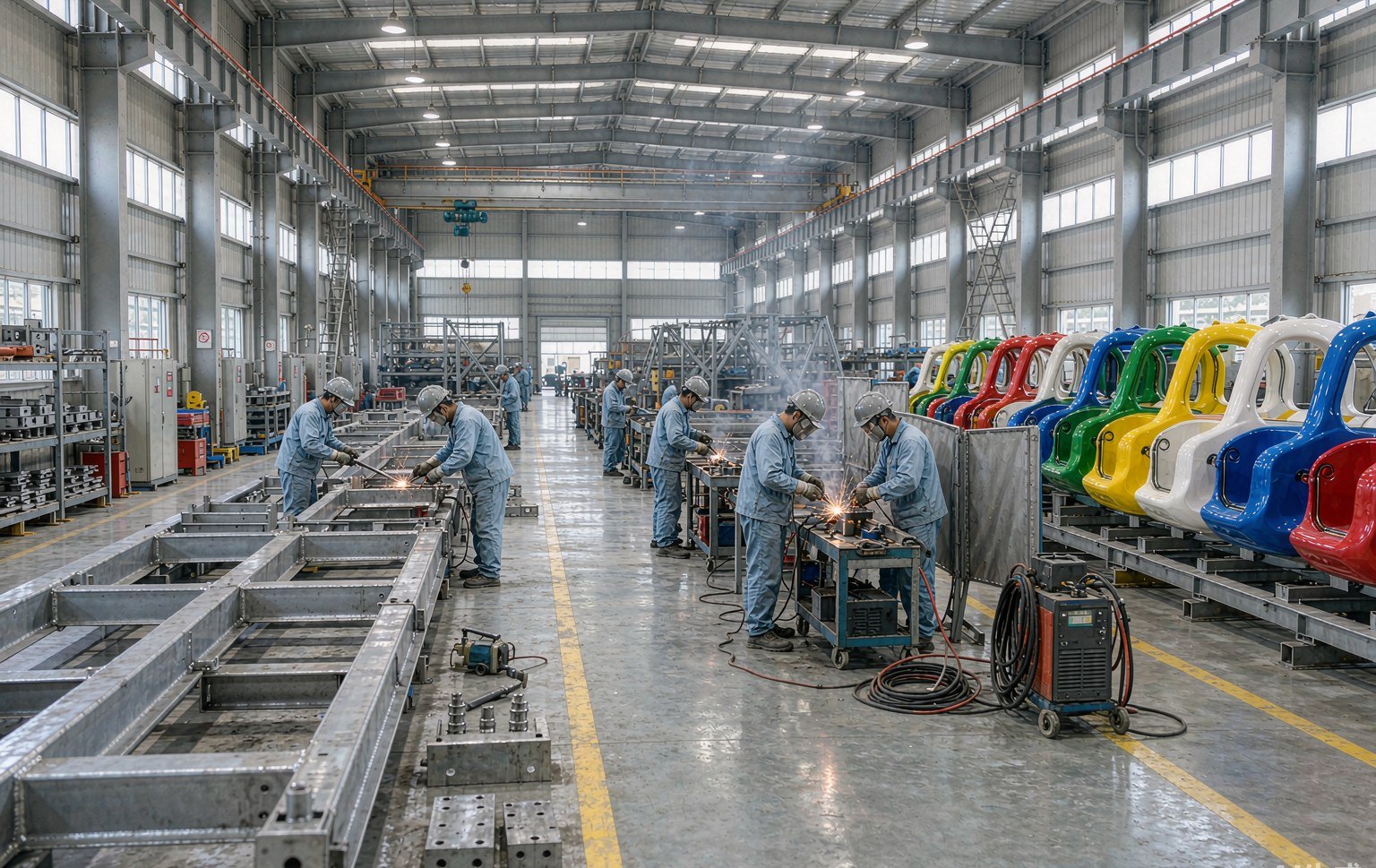
- Premium Models: Use high-density, impact-resistant fiberglass reinforced with steel frames. They feature thick rubber bumpers that absorb shock, protecting both the car and the passengers.
2. Electronics and Features:
- Basic: Simple on/off switch and speed control.
- Advanced: Digital dashboards, MP3 music players, LED underglow lighting, and remote control shut-off capabilities for operators.
3. Customization and Theming:
Standard colors (red, blue, yellow) are usually included in the base price. However, if you want custom molds (e.g., shaped like animals, police cars, or cartoon characters) or specific branding, the manufacturer will charge for custom molding fees.
4. Order Quantity:
Like most manufacturing, economies of scale apply. Buying a single car is expensive per unit. Ordering a full set (e.g., 10, 20, or 30 cars) along with the control system and spare parts will significantly lower the per-unit cost.
3. Hidden Costs: Installation and Maintenance
When budgeting, do not just look at the sticker price of the cars. You must account for the total cost of ownership.
- Flooring: For ground grid systems, the conductive floor installation can cost as much as the cars themselves. For battery cars, you need a smooth, level surface.
- Charging Station: Battery cars require a dedicated charging area with industrial power outlets.
- Spare Parts: Bumper cars take a beating. You will need a stock of replacement rubber bumpers, brushes (for sky net cars), fuses, and joysticks.
- Shipping: Bumper cars are bulky. Shipping a container of 10-15 cars internationally adds significant freight costs to the unit price.
4. ROI Analysis: Are Bumper Cars Profitable?
Despite the upfront costs, bumper cars are one of the fastest-returning investments in the amusement industry.
The Math:
- Capacity: A standard set of 10 cars running 4-minute cycles.
- Throughput: You can run approx. 10–12 cycles per hour.
- Revenue: If you charge $4 per ride, and run at 70% capacity (approx. 8 cars filled per cycle), the hourly revenue is roughly:
- 8 cars x $4 x 10 cycles = $320 per hour.
- Daily Revenue: Operating for 6 hours a day = $1,920 per day.
Even with conservative estimates, a well-located bumper car ride can pay for itself in as little as 6 to 12 months. The key is high visibility and high foot traffic.
5. Conclusion: Choosing the Right Option
When analyzing the bumper car ride price for sale, remember that the cheapest option is not always the most profitable.
- If you have a low budget and flexible space, Battery Cars are the best entry point.
- If you are building a high-end indoor park and want a premium look, invest in Ground Grid cars.
- If you want continuous operation without floor costs, Sky Net is the traditional choice.
By understanding these cost drivers, you can negotiate effectively with manufacturers and select the bumper car system that offers the best balance of durability, guest experience, and financial return.