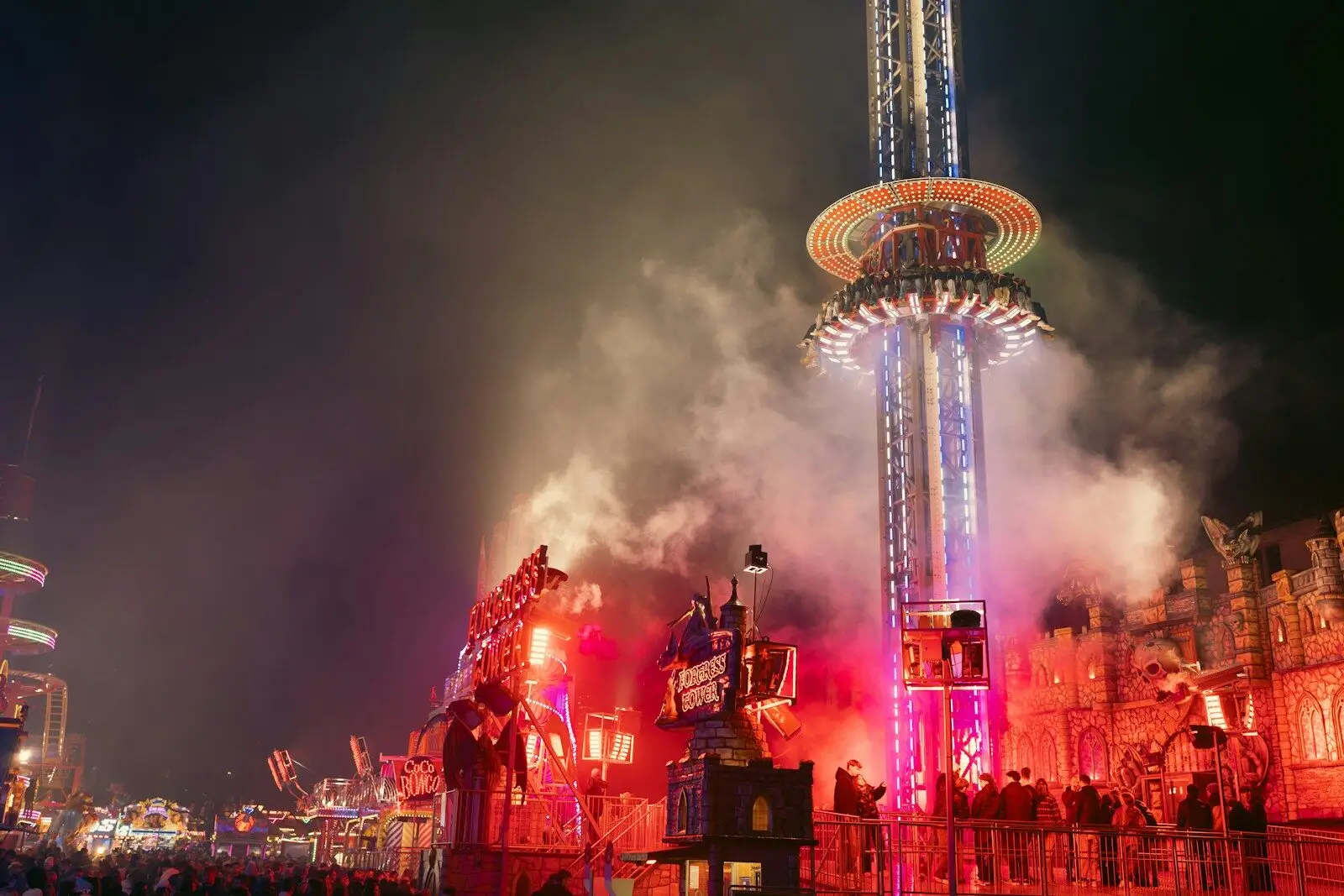
Few attractions command the skyline of an amusement park quite like the Drop Tower. Known variously as the “Gyro Drop,” “Free Fall Tower,” or simply the “Big Drop,” this vertical thrill ride is a proven crowd-puller. It offers a unique combination of high visibility, high throughput, and the pure, adrenaline-fueled sensation of weightlessness.
However, for park owners and investors, purchasing a drop tower is a significant capital expenditure. It requires careful consideration of site logistics, target demographics, and rigorous safety compliance. If you are looking to buy drop tower ride for amusement park operations, this comprehensive guide will walk you through everything from technical specifications to return on investment (ROI).
1. Understanding the Mechanics: How Drop Towers Work
Before diving into procurement, it is essential to understand the engineering behind the thrill. A standard drop tower consists of a vertical steel tower, a passenger gondola (or carriage), and a drive system.
The Ride Cycle:
- Ascent: The gondola is lifted to the top of the tower. This is typically achieved using a hydraulic system (oil cylinders) or a cable-and-winch mechanism. The slow ascent builds anticipation.
- The Pause: At the peak, the ride holds for a few seconds. This “moment of dread” allows riders to take in the view and heightens the psychological thrill.
- The Drop: The braking mechanism releases, and gravity takes over. The gondola free-falls, creating a sensation of weightlessness (0G).
- Braking: Just before hitting the ground, the ride engages a braking system. Modern towers use magnetic braking, where magnets pass through conductive fins to create resistance. This is frictionless, silent, and incredibly smooth.
Key Technical Parameters:
When evaluating a drop tower ride for sale, you will encounter specific metrics:
- Total Height vs. Operating Height: The total height includes the decorative spire and lightning rod, while the operating height is where the passengers actually drop from.
- Drop Speed: High-thrill towers can reach speeds of 60–110 km/h (approx. 4–7 m/s).
- Capacity: Measured in “P” (passengers). Common configurations range from 12P to 24P per cycle.
2. Types of Drop Towers: Choosing the Right Fit
Not all drop towers are created equal. The market offers various configurations tailored to different park sizes and audience demographics.
A. The Mini Drop Tower (Frog Hopper)
- Target Audience: Families and young children (Ages 5-12).
- Height: Typically 6m to 10m.
- Experience: Instead of a terrifying free-fall, these rides often “bounce” or drop in short segments. They are often themed as frogs, rockets, or cartoon characters.
- Best For: Indoor Family Entertainment Centers (FECs), shopping malls, and small carnival setups.
B. The Standard Free-Fall Tower
- Target Audience: Teenagers and adults seeking thrills.
- Height: Ranges from 20m to 40m.
- Experience: A classic vertical drop. Some models rotate 360 degrees during the ascent or descent (Gyro Drop) to enhance the disorientation and excitement.
- Best For: Regional theme parks and traveling carnivals.
C. The Mega / Turbo Drop
- Target Audience: Hardcore thrill-seekers.
- Height: 40m to 100m+.
- Experience: These are landmark attractions. “Turbo” models use pneumatic or hydraulic launch systems to shoot riders upward before dropping them, or they feature multiple drops in a single cycle.
- Best For: Major destination theme parks looking for an iconic skyline feature.
3. Cost Breakdown: How Much to Buy a Drop Tower?
Pricing is the most critical factor when you buy drop tower ride for amusement park projects. The price varies wildly based on height, capacity, and technology.
Estimated Price Ranges (FOB China):
- Mini Drop Tower (6m – 10m): $15,000 – $40,000. These are relatively affordable and offer a quick ROI due to high cycle rates.
- Medium Tower (20m – 30m): $80,000 – $200,000. This is the “sweet spot” for many parks, balancing thrill factor with cost.
- Giant Tower (40m+): $250,000 – $600,000+. These are custom-engineered structures requiring significant civil works.
Factors Influencing Price:
- Drive System: Hydraulic systems (oil cylinders) are generally smoother and require less maintenance than older cable-winch systems, but they can be more expensive upfront.
- Braking System: Magnetic braking is the industry standard for safety and comfort but adds to the cost compared to mechanical friction brakes.
- Aesthetics: Custom fiberglass molding, LED lighting packages, and themed wrapping (e.g., wrapping the tower to look like a rocket or a tree) will increase the price.
- Foundation Type: Some modern towers are “foundation-free” (using a heavy steel base plate), which saves on concrete costs but increases the steel structure cost.
4. Installation and Site Requirements
Unlike a bumper car that can be plugged in and played, a drop tower is a major construction project.
Civil Works & Foundation:
Most drop towers require a reinforced concrete foundation. The depth and rebar specifications depend on the soil bearing capacity and the wind load of your specific location.
- Note: If you are installing a tower in a high-wind zone (e.g., coastal areas), the foundation must be engineered to withstand significant lateral forces.
Space Planning:
You need to account for the “footprint” plus a safety buffer.
- Small Tower (12m): Requires approx. 6m x 6m.
- Large Tower (30m+): Requires approx. 12m x 12m or more.
- Safety Zone: Ensure there are no overhead power lines or obstructions within the drop path.
Power Supply:
Drop towers are power-hungry. A 30m tower might require a total power load of 100kW. Ensure your park’s electrical infrastructure can handle the surge current during the lift phase.
5. Safety Standards and Maintenance
When you buy drop tower ride for amusement park use, safety is non-negotiable. A failure in this equipment is catastrophic.
Critical Safety Features to Look For:
- Redundant Restraints: Every seat must have a primary restraint (usually a hydraulic or mechanical shoulder harness) and a secondary restraint (a seatbelt).
- Rope Break Protection: If the ride uses cables for lifting, it must have sensors that detect slack or breakage and trigger an emergency brake instantly.
- Emergency Lowering: In the event of a power outage, the ride must have a manual or battery-backup system to slowly lower the passengers to the ground.
- Sensor Interlocks: The ride should not be able to start if a single safety bar is not fully locked.
Certifications:
Ensure the manufacturer provides a CE Certificate (for Europe/Global) or compliance with ASTM F2291 (USA standards). Without these, you may face legal issues and insurance voids.
Maintenance Routine:
- Daily: Visual inspection of cables, hydraulic hoses, and safety belts. Test run without passengers.
- Weekly: Greasing of guide rails and checking of magnetic brake alignment.
- Annually: Non-Destructive Testing (NDT) on critical welds and structural steel to check for fatigue cracks.
6. Conclusion: Is a Drop Tower Right for Your Park?
The drop tower is more than just a ride; it is a marketing tool. Its towering height acts as a beacon, visible from miles away, drawing guests into your park.
If you have the space and the budget, a drop tower offers an excellent Return on Investment (ROI) due to its high hourly capacity (processing 400-800 riders per hour) and broad appeal. However, success lies in the details: choosing the right height for your audience, ensuring rigorous safety compliance, and partnering with a manufacturer who provides comprehensive after-sales support.
By following this guide, you are well on your way to selecting the perfect vertical thrill for your amusement park.