In the high-stakes world of amusement park development, safety is not merely a regulatory checkbox—it is the bedrock of your business model. When sourcing heavy machinery and entertainment attractions, the distinction between a compliant supplier and a non-compliant one can determine the financial viability of your entire project.
While many manufacturers in Asia offer competitive pricing, choosing a theme park equipment supplier with CE certification offers profound commercial advantages that extend far beyond simple legal compliance. This guide explores the tangible business value of CE certification, analyzing its impact on insurance premiums, international market access, and investor confidence.
1. The CE Mark: More Than Just a Sticker
The CE marking (Conformité Européenne) indicates that a product has been assessed by the manufacturer and meets EU safety, health, and environmental protection requirements. For amusement rides, this generally means compliance with the Machinery Directive (2006/42/EC) and the specific standard EN 13814 (Fairground and amusement park machinery and structures).
However, viewing CE certification solely as a “passport to Europe” is a narrow perspective. In the global market, it has evolved into a proxy for quality assurance and engineering excellence.
2. Unlocking Global Market Access and Permitting
The most immediate benefit of sourcing from a theme park equipment supplier with CE certification is the removal of trade barriers.
The European Gateway:
For any operator looking to establish a park within the European Economic Area (EEA), CE certification is a non-negotiable legal requirement. Without it, your equipment cannot be legally installed or operated. Customs authorities have the power to seize non-compliant machinery at the border, leading to catastrophic project delays and storage fees.
The Global “Gold Standard”:
Even if your park is located outside of Europe (e.g., in the Middle East, Southeast Asia, or Latin America), CE certification remains a powerful asset.
- Local Permitting: Many developing nations do not have their own rigorous amusement ride safety standards. Consequently, local government inspectors often accept the CE mark as proof of safety. Having a CE-certified ride significantly smooths the bureaucratic process of obtaining an operating license.
- Re-Exportability: If you decide to sell your used equipment to a buyer in another country five years down the line, a CE-certified ride will have a significantly higher resale value and a broader pool of potential buyers compared to a non-certified unit.
3. The Insurance Advantage: Lowering Risk and Premiums
One of the most overlooked financial benefits of CE certification lies in risk management and insurance procurement.
Lowering Liability Premiums:
Insurance underwriters are, by nature, risk-averse. When calculating premiums for a theme park, they assess the likelihood of mechanical failure and subsequent liability claims.
- Verified Engineering: A CE-certified ride comes with a comprehensive Technical File, including risk assessments, load calculations, and material test certificates. This documentation proves to the insurer that the ride was engineered to withstand specific stress factors.
- Cost Savings: Operators using non-certified equipment often face “high-risk” surcharges or are required to purchase expensive third-party engineering audits to satisfy their insurers. By sourcing from a theme park equipment supplier with CE certification, you provide the insurer with immediate confidence, often resulting in lower annual premiums.
Business Interruption Coverage:
In the event of an accident, insurance payouts can be denied if it is proven that the equipment was non-compliant with safety standards. CE certification acts as a legal shield, demonstrating “due diligence” on the part of the park operator.
4. Investor Confidence and Capital Raising
For developers seeking funding from banks, private equity firms, or public listing, the provenance of your assets is a critical part of due diligence.
Mitigating Asset Risk:
Investors view amusement rides as long-term capital assets. A non-certified ride represents a “stranded asset” risk—it might be illegal to operate in certain jurisdictions or impossible to insure. A theme park equipment supplier with CE certification guarantees that the asset is legally viable and insurable, protecting the investor’s capital.
Professionalism and Governance:
Choosing certified equipment signals to stakeholders that the park management prioritizes safety and operational excellence over short-term cost savings. This builds trust and can be the deciding factor in securing Series A or Series B funding for expansion.
5. Technical Superiority and Maintenance
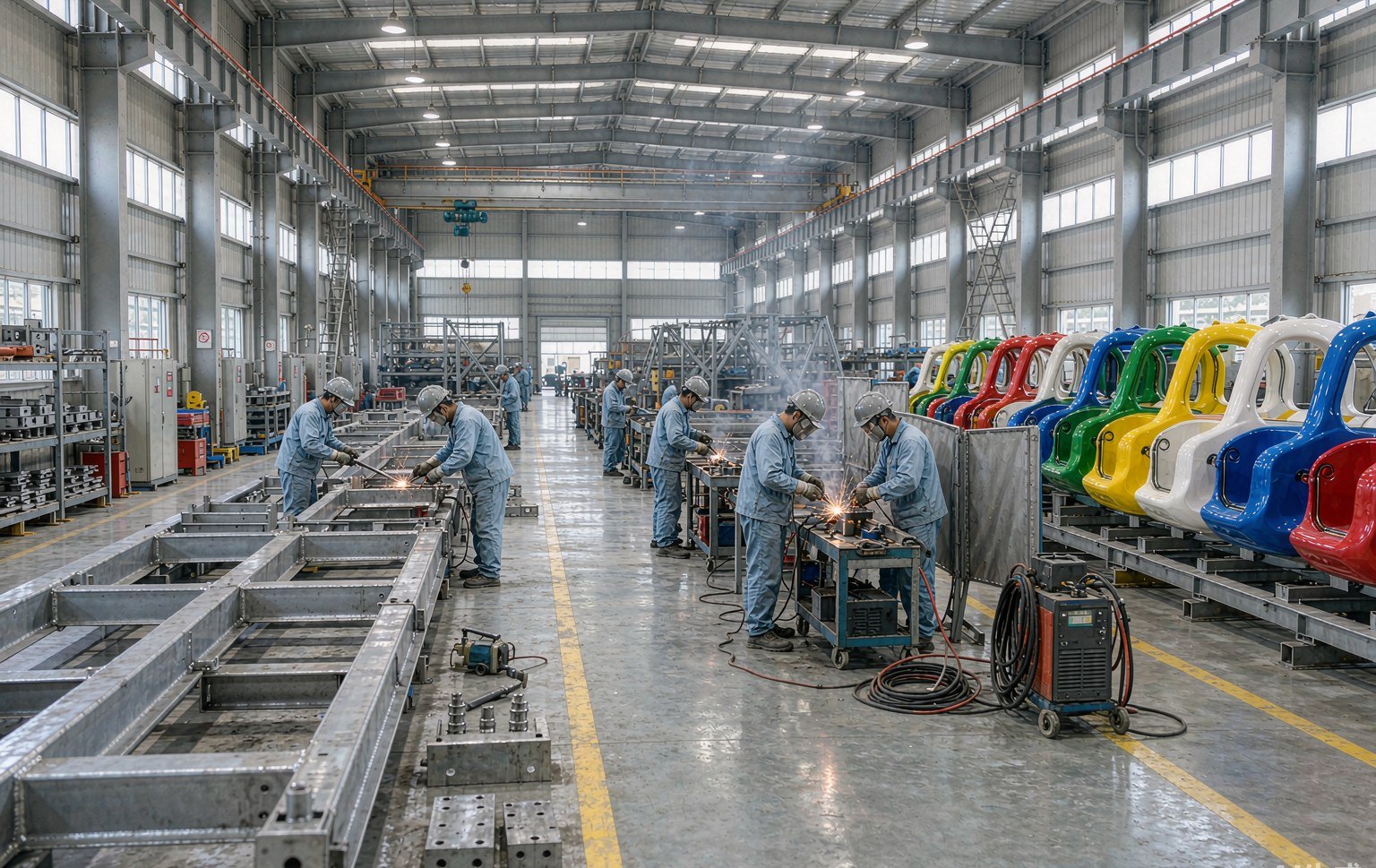
The process of obtaining CE certification forces a manufacturer to adhere to strict quality control protocols. This often results in a technically superior product.
- Documentation: CE suppliers must provide detailed operation and maintenance manuals, electrical schematics, and spare parts lists. This makes long-term maintenance significantly easier for your engineering team.
- Component Quality: To pass CE audits, manufacturers often must upgrade sub-components (e.g., using branded motors, sensors, and safety relays) rather than generic alternatives. This reduces the frequency of breakdowns and downtime.
Conclusion
While the initial procurement cost of a ride from a theme park equipment supplier with CE certification may be slightly higher than that of a non-compliant alternative, the Total Cost of Ownership (TCO) is often lower. When you factor in the savings on insurance premiums, the ease of permitting, the assurance of resale value, and the mitigation of catastrophic liability risks, the CE mark proves to be one of the most valuable investments a park operator can make.