Searching for used amusement rides for sale is one of the fastest ways to stretch a park development budget — but it is also the segment of the market where buyers lose the most money. A second-hand ride that looks clean on a trade platform can hide twenty thousand operating hours, a missing inspection history, or a control system no one can service. This guide explains how professional operators evaluate used rides, what refurbishment should include, where the real risks sit, and when buying new from a factory is simply the smarter transaction. Not every listing of used amusement rides for sale is a trap — but every listing deserves the same disciplined review.
Why the Used Amusement Rides Market Exists — and Who It Suits
Every year, established parks renovate their lineups, traveling funfairs retire equipment at season’s end, and leasing companies repossess rides from failed venues. That constant churn creates a genuine market for used amusement rides for sale, and for the right buyer it can be a legitimate opportunity. An operator in a price-sensitive market, a seasonal carnival company replacing one unit in a proven lineup, or an investor adding a family ride to an existing venue can all capture real savings — typically 40% to 60% off comparable new-build pricing.
The market does not suit everyone, however. A greenfield park that needs certified, warranted equipment to satisfy lenders and insurers will usually find that a carefully specified new purchase delivers a better total cost of ownership. If you are still deciding what your lineup should contain at all, our overview of amusement rides for sale covers how to structure a balanced ride mix before you commit to any individual unit.
How to Evaluate Used Amusement Rides Before You Buy
Price is the last number you should look at. Professional buyers work through a fixed evaluation sequence, and every step either strengthens or kills the deal.
Operating Hours and Duty History
A ride’s structural life is consumed by load cycles, not by calendar years. Ask for the operating log: seasons in service, annual hours, rider throughput, and whether the unit ran indoors or in a coastal, high-humidity environment. A ten-year-old carousel with 4,000 gentle operating hours is often a better buy than a five-year-old unit from a busy traveling fair. Be cautious of sellers who cannot produce any log at all — for many ride classes, missing duty records mean the structure must be treated as end-of-life by a conservative inspector. Among all listings of used amusement rides for sale, hours data is the single best predictor of what the machine will cost you after purchase.
Inspection and Maintenance Reports
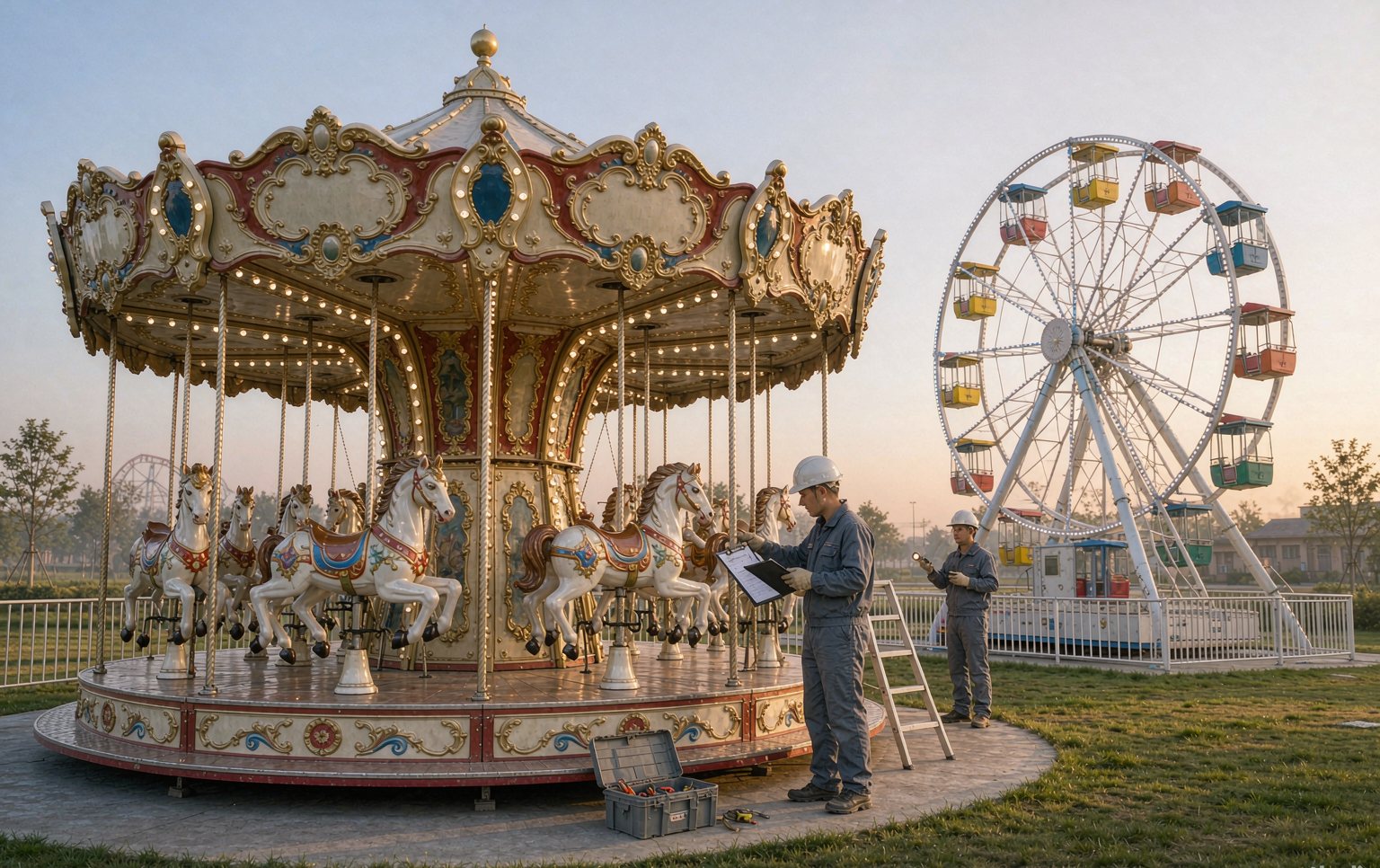
Request the complete paper trail: annual third-party inspection certificates, non-destructive testing (NDT) records on welds and critical load paths, gear oil analysis, and the manufacturer’s maintenance manual with completed service tickets. Cross-check serial numbers on the certificates against the physical unit. If the ride was manufactured under EN 13814 or ASTM standards, ask whether re-certification after relocation is realistic in your jurisdiction — some regulators require a full design review before a relocated ride may reopen, and that cost belongs in your comparison, not in a footnote.
Spares Availability and Technical Support
This is where used deals quietly fail. A ride is only as operable as its supply chain: bearings, motors, PLC modules, restraint systems, hydraulic seals, and FRP body panels all wear or break. Before you sign anything, confirm in writing that replacement parts are still produced or stocked, and at what price and lead time. If the original manufacturer has closed or will not support grey-market units, you are buying a future statue. Genuine factories — you can see how a ride supplier you can verify operates on our supplier guide — keep spare parts programs running for decades, which is precisely why many used-ride buyers end up contacting the OEM anyway.

Refurbishment: What a Serious Quote Must Include
Most used rides change hands in “as-is, where-is” condition, and the refurbishment budget is the number buyers underestimate. A professional scope is far more than a coat of paint. Demand itemized pricing for each of the following before you compare two units:
- Structural work: NDT of welds, corrosion treatment, replacement of any cracked or fatigued members.
- Drive and braking systems: gearbox overhaul, motor rewinding or replacement, brake pad and friction surface renewal.
- Safety components: new restraint pads, lap bars and locking mechanisms tested to original specification, emergency stop circuit verification.
- Electrical and controls: PLC health check, replacement of aged cabling, new variable frequency drives where needed, and reprogramming support.
- Passenger units: FRP crack repair or replacement vehicles, new seating, renewed restraint webbing.
- Cosmetics and theming: sandblasting, zinc-rich primer, marine-grade topcoat, LED lighting packages, and any theme sculpture restoration.
As a planning figure, refurbishment on a mid-life family ride commonly runs 15% to 30% of the machine’s new-build value; on neglected units it can exceed the purchase price itself. Insist that whoever performs the work issues test certificates, because an uncertified refurbishment is a liability, not an asset. In short: the true price of used amusement rides for sale is purchase price plus refurbishment plus downtime.
Used Ride Risk Checklist
Run every candidate through this checklist. Any single “no” should trigger a price reduction, an escrow condition, or a walk-away — this is the filter that separates working used amusement rides for sale from expensive scrap:
- Complete operating log and maintenance records available and consistent with the unit’s serial number?
- Latest third-party inspection certificate current, with no open non-conformities?
- Original manufacturer still in business and willing to supply spare parts and drawings?
- NDT reports on critical welds available from the last three years?
- Dismantling method documented, with all foundation bolts, pins, and specialty tools accounted for?
- Re-installation drawings and commissioning support offered by the seller or OEM?
- Ownership clear — no liens, leasing claims, or export restrictions?
- Refurbishment scope quoted in writing, with test certificates on completion?
- Transport, customs duties, and re-certification costs in your market calculated before the deposit?
- Payment structured against milestones (for example, deposit, pre-shipment inspection, bill of lading) rather than 100% upfront?
Used vs New: Price Comparison
So what does the arithmetic actually look like? The table below compares indicative pricing for popular ride classes. All figures are indicative, ex-works, configuration dependent; used values assume a mid-life unit in working condition and exclude refurbishment, dismantling, and freight.
| Ride Type | New (Ex-Works, Indicative) | Used (Typical Range) | Key Used-Market Variables |
|---|---|---|---|
| Carousel, 16–24 seats | $20,000 – $60,000 | $8,000 – $30,000 | Hours, horse/chariot condition, theming |
| Pirate ship, 24–40 seats | $25,000 – $80,000 | $12,000 – $40,000 | Frame corrosion, bearing wear, drive overhaul |
| Drop tower, 20–30 m | $120,000 – $350,000 | $60,000 – $180,000 | Brake system type, NDT status, foundation kit |
| Family coaster | $150,000 – $600,000 | $70,000 – $300,000 | Track fatigue, train condition, spares chain |
| Ferris wheel, 42 m class | $400,000 – $1,200,000 | $150,000 – $600,000 | Cabin refurbishment, drive/gearbox history, re-certification |
Read those used ranges with discipline. After adding dismantling ($10,000–$80,000 depending on ride size), international freight, refurbishment, and re-certification, the effective saving on a well-documented unit usually lands between 25% and 45% — real money, but nothing like the headline discount. Meanwhile, browsing amusement park rides price benchmarks for new equipment gives you the honest baseline that every “bargain” should be measured against. A buyer who shops used amusement rides for sale without knowing new-build pricing is negotiating blind.
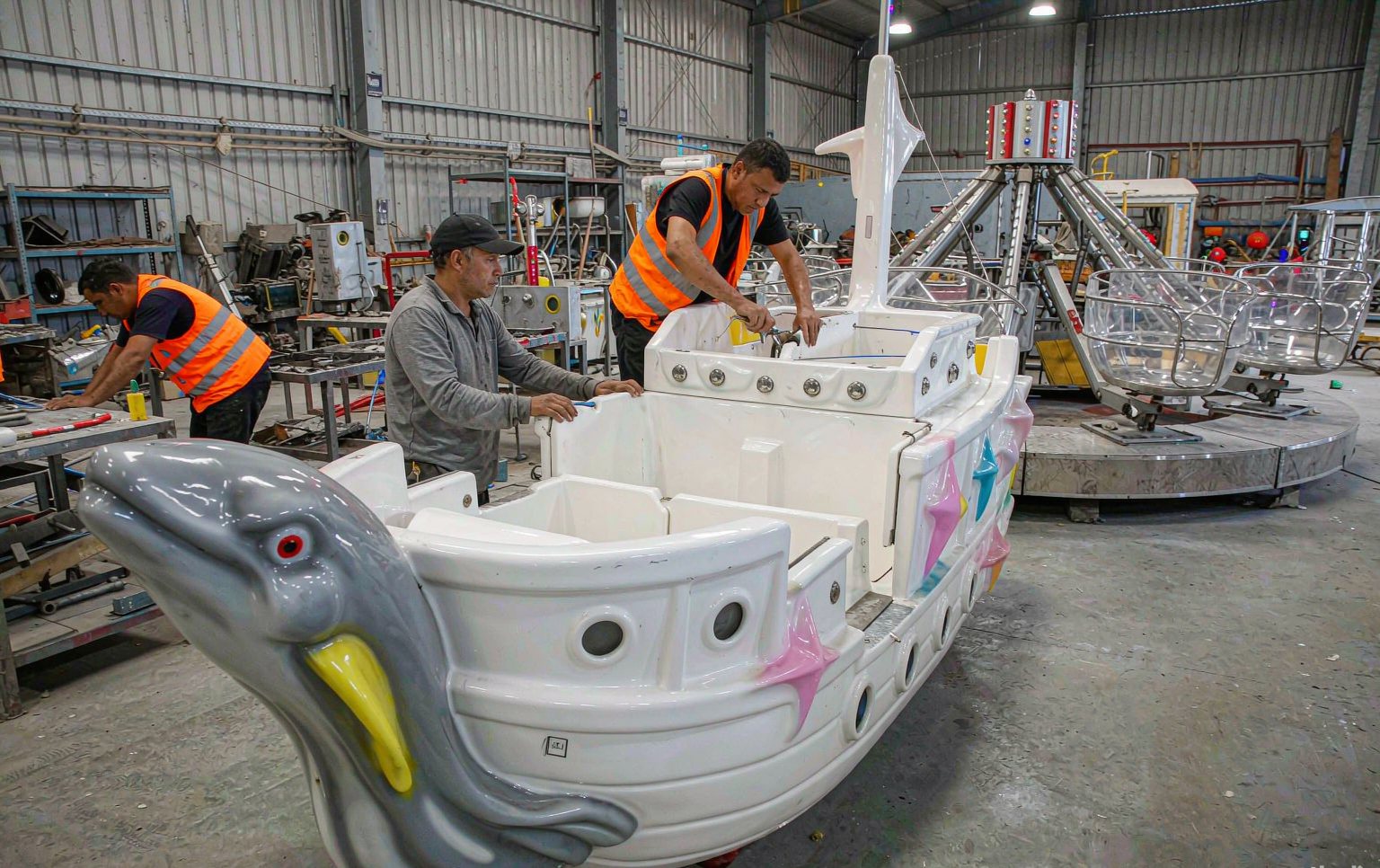
When Buying New from a Factory Makes More Sense
There are situations where the used route, however tempting, is the wrong transaction, no matter how many attractive listings of used amusement rides for sale you have bookmarked. In our experience, buying new directly from a manufacturer wins on four fronts:
1. Warranty and liability. A new ride from a reputable factory carries a 2-year warranty, lifetime technical support, and a clear chain of responsibility. A used purchase transfers every latent defect to you, and your insurer knows it — which is why premiums for undocumented second-hand equipment can erode much of the purchase saving.
2. Certification that matches your market. New equipment is designed and tested against the standards your regulator requires today — CE and EN 13814 for Europe, ASTM-aligned documentation for North America, ISO 9001-controlled production throughout. Retro-certifying a fifteen-year-old ride to modern standards is sometimes impossible and always expensive.
3. Customization and throughput. A used ride is what it is: fixed height, fixed capacity, fixed theme. New builds let you match seating counts, colors, theme sculptures, and site dimensions to your park plan — the entire premise behind custom amusement rides. For a landmark attraction, that flexibility is usually worth more than the discount.
4. Lifecycle cost. New units ship with operator training, installation crews (typically 10–25 days on site), stocked spare parts, and decades of support. Standard lead times run 25–45 days for core rides and 35–60 days for custom or large equipment — and the buyer who planned around those lead times rarely pays the panic premium that used-market buyers face when a deal collapses at inspection.
If several of these factors apply to your project, browsing a factory’s used amusement rides for sale alternatives — that is, its new-ride catalog with financing or phased delivery — will usually produce the stronger business case.
How to Deal With Sellers Fairly — On Both Sides of the Market
A final word on conduct, because this market runs on trust. Most sellers of second-hand equipment are honest operators retiring serviceable machines; a minority are moving liabilities. The same diligence standards apply in both directions. Never ask a seller to misdeclare hours or condition — those documents protect you. Use escrow or milestone payments, commission an independent inspector rather than relying on photos, and put the refurbishment scope in a written contract. And if you manufacture rides yourself, as we do at Anxin Amusement, you learn quickly that transparent documentation is the cheapest risk control in the industry: it is exactly the standard we apply to every new unit’s factory test record, and it is the standard you should demand from any used-ride seller.
Frequently Asked Questions
Are used amusement rides a good investment for a new park?
Occasionally, yes — for a well-documented, recently inspected unit where you control the refurbishment. For a new park facing lender, insurer, and regulator scrutiny, new factory-direct equipment with full certification and warranty is almost always the safer investment, and frequently the cheaper one once lifecycle costs are counted. Treat used amusement rides for sale as an operator’s shortcut, not a startup’s foundation.
How much can I really save buying used amusement rides?
Headline prices run 40–60% below new, but after dismantling, freight, refurbishment, and re-certification, realistic net savings are 25–45% on a clean unit — and close to zero on a neglected one. Build the full landed cost before comparing.
What documents must a seller of used rides provide?
At minimum: operating log, complete maintenance records, current third-party inspection certificates, NDT reports on critical welds, original design documentation, and proof of unencumbered ownership. Missing paperwork is a price-deduction item at best and a deal-killer at worst.
Can a used ride be re-certified after relocation?
Often, but not automatically. Many jurisdictions require inspection and sometimes a design review before a relocated ride reopens. Confirm the requirement with your local authority before purchase, and get the seller to commit in writing to whatever documentation the review will need.
Does Anxin Amusement sell used rides?
No — we manufacture new rides factory-direct, backed by a 2-year warranty, CE/EN 13814 and ASTM-aligned compliance, ISO 9001 production, spare parts supply, and operator training. Buyers who arrive at our door after a difficult used-market experience are, frankly, our most loyal customers.
Conclusion: Buy Smart, Not Cheap
The market for used amusement rides rewards exactly one kind of buyer: the one who verifies hours, demands inspection records, prices refurbishment honestly, and knows new-build benchmarks before negotiating. Run the risk checklist, calculate the full landed cost, and compare it against a warranted, certified, customizable new build with a realistic lead time. If the numbers favor new — and for most permanent installations they do — we would be glad to quote it. Request a quote from Anxin Amusement today, and our engineers will return a detailed, itemized proposal for your site, your market, and your budget.