Inflatable rentals are one of the most accessible entry points into the events and entertainment business. Startup capital is modest, units are portable, and demand comes from birthday parties, schools, festivals, and corporate events all year round in most climates. But the difference between a rental business that compounds and one that drains money is almost entirely in the buying and operating decisions made in the first year. This guide walks through the practical path from first purchase to a working fleet.
Step 1: Choose Your Market Before Your Units
Rental businesses fail most often because they buy the wrong product mix for their market. Before ordering anything, answer these questions:
- Who books inflatables in your area? Private birthday parties favor bounce houses and small combos; schools and festivals favor obstacle courses, slides, and interactive games; corporate events favor sports inflatables and branded units.
- How will units travel? Residential backyards limit unit size and weight; if you only have a van, giant slides with heavy blower requirements may sit idle.
- Who does the labor? Solo operators should favor units one or two people can install in under 30 minutes.
Step 2: Build the First Fleet
A practical starter fleet balances booking frequency with rate potential:
- 2–3 classic bounce houses or combos — the volume products that book most weekends.
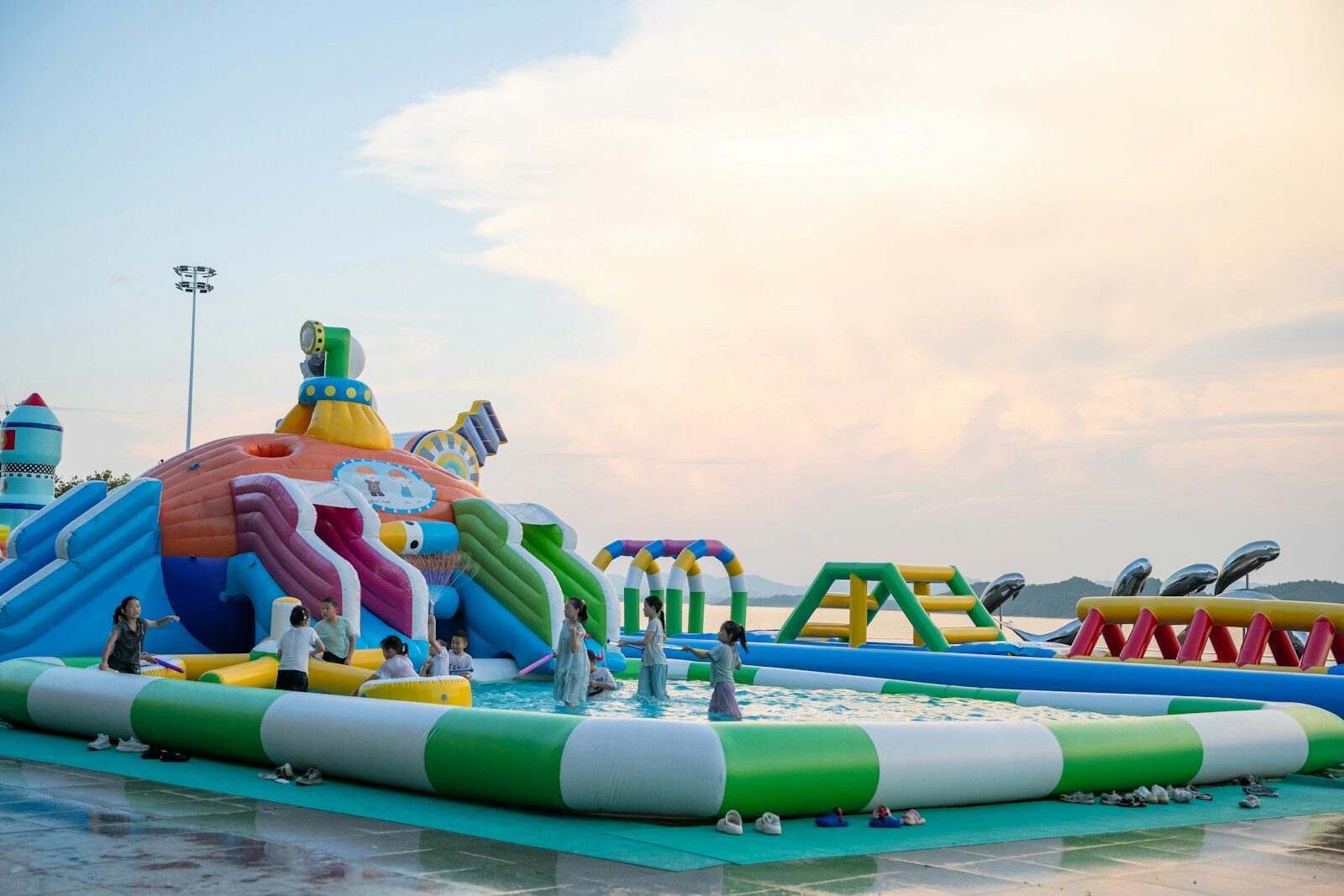
- 1 water slide or dry slide (climate-dependent) — the high-rate item that lifts average order value.
- 1 obstacle course or interactive unit — differentiates you for school fairs and company events.
- Accessories — blowers with spares, sandbags and stakes, extension cords, tarps, dollies, and a wet/dry vacuum.
Resist the temptation to buy ten of the same unit. Variety in a small fleet wins more weekend quotes than depth in one category.
What Quality Actually Means in Inflatables
Rental inflatables live a harder life than park inflatables: constant setup and teardown, sun exposure, and hundreds of cleanings per season. When comparing suppliers, verify:
- Vinyl weight. Commercial units should use heavy-duty PVC tarpaulin (commonly 15–18 oz on slides and stress areas); anything lighter will not survive rental cycles.
- Stitching. Double or quadruple stitching at seams and stress points; ask for close-up photos or factory videos.
- Commercial blowers and certification. Blowers should be CE/UL-rated as applicable, with inflatable airflow and pressure suitable for continuous commercial use.
- Fire retardancy and lead-safe materials. Request test certificates — many US states and European markets require documentation.
- Anchor points and repair kit. Count the anchor points against your local wind-use rules, and confirm a patch kit and spare parts ship with every unit.
Know the Real Numbers
Typical rental economics (figures vary by market):
- A bounce house rents for a few hundred dollars per weekend in many markets; large slides and obstacle courses can rent for two to four times that.
- A well-maintained commercial unit can pay for itself within one season of steady weekend bookings.
- Expect real costs beyond the unit price: transport, insurance (many venues require liability cover), cleaning consumables, storage, and repairs.
Track revenue per unit and per delivery, not just total revenue. This tells you when to add units and which categories to expand.
Operations That Protect the Investment
- Written rental agreements. Cover supervision requirements, weather cancellation, and damage responsibility.
- Wind rules and enforcement. Commercial inflatables have strict maximum wind speeds; train staff to measure, not guess, and to cancel without argument.
- Sanitation between rentals. Clean and dry every unit after each booking; mildew is the fastest way to destroy vinyl.
- Proper drying and storage. Never pack a wet unit; store rolled, off the floor, away from rodents and sunlight.
- Repair discipline. Small seam tears become big ones fast. Fix within the week, or pull the unit from the fleet.
Common First-Year Mistakes
- Buying residential-grade units because they are cheaper — they cannot be legally or practically rented in most markets.
- No weather policy, leading to risky setups and disputes.
- Underpricing to win early bookings, then being unable to afford insurance and repairs.
- No booking calendar discipline — double bookings and same-day cancellations destroy weekend revenue.
Final Thoughts
The inflatable rental business rewards operators who buy commercial-grade equipment, document their safety rules, and treat cleaning and storage as part of the product. Start with a balanced fleet, track per-unit performance, and reinvest in the categories your market actually books.
Anxin Amusement manufactures commercial-grade inflatables — bounce houses, slides, obstacle courses, and inflatable water parks — with factory-direct pricing, customization, and export documentation. Contact us for a starter-fleet quotation tailored to your market.