Why Pendulum Rides Should Be on Your Radar
If you’re running an amusement park, a family entertainment center, or a traveling carnival, you already know that the thrill ride sector is a brutal battleground. Guests want bigger, faster, and more intense experiences, but your spreadsheet demands rides that don’t eat up your entire capital budget or require a massive footprint. That’s exactly where pendulum rides shine.
At Anxin Amusement, we’ve spent over 15 years building and installing pendulum rides for operators across 24+ countries. We’ve seen firsthand how a well-placed pendulum attraction can transform a park’s layout, boost guest dwell time, and deliver a surprisingly fast return on investment. They aren’t just big, swinging metal structures; they are highly engineered revenue generators.
Whether you’re looking to fill an empty corner of your park, replace an aging attraction, or add a new anchor thrill ride, this guide covers everything you need to know. We’ll break down the real numbers, the operational realities, and the common pitfalls so you can make a confident, profitable decision. Let’s get into it.
What Exactly Is a Pendulum Ride?
At its core, a pendulum ride uses the physics of a swinging arm to generate thrill. But in the amusement industry, “pendulum ride” is a broad category that encompasses several distinct designs. The basic principle involves a central pivot point with an arm that swings back and forth, carrying a gondola or seating arrangement at the end.
What makes them so popular isn’t just the swinging motion; it’s the combination of forces. Riders experience positive and negative G-forces, airtime, and a unique sense of disorientation that you simply can’t get from a standard flat ride. Modern pendulum rides often incorporate rotation, tilting gondolas, or secondary pendulum arms to multiply the intensity.
Unlike a roller coaster that requires a massive track layout, or a drop tower that demands significant vertical clearance and structural footprint, pendulum rides are remarkably space-efficient. They deliver maximum thrill per square foot, which is exactly what venue owners care about when optimizing their land use.
Why Pendulum Rides Are a Smart Investment
Let’s talk about the bottom line. You’re not just buying a ride; you’re buying a business asset. Here is why pendulum rides consistently perform well on operator balance sheets:
Unmatched ROI and Capacity
Pendulum rides are throughput machines. A standard 42-seat pendulum ride can process upwards of 800 to 1,000 guests per hour during peak operations. Compare that to many high-capacity coasters that struggle to hit 1,200 riders per hour despite costing three times as much. The per-rider revenue potential is exceptional.
Space Efficiency
Land is expensive, whether you’re paying a mortgage, leasing, or managing a traveling footprint. Pendulum rides have a relatively small ground footprint compared to their visual presence and thrill output. You don’t need a sprawling queue line or a massive maintenance shed. This makes them perfect for urban entertainment centers or parks with tight zoning restrictions.
Repeat Ridership
Thrill-seekers are loyal, but they get bored. Pendulum rides offer a dynamic experience because the forces change with every cycle depending on the rider’s weight distribution and the operator’s control. Guests will ride it multiple times in a single visit, especially if you implement a multi-ride pass or wristband system.
Flexible Revenue Models
Beyond standard per-ride tickets, pendulum rides are ideal for photo and video monetization. The extreme facial expressions and G-force moments are perfect for on-ride media. You can also use them as anchor attractions for VIP fast-pass programs or seasonal upcharges during Halloween and summer events.
Types of Pendulum Rides
Not all pendulum rides are created equal. Choosing the right variant depends entirely on your target demographic and available space. Here are the most common types we manufacture:
Pirate Ship Rides
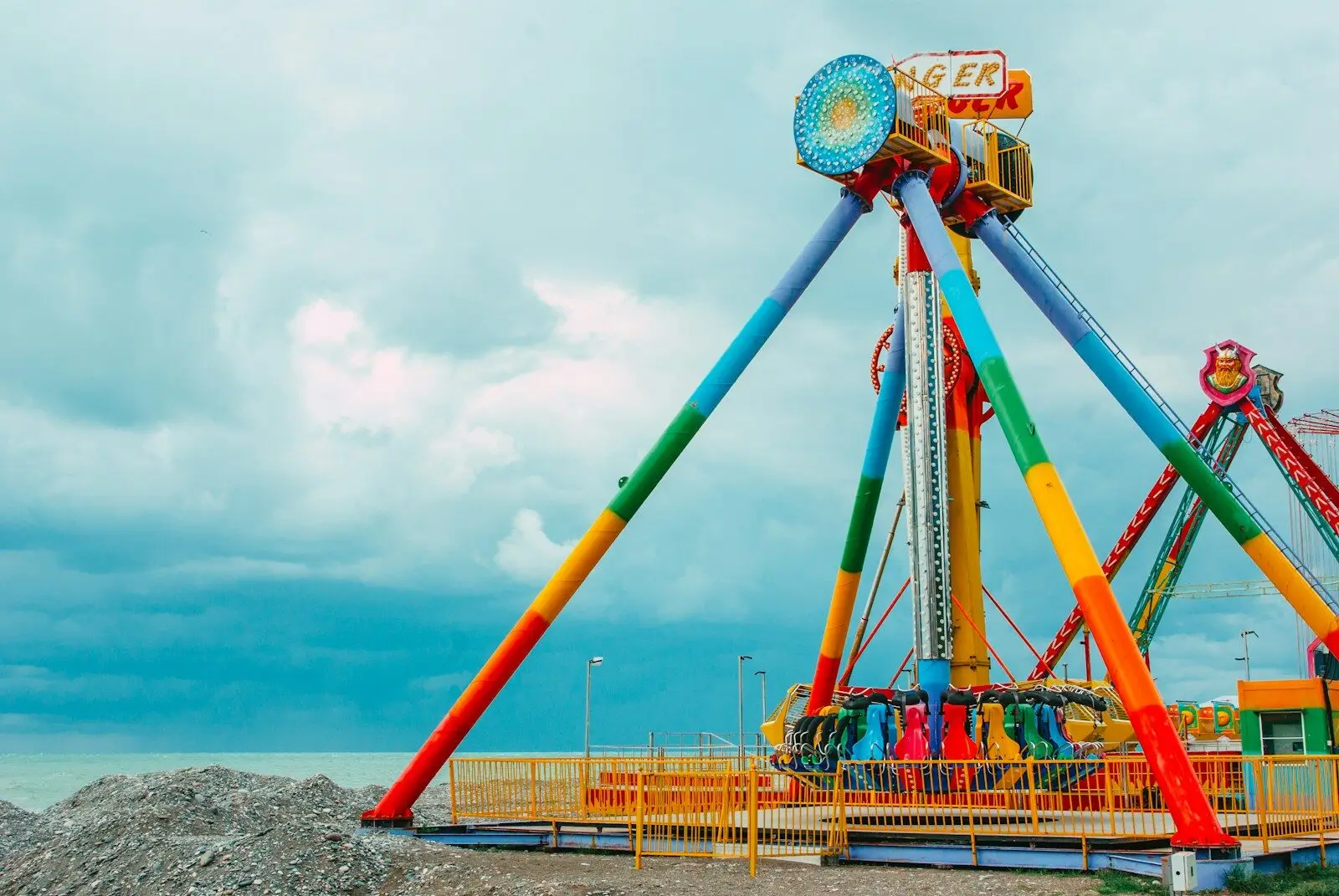
The classic. Pirate ships are the gateway pendulum ride. They offer a moderate, rhythmic swing that appeals to a wide age range, including older kids and adults who want a thrill without the extreme G-forces of a double pendulum. They are highly reliable, have low maintenance costs, and serve as excellent visual landmarks for a park. Check out our Pirate Ship Rides for family-friendly options.
Wave Swingers and Flying Chairs
These are technically pendulum rides, but they offer a completely different experience. Instead of a single gondola, riders sit in individual chairs suspended from a rotating canopy that swings outward via centrifugal force. They are visually stunning, highly photogenic, and appeal strongly to families and teens. If you’re looking to add a unique visual element, explore our Flying Chair options.
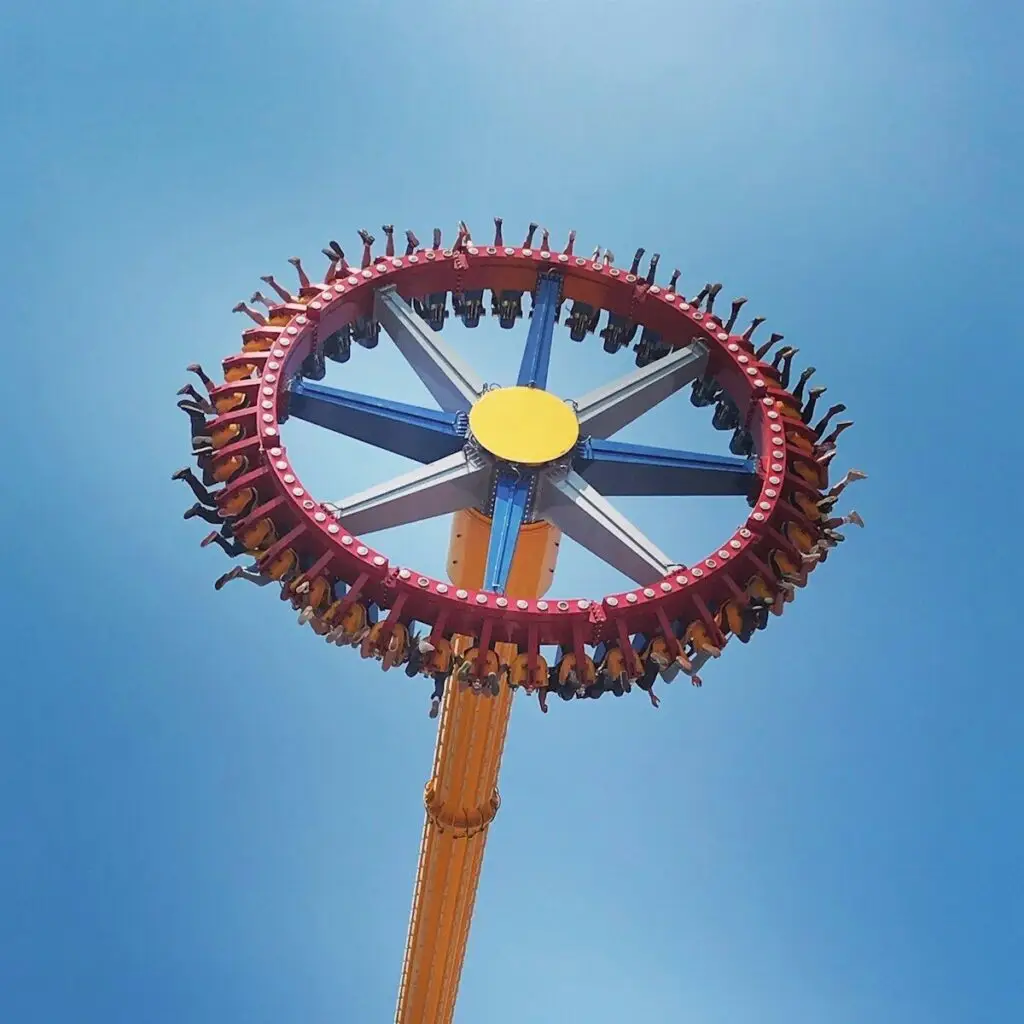
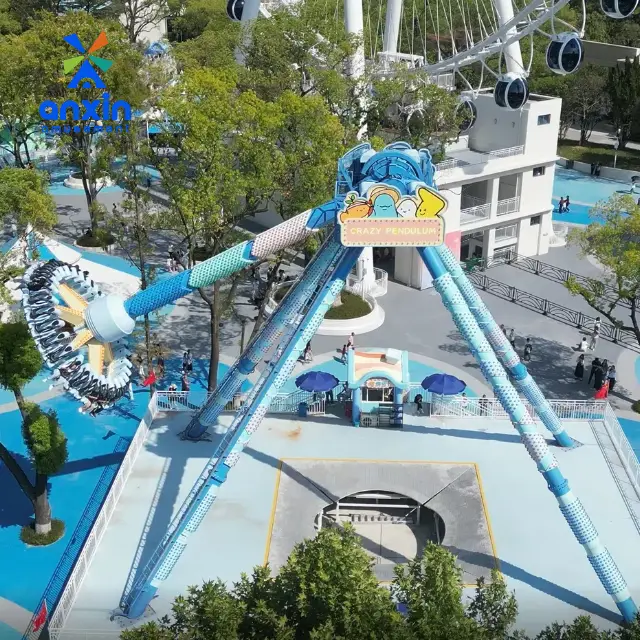
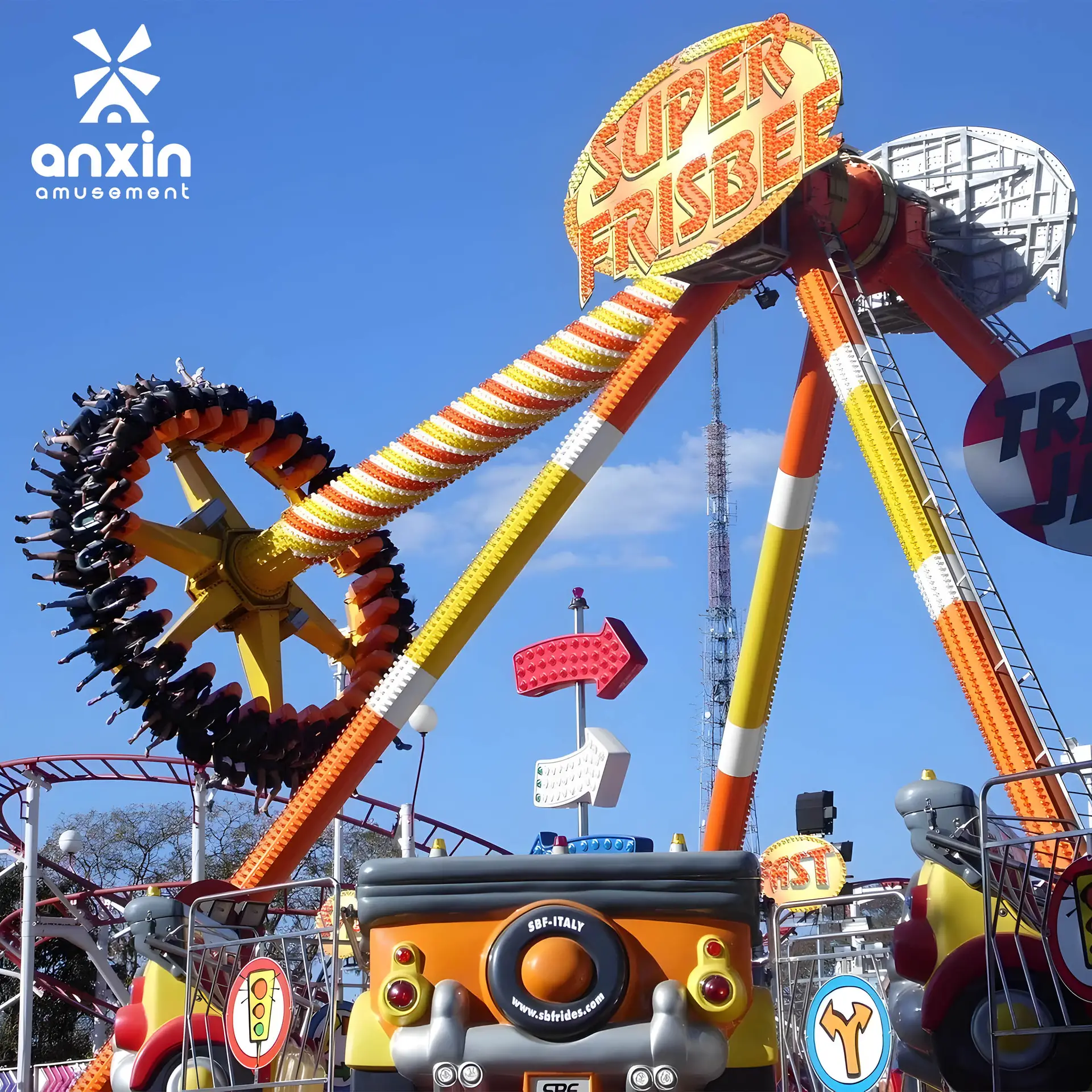
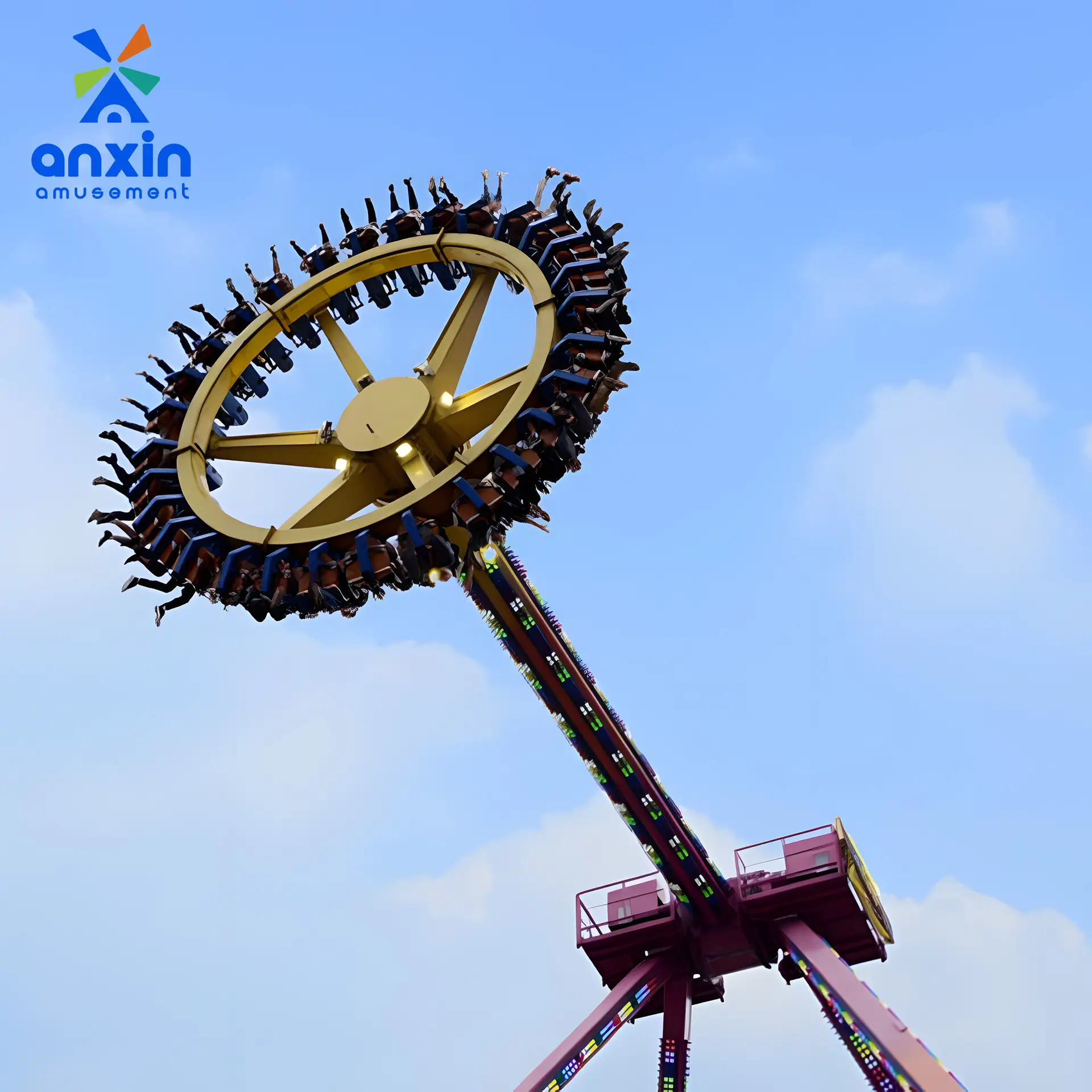
Double Pendulum (Frisbee / Disk’O)
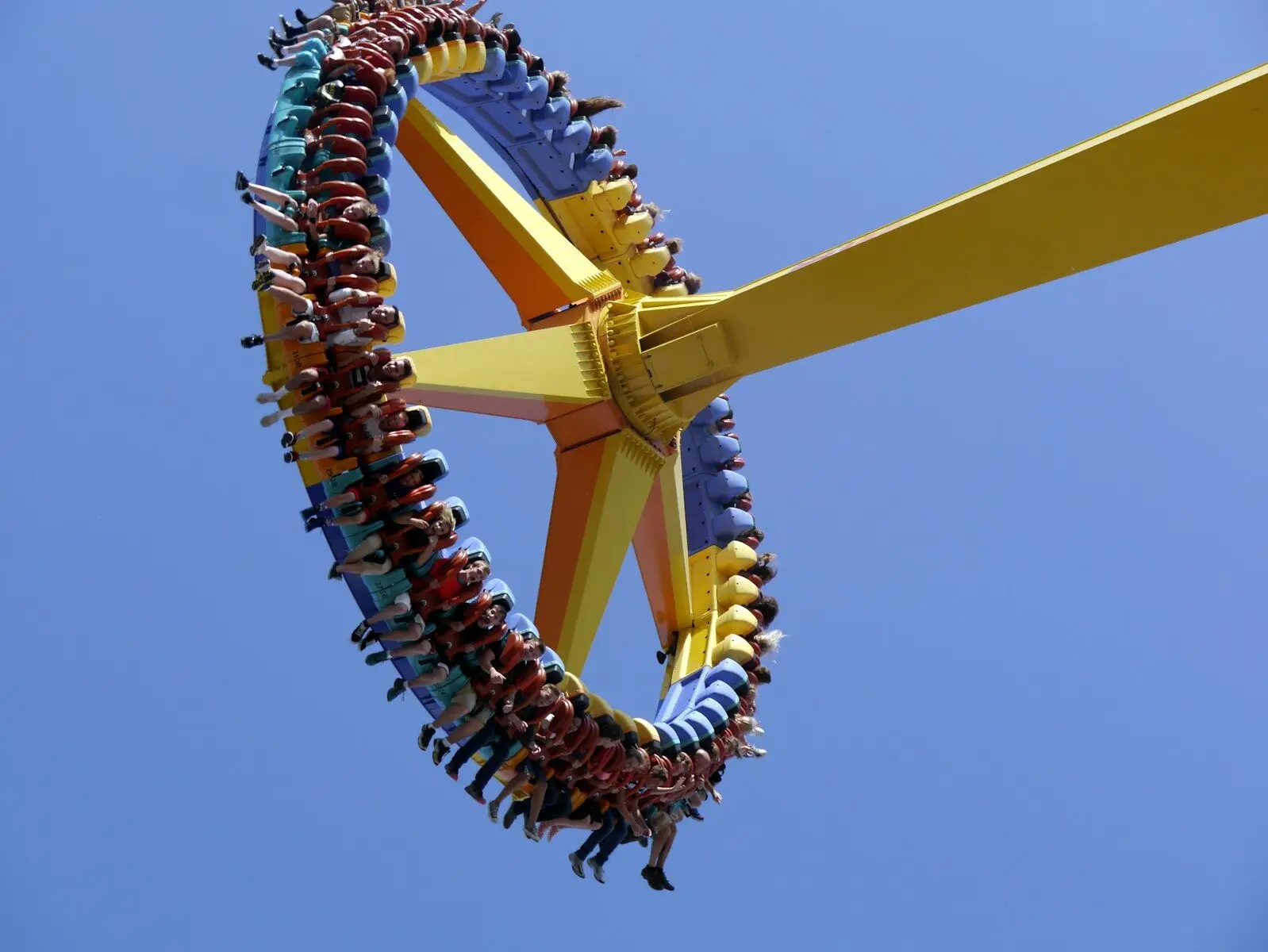
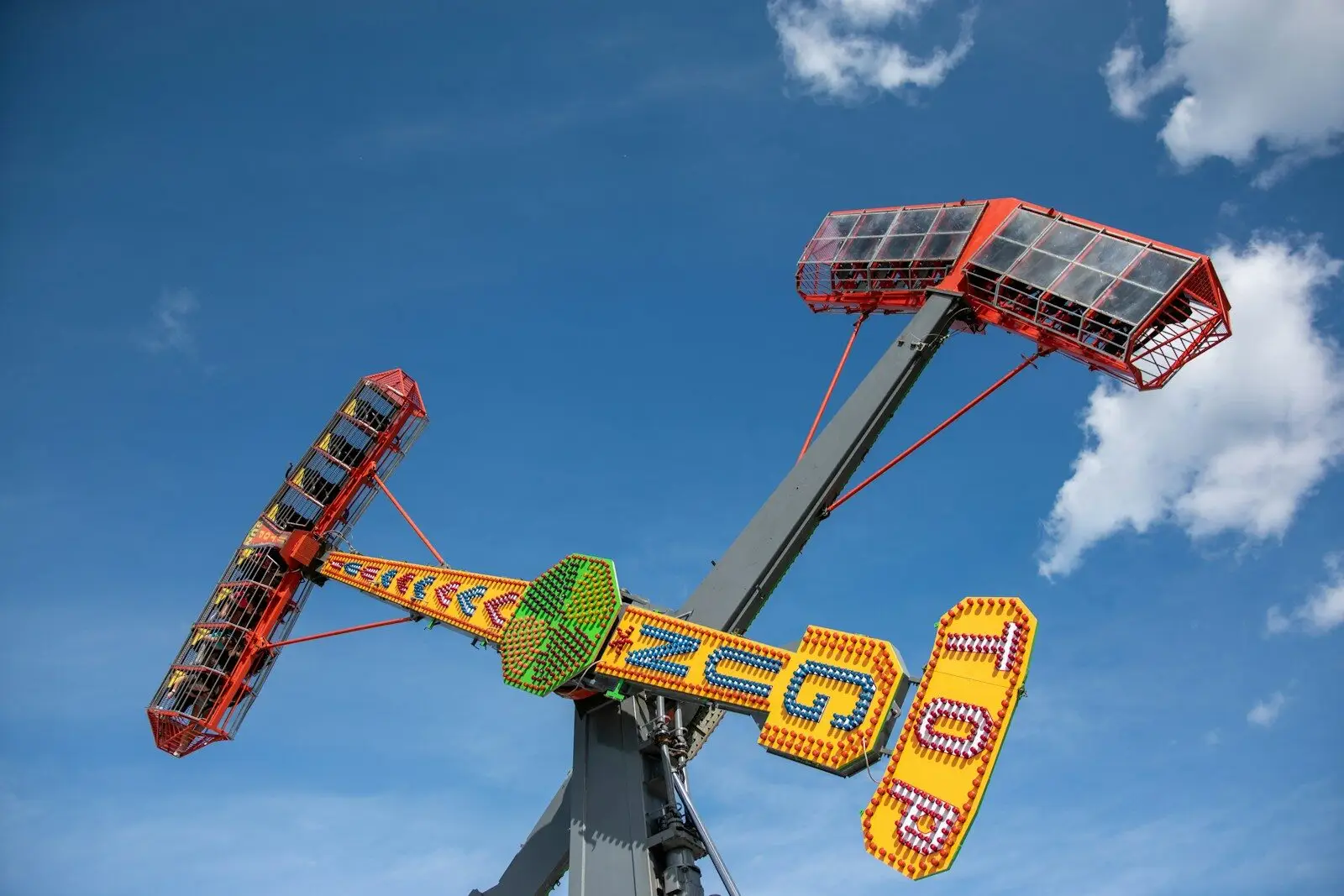
This is where the extreme thrill market lives. A double pendulum features a primary swinging arm with a secondary rotating disc at the end. Riders experience wild, unpredictable combinations of swinging and spinning. These are your headline attractions, designed to draw in adrenaline junkies and generate social media buzz. For high-intensity options, take a look at our Mega Disk’O and Scream Rides.
Mini Pendulum Rides
Perfect for parks that want to introduce younger guests to pendulum mechanics without overwhelming them. Mini pendulums scale down the forces and height while maintaining the core swinging motion. They are excellent transition rides between kiddie areas and the main thrill zone. Browse our Family & Kiddie Rides to see how these fit into a broader portfolio.
Custom and Themed Pendulum Rides
Off-the-shelf is great, but custom is better for branding. We can integrate your park’s IP, custom color schemes, themed gondolas, or proprietary lighting packages. A themed pendulum ride doesn’t just operate; it tells a story, which justifies premium pricing and enhances your park’s immersive environment.
Space, Installation & Logistics
One of the biggest concerns we hear from operators is, “Will this actually fit, and how long will it take to get running?”
Site Requirements
Pendulum rides require a reinforced concrete foundation, but the footprint is surprisingly compact. A standard 42-seat pendulum typically needs a circular safety zone of about 20-25 meters in diameter, including the ride envelope and emergency egress paths. You’ll also need to account for a small control booth and a maintenance access area. We provide detailed CAD drawings and foundation plans early in the process so your civil engineers can prep the site while the ride is in production.
Timeline from Order to Opening
From contract signing to grand opening, expect a timeline of 4 to 6 months for standard models, and 6 to 8 months for custom builds. This includes manufacturing, CE certification testing, ocean freight, customs clearance, and on-site installation. As a direct manufacturer, we control the production schedule tightly, avoiding the delays common with third-party brokers.
What’s Included
When you buy from Anxin Amusement, you aren’t just getting the ride structure. Our packages typically include the ride, control system, spare parts kit, installation supervision, operator training, and comprehensive documentation. We handle the heavy lifting so your local crew can focus on the foundation and electrical hookups.
Safety & Compliance
Safety isn’t a feature; it’s the foundation of your business. A single incident can shut you down permanently. As a leading pendulum ride manufacturer, we build to the highest international standards.
CE Certification and Standards
All our pendulum rides are CE certified and comply with EN 13814 and ASTM F2291 standards. This isn’t just a sticker; it means every weld, bolt, and electrical component has been verified by independent third-party inspectors. If you’re operating in Europe, the Middle East, or regions that recognize CE marking, this is non-negotiable. We provide full technical dossiers for your local regulatory approvals.
Built-In Safety Features
Modern pendulum rides are loaded with redundant safety systems: – Dual Restraint Systems: Over-the-shoulder harnesses combined with lap bars or seat belts. – Programmable Logic Controllers (PLCs): The ride won’t cycle if a single sensor detects an anomaly. – Hydraulic Braking Systems: Fail-safe brakes that engage automatically during power loss. – Wind Sensors: Automatic shutdown protocols when wind speeds exceed safe thresholds. – Emergency Stop Buttons: Strategically placed at the control booth and along the ride perimeter.
We also design for easy inspection. Critical stress points are accessible without disassembly, and we provide detailed maintenance checklists so your team can perform daily, weekly, and annual inspections with confidence.
Operating Costs & Maintenance
The purchase price is just the beginning. Smart operators evaluate the total cost of ownership (TCO). Here’s what to expect:
Energy Consumption
Pendulum rides are surprisingly energy-efficient compared to coasters or dark rides. A standard 42-seat pendulum typically runs on a 45-75 kW motor system, depending on the model. With modern VFD (Variable Frequency Drive) technology, energy consumption is optimized during the swing cycle, reducing peak draw. Expect monthly electricity costs to be a fraction of what you’d pay for a similarly sized coaster.
Staffing Requirements
You typically need 2-3 operators per shift: one at the control console, one for loading/unloading, and one for queue management during peak hours. The control system is designed for intuitive operation, reducing training time and minimizing human error.
Annual Maintenance Budget
A good rule of thumb is to budget 3-5% of the ride’s purchase price annually for maintenance. This covers consumables (brake pads, hydraulic fluid, bearings), periodic inspections, and unexpected repairs. Pendulum rides have fewer moving parts than coasters, which translates to lower long-term maintenance costs. We provide a recommended spare parts list with every delivery so you’re never waiting on a critical component.
Seasonal Operations
Pendulum rides are versatile across seasons, but your strategy should adapt:
Peak Season Strategy
During summer and holidays, maximize throughput. Run continuous cycles, minimize downtime between loads, and use the ride as a photo op anchor. Consider extended evening hours with LED lighting packages to capture night-time crowds. Pendulum rides are visually spectacular at night, and the lighting draws guests from across the park.
Off-Season Strategy
In shoulder seasons, use the pendulum ride as a promotional tool. Offer discounted multi-ride passes that include the pendulum to drive attendance on slower days. Host special events like “Thrill Nights” or charity fundraisers centered around the ride. If you’re in a region with harsh winters, plan for a winterization shutdown. Pendulum rides are designed for easy seasonal storage or protection with minimal disassembly.
Pendulum Rides vs Other Thrill Rides
How do pendulum rides stack up against other options in your thrill rides portfolio? Let’s compare:
vs Roller Coasters
Coasters are the ultimate headliners, but they’re expensive, space-hungry, and have lower hourly capacity. Pendulum rides offer 70-80% of the thrill intensity at 30-40% of the cost and footprint. They’re the perfect complement, not a replacement.
vs Drop Towers
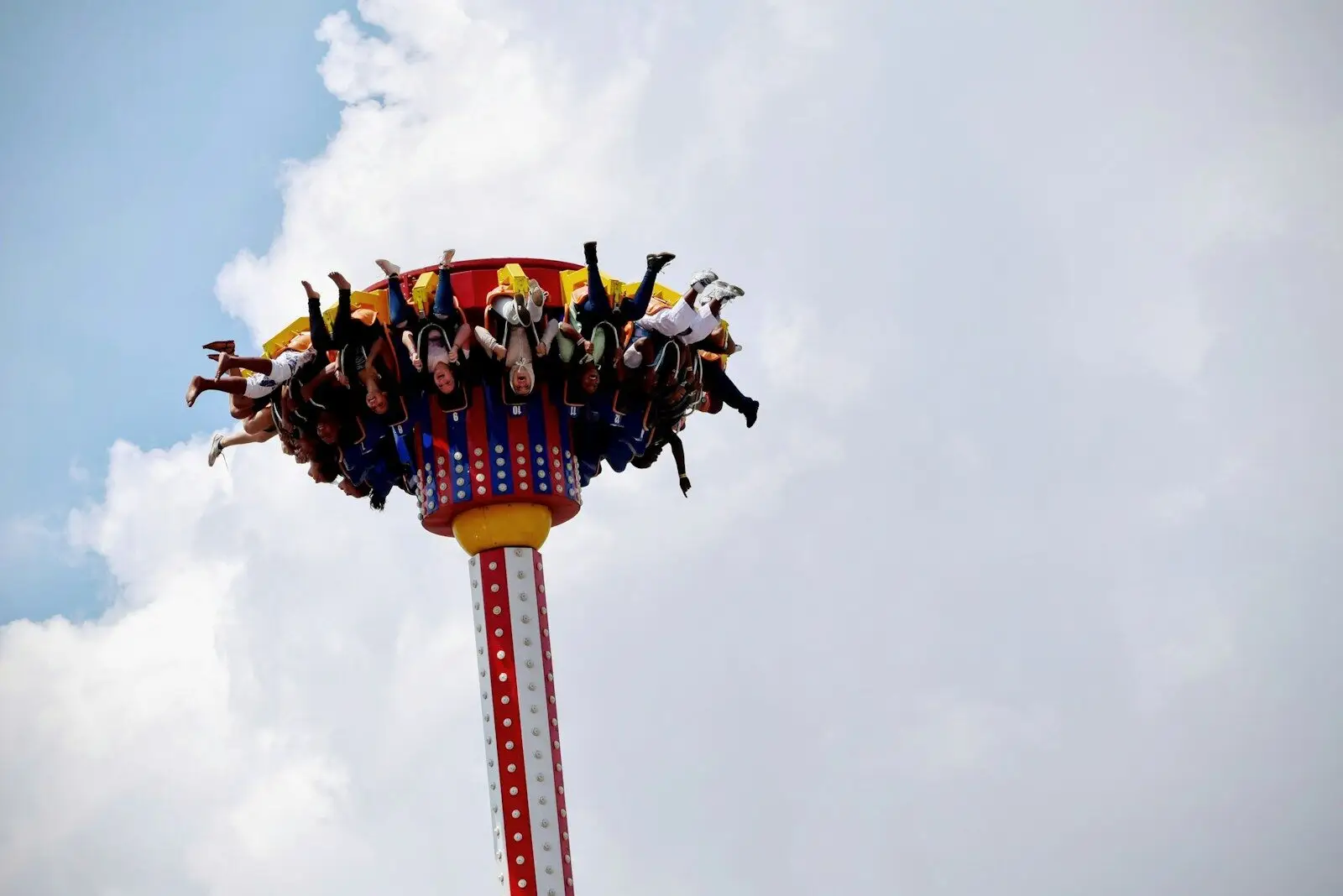
Drop towers deliver intense airtime but are single-experience attractions. Guests ride once and move on. Pendulum rides offer sustained, dynamic forces that encourage repeat rides. Drop towers also require significantly more vertical clearance, which can be a zoning nightmare in some areas.
vs Flying Chairs
Flying chairs are gentler and more family-oriented. Pendulum rides (especially double pendulums) target the extreme thrill demographic. Many parks successfully operate both, as they serve different market segments. Explore our Swing Rides for family-friendly alternatives.
vs Scream Rides
Scream rides and pendulum rides often overlap in the extreme category. Scream rides typically focus on vertical drops and inversions, while pendulum rides emphasize swinging momentum. The choice depends on whether you want vertical or horizontal thrill dynamics. Check out our Scream Rides for comparison.
vs Mega Disk’O
The Mega Disk’O is essentially a hybrid pendulum-spin ride. It combines pendulum swinging with disc rotation for maximum disorientation. If you want the most intense option in the pendulum family, this is it.
vs Carousels and Bumper Cars
These are flat rides with completely different purposes. Carousels and bumper cars serve as low-intensity, high-capacity fillers. Pendulum rides drive premium pricing and attract the thrill-seeking demographic. A balanced park needs both.
vs Spin Rides and Track Rides
Spin rides and track rides offer variety, but pendulum rides have a unique visual presence that acts as a park landmark. They’re visible from miles away, serving as free advertising.
How to Choose the Right Pendulum Ride
Making the right choice comes down to four factors:
Know Your Audience
Are you targeting families, teens, or extreme thrill-seekers? A pirate ship works for families; a double pendulum targets teens and adults. Don’t build a coaster-level thrill ride in a park where your core demographic is families with young kids. Match the ride to your market.
Measure Your Space Accurately
Don’t just measure the ride footprint; measure the entire safety zone, queue line, and maintenance access. Bring in a surveyor if you’re unsure. We can review your site plans before you commit to ensure there are no surprises.
Set a Realistic Budget
Include the ride, foundation, electrical upgrades, installation, and first-year spare parts. Don’t stretch your budget so thin that you can’t properly maintain the ride. A well-maintained pendulum ride lasts 20+ years; a neglected one becomes a liability in 5.
Vet the Manufacturer
This is critical. Look for a pendulum ride manufacturer with verifiable CE certification, a track record of international installations, and responsive after-sales support. Ask for references from operators in your region. At Anxin Amusement, we’ve delivered to 24+ countries and can connect you with operators who’ve run our rides for years. Learn more about our credentials on our About Us page.
Future-Proof Your Investment
Consider scalability. Can the ride be upgraded with new themes or lighting later? Is the control system compatible with future park-wide integration? We design our rides with modularity in mind, so you can adapt as your park grows.
Revenue Projections
Let’s get specific. Based on data from our international clients, here are conservative and moderate revenue estimates for a standard 42-seat pendulum ride:
Conservative Estimate
- Daily Riders:600 (accounting for weather, maintenance, and off-peak days)
- Ticket Price:$5.00
- Daily Revenue:$3,000
- Annual Revenue (300 operating days):$900,000
- Operating Costs (staff, energy, maintenance):$180,000
- Net Annual Profit:$720,000
- ROI Timeline:5 – 3 years (based on $2M total investment)
Moderate Estimate
- Daily Riders:900 (peak season average, including multi-ride pass users)
- Ticket Price:$6.00 (including photo upsell)
- Daily Revenue:$5,400
- Annual Revenue (300 operating days):$1,620,000
- Operating Costs:$220,000
- Net Annual Profit:$1,400,000
- ROI Timeline:5 – 2 years
These numbers vary by market, location, and park attendance, but they reflect real-world performance from parks operating our rides. The key driver is throughput; pendulum rides generate revenue continuously with minimal downtime between cycles.
Installation & Commissioning Process
We’ve streamlined this into four phases:
Phase 1: Site Preparation (Weeks 1-8)
You handle the foundation and electrical infrastructure based on our CAD drawings. We provide ongoing technical support to your civil engineers to ensure specs are met.
Phase 2: Delivery & Unloading (Weeks 8-12)
The ride arrives in modular sections. We coordinate logistics and customs clearance. Your team unloads using standard heavy equipment; we provide detailed unloading guides.
Phase 3: Assembly & Installation (Weeks 12-16)
Our installation supervisor oversees your local crew. Assembly typically takes 3-4 weeks for experienced teams. We provide real-time technical support via video call if needed.
Phase 4: Testing & Commissioning (Weeks 16-18)
We conduct comprehensive testing: empty cycles, weighted tests, safety system verification, and PLC calibration. Once passed, we train your operators and maintenance staff. You’re ready to open.
Common Mistakes Operators Make
Avoid these six costly errors:
1. Underestimating Foundation Costs
The foundation is 10-15% of your total project cost. Don’t value-engineer this. A substandard foundation leads to premature wear, safety issues, and expensive remediation.
2. Skipping Operator Training
Even with intuitive controls, proper training prevents accidents and extends ride life. Invest the time; it pays for itself in reduced downtime and liability protection.
3. Ignoring Seasonal Maintenance
Don’t just shut it down for winter. Follow the winterization protocol. Corrosion and bearing damage during storage are the #1 cause of spring opening delays.
4. Buying Based on Price Alone
The cheapest ride often costs the most in the long run. Poorly engineered rides have higher maintenance costs, shorter lifespans, and safety risks. Buy from a reputable pendulum ride manufacturer with proven quality.
5. Neglecting Queue Line Design
A great ride with a terrible queue line kills guest satisfaction. Design the queue for shade, entertainment, and efficient loading. The queue experience is part of the ride experience.
6. Forgetting About Spare Parts
Don’t wait for a breakdown to order parts. Keep a critical spare parts inventory on-site. Downtime during peak season costs thousands per hour; a $500 bearing shouldn’t shut you down for 3 weeks.
Complementing Your Pendulum Ride with Other Attractions
A pendulum ride doesn’t exist in a vacuum. It works best as part of a balanced portfolio:
- Pair with a Drop Tower:Create a thrill zone where guests can experience both swinging and vertical drop sensations.
- Add a Carousel:Balance the extreme thrill with a classic family attraction nearby. Families can split up and reunite easily.
- Include Water Play Rides:In hot climates, water attractions drive summer attendance. Pendulum rides draw crowds; water rides keep them cool and spending.
- Integrate Bumper Cars:Interactive flat rides increase dwell time. Guests who finish the pendulum often seek a lower-intensity interactive experience next.
For comprehensive park planning, explore our Solutions page to see how we help operators design balanced, profitable layouts.
Frequently Asked Questions
1. What is the typical lifespan of a pendulum ride?
With proper maintenance, 20-25 years. We’ve seen pendulum rides from the early 2000s still operating safely today. The key is adherence to the maintenance schedule and timely replacement of wear components.
2. Do pendulum rides require special permits?
Permitting varies by jurisdiction. Our CE certification and technical documentation are designed to streamline local approval processes. We provide all necessary engineering drawings and safety certifications to support your permit application.
3. How many staff do I need to operate a pendulum ride?
Typically 2-3 per shift. One operator at the console, one for loading/unloading, and one for queue management during peak hours. Off-peak, you can often operate with 2.
4. Can pendulum rides be used indoors?
Yes, but ceiling height is the limiting factor. Double pendulums require significant vertical clearance. Indoor installations are common in large entertainment centers, but you must verify clearances before purchasing.
5. What wind speed is safe for pendulum ride operation?
Most pendulum rides have automatic shutdown at 45-55 mph (72-88 km/h), but operational limits are typically set lower (30-40 mph) for guest comfort. Always follow the manufacturer’s specified wind limits and install anemometers.
6. How long does installation take?
Assembly typically takes 3-4 weeks with an experienced crew and our supervision. Total project timeline from order to opening is 4-6 months for standard models.
7. Are pendulum rides loud?
Modern pendulum rides are relatively quiet compared to coasters. The primary noise is mechanical (hydraulics, motors) and rider screams. Sound levels are typically 85-95 dB at the ride perimeter, well within most zoning limits.
8. Can I customize the theme and colors?
Absolutely. Custom themes, color schemes, lighting packages, and branded gondolas are standard offerings. Themed rides justify premium pricing and enhance park immersion.
9. What happens if there’s a power failure during operation?
Fail-safe braking systems engage automatically. The ride will stop safely, and manual lowering procedures allow operators to evacuate guests. Battery backup systems ensure control systems remain functional during outages.
10. Do you offer financing or leasing options?
We work with international financing partners to offer flexible payment terms. Contact our sales team to discuss options tailored to your budget and cash flow