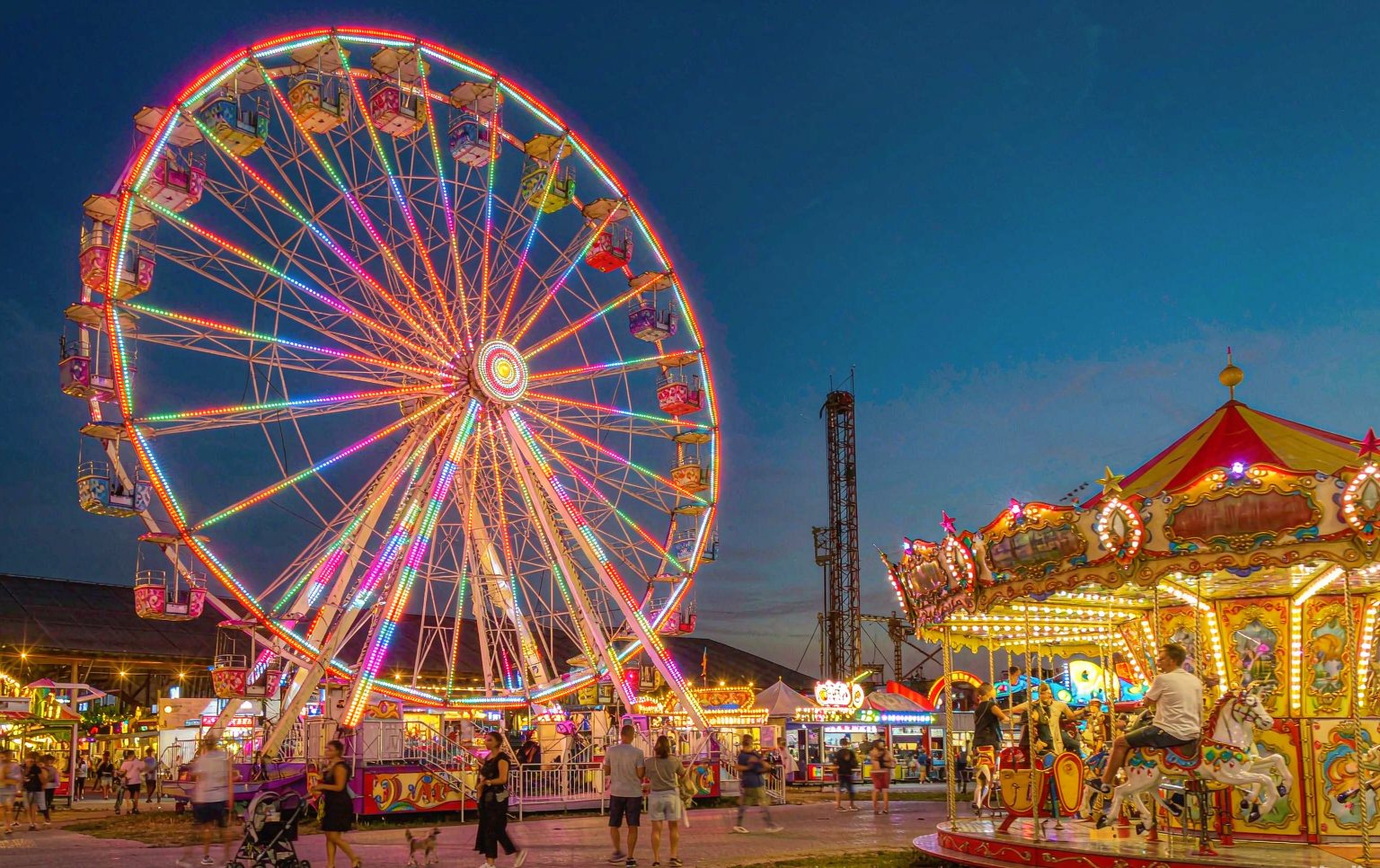
For international buyers looking to buy amusement rides at competitive prices without sacrificing quality, China remains the world’s manufacturing powerhouse. Whether you’re a theme park operator, or an event planner expanding your fleet, sourcing from a trusted China amusement ride manufacturer can transform your project economics. This amusement ride sourcing guide walks you through every step—from factory verification to customs clearance—so you can import with confidence.
Why Source Amusement Rides from China
China’s amusement ride industry has matured over three decades, producing equipment for household names and independent parks alike. The advantages are clear: lower manufacturing costs, flexible MOQs (minimum order quantities), rapid production capacity, and the ability to handle complex custom designs. Chinese manufacturers have invested heavily in certifications, with many holding CE, ASTM, and ISO 9001 credentials to serve global markets.
Beyond cost, China offers design flexibility. Want a carousel with your brand’s color palette? A roller coaster with custom train styling? Chinese factories increasingly accommodate bespoke engineering. The combination of affordability, capability, and compliance makes China the top destination for amusement ride sourcing.
Step 1: Choose the Right Amusement Ride Manufacturer
The single most critical decision in your sourcing process is selecting a manufacturer. Not all suppliers are equal, and the difference between a reliable partner and a costly mistake starts here.
H3: Factory vs. Trading Company — How to Tell the Difference
A factory owns production facilities, employs engineers, and controls quality directly. A trading company acts as an intermediary—it sources from factories and adds a margin. For complex mechanical rides, you want a factory.
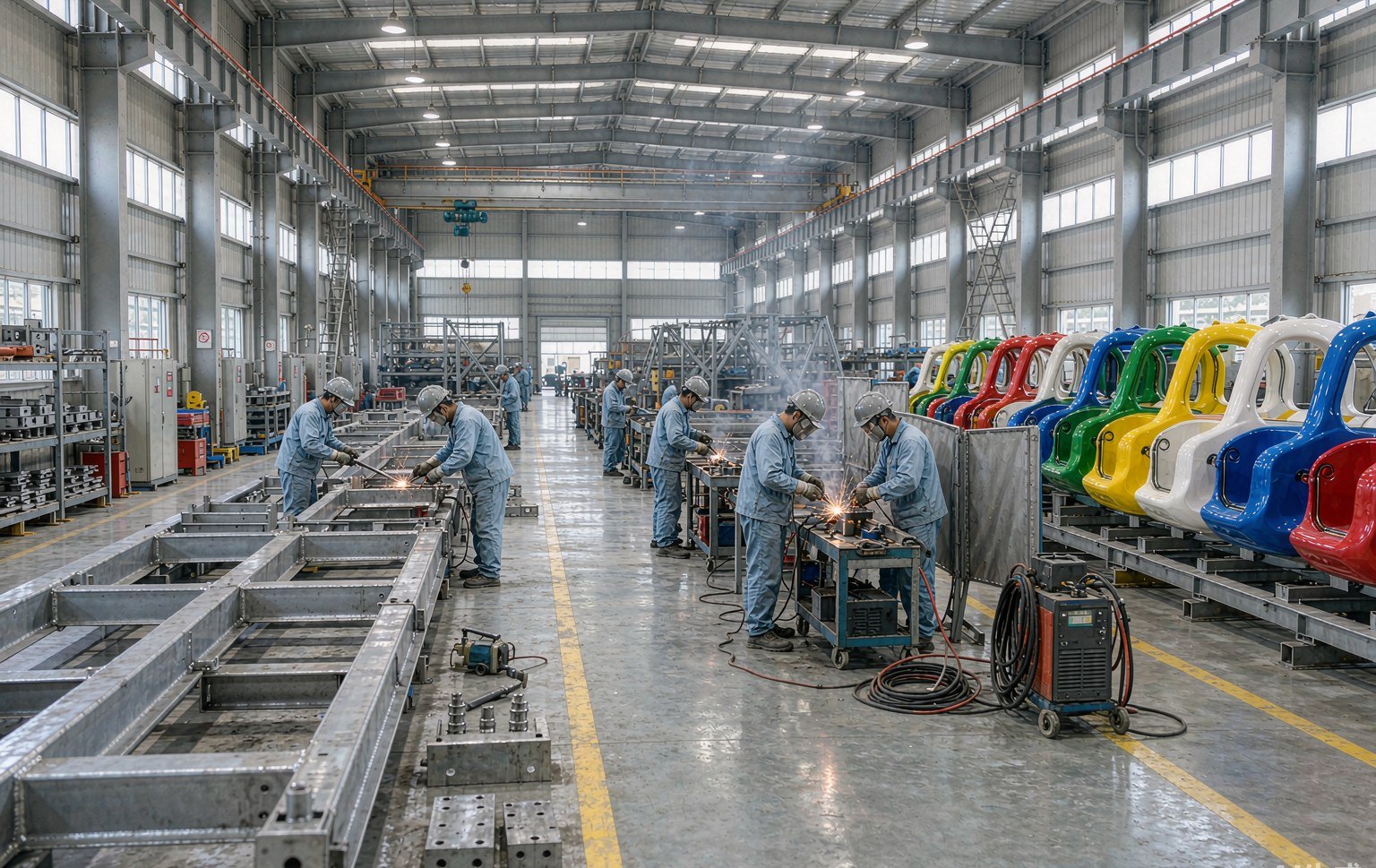
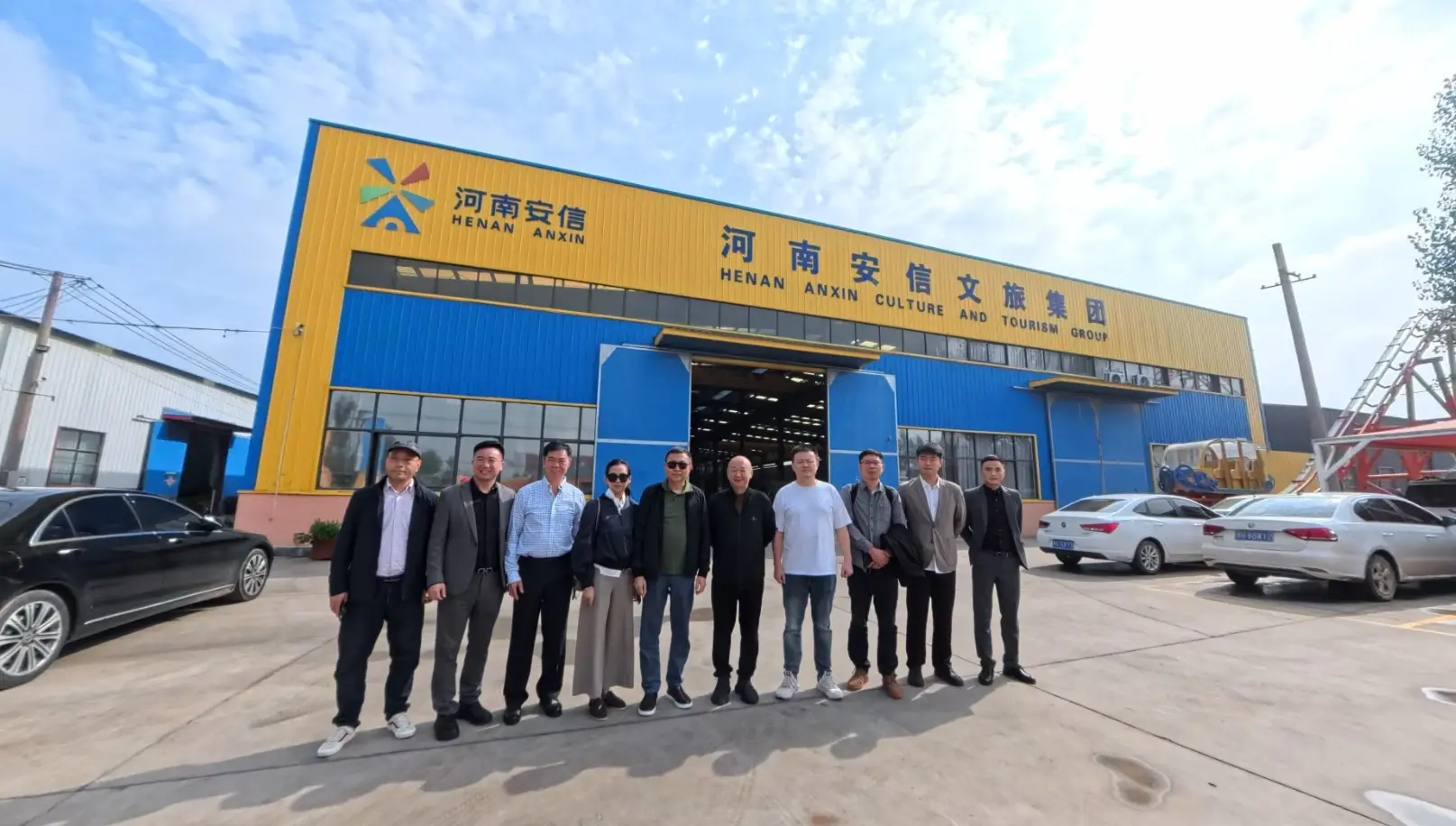
Ask suppliers for: (1) Business license showing “manufacturing” scope, (2) Photos or video of the production floor, (3) Employee count and engineering team size, (4) Proof of their own welding, fabrication, or sewing workshops. Anxin Amusement Equipment, for instance, operates a 15,000+ square meter facility with dedicated mechanical and inflatable production lines—a direct manufacturer, not a middleman.
Key Certifications to Verify (CE, ASTM, EN 13814)
Certifications are your first line of defense against substandard products. At minimum, verify:
- CE marking — Required for equipment sold or operated in the European Economic Area
- ASTM F747/F2291 — North American safety standards for amusement rides
- EN 13814 — European standard for fairground and amusement park machinery
- EN 14960 — Specific standard for inflatable amusement devices
- ISO 9001 — Quality management system certification
- SGS testing reports — Third-party verification of materials and construction
Request current certificates directly from the issuing bodies or verify through official databases. Scrutinize the scope: does the certificate cover the specific ride type you’re purchasing?
Step 2: Define Your Project Requirements
Before reaching out to suppliers, clarify what you need. Ambiguity in your requirements leads to misaligned quotes, delays, and cost overruns.
Mechanical Rides vs. Inflatable Equipment — Which Fits Your Park?
Mechanical rides (roller coasters, pendulum rides, drop towers, carousels) offer high thrill factors and long operational lifespans—typically 15-25 years with proper maintenance. They’re capital-intensive but generate premium ticket pricing.
Inflatable equipment (bounce castles, inflatable slides, obstacle courses) delivers quick setup, lower cost, and strong appeal for young children and family events. Commercial-grade inflatables last 3-7 years depending on usage intensity. Many successful parks run both categories: mechanical rides as anchor attractions, inflatables as high-margin add-ons.
Your venue type, target demographic, and revenue model should guide this decision.
Capacity, Space, and Budget Planning
Calculate your per-hour guest capacity needs. A large roller coaster might process 800 guests/hour; a bounce castle, 60. Don’t overbuild if your park expects 500 daily visitors.
Map equipment dimensions against your available footprint. Indoor FECs often prioritize compact kiddie rides and wall-mounted inflatables. Outdoor theme parks have flexibility for massive installations.
Set a realistic budget that includes not just equipment purchase price, but: freight forwarding, customs duties (typically 5-10% for amusement equipment under HS code 9508), site preparation, installation labor, and a 10-15% contingency reserve.
Step 3: Request Quotes and Compare Offers
What to Include in Your RFQ (Request for Quotation)
A thorough RFQ accelerates comparison and reduces misunderstandings. Include:
- Specific ride names or reference photos
- Dimensions (height, width, length, passenger capacity)
- Target market and applicable safety standards
- Power requirements (voltage, phase, frequency)
- Installation environment (indoor/outdoor, climate conditions)
- Customization needs (colors, branding, theming)
- Target delivery date
- Required certifications for your market
Red Flags to Watch for in Pricing
Prices that seem too good to be true signal risk. Watch for:
- Unrealistically low quotes — Could indicate inferior materials, skipped safety features, or copycat designs
- Vague specifications — “Standard quality” or “Similar to photo” without exact parameters
- Missing certification documents — Legitimate manufacturers readily provide COCs and test reports
- No sample inspection offered — Reputable suppliers invite or facilitate pre-shipment inspection
- Pressure to rush payment — Be cautious of suppliers demanding full payment upfront before any verification
Step 4: Quality Inspection and Pre-Shipment Verification
On-Site Factory Audit Checklist
If your order value justifies travel, conduct a factory audit yourself or through a representative. Inspect:
- Welding quality on structural steel (no visible cracks, proper reinforcement)
- Electrical systems and wiring (proper grounding, conduit routing)
- Hydraulic/pneumatic systems (leak-free, proper pressure ratings)
- Material specifications (steel grade, PVC thickness for inflatables)
- Workmanship on seams and stitching (consistent tension, no loose threads)
- Safety features (emergency stops, restraint systems, fencing)
- Quality control documentation and defect logging procedures
Third-Party Inspection Services
For buyers unable to visit, third-party inspection services (SGS, Bureau Veritas, Intertek) provide independent verification. Typical scope includes: quantity check, visual inspection against specifications, material verification, and functionality testing where feasible. Costs range from $200-$500/day depending on location and scope—a worthwhile investment against significant quality issues.
Step 5: Shipping and Customs Clearance
Choosing Between Container and RoRo Shipping
For mechanical rides, assess your options:
Flat Rack Container (20ft/40ft): Best for disassembled rides. Cost-effective for volumes fitting standard containers. Requires professional rigging at both ends.
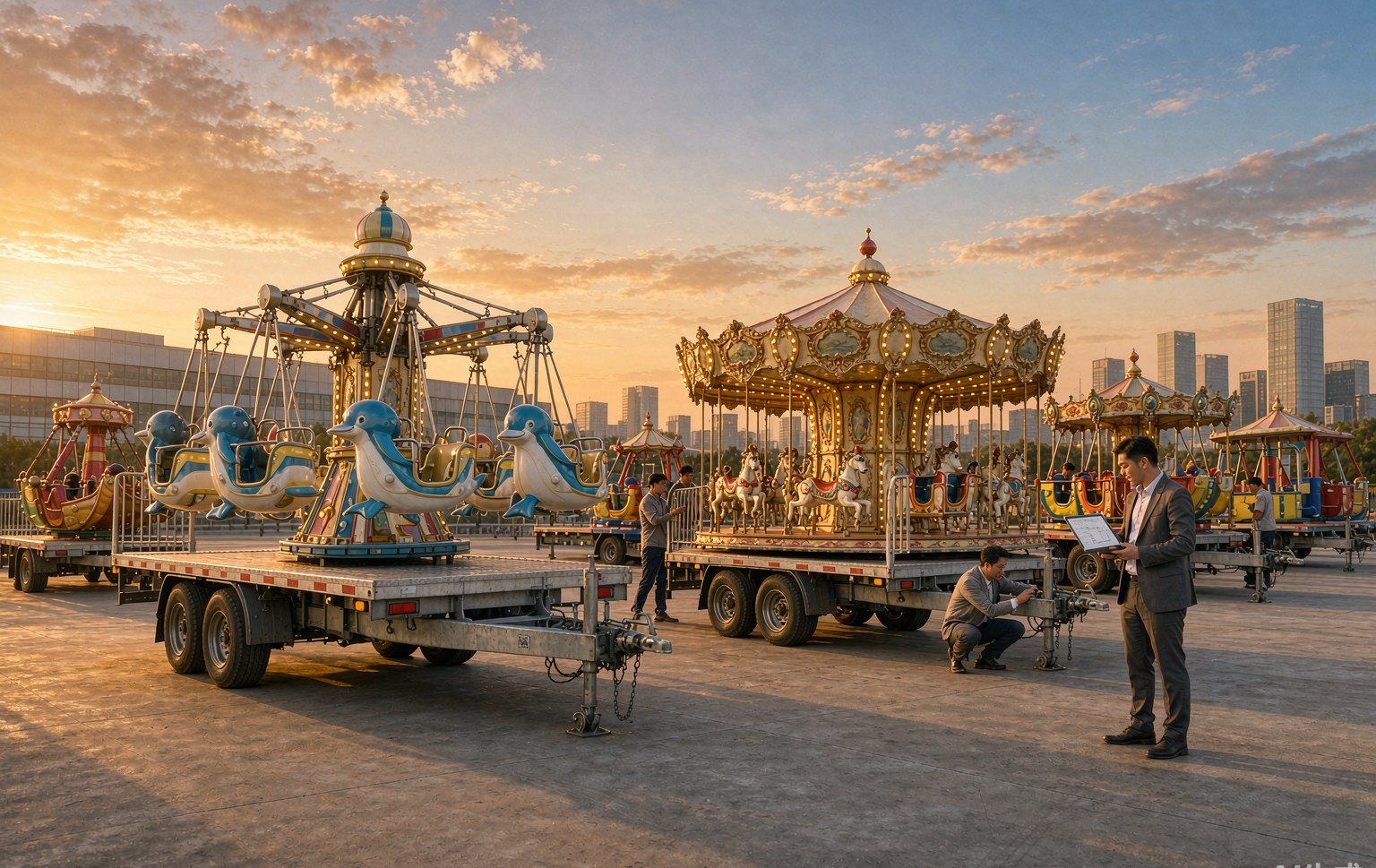
RoRo (Roll-on/Roll-off): Ideal for self-propelled or wheeled rides. Simpler loading/unloading, but limited to port pairs with RoRo terminals. Generally more expensive per unit than container for small shipments.
Breakbulk: For oversized or uniquely shaped equipment. Highest cost but maximum flexibility for unusual dimensions.
Import Duties and HS Codes for Amusement Rides
Amusement equipment typically falls under HS Code 9508 (fairground amusement rides, theatrical scenery and equipment). Import duties vary by destination country—U.S. MFN rate is 0% for most 9508 subcategories; EU rates range 0-3.7%; Middle Eastern and Southeast Asian markets vary. Always consult a licensed customs broker in your destination country before importing.
Final Tips from a Leading Chinese Manufacturer
Buying amusement rides from China rewards careful preparation. Build relationships with 3-5 vetted manufacturers, request samples or detailed product tours, and never skip verification. The cheapest quote is rarely the best value when safety, durability, and compliance are at stake.
At Anxin Amusement Equipment, we specialize in both mechanical rides and inflatable equipment, holding CE, ASTM, EN 13814, EN 14960, and ISO 9001 certifications for global markets. Whether you’re stocking a small FEC or equipping a major theme park, our team provides transparent pricing, engineering consultation, and end-to-end export support.
Ready to start your amusement ride sourcing journey? Contact Anxin today for a customized quotation tailored to your project requirements.